







analysis World
How the US could try to seize Iran’s Kharg Island - and why it might backfire
Any attempt to take Iran's primary oil terminal hostage would be risky and complex, say analysts.
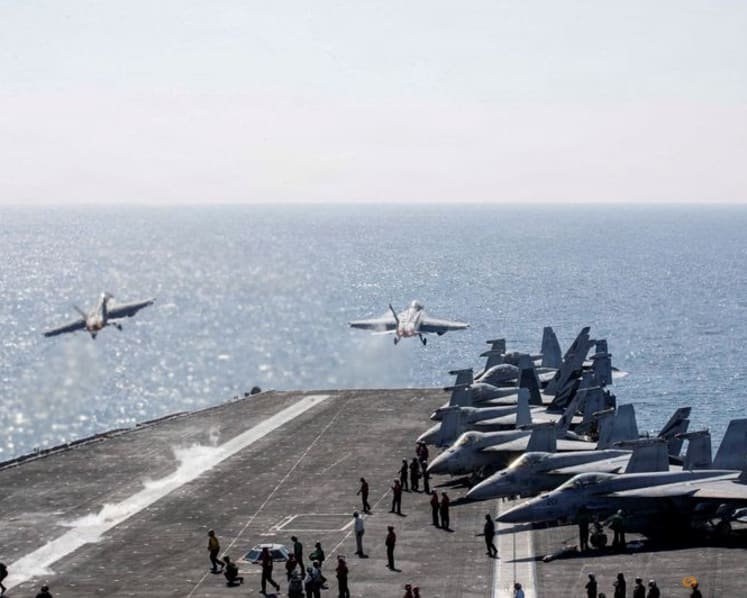
Two F/A-18 Super Hornets launch from the flight deck of the US Navy Nimitz-class aircraft carrier USS Abraham Lincoln in support of the Operation Epic Fury attack on Iran from an undisclosed location on Mar 3, 2026. (File photo: Reuters/US Navy)

This audio is generated by an AI tool.


The United States could attempt to seize Iran’s Kharg Island through an amphibious assault or a combination of a Marine and airborne operation, said analysts, warning that any such move carries a high risk of failure and could potentially widen the war.
The strategic island drifted back into the spotlight on Monday (Mar 30) after US President Donald Trump threatened to capture the island if no deal is reached.
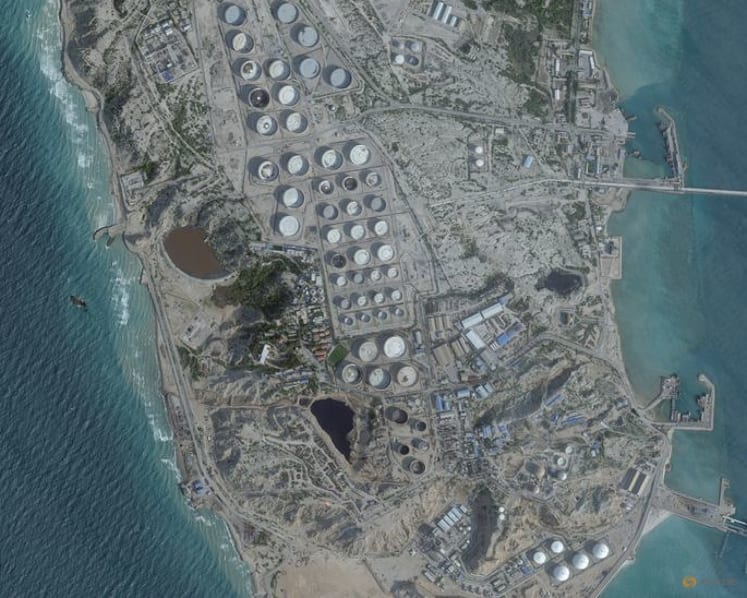
Located off the west coast of Iran, Kharg Island handles 90 per cent of the country’s oil exports, making it one of Tehran's most critical economic lifelines. Iran is the third-largest producer in the Organization of the Petroleum Exporting Countries (OPEC).
When asked about the state of Iranian defence on the island in a recent interview with the Financial Times, Trump said: “I don't think they have any defence. We could take it very easily.”
That assessment, analysts suggest, underestimated the challenges and the risks of escalation.
WASHINGTON’S CALCULUS
A move against Kharg Island would likely be less about territorial control than about coercive leverage.
“At this point, the administration's actions are largely about trying to influence Iran's behaviour, as much as anything, to compel them to come to an agreement,” Lieutenant General Karen Gibson, former director of intelligence for the US Central Command, told CNA.
“So any actions that are taken, whether it's the deployment of additional military forces or threats of additional strikes, are really focused more than anything on influencing the decision calculus of the Islamic Republic.”
Dr Malcolm Davis, senior analyst at the Australian Strategic Policy Institute, also said that if the US decides to deploy ground forces, Kharg Island would be a likely target to force Iran’s hand.
“The goal would be to capture the island, defeat Iranian forces ashore, and seize control of Iranian oil infrastructure there, to deny Iran access to 90 per cent of its oil revenue,” he said.
By doing so, the US would leverage holding Iran’s oil infrastructure hostage to force it to accept a peace agreement on US terms and force open the Strait of Hormuz as part of those terms, Dr Davis added.
Militarily, the US has options, with analysts pointing to two broad approaches - an amphibious operation or a combination of airborne and marine attacks.
US Marines in the region are specifically trained for such operations.
“The US Marine Corps' whole reason for existence, or, you know, their primary purpose is for amphibious landings, for taking islands from the sea or shoreline. It's really what they are best suited for doing,” General Gibson said.
She added that any mission will be tightly scoped - aimed at seizing a key site in a short-duration raid, rather than a large-scale invasion.
Dr Davis, meanwhile, believes it will be a joint and integrated operation likely involving the deployment of marines and special forces via helicopter from land bases.
These ground forces could be supported by full air cover from land-based and carrier-based air power, he said.
“Iranian positions ashore could be hit with long-range missiles fired from US Navy vessels in the Arabian Sea and the Mediterranean Sea, from shore-based missiles, as well as air strikes from land-based air power prior to the landing of the Marines or Airborne forces,” Dr Davis explained.
Once ashore, the ground forces would then move quickly to seize control of Iranian facilities and defeat Iranian forces, he added.
HIGH RISK, UNCERTAIN PAYOFF
The greater challenge lies in what follows.
US forces on Kharg Island would be operating within close range of the Iranian mainland, exposed to sustained attacks from drones and missiles.
Holding the island would require continuous air cover.
“It would require additional air defence. It would require additional intelligence. It would probably require an additional combat air patrol to protect those ground forces for the duration of the time that they are on the islands,” General Gibson said.
Dr Davis told CNA that the operation would be highly challenging and risky as the Iranians would have dug in forces, raising the prospect of house-to-house fighting in the urban areas near Kharg Airport.
“It is a complex military operation that is high risk, with complex and challenging logistics across long distances, and forces ashore are under constant attack from local ground forces as well as long-range fire,” he said.
A lack of natural cover on the island would also leave troops exposed to direct and indirect fire, although he noted that the challenge could work both ways.
“The potential for casualties is high, and the likelihood that the operation will fail is also very significant,” he said.
IRAN’S RESPONSE COULD WIDEN THE WAR
Any US move on Kharg Island would almost certainly invite retaliation from Iran, with consequences that could extend well beyond the immediate battlefield.
Iran could target energy infrastructure and water desalination facilities in the Gulf Cooperation Council (GCC) states, or strike oil fields directly, Dr Davis said.
They could also coordinate with the Houthis to close the Bab el-Mandeb and cut off the flow of oil from the Red Sea, or mine the Strait of Hormuz in a manner that would take months to open the strait, he added.
He noted that in such a scenario, GCC states would face mounting pressure to respond, potentially widening the war in geographic scope and extending its duration.
These could all amplify the energy crisis.
“The US’ response to such steps is likely to be Trump’s promised attacks on Iranian energy infrastructure and potentially water desalination plants,” Dr Davis said.
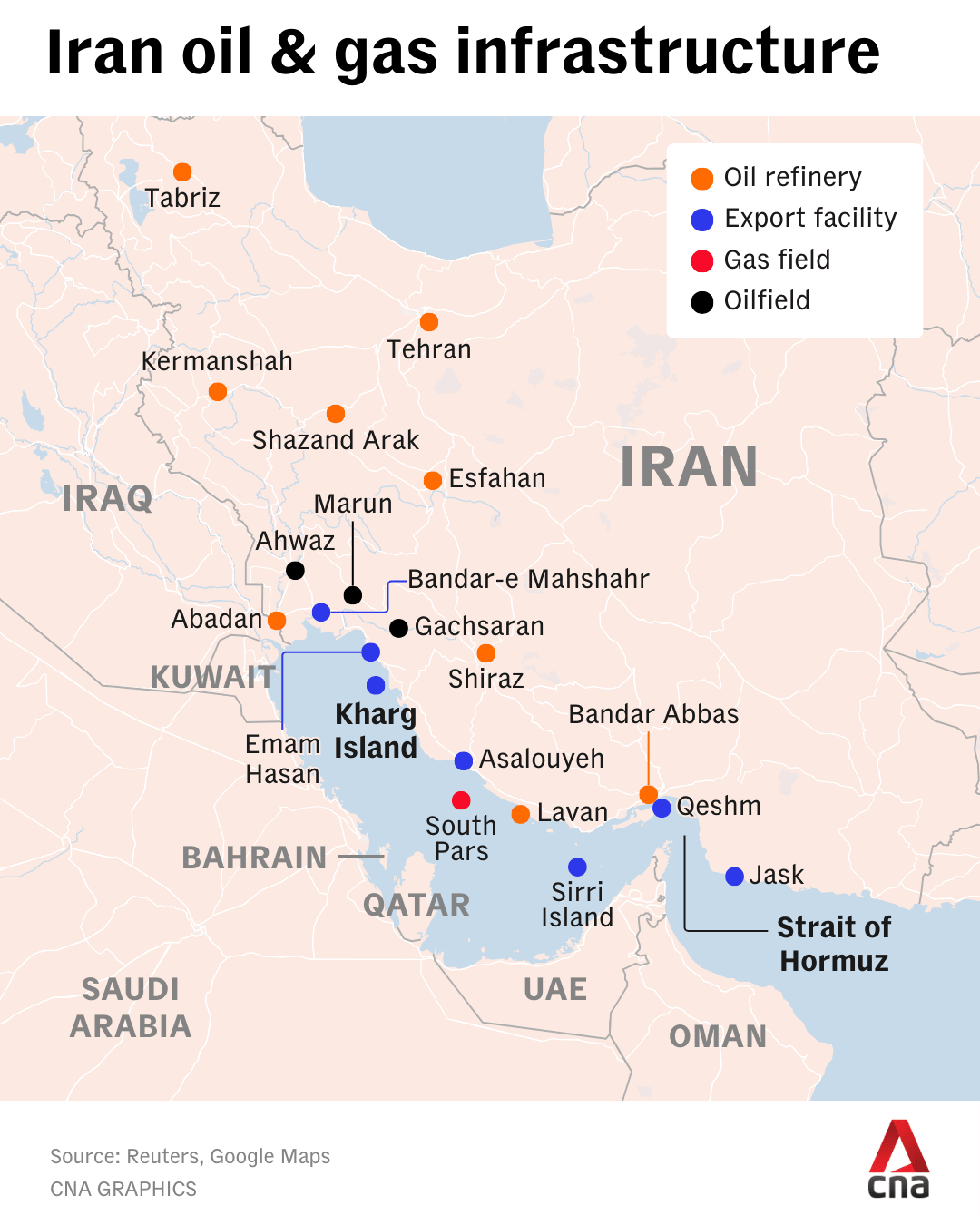
Besides Kharg Island, Washington could also set its sights on other islands near the vital Strait of Hormuz.
Dr Davis pointed to Abu Musa and the Greater and Lesser Tunb islands as likely targets in any US effort to force open the Strait of Hormuz.
The three Persian Gulf islands guard the approach to the Strait of Hormuz and are held by Iran but long claimed by the United Arab Emirates, a close US ally.
"These islands have been fortified, turned into mini-fortresses with anti-ship missiles", Pierre Razoux from the France-based Mediterranean Foundation for Strategic Studies told AFP recently.
If these islets were "controlled by the United States, it would prevent the Iranians from using them for offensive purposes against maritime traffic", Mr Razoux said
Qeshm Island, the largest island in the Persian Gulf, is also a possible but riskier option in terms of casualties and the complexity of sustaining logistical support, Dr Davis added.
The island stretches for around 100km across the Strait of Hormuz, dominating the entrance to the Gulf. Analysts have also said Qeshm is heavily militarised, including strike capabilities that could be used against shipping in the Gulf or invading US troops.
Iran said the US struck a desalination plant on the island on Mar 8 – a claim not acknowledged by Washington.
Dr Davis said: “The geographic proximity of these islands would allow easier access for heliborne forces operating from amphibious ships, but sustaining them ashore with adequate logistics from the air is going to be challenging.
“Unless the US can force open the Strait of Hormuz quickly, under fire from Iranian forces ashore and deep inland on the Iranian mainland, it would be difficult to sustain forces lodged on these islands.”





