Prediction markets face scrutiny after bets on Iran strikes raise insider trading concerns
But regulating the sector presents challenges, given the use of cryptocurrencies and support from US President Donald Trump’s administration.

Smoke rises on the skyline after an explosion in Tehran, Iran, on Feb 28, 2026. (Photo: AP)

This audio is generated by an AI tool.




SAN FRANCISCO: Prediction markets have seen a dramatic rise in popularity and influence, allowing people to win money on the outcome of real-world events like elections, sporting contests and even major geopolitical developments.
But after traders appeared to profit from bets placed shortly before the United States and Israel launched strikes on Iran last Saturday (Feb 28), critics are raising new concerns about insider trading and national security.
FRESH SCRUTINY
Platforms such as Polymarket and Kalshi have surged in popularity in recent years, enabling users to wager against each other on yes-or-no questions about future events.
Prices shift in real time, reflecting the market’s collective expectations.
"You can predict the future. You're betting yes or no on whether events happen,” noted Dustin Gouker, publisher of the Event Horizon Newsletter which focuses on prediction markets.
“That can be whether someone wins an election, how much snow is going to fall in your city, who's going to win tonight's NBA game or the Superbowl.”
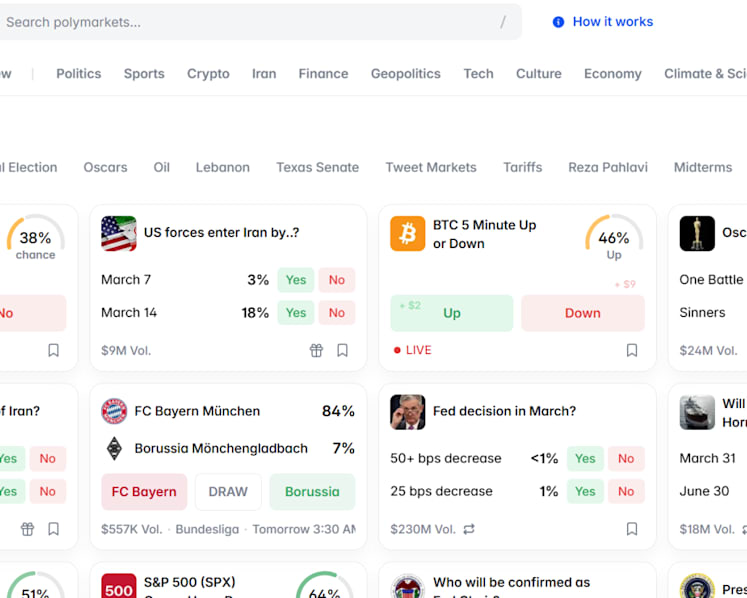
Last weekend, the industry drew fresh scrutiny when large bets were placed on US and Israeli strikes on Iran just hours before the attacks occurred.
Al Jazeera reported that a Polymarket user known as “Magamyman” reportedly made more than US$500,000 in a single day after betting Iran’s supreme leader, Ayatollah Ali Khamenei, would be out of power. Khamenei’s killing was confirmed on Sunday.
The timing of the trades has raised questions about whether some participants may have acted on inside information.
"These wallets that were freshly created bet on Israel and the US striking Iran right before it happened and (they won) a lot of money. That's hard to believe that it's not insider trading," Gouker said.
While there has been no actual evidence of wrongdoing, it has led to fresh calls for regulation of a sector that has seen dramatic growth, with billions of dollars traded on prediction markets during the 2024 US election cycle alone.
CALLS FOR REGULATION
Some critics argue that the US Congress should intervene, particularly when markets involve elections or matters of war.
"I think Congress needs to step in and say: ‘We don't want people betting on elections.’ By the same token, we don't want people betting on things that are similar to war, assassination, things of that nature," said Ben Schiffrin, director of securities policy at Washington-based non-profit Better Markets.
US Democratic lawmaker Mike Levin told Reuters that he and Senator Chris Murphy, a fellow Democrat, are working on a bill to rein in prediction markets following the bets on US-Israel strikes in Iran.
Regulating the sector, however, presents challenges.
Polymarket, one of the biggest prediction market sites, operates some of its activities offshore, making oversight by US authorities more difficult.
The use of cryptocurrency on many platforms also allows users to remain anonymous.
Prediction markets have also received support from the Trump administration, which has taken a more favourable view of the industry after tighter scrutiny under former President Joe Biden’s administration.
The president’s son Donald Trump Jr serves as an advisor to both Polymarket and Kalshi.
Advocates of prediction markets, including Trump administration official Michael Selig who oversees them, argue that they can help businesses and investors better anticipate future risks.
"They provide useful functions for society by allowing everyday Americans to hedge commercial risk like increases in temperature and energy price spikes,” said Selig, who is chairman of the US Commodity Futures Trading Commission.
“They also serve as an important check on our news media and our information stream,” he added in a video posted to the X social media platform.
Even so, critics warn that allowing bets on conflicts and crises could create dangerous incentives, particularly if individuals with access to sensitive information can profit from it.
They argue that when national security events become tradable markets, the risks extend beyond financial speculation.