







Meta hooked children and misled public: Prosecutors
An Oakland court heard that Meta "exploited how kids’ brains work" by making Instagram and Facebook addictive.
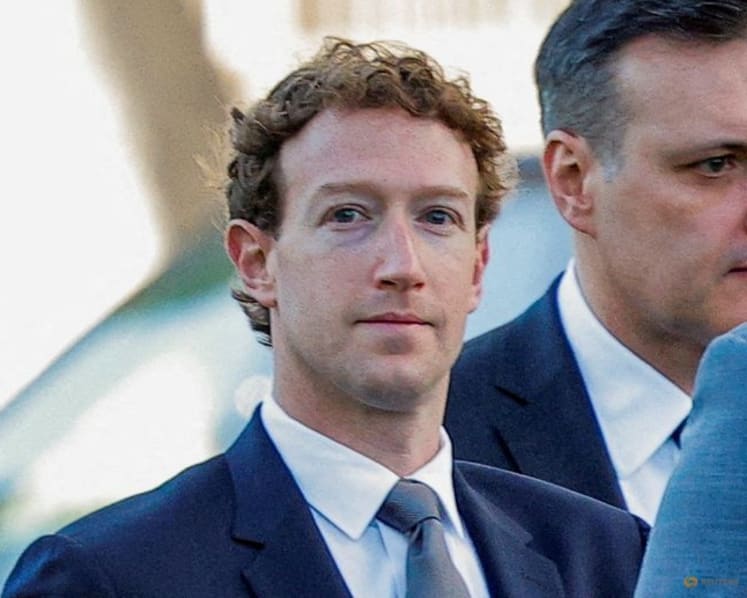
Meta Platforms CEO Mark Zuckerberg arrives outside court to take the stand at trial, in Los Angeles, California, on Feb 18, 2026. (Photo: Reuters/Mike Blake)
OAKLAND: Meta knowingly hooked and exploited children, a US federal court heard on Tuesday (Aug 18) in a trial against the social media giant on charges that it deliberately made Instagram and Facebook addictive to young users.
In what many experts have called social media's "big tobacco moment", a coalition of states is asking that Meta be penalised by around US$200 billion for designing products addictive to children.
The states are intervening where "Congress failed to act", Colorado Attorney General Phil Weiser said Tuesday afternoon during a press conference, noting that - like landmark cases against tobacco companies from decades past - this case, too, involved "public health, and in some cases, marketing to kids that hurt kids".
During opening statements, California prosecutor Megan O'Neill painted Meta's business model as one intended to "hook the users, hold them for as long as they can, harvest their data, and then hide the truth from the public".





Meta "exploited how kids' brains work", O'Neill said.
Meta's lawyer, Paul Schmidt, acknowledged that some users had negative experiences on the apps, but argued that the company had "tried to come up with tools to help them".
Before the trial began, the company denied the allegations, insisting it had worked with parents, experts and law enforcement to incorporate safeguards for children.
Former Meta engineering director Arturo Bejar testified that during Facebook's early years, "the goal was to be able to get things into the hands of users as fast as possible, which meant that a lot of the time, safety or security was an afterthought".
Days before the trial, Meta attempted to block Bejar from testifying, a move which the judge denied.

MOTHERS RALLY
This is not the first case seeking to hold tech companies, including Meta, accountable for these types of issues, but it could become one of the most consequential if it forces Meta to make sweeping changes.
Activists, including mothers of children they say were driven to suicide by their social media usage, rallied outside court.
One mother, Lori Schott, called out Meta founder and CEO Mark Zuckerberg and Instagram head Adam Mosseri, saying they "built one of those most powerful and richest companies in the world ... But power does not excuse harm".
Zuckerberg and Mosseri are among the star witnesses expected to testify, according to court documents.
In a press conference Tuesday afternoon, California Attorney General Rob Bonta declined to confirm whether Zuckerberg would be called to the stand.
FIRST OF MANY?
This is the first federal trial in what is expected to be a tidal wave of lawsuits targeting social media companies, including TikTok, Snapchat and YouTube. Families, educators and state governments in the United States accuse the companies of harming the mental health of young people.
Meta, which has more than three billion users worldwide, is the sole defendant in the Oakland case.
In addition to financial penalties, the states are demanding changes to Meta's apps to protect young users, including limits to screen time.
Four states - California, Colorado, Kentucky and New Jersey - are representing a coalition of 29 states that first sued Meta in 2023.
The charges are threefold: that Meta lied to the public about how dangerous its apps are for minors; designed some features specifically to get them hooked and keep them online, including screen-time-limiting ones that are easy to get around; and gathered data on children under age 13 without parental consent, in violation of federal law.


The trial is expected to last around six weeks, with a verdict expected by October.
For Meta, "the huge issue here is reputational harm" and being forced to make major changes to Facebook and Instagram, Vincent Joralemon, a director at Berkeley's Life Sciences Law and Policy Center, told AFP.
"It really feels like tobacco in the 1990s," Joralemon said.
While cases about social media harms revolve around the intersection of technology and addiction, the case against Meta focuses on its business practices, similar to when US regulators sued tobacco companies, Joralemon said.
Dozens of US states sued four major tobacco companies for downplaying the harmful health impacts of their products, and won a 1998 landmark settlement that included financial penalties and changes to product marketing.
Those tobacco companies have paid over US$176 billion since, according to data from the National Association of Attorneys General.
Speaking separately to CNA’s Asia First, Joralemon said the case also reflects a broader concern in US law over “information asymmetries” – where one party has better or more information than the other.
Companies can sell products that may be addictive or harmful, he said, as long as consumers are informed of those risks.
“If the public doesn't know that, you need to add a warning label or you need to have your public disclosures communicate that potential risk,” he said.
“The argument here is about that deception,” he noted, adding that the key question would be whether Meta knew its platforms were potentially harmful and hid that information from the public.




