Russia tightens grip on popular messaging app Telegram, leaving businesses and users in limbo
The move is part of a broader push to enforce strict data laws and steer users toward state-controlled platforms – an uneasy transition for many.
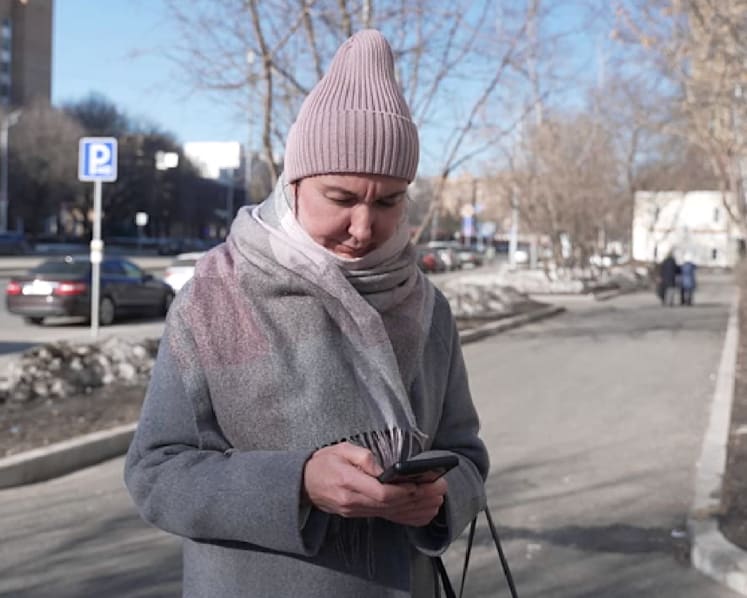
For years, art teacher Ekaterina has built her small art school through social media – attracting clients, showcasing her work, and staying connected with students. Now, that connection is under strain as Russian authorities tighten restrictions on popular messaging apps like Telegram, while promoting a new state-backed platform called Max.

This audio is generated by an AI tool.


MOSCOW: Small businesses and millions of social media users in Russia face growing uncertainty as authorities tighten control over the digital space.
The messaging app Telegram is under increasing regulatory pressure, with recent disruptions heightening concern among users who depend on it for communication and commerce.
The move is part of a broader push to enforce strict data laws and steer users toward state-controlled platforms – an uneasy transition for many.

TIGHTENING DIGITAL CONTROLS
For years, art teacher Ekaterina has built her small art school through social media – attracting clients, showcasing her work, and staying connected with students.





Now, that connection is under strain as Russian authorities tighten restrictions on popular messaging apps like Telegram, while promoting a new state-backed platform called Max.
Ekaterina said sharing photos and videos of her classes is crucial for parents to track their children’s progress and explain what the school is doing, but uploads have become inconsistent.
“Sometimes, I post a video for three days and it doesn't upload. Sometimes, it uploads after a few days, sometimes it doesn't. I'm losing touch with the audience,” she added.
“I made a group in Max, but only 10 to 15 people out of 100 went there – someone doesn't have Max, someone doesn't follow there. This option is not very convenient."
In February, Russia’s internet watchdog Roskomnadzor announced new restrictions on Telegram, with users across the country reporting widespread slowdowns.
The disruptions come amid a broader government effort to enforce data localisation laws, requiring companies to store user data on servers within Russia.
Critics say this increases state access to online communications.
MOUNTING REGULATORY SCRUTINY
Telegram’s resistance to some of these requirements has placed it under scrutiny, with authorities also opening a criminal case against its founder. Other major platforms have faced blocks under similar rules.
For many businesses like Ekaterina’s, Telegram is more than just a messaging app – it is a key marketing and customer engagement tool.
“It's an international messenger,” said one commercial director. “I need to communicate with people for work, so it's a big problem for me right now.”
Analysts say replacing Telegram will not be easy, as the app is deeply embedded in daily life in Russia – from private messaging to news and community groups.
Alexander Kuksa of the Interactive Advertising Development Association, an alliance of key players in the Russian interactive advertising market, said Telegram serves not only as a communication tool but also as a business infrastructure, particularly through chatbots used for generating leads.
Max, launched in 2025, has yet to see widespread adoption despite being integrated with state-run services.
There are also concerns about how the app collects data and where that data is stored.
As for disruption and service slowdowns, authorities said some mobile internet services are being restricted for security reasons.
They have introduced “white lists” of approved online resources during outages, allowing continued access to essential services such as taxis, food delivery and maps.
But for many users and small business owners, the changes go beyond inconvenience – threatening livelihoods built in the digital space.