







Sweden bets on nuclear power to drive economic growth and cut emissions
The Scandinavian country is adopting small modular nuclear reactors – a simpler and more cost-effective way to meet growing clean energy demand, says its deputy prime minister.

Sweden’s push to expand nuclear power stems from its effort to balance economic growth with emissions reduction, said the country’s Deputy Prime Minister Ebba Busch.

This audio is generated by an AI tool.




SINGAPORE: Sweden’s push to expand nuclear power stems from its effort to balance economic growth with emissions reduction, said the country’s Deputy Prime Minister Ebba Busch.
“We realised that we need to electrify, and we need to do that at a large scale,” Busch told CNA during her visit to Singapore last week.
“If you want to do that fossil-free, for many countries like Sweden, the answer will be new nuclear power.”
The move reflects a growing political consensus in Sweden to expand nuclear energy alongside renewables as part of broader efforts to reduce reliance on fossil fuels.





SWEDEN’S NUCLEAR JOURNEY
Busch, who is also minister for energy, business and industry, highlighted the crucial role nuclear power plays in Sweden’s energy strategy.
Sweden’s energy mix is dominated by low-carbon sources such as hydropower, wind and nuclear energy.
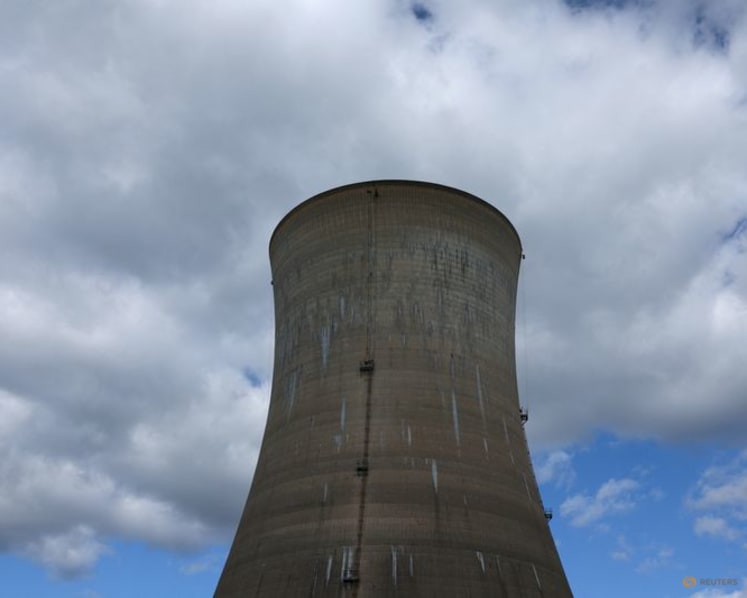
The country has six active nuclear reactors, which generate around 30 per cent of its electricity.
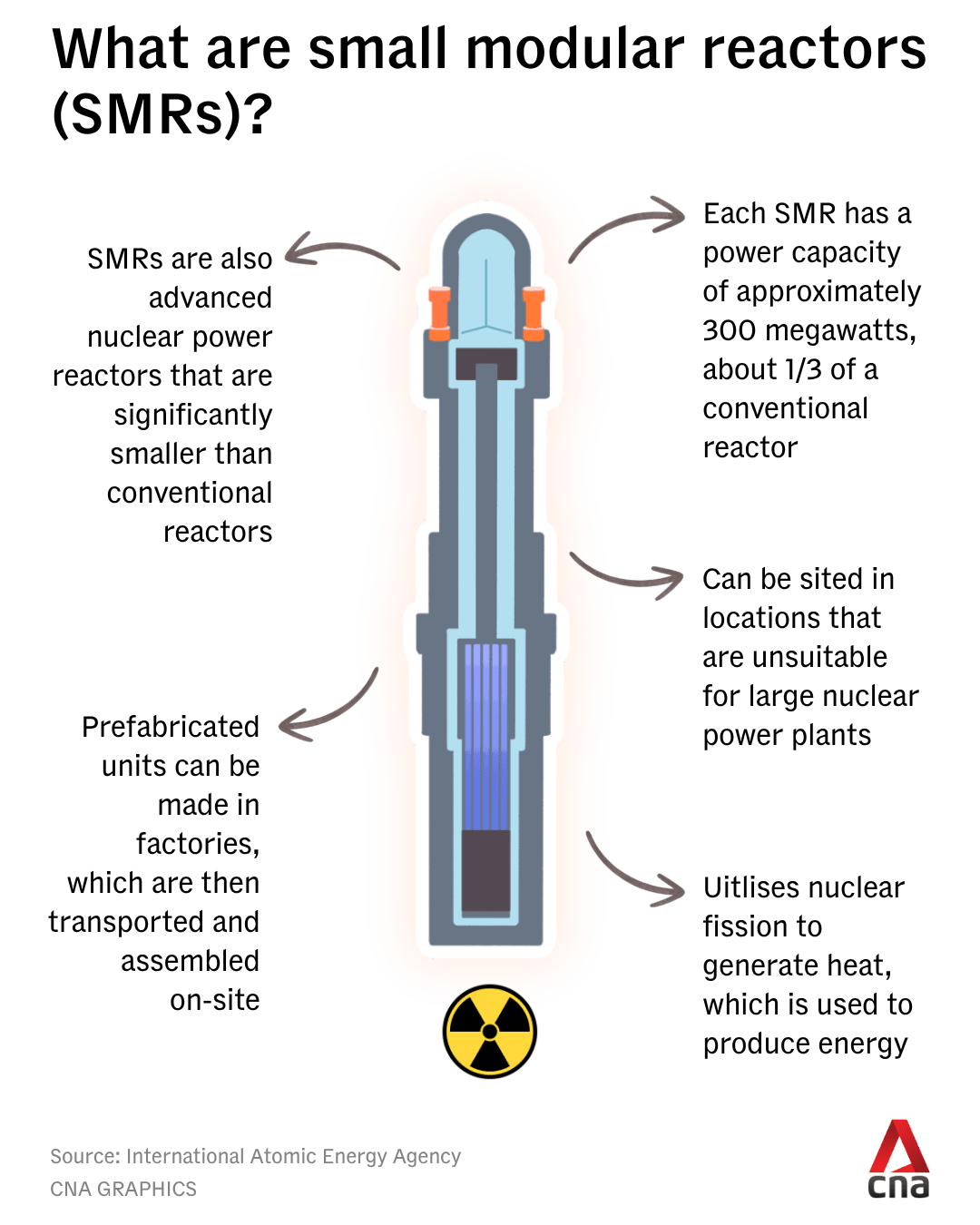
To meet rising demand for clean power, Sweden will adopt small modular nuclear reactors (SMRs) – a next-generation technology that is simpler, safer and potentially more cost-effective to build than traditional large-scale reactors.
In August, the Swedish government announced plans to build between three and five of these reactors at the Ringhals plant in southwestern Sweden. They are expected to supply around 1,500 megawatts of power – roughly equivalent to two conventional reactors.
Busch said she sees significant potential for SMRs in the years ahead.
“I think you will see Sweden emerge as somewhat of a hub around the (Nordic and Baltic Sea regions) for investments in nuclear,” she added.
“I would like to see at least coordinated purchases of SMRs pushing prices down, but also making it possible to collaborate on the know-hows.”

DRAWING VALUABLE LESSONS
Last Thursday (Oct 30), top energy leaders from Singapore and Sweden met at a forum here to discuss topics ranging from hydrogen and clean fuels to emerging energy technologies.
Both countries have been stepping up collaboration on clean energy technologies and regional energy connectivity through a series of high-level exchanges this year. The efforts build on a memorandum of understanding on energy cooperation signed last November.
Emphasising innovation’s key role in the energy transition, Busch voiced optimism about continued exchanges between Singapore and Sweden.
Analysts said Singapore, which largely relies on fossil fuels and is exploring nuclear energy technologies, could gain deeper insights from Sweden’s approach to regional energy trade and innovation.
David Broadstock, a partner at economic consultancy The Lantau Group, said Singapore is surrounded by countries it must collaborate with for energy trade.
“By looking towards the experience in Europe, not just from Sweden ... it will be possible for Singapore to learn much more about how that type of practice can be effective,” he added.
Singapore has been making steady progress towards diversifying its energy mix.
While its conditions differ from Sweden’s, Broadstock noted that the Scandinavian country’s long-standing experience with conventional reactors and its readiness to embrace newer nuclear technologies offer valuable lessons.
“The older technologies are very large in scale and they were prone to some security and risks that were exposed,” he added.
“But these new small modular reactors, they are much easier to place, they are much more secure and there are less safety concerns to be thinking about.”




