CNA Explains: Why the UAE is quitting OPEC – and what it means for oil markets
The UAE’s departure from OPEC is a big move, said analysts, but while market reaction has been muted, the exit could reshape geopolitical alignments.
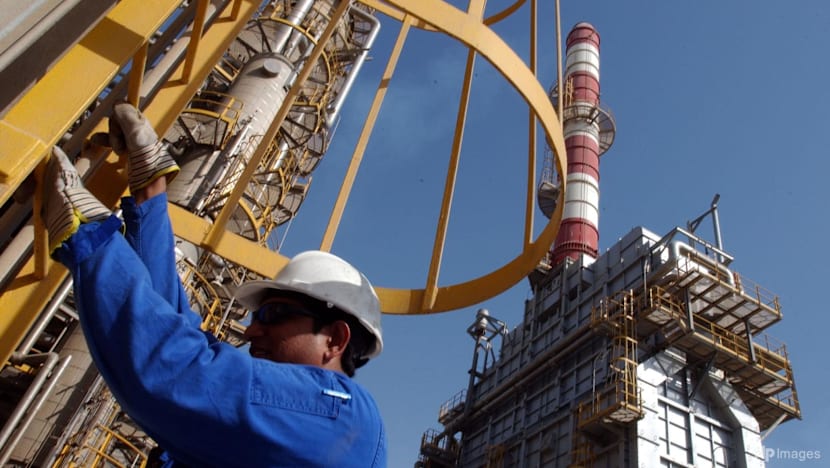
An oil technician climbs down a tower at a refinery in Jebel Ali, United Arab Emirates in March 2004. (File photo: AP/Kamran Jebreili)

This audio is generated by an AI tool.


SINGAPORE: The Organization of the Petroleum Exporting Countries (OPEC) will have one fewer member from Friday (May 1) after the United Arab Emirates (UAE) announced its decision to leave the oil cartel.
The 65-year-old organisation produces about 40 per cent of the world’s crude oil and has long wielded significant influence over global energy prices.
The UAE said it plans to continue pursuing its goal of gradually increasing crude production, in line with demand and market conditions.
Here’s what to know about OPEC - and the potential impact of the UAE’s move.
What is OPEC AND OPEC+?
OPEC was founded in 1960 to coordinate oil production and regulate prices.
It currently has 12 members - Algeria, Congo, Equatorial Guinea, Gabon, Iran, Iraq, Kuwait, Libya, Nigeria, Saudi Arabia, UAE and Venezuela. Together, they hold more than 80 per cent of the world’s proven oil reserves.
OPEC said its objective is to ensure stable prices, reliable supply and fair returns for investors.
Its formation marked a shift from Western dominance of oil markets to one where countries with oil reserves took greater control over their resources and profits.
OPEC later expanded its influence through OPEC+, formed in 2016 with 10 additional producers, including Russia.
Saudi Arabia and Russia are the two largest producers in the alliance, producing about 9 million and 9.3 million barrels per day, respectively, according to a 2024 Reuters report.
The UAE is the third-largest producer in OPEC and fourth in OPEC+.
However, tensions have simmered within OPEC over production limits, particularly between the UAE and Saudi Arabia, the de facto leader of the cartel.
Analysts said the UAE has long been frustrated by output quotas and is seeking greater flexibility to expand production.
The UAE, which joined OPEC through its emirate of Abu Dhabi in 1967, had been producing around 3.4 million barrels of crude a day just before the war on Iran began on Feb 28. Analysts said it has the capacity to produce roughly 5 million barrels a day.






What's the impact on markets?
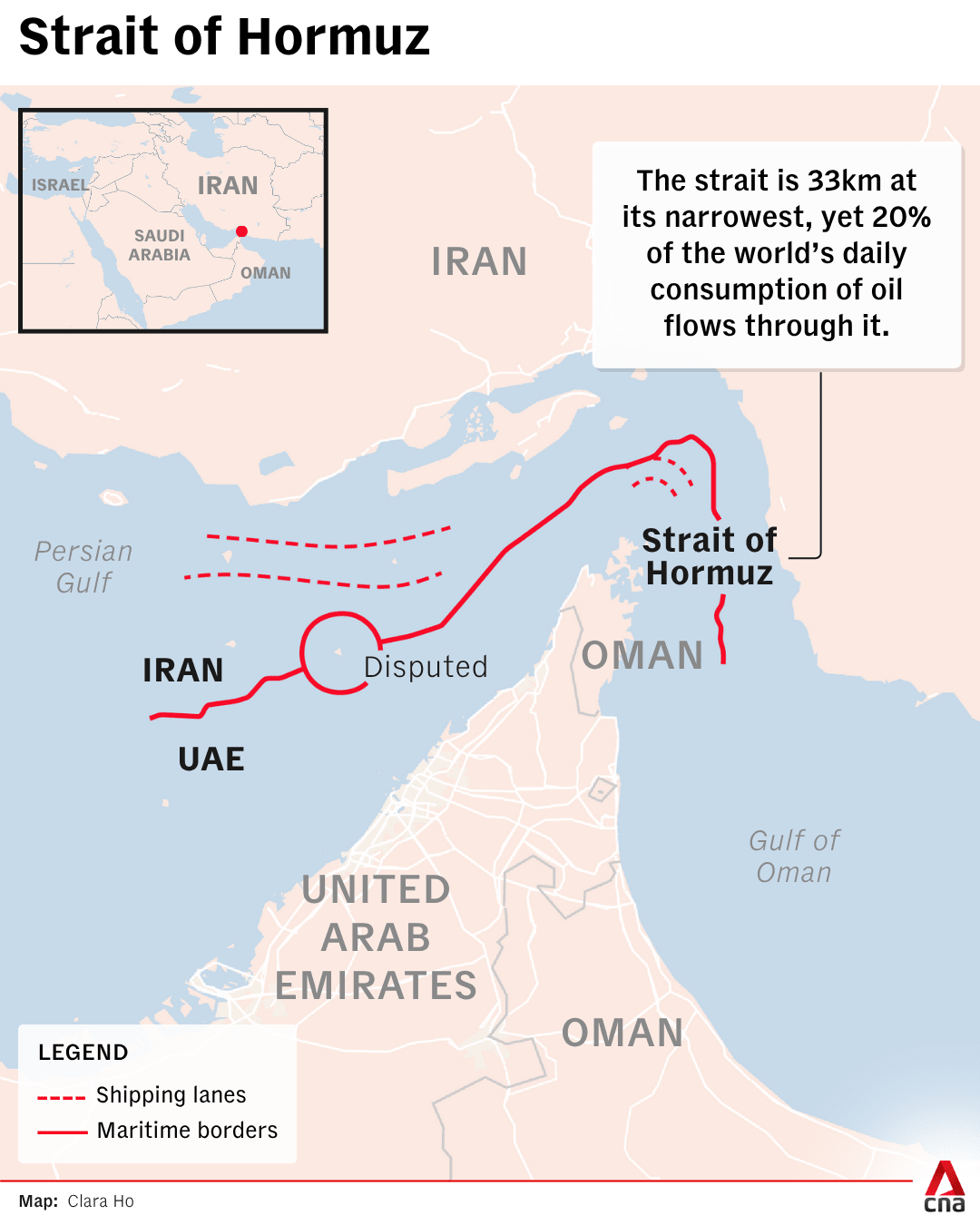
Despite the significance of the UAE's move, analysts said the immediate impact on oil markets is likely to be limited due to ongoing constraints linked to the Strait of Hormuz.
Claudio Galimberti, chief economist at Rystad Energy, described the announcement as “one of the most consequential” in recent years - but noted that prices barely reacted.
“The market did exactly nothing,” he said.
“The reason is that, of course, the whole oil market is still hostage to the situation in Hormuz, and as long as you have this supply crunch going on, then the market will not react,” he added.
“If the Strait of Hormuz normalises, then you may argue that the ability of OPEC to basically respond to the market - increasing and decreasing production - will be greatly diminished.”
Rachel Ziemba, an Adjunct Senior Fellow at the Center for a New American Security, said the UAE's move is more of a signal for the post-conflict environment, rather than something that will affect markets in the near term.
However, once conditions normalise, OPEC could find it more difficult to “manage the markets”, she told CNA.
Ms Ziemba noted that OPEC and OPEC+ were already “having difficulty” managing supply as some members were overproducing.
“The bigger issue is if other countries will try to defect and signal production gains,” she said, citing OPEC countries such as Nigeria and Iraq.
Still, some say the system is resilient.
The oil market is a “highly complex self-balancing system”, said Argus Media's Neil Fleming and Chay You Liang, adding that the exit of a single country is “arguably unlikely to cause any fragmentation in markets themselves”.
What about the impact on OPEC?
The UAE’s departure is expected to weaken OPEC’s influence, as it loses one of the few members with the ability to quickly increase production.
Jaime Brito, executive director of refining and oil markets at OPIS by Dow Jones, told CNA that with less oil volume in OPEC, the cartel has “less sway” to influence the overall oil markets, adding that the UAE has quite an “important volume” of oil.
Analysts said OPEC's influence has already been eroding in recent years as the US ramped up production.
While Saudi Arabia had been producing more than 10 million barrels of oil a day before the war, the US pumps more than 13 million barrels a day.
It has not had an “actual ability to effectively control prices for a while”, Mr Brito said, with increased crude production from various countries weakening or creating resistance to the organisation's influence.
Gregory Treverton, professor of the practice of international relations and spatial sciences at the University of Southern California, said OPEC “has been, in some ways, decaying for quite a long time”.
“It’s a good way to organise and talk about things, but it no longer seems to me to have the ability to discipline states to produce less oil than they would like,” Prof Treverton said.
Even so, Mr Galimberti of Rystad Energy believes that OPEC will not collapse.
He noted that OPEC has weathered even more severe crises in the past, including the Iran-Iraq war in the 1980s.
Why does it matter to the region?
Apart from wanting to ramp up production, regional politics were also likely at play in the UAE's decision.
The UAE has had increasingly frosty relations with Saudi Arabia over economic issues and regional politics, even after both came under attack by fellow OPEC member Iran during the war.
“This exit of OPEC fits into the UAE need for flexibility with key energy consumers as well - including a future relationship with China and a more competitive relationship with Saudi Arabia," Karen Young, a senior research scholar at Columbia University’s Center on Global Energy Policy, told the Associated Press.
While Saudi Arabia and OPEC had no immediate reaction, Emirati Energy Minister Suhail al-Mazrouei insisted his country's decision did not stem from any dispute with its Gulf neighbour.
All this could have consequences for Gulf unity, said Dr James M Dorsey, an Adjunct Senior Fellow at Nanyang Technological University’s S Rajaratnam School of International Studies.
This could include the return of Saudi-Emirati rivalry, said Dr Dorsey, adding that he also expects the UAE to partner with Israel and to tighten its partnership with the US.
How does it benefit the US?
The UAE’s exit could reshape geopolitical alignments.
Philip Cornell, a senior fellow at the Atlantic Council's Global Energy Center, said that the move may bring Abu Dhabi closer to Washington, particularly after the conflict subsides.
Washington has historically been critical of OPEC, with both US President Donald Trump and former President Joe Biden pressuring the group to boost production.
Analysts said the US is likely to welcome any weakening of the cartel to potentially bring down oil prices.
"They would rather production increase in the US but the government is supportive of production gains wherever they are in the world, especially if it could weaken adversaries," Ms Ziemba said.
When asked how the US might respond to the move, Dr Dorsey said that Trump “is going to love this”.
“Any weakening of the cartel is, in his mind, a strengthening of the United States,” he said.
What's the impact on Asia?
For Asia, the benefits of the UAE’s exit will depend heavily on developments in the Strait of Hormuz.
The narrow waterway - through which roughly a fifth of global oil supply passes - remains a key chokepoint. As long as disruptions persist, analysts said any potential benefits from the UAE’s policy shift will be delayed.
Even after the waterway fully reopens, recovery could take months as production ramps up, tankers reposition and infrastructure is assessed for damage, said Ms Ziemba.
In the near term, Asian economies - many of which are heavily reliant on imported energy - are unlikely to see meaningful price relief.
Simon Henderson, director of Gulf and Energy Policy at The Washington Institute, said that countries like China and India depend on oil imports and are therefore price-takers. “They will have to live with whatever happens”, he said.
Countries such as China, India, Japan and South Korea remain exposed to elevated shipping costs, insurance premiums and supply uncertainty linked to tensions in the Gulf.
Analysts noted that even if the UAE increases production, its ability to export is currently constrained by regional instability.
As a result, oil prices in Asia will continue to be driven more by geopolitical risk than by changes within OPEC itself.
Over a longer horizon, however, increased UAE output could help reduce import costs for major buyers, said Ms Ziemba.
Analysts at Argus similarly said that the UAE’s exit from OPEC could benefit buyers in the longer term should the UAE move ahead with more aggressive production expansion plans.
Yet others said that despite these potential shifts, the mechanics of oil trade mean the impact may be less direct than it appears.
Dr Dorsey said the UAE’s exit from OPEC would not matter much to countries like China, as oil is not purchased from OPEC as a bloc, but through bilateral deals with individual producers or state-owned companies.
“OPEC sets pricing, sets production quotas, but the deals are cut bilaterally. China doesn't buy from OPEC,” Dr Dorsey added.
Argus' analysts noted that OPEC does not have a collective approach to sales. It abandoned attempts to control price directly in the mid-1980s, in favour of adjusting its output instead.
Want an issue or topic explained? Email us at digitalnews [at] mediacorp.com.sg. Your question might become a story on our site.