







US strikes Iran again as Tehran warns of 'existential war' with America
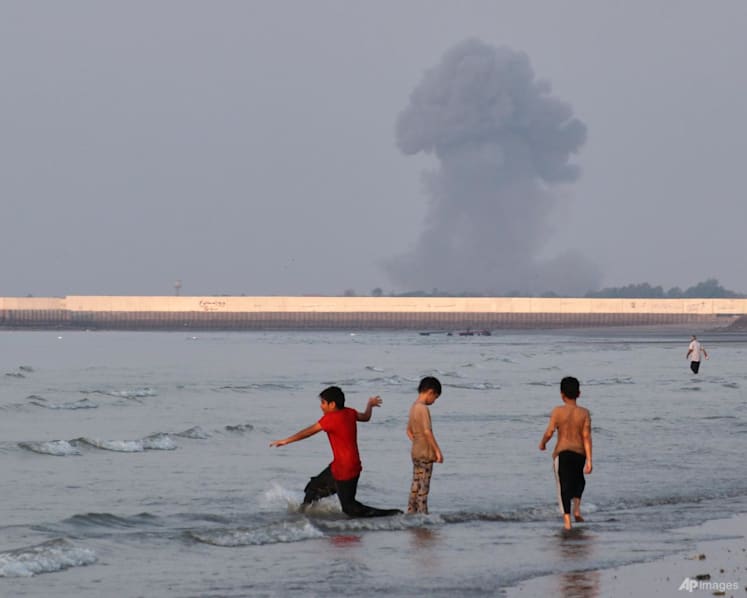
US Central Command said in a statement that the military had targeted coastal defence systems and cruise missile storage and launch sites on Iran's Greater Tunb Island, and had completed the wave of strikes within around 90 minutes.
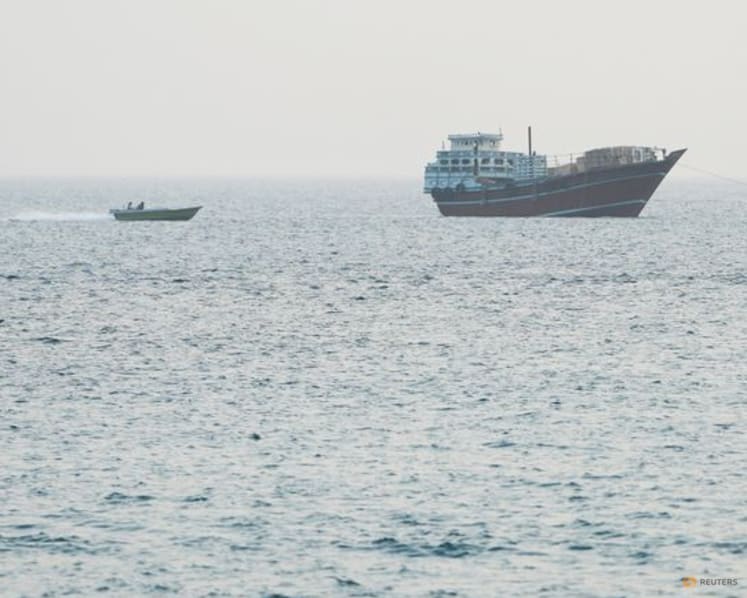
A vessel at the Strait of Hormuz, as seen from Musandam, Oman, on Jul 15, 2026. (File photo: Reuters/Stringer)
CAIRO: The US struck Iran's coastal defences and missile sites on Wednesday (Jul 15) after reimposing a naval blockade of Iranian ports, while Iran threatened to shut off more regional energy exports, saying it was engaged in an "existential war" with America.
The daytime strikes mark the latest escalation of attacks and counterattacks launched by the two sides as they vie for control of the Strait of Hormuz, which carried about a fifth of global oil and gas shipments before the war.
"At 6am ET today, US Central Command forces began launching a wave of strikes against Iran," the US military said.
"The strikes are designed to further degrade military capabilities Iranian forces have used to attack commercial shipping in the Strait of Hormuz."
In a statement issued hours after Iran's Mehr news agency reported that US projectiles had hit a location on Iran's Hengam Island in the Strait of Hormuz, Tehran's top negotiator Mohammad Baqer Qalibaf said Iranian security depended on maintaining what he called "Iranian arrangements" in the strait.
"We are in an essential and existential war with America," Qalibaf said in a statement.
US Central Command said the military had attacked coastal defence systems and cruise missile storage and launch sites on Iran's Greater Tunb Island, and had completed the wave of strikes within around 90 minutes.
That followed seven hours of strikes on Tuesday in which the US said it had hit dozens of military targets near the Strait of Hormuz and Iranian coastal areas.
IRAN WILL "STAND TO THE END," SAYS TOP NEGOTIATOR
In response, Iran's Islamic Revolutionary Guard Corps said on Wednesday it had struck US military targets in the region, including in Bahrain, Kuwait and Jordan.
It also threatened on Wednesday to shut off more regional energy exports, saying the US "must brace for the closure of all other export corridors that benefit the US and its allies."
An interim ceasefire deal in the conflict signed last month was meant to lead to further negotiations including on Iran's nuclear programme, and to a permanent truce, but a return to talks has faltered.
"We have no plans for negotiations at the moment and are focused on defence," Tasnim news agency quoted Iranian Foreign Ministry spokesperson Esmaeil Baghaei as saying.
Qalibaf, who is also speaker of Iran's parliament, said that if Iran did not benefit from its memorandum of understanding with the US, "we have no reason to adhere to such an understanding".
Iran never welcomed war but it must always be ready to fight and "stand to the end" to protect national security and Iranian interests, Qalibaf said. He added Iran must also use "the tools of diplomacy and negotiation", and choosing either negotiation or war as the sole course of action would be a strategic error.
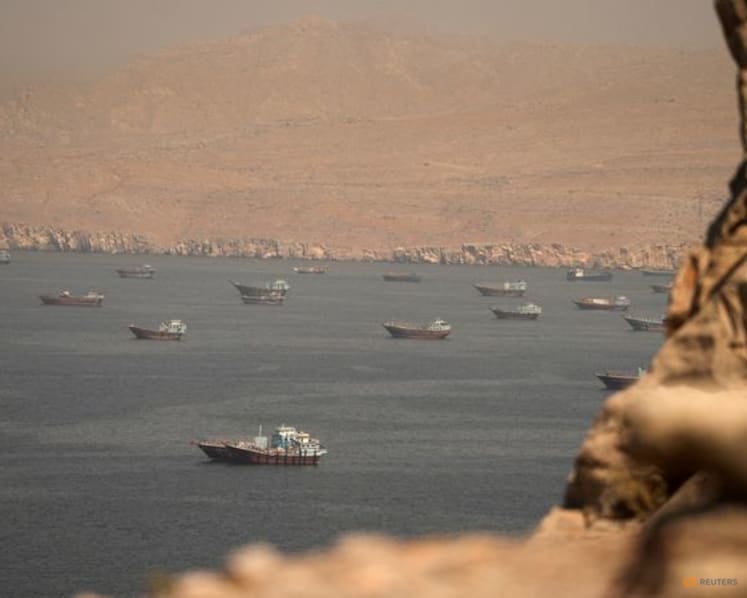
Hostilities have intensified since Iran said late on Saturday it had closed the Strait of Hormuz. The US says Iran attacked seven commercial ships over the last week, leaving nearly a dozen crew members killed, missing or injured.
"WE'LL HIT ENERGY TARGETS," SAYS TRUMP
US President Donald Trump on Tuesday threatened to hit Iranian power plants and bridges next week unless Tehran resumes negotiations.
"I'll save the energy targets for last, but ultimately we'll hit energy targets," Trump said.
US negotiators had been in touch with their Iranian counterparts to tell them "you better make a deal," Trump added.
The war, which began with US and Israeli strikes against Iran on Feb 28, triggered Iranian attacks on Gulf states that host US bases and caused major disruption to global energy supplies, raising fears of a surge in inflation.
Oil prices fell back on Wednesday, after settling on Tuesday at a new one-month high.
Analysts say that while the US and Iran have gone back to sparring as they did before the interim ceasefire deal was signed, they are unlikely to return to full-scale war, though a risk of further escalation remains.
They say Iran is signalling it may use its Houthi allies in Yemen to shut Bab el-Mandeb, opening a new front against Washington and putting two of the world's most vital energy arteries at risk.
Bab el-Mandeb links the Red Sea to the Gulf of Aden, through which Saudi oil exports and a substantial share of global shipping pass. Some shippers have been returning to Red Sea routes after being deterred by Houthi attacks linked to the Gaza war that began in 2023.
As a result of this year's Iran war, Iran has been trying to assert permanent control over shipping in the Strait of Hormuz and to impose fees on vessels passing through it, in what would be a major shift in the balance of power in a region where the US has long acted as guarantor of security.
As tensions escalated, Trump on Monday floated the idea of a 20 per cent fee on shipping through the strait. On Tuesday, he scrapped the idea and said, without providing details, that he would instead seek investment deals with Gulf states.
The war has killed thousands of people and displaced millions, mainly in Iran and Lebanon, where conflict restarted between Israel and Iran-backed militant group Hezbollah.
Iranian government spokesperson Fatemeh Mohajerani said at least 30 civilians had been killed in recent days due to the US strikes on southern Iran, state media reported on Wednesday.




