







Thousands feared dead after two major earthquakes strike Venezuela
A magnitude 7.2 earthquake hit about 160km west of Caracas, followed less than a minute later by a magnitude 7.5 tremor, according to the US Geological Survey.
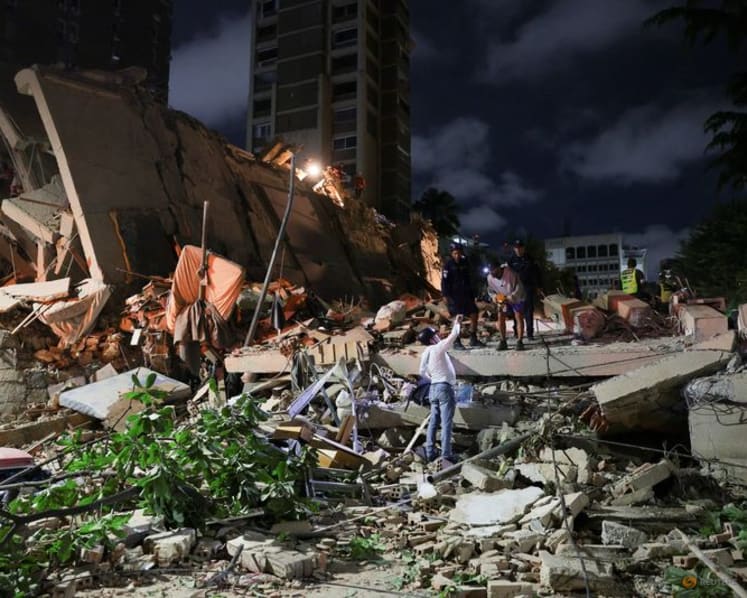
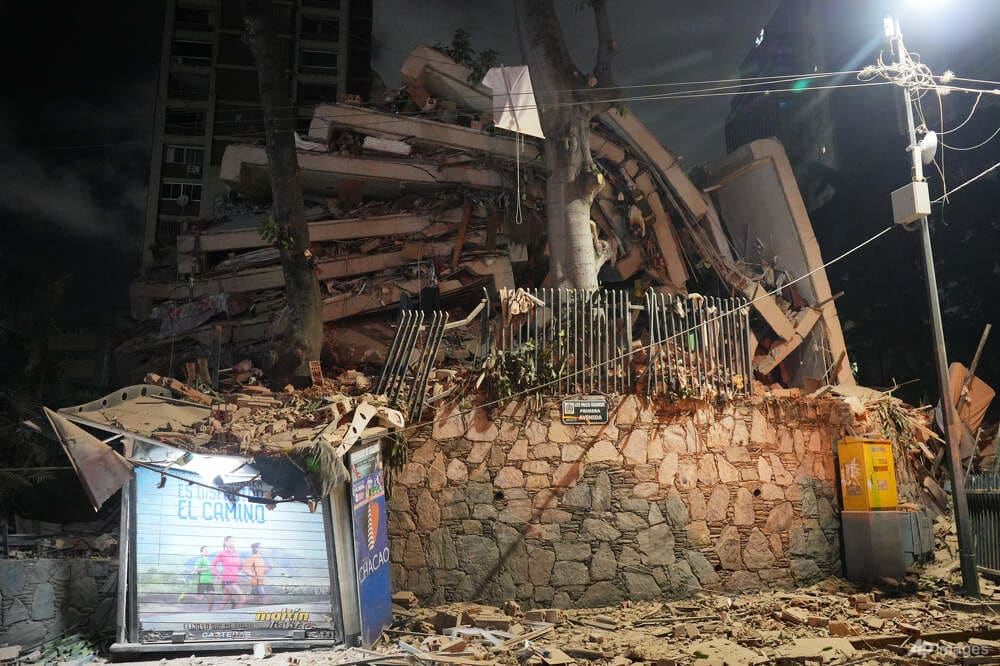
Emergency services work at the site of a collapsed building after an earthquake, in Caracas, Venezuela, June 24, 2026. REUTERS/Gaby Oraa
CARACAS: Thousands of Venezuelans were feared dead on Thursday (Jun 25) after two powerful earthquakes wreaked havoc in and around the capital Caracas, trapping people beneath the rubble of collapsed buildings and setting off powerful aftershocks.
A magnitude 7.2 earthquake hit about 160km west of Caracas on Wednesday afternoon, followed less than a minute later by a magnitude 7.5 tremor, according to the US Geological Survey.
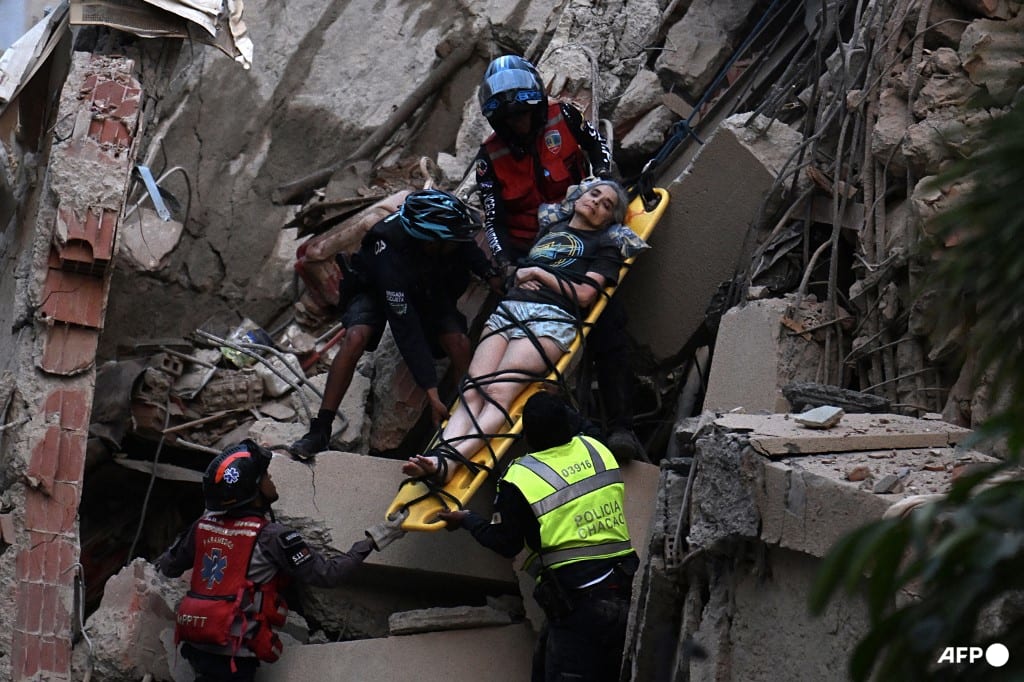
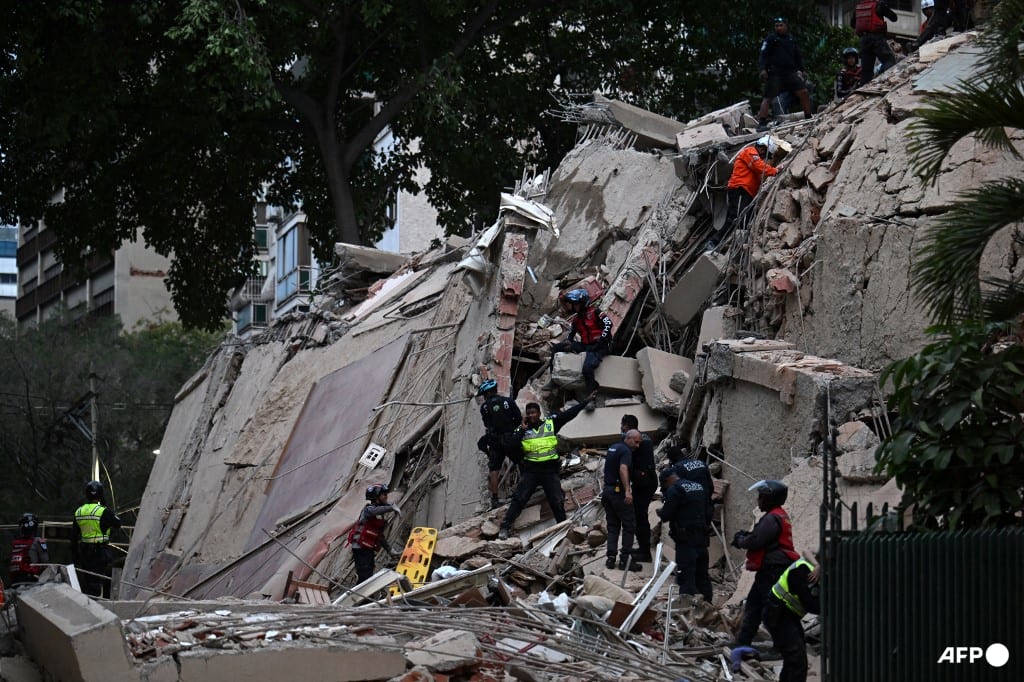
Venezuela's strongest earthquake since 1900 sent rescuers and locals clambering in the dark over flattened buildings, hunting for survivors and extracting people from under the ruins.
Countries including the US, China and India offered to urgently send help.
Interim President Delcy Rodriguez said at least 164 people were confirmed dead and nearly 1,000 injured, and the worst-affected area was La Guaira state, near Caracas and home to the city's airport. Witnesses' footage there showed scenes of panic as ceilings came down.
The US Geological Survey, using predictive modelling to estimate the death toll, said it would most likely run into the thousands, with a substantial probability of exceeding 10,000.
A website set up to track missing people and posted on X by leaders from the country's opposition, many of whom are outside Venezuela, listed more than 10,000 people as unaccounted for at 5.40am local time (5.40pm Singapore time).
Many Venezuelans were at home when the quakes struck during a public holiday.
Rodriguez said rescue crews from other countries would arrive soon as she thanked leaders including US President Donald Trump and Russian President Vladimir Putin.
She called for unity in Venezuela, where anti-government protests by people facing annual inflation of more than 500 per cent have become more frequent since Trump ordered the capture of President Nicolas Maduro in a violent raid in January.
Trump said on social media that the US was ready to help in the disaster, which he said had left a "devastating" number of deaths.
The UN's Venezuela human rights mission urged the government to lift local restrictions on social media, saying it was a "matter of life and death". In some areas, access was available as authorities struggled to cope in a country weighed down by years of economic mismanagement.
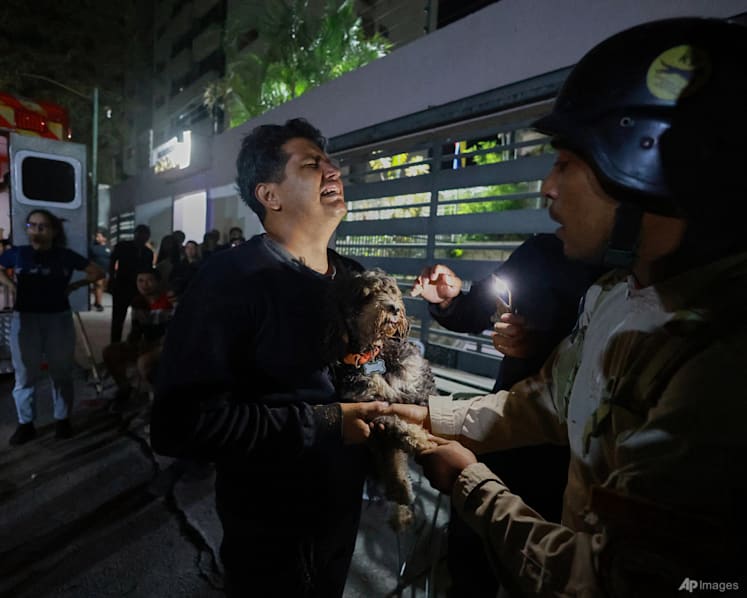
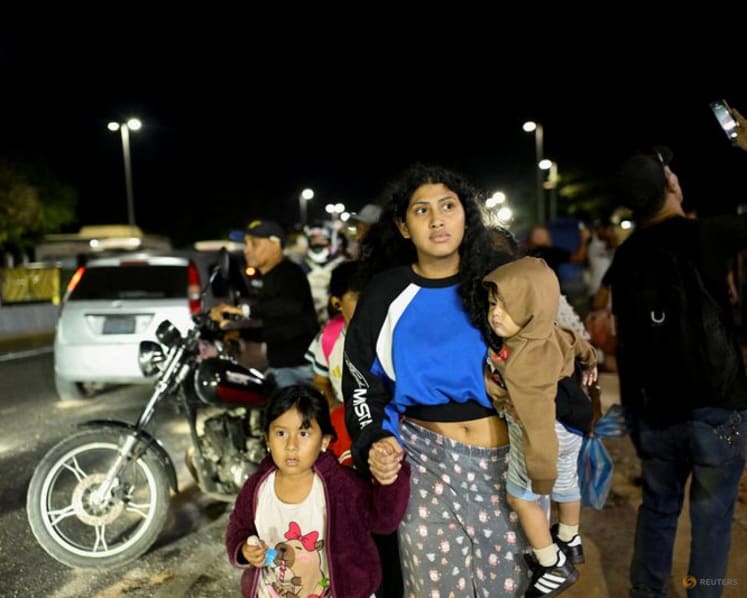
"NO ONE SAVING THEM"
After Wednesday's shock, some residential buildings showed large cracks and fallen walls, with dozens of others destroyed, according to AFP reporters.
"There are people alive in there and no one is coming to save them," said a woman waiting for news of her daughter, who was buried in a ruined 12-story building.
The European Union, Spain, Italy, China, India and most Latin American countries have expressed solidarity and offered aid.
The US was "immediately deploying search and rescue teams, medical resources, and humanitarian assistance to Venezuela", Secretary of State Marco Rubio said on Thursday.
The first quake, with an epicentre 21km west of the coastal town of Moron, occurred at 10.04pm GMT, USGS said.
Within a minute, a 7.5-magnitude quake struck about 45km away.
"This earthquake was the second event in a doublet. This magnitude 7.5 mainshock was preceded by 39 seconds by a 7.2 foreshock," USGS said.
The 7.5-magnitude earthquake that hit Venezuela was the most powerful since Oct 29, 1900, when a 7.7-magnitude quake hit offshore.
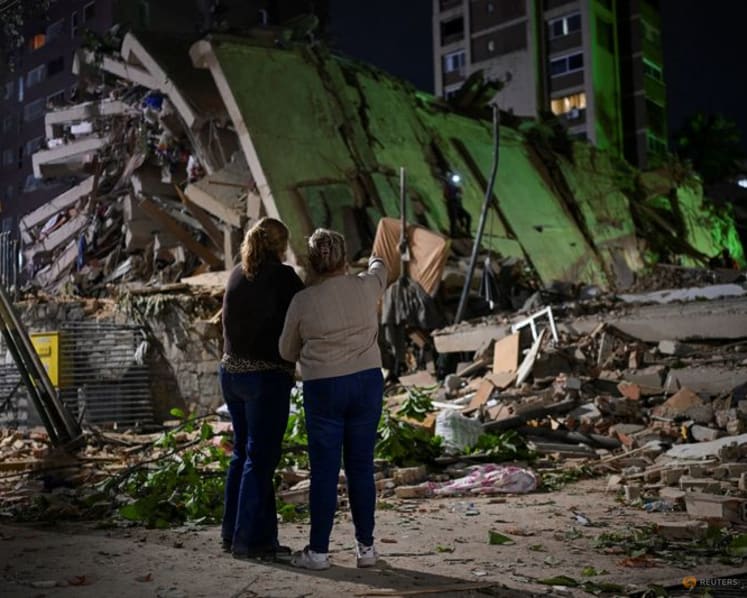
Interior Minister Diosdado Cabello asked people to leave their homes, adding that gas supplies had been cut to several buildings as a precaution.
"We have some damaged structures and we don't want any kind of accident involving gas to occur," he said.
The Maiquetia International Airport, located near Caracas, was closed due to "serious damage" to its infrastructure, Rodriguez said, with social media posts showing its severely damaged facilities.
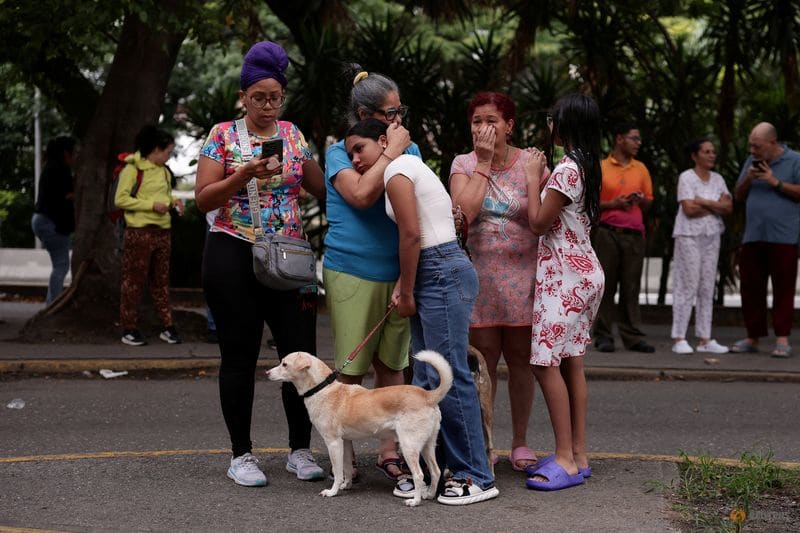
The quakes triggered panic in the capital and drove people into the streets, AFP journalists saw.
"The stairs came away, the whole wall cracked. Things fell from the ceiling. It was horrible," said 54-year-old bank employee Odalis Escalona.
An AFP journalist saw a 22-story building completely destroyed in the capital's Altamira neighbourhood, where people cried out relatives' names as volunteers climbed over the rubble.
"We need flashlights," one of them said.
"WE COULDN'T GET OUT"
The tremors struck at a depth of 22km and 10km, respectively.
They prompted screams of panic at a shopping centre in Caracas, an AFP journalist observed.
"It was unbelievable, I don't even know how long it lasted," said shopkeeper Heidi Romero, who was on the top floor when the quake struck.
"We went out through the emergency stairs; that's how they got us out," the 42-year-old told AFP.
Dozens more in the capital exited buildings and waited outside before returning to their offices and homes.
Carmen Guedez, 69, was in the same room as her bedridden sister when she felt the jolt.
"It kept getting stronger," said the administrator, who lives in a hilly middle-class neighbourhood above the capital. "I started to see the windows begin to move and then everything shook."
She described how she "huddled together" with her sister and a neighbour, adding that "we couldn't get out. The neighbours are still out on the street".
The states of Trujillo, Carabobo, Miranda and La Guaira were the hardest hit, according to Cabello.
The quake was felt as far away as the Colombian capital of Bogota, where alarms sounded and some residents evacuated buildings as a precaution.
Freddy Tovar, coordinator of Colombia's National Seismological Network, said they had received more than 200 reports of tremors nationwide.
"The conditions of this seismic event mean that some aftershocks may occur, which could also be widely felt across Colombian territory," he said in a video posted on X.
Venezuela lies in a seismically active zone where the Caribbean Plate meets the South American Plate.




