







How trusted data turns corporate reporting into a strategic advantage
Powered by artificial intelligence, Workiva’s platform connects finance, sustainability and risk data, helping organisations improve the quality of disclosures and make decisions with greater confidence.

Integrated, traceable data is changing how organisations report, stay ahead of risks and build trust. (Photos: Shutterstock, Workiva; Infographics: Workiva)

This audio is generated by an AI tool.


Brought to you by

In today’s high-scrutiny, uncertain environment, corporate reporting is no longer defined by financial results alone. Investors and the wider public are paying closer attention to environmental, social and governance practices. For many, transparency in governance, risk and compliance is as important as a strong bottom line.
The phased implementation of mandatory climate reporting for Singapore-listed companies reflects this shift. Financial and non-financial information is now assessed together, raising expectations on consistency, accuracy and accountability. Trust in these disclosures depends on the integrity of the underlying data.
As the regulatory landscape evolves, the challenge for organisations is not just what to disclose but how. Bringing these data sets into a connected, controlled framework – known as assured integrated reporting – is one way forward. With artificial intelligence (AI) assisting in data collection and validation, companies can produce more reliable and meaningful insights.
A unified view of performance based on trusted, traceable data does more than meet compliance requirements. It supports clearer decision-making, reduces risk and can lower capital costs. More importantly, it can strengthen credibility with stakeholders.
FRAGMENTED DATA IS A PROBLEM
“The complexity companies face is unlike anything seen before,” said Mr KP Pimpini, vice president and general manager of Asia Pacific at Workiva. “Investors, regulators and boards now expect a coherent, auditable narrative linking financial performance with governance, risk and sustainability commitments.”

To create trustworthy integrated reports, access to high-quality data is vital. However, issues such as lack of real-time data and departmental silos remain prevalent. “The sustainability function tracks emissions in spreadsheets, finance manages energy costs in enterprise resource planning software, and procurement holds supplier data in another system,” said Mr Pimpini. “When nothing connects, there’s no single source of truth or auditable trail.”
Workiva’s 2026 Executive Benchmark Survey highlights the scale of the problem. Almost all investors polled believed business leaders underestimate the risk caused by fragmented data in financial reporting. This points to a real – and widening – trust gap.
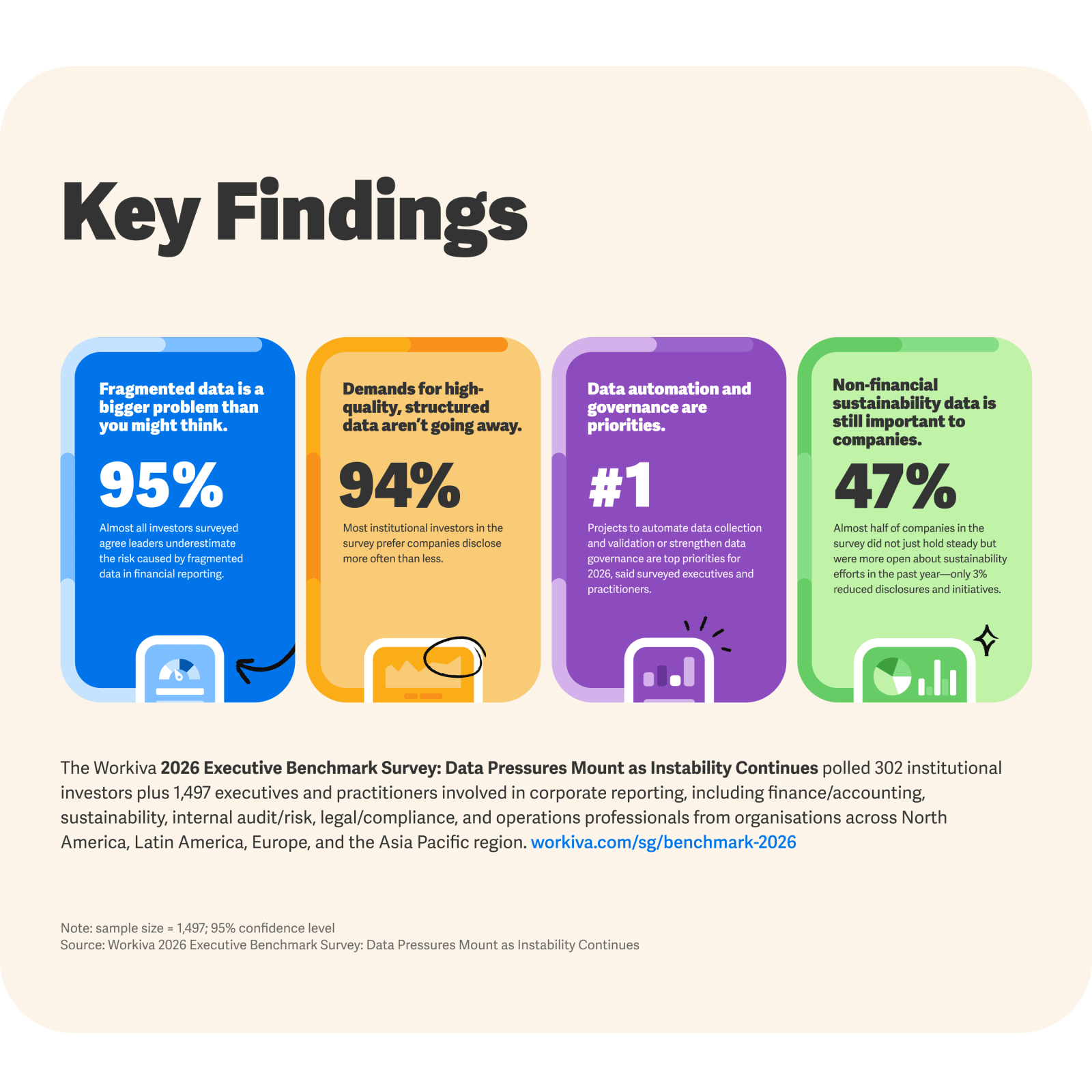
“The trust gap is a data problem,” said Mr Pimpini. “Fragmented data slows decisions, increases risk and erodes trust. Without clear data lineage and ownership, companies risk being left behind – not just by regulators, but by investors allocating capital elsewhere.”
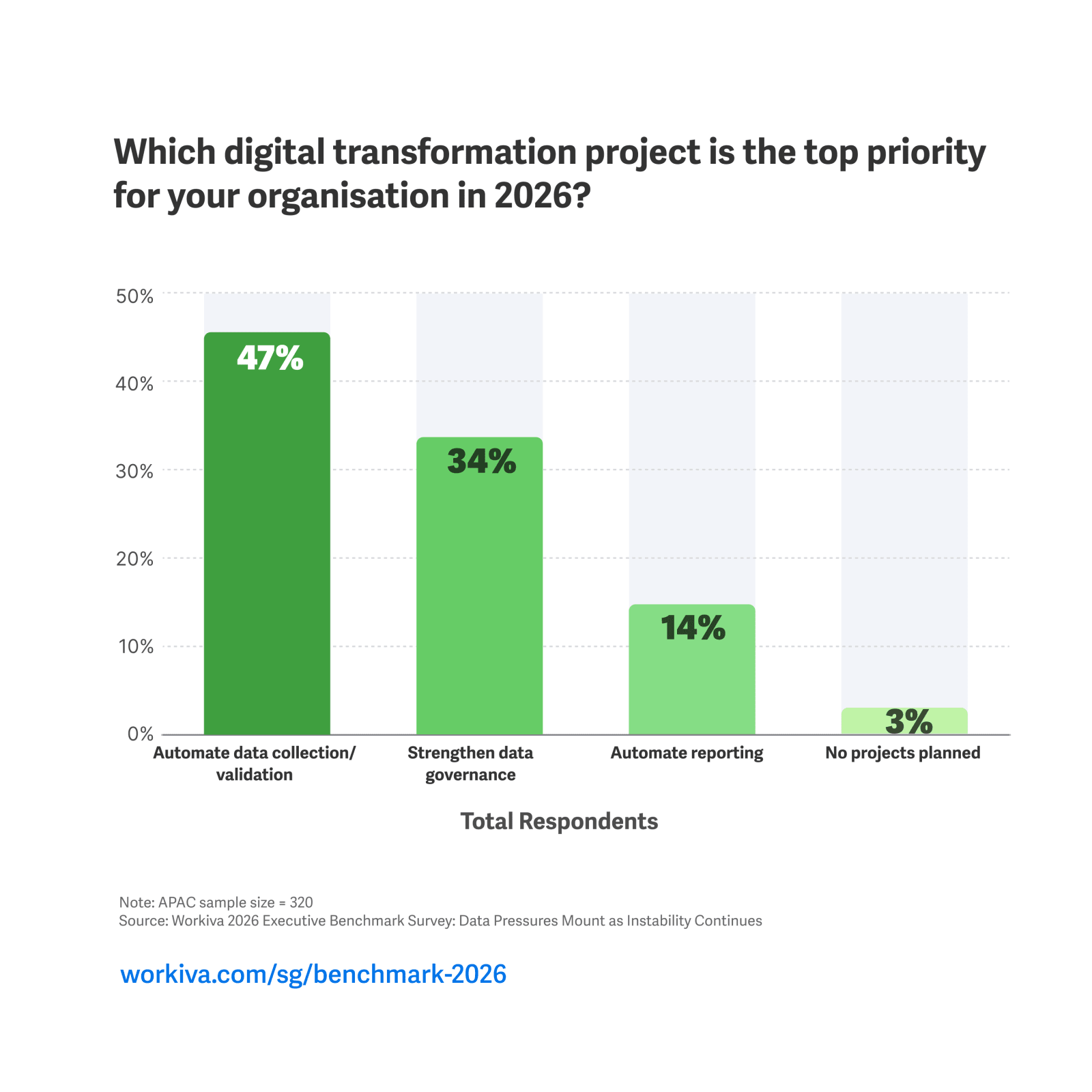
The same study found that companies are turning to digital transformation to close the gap. In the Asia Pacific, the top priorities among executives and practitioners surveyed were automating data collection and validation, and strengthening data governance.
TECHNOLOGY CAN IMPROVE THE DATA INFRASTRUCTURE
Workiva’s AI-powered platform is designed with both data automation and governance in mind. It brings together finance, sustainability and risk metrics from disparate sources, helping to reduce manual errors and break down departmental silos.
All information is housed in a secure, centralised environment. Purpose-built generative AI streamlines workflows while built-in data lineage provides a transparent, source-to-report audit trail.
These capabilities shorten reporting cycles and free teams up to focus on analysis rather than preparation. For business leaders, this means clearer visibility of organisational performance, enabling faster and more informed decisions.
Kubota, a Japan-headquartered manufacturer of agricultural machinery, construction equipment and other industrial products, faced challenges maintaining governance as its global footprint grew. Manual processes and heavy reliance on emails slowed audits, while regional differences created inconsistencies. Locally stored documents caused fragmentation and made oversight difficult.
With Workiva, Kubota found a unified solution to run global audits more efficiently and at scale. The platform helped standardise its audit processes across North America, Europe and Asia, saving seven to eight hours per audit in Europe through workflow automation and centralisation. Instant access to linked documentation improved traceability and accelerated reviews. Dashboard-based status management offered real-time visibility and reduced email volume.
“Workiva has transformed our audit operations,” said Mr Kohei Yamane, manager of Kubota’s Corporate Auditing Department. “Speed, accuracy and teamwork have dramatically improved.”
TRANSPARENCY BUILDS TRUST
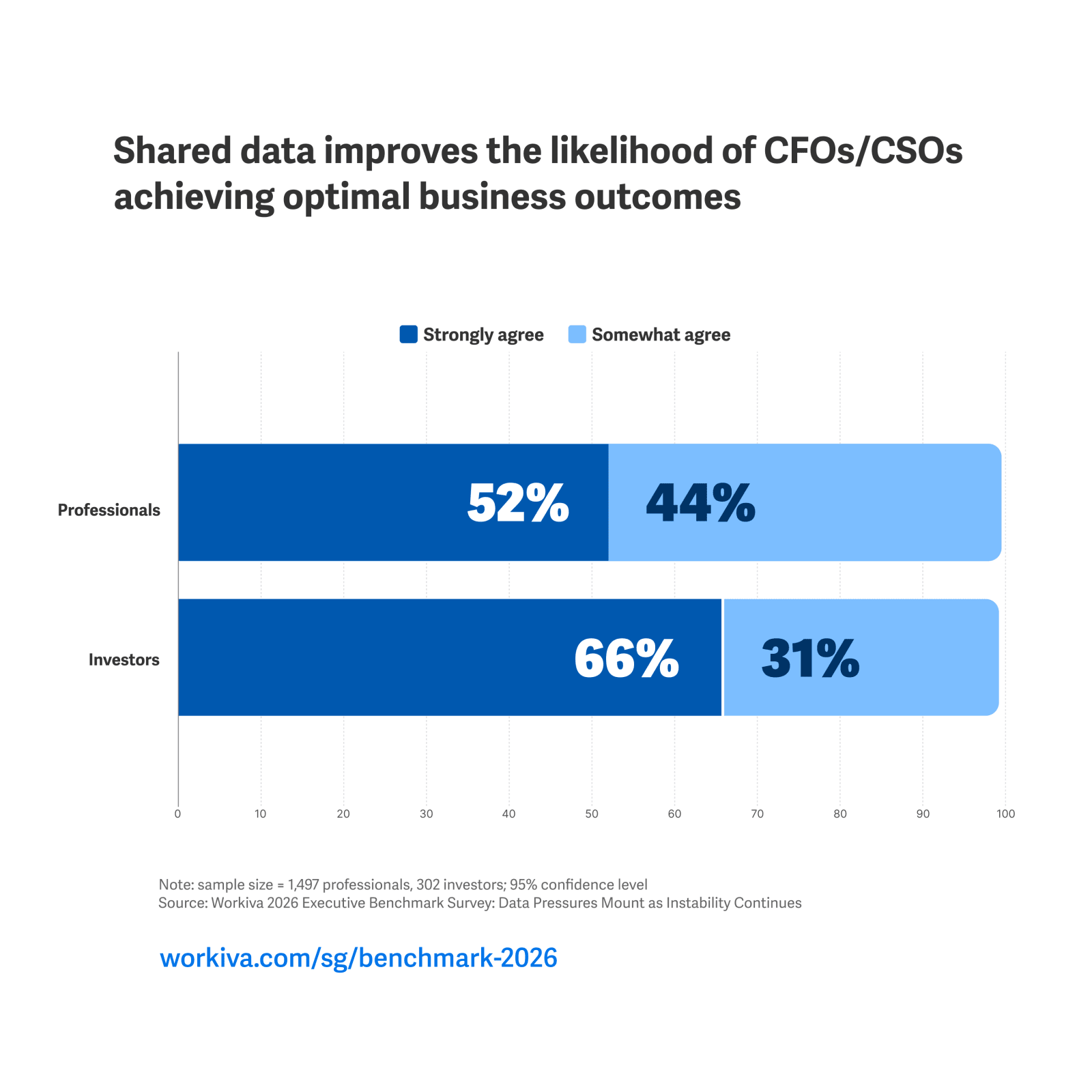
Aligning data across functions can also enhance cross-team collaboration. In the Workiva survey, most respondents strongly agreed that shared data improves the likelihood of chief financial officers and chief sustainability officers achieving optimal business outcomes.
“The trust gap will only close when the data gap closes,” said Mr Pimpini. “When financial and non-financial data are unified within a single, audit-ready and controlled framework, business leaders can stand behind every number and narrative they disclose.”
The impact goes beyond reporting, he added. “Better data integrity leads to sharper capital allocation, more credible sustainability commitments, and a stronger ability to identify risks and opportunities. Assured integrated reporting not only builds investor trust; it drives clarity and confidence, which can become a competitive edge.”
Mr Pimpini will be among the speakers at the Workiva Accelerate Asia 2026 forum at Marina Bay Sands on May 14. Register for the event to stay abreast of best practices in regulatory disclosure and reporting.
For more insights from Workiva’s 2026 Executive Benchmark Survey, download the full report.




