







Bangladesh's BNP wins sweeping election majority, promise of stability
The official vote count gave the Bangladesh Nationalist Party and its allies at least 212 of the 299 seats up for grabs.
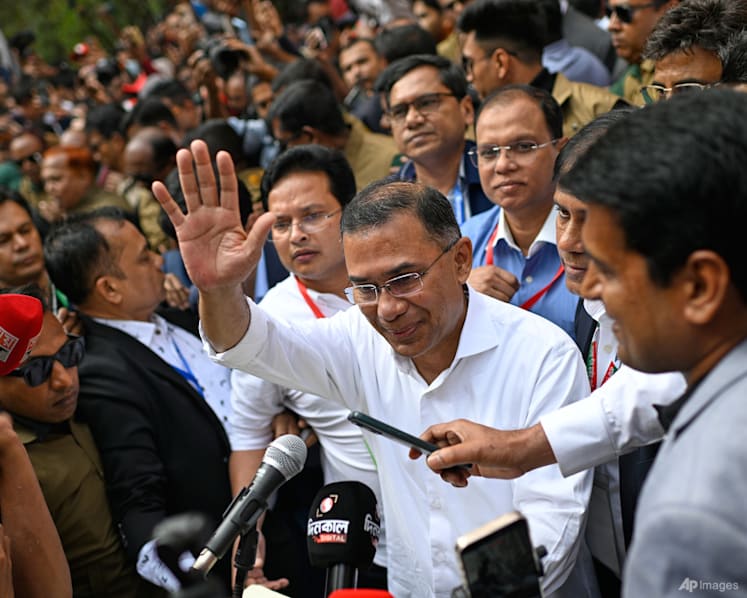
Bangladesh Nationalist Party Chairperson Tarique Rahman waves as he comes out after casting his vote during the national parliamentary elections in Dhaka, Bangladesh, on Feb 12, 2026. (Photo: AP/Mahmud Hossain Opu)
DHAKA: Bangladesh’s opposition Bangladesh Nationalist Party (BNP) won a landslide parliamentary election on Friday (Feb 13), returning to power after nearly two decades and positioning party leader Tarique Rahman to become prime minister as the country emerges from months of unrest and economic disruption.
Rahman, the son of former premier Khaleda Zia and assassinated former President Ziaur Rahman, faces immediate challenges in restoring political stability, reviving investor confidence and rebuilding key industries - including the garment sector - after prolonged turmoil that followed the collapse of former Prime Minister Sheikh Hasina’s government in 2024.
An interim government led by Nobel laureate Muhammad Yunus has been in charge since then.
A clear outcome was seen as key for the nation of 175 million after months of deadly anti-Hasina unrest disrupted everyday life and industries, including garment manufacturing. Bangladesh is the number two exporter of apparel in the world.





"A strong majority gives the BNP the parliamentary strength to pass reforms efficiently and avoid legislative paralysis. That alone can create short-term political stability," said Selim Raihan, an economics professor at the University of Dhaka.
YOUNG ACTIVIST PARTY SLUMPS
The official count in a vote viewed as the South Asian nation's first truly competitive election in years gave the BNP and its allies at least 212 of the 299 seats up for grabs, the Election Commission said.
The opposition Jamaat-e-Islami and its allies won 77 seats in the Jatiya Sangsad, or House of the Nation. Results for two seats were yet to be declared.
The National Citizen Party (NCP), led by youth activists who played a key role in toppling Hasina and part of a Jamaat-led alliance, won just six of the 30 seats that it contested, highlighting the difficulty of converting protest momentum into electoral support.
Rahman, 60, has not yet commented even though more than 15 hours have passed since trends in favour of his party became clear.
He smiled and waved from his vehicle to journalists gathered outside his house in Dhaka as he left for a mosque, television footage showed.
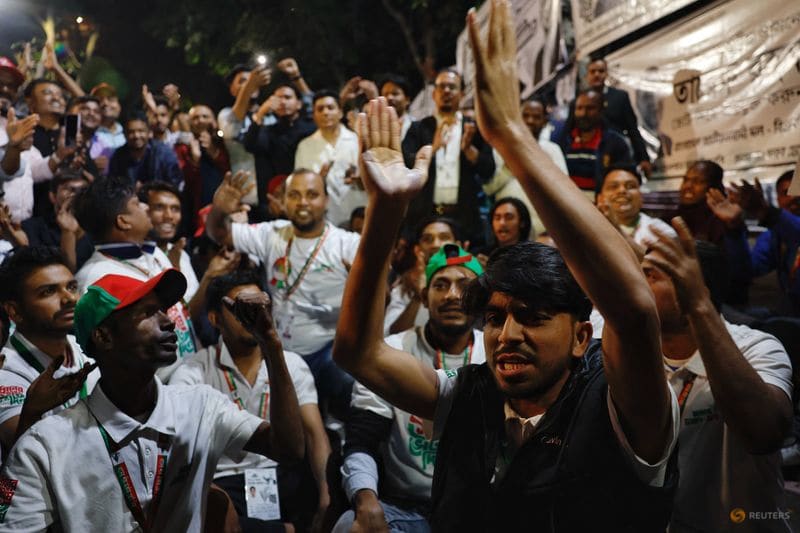
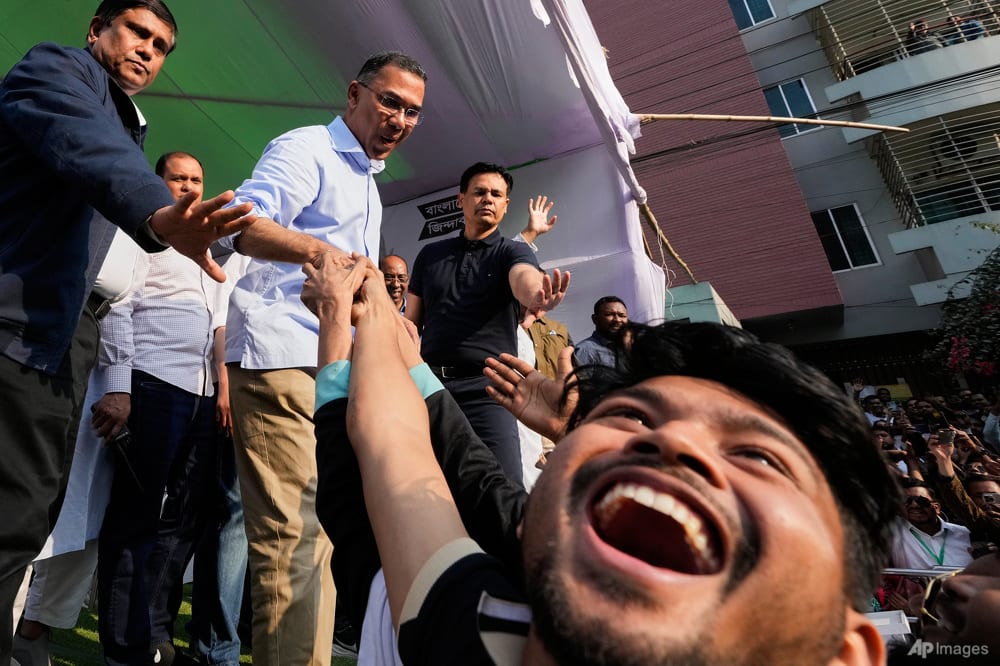
The BNP asked people to refrain from large celebrations and offer special prayers on Friday instead.
"Despite winning ... by a large margin of votes, no celebratory procession or rally shall be organised," the party said in a statement.
In its manifesto, the BNP promised to prioritise job creation, protect low-income and marginal households and ensure fair prices to farmers.
DESIRE FOR STABILITY
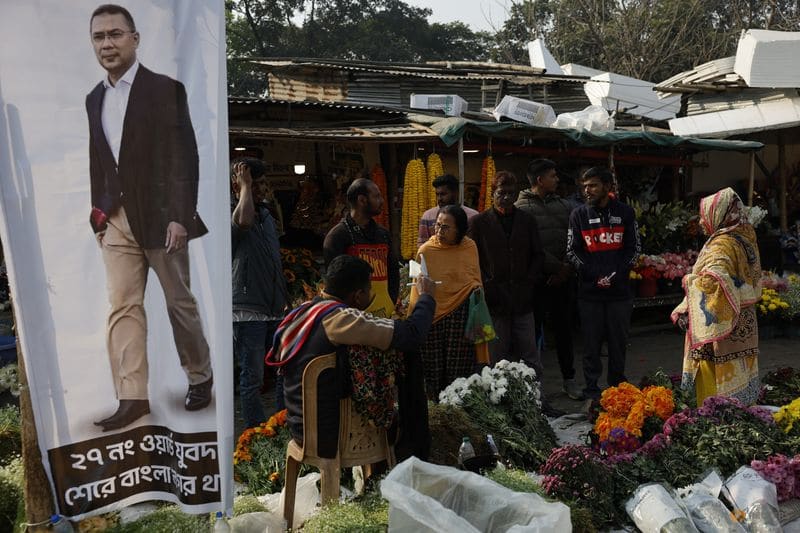
"If the factories run regularly and we get our wages on time, that’s what matters to us. I just want the BNP government to bring back stability so more orders come to Bangladesh and we can survive," Josna Begum, 28, a garment worker and mother of two, told Reuters.
Indian Prime Minister Narendra Modi, Pakistan Prime Minister Shehbaz Sharif and the US ambassador to Bangladesh, Brent T Christensen, were among the first to congratulate Rahman on his party's victory.
India, China and the US are vying for influence in Bangladesh, with the US ambassador telling Reuters earlier this week that Washington was concerned about China's growing presence.
"It is an opportunity for Bangladesh ... it has these major powers around it that are vying for influence. It's also a challenge. How do you manage those relationships?" said Thomas Kean, a senior consultant with the International Crisis Group.
New Delhi-Dhaka relations had nosedived since Hasina fled and took refuge in India, affecting everything from visa services to cricket ties between the two neighbours.
Modi said he had spoken to Rahman on Friday afternoon and termed his victory as "remarkable".
TURNOUT SURGES
The Jamaat-e-Islami conceded defeat late on Thursday night once trends became clear, but said in a statement on Friday that it was "not satisfied" with the process and asked its followers to remain patient.
The party won its highest-ever tally of 70 seats in Parliament, contesting for the first time since it was banned in 2013 after its registration was cancelled. The ban was lifted after Hasina's ouster.
The BNP's win surpasses its last victory in 2001, when it won 193 seats, although Hasina's Awami League, which ruled for 15 years and was barred from contesting this time, secured a bigger tally of 230 in 2008.
Turnout in Thursday's election reached nearly 60 per cent of registered voters, according to the Election Commission, well over the 42 per cent registered in the last election in 2024.
The ballot featured a record number of parties, more than 50, and over 2,000 candidates, many of them independents.
The election commission also said around 48 million voters chose "Yes" while around 23 million said "No" in a referendum on constitutional reforms held alongside the election, though there was no official word on the outcome.
The changes include two-term limits for prime ministers and stronger judicial independence and women's representation, while providing for neutral interim governments during election periods and setting up a second house of the 300-seat parliament.





