In focus at India’s upcoming Budget 2026 – a sweet dish, a red cloth ledger, and implementation
As India prepares to unveil its annual Budget on Sunday (Feb 1), industry leaders are calling for action on AI, semiconductor design and funding reforms.
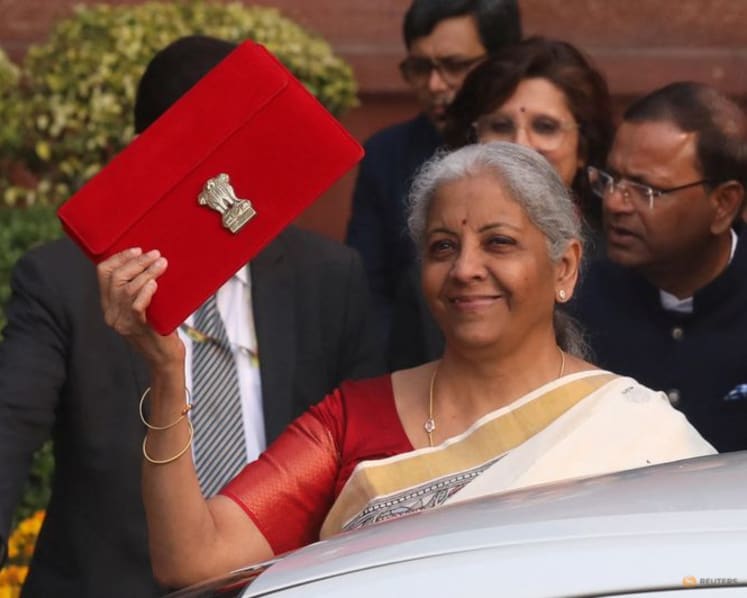
India's Finance Minister Nirmala Sitharaman holds up a folder with the Government of India's logo as she leaves her office to present the annual budget in the parliament, in New Delhi, India, Feb 1, 2025. (Photo: Reuters/Altaf Hussain)

This audio is generated by an AI tool.


SINGAPORE: Among the many traditions that Indian Prime Minister Narendra Modi has reportedly scrapped over the years, one has prevailed: the halwa ceremony.
It involves the cooking of halwa, a traditional Indian sweet dish, at the Finance Ministry’s compounds at an event held mere days before the country’s annual Budget is unveiled.
The halwa, which symbolises successful completion of important tasks, is cooked in an iron pot before being stirred by the Finance Minister and then served to officials and staff involved in the Budget preparations.
The ceremony also signals the start of a strict lockdown for finance ministry officials at its central secretariat in Kartavya Bhavan, New Delhi, to ensure confidentiality over the Budget documents and papers.






It’s no different this year at the ceremony held on Tuesday (Jan 27), helmed by Finance Minister Nirmala Sitharaman and marking the start of the lock-in period ahead of the Budget to be unveiled this Sunday.
When they emerge, all attention in India and globally will be on the Bahi-Khata – the red cloth ledger that symbolises the Union Budget – that Minister Sitharaman will be seen clutching as she enters India’s Parliament to deliver her annual address.
India’s Union Budget is the country’s financial blueprint for the year from April 1, 2026 to March 31, 2027, and is closely watched by global stock markets, investors and policymakers.
India is the world’s fourth-largest economy, with gross domestic product estimated to reach US$4.51 trillion this year, according to International Monetary Fund data.
Total expenditure under the Union Budget 2025 stood at 50.65 trillion rupees (US$551 billion), according to Indian government data.
Last year’s budget emphasised innovation and entrepreneurship - announcing measures spanning artificial intelligence, deep tech research, the semiconductor and electronics ecosystem, and credit access for micro, small and medium-sized enterprises (MSMEs).
This year, the challenge lies in implementation of those measures and new ones to come, analysts and business leaders tell CNA.
“India now stands at an inflection point. Budget 2025 signalled intent. Budget 2026 must deliver action – not just through new initiatives, but by making existing mechanisms frictionless, founder-first, and ready for deployment,” said Amit Chand, founder of early-stage venture capital fund BYT Capital.
From deep tech innovation and artificial intelligence to MSME financing and electric vehicle (EV) manufacturing, stakeholders said the coming Budget must convert intent into impact.
Here are four key things analysts and tech business leaders are watching for in this year’s budget:
DEEP TECH AND R&D INCENTIVES
While the tech sector welcomes the intent behind funds like the Research, Development, and Innovation (RDI) fund and the Deep Tech Fund of Funds announced in last year’s budget, “the real test lies in execution - particularly in speed, clarity of access, and seamless coordination across ministries”, said Chand.
The RDI Fund, worth about 1 trillion rupees, was launched in November 2025. The six-year programme offers patient funding - including low-interest loans or equity support - for areas such as artificial intelligence (AI), quantum computing and clean energy, where private investors are often cautious due to long development timelines.
The fund is aimed at encouraging companies to invest in cutting-edge, but risky technologies.
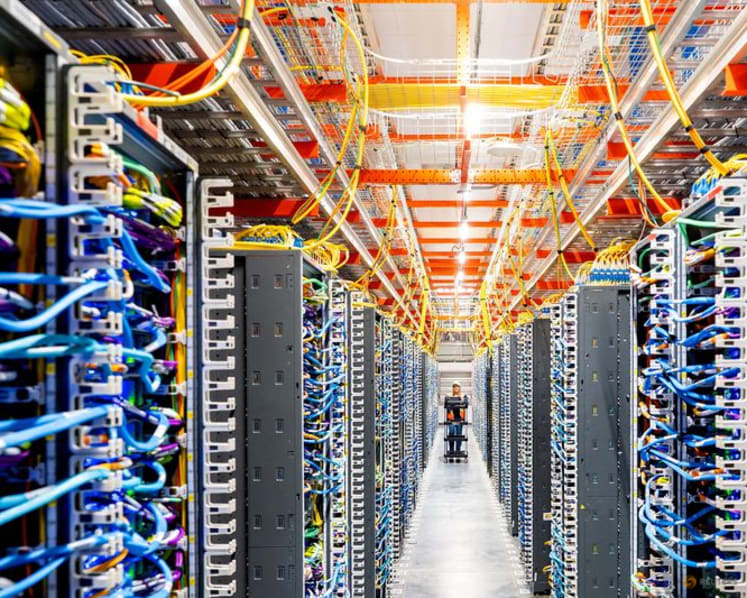
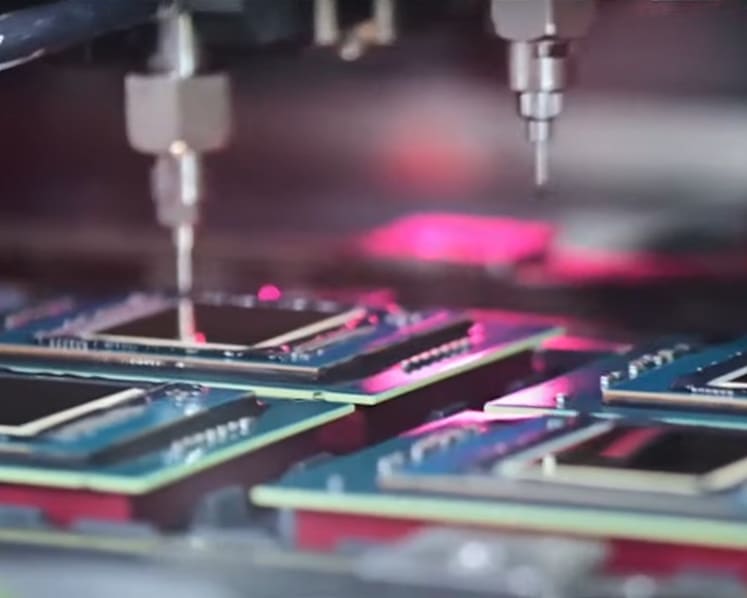
The Deep Tech Fund of Funds - an investment vehicle where a fund invests in a portfolio of other funds - was launched to support early-stage startups in areas such as robotics, biotechnology, AI and quantum computing.
Worth 100 billion rupees, it aims to reduce investor risk and move new technologies from the lab to the market.
However, there is little publicly available information on how exactly the fund has been deployed.
Chand said that in order to unlock its full potential, the government must take “bold, outcome-driven steps to support high-risk innovation”, especially in areas where private capital alone cannot sustain longer investment cycles.
Deep tech companies typically rely on major scientific or engineering breakthroughs and can spend more than five years in research before reaching product development and commercialisation.
Some industry experts also told CNA that stronger research and development (R&D) tax incentives are needed for startups building original intellectual property.
“These will boost innovation, create more jobs and foster an environment where startups thrive,” said Madhu Rajputra Peravalli, co-founder of Troogue, a HRtech platform for gig workers.
There were also calls for better coordination across ministries.
Akshay Shekhar, founder and CEO of EV charging and energy management system provider Kazam, said the upcoming budget should create a framework that allows ministries overseeing mobility, power, and urban planning to work together “so that charging, distribution networks, renewables, and digital energy platforms evolve as one system”.

PRODUCTION AND DESIGN INCENTIVES
Production-Linked Incentives (PLIs) and Design-Linked Incentives (DLIs) are government schemes that reward companies for manufacturing or designing products domestically.
In March 2025, Reuters reported that the Indian government had decided to let the US$23 billion PLI scheme lapse, just four years after it was launched to incentivise domestic manufacturing and woo firms away from China.
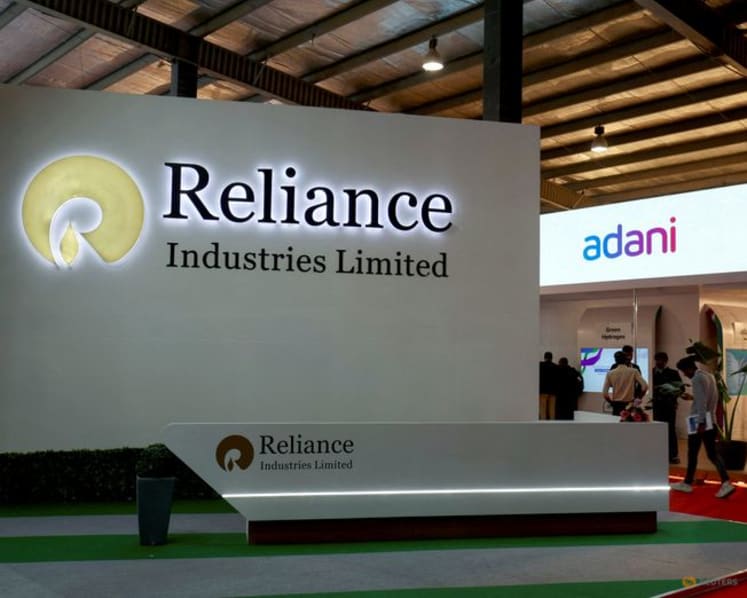
Global manufacturers such as Foxconn and Indian conglomerates like Reliance Industries were among the 750 firms that enrolled in the programme.
Under the scheme, companies were promised cash payouts for meeting specific production milestones.
Analysts and industry experts have called for Budget 2026 to reboot the PLI scheme and extend it to more industries, including manufacturers of EV components, semiconductors, and electronics.
The DLI scheme, meanwhile, offers up to 150 million rupees to support chip design. However, this assistance is provided as reimbursement, rather than upfront capital.
Vijay Muktamath, founder and CEO of Sensesemi Technologies, a chip designing firm, warned that innovation in the semiconductor sector cannot survive on capped or delayed funding.
“The DLI scheme requires restructuring with upfront fund allocation to companies, enabling faster deployment toward critical component development … The current 150 million rupee cap per company is inadequate for meaningful growth,” he told CNA.
Semiconductor design and EV industries require years of R&D before revenues appear. Without predictable incentives, companies struggle to sustain these long investment cycles.
According to local reports, the government plans to introduce a new version of the DLI scheme that would provide upfront funding, either in exchange for equity or as a loan.
POLICY SUPPORT FOR AI AND CYBERSECURITY
Industry leaders broadly agreed that India’s advantage in AI will not come from building the largest models but from deploying AI safely, productively, and at scale across businesses and public systems.
Anurag Jain, CEO and founder of AI startup Oriserve, called for the government to provide policy support on data security to ensure that AI tools can be built, hosted, and used within India while keeping sensitive data protected.
Agreeing, Vivek Shankaranarayanan, co-founder of Impactree.ai, an environmental, social and governance advisory startup, said: “Rather than only pursuing large foundation AI models, India should focus on business language models that integrate digital public infrastructure, enterprise software, and real-world operational data.”
Such an approach, industry leaders said, would help create AI that enables better decision-making in areas such as finance, supply chains, climate risk and compliance, rather than general-purpose chatbots.
As India digitises rapidly, cybersecurity has become a frontline concern.
Mandar Patil, Senior Vice President at cybersecurity startup Cyble, warned that the rapid digitisation of government infrastructure has increased systemic risk without adequate protection.
In December 2025, the Indian government confirmed that seven major airports had been hit by cyber attacks, resulting in flight disruptions. Separately, key government infrastructure was targeted during the escalation of border tensions between India and Pakistan in 2025, according to a local report.
“We anticipate the focus must now shift to advanced threat intelligence, cyber talent development, and security-first innovation. Targeted investments and public-private collaboration will help protect national infrastructure, citizen data, and trust in India’s digital future,” Patil added.
RETHINKING FUNDING FOR MSMEs AND STARTUPS
Global and domestic investors and startups are watching this year’s Budget closely for clarity on the taxation of investments routed through tax havens such as Mauritius.
This follows a Supreme Court of India ruling in January that held global investment firm Tiger Global liable for tax evasion on the sale of its stake in Walmart-backed Flipkart, which had been routed into India via Mauritius.
The ruling has raised concerns about India’s approach to taxing offshore transactions and unsettled the market, prompting a body representing 60 Indian startups to write to the Supreme Court seeking clarity on whether the ruling could be used to reopen and scrutinise past investments.
According to Indian government data, cumulative foreign direct investment equity inflows from Mauritius into India totalled US$178.8 billion between April 2020 and December 2024.
Beyond tax certainty, industry leaders said a strong consensus is emerging that equity alone cannot fund India’s next phase of growth, especially for MSMEs and capital-intensive startups.
“What the ecosystem now needs is policy support for blended capital where venture debt and alternative credit work alongside equity,” said Ankur Bansal, Managing Director at investment firm BlackSoil.
He added that the focus should shift to “execution over announcements”, with frameworks that enable loans aligned to a business’s earnings and tailored to each sector, while sharing risk beyond the entrepreneur.
Such structures, he said, would allow MSMEs and growth-stage startups to access flexible capital without diluting ownership - a move that often limits founders’ control over their companies.
Some industry experts also called on the Budget to introduce measurable sustainability metrics to encourage MSMEs and startups to access financing by meeting environmental targets.
“Now more than ever with global supply shifts, it’s imperative that the budget focuses on strengthening climate finance and MSMEs,” said Rajashri Sai, founder and CEO of Impactree.ai.