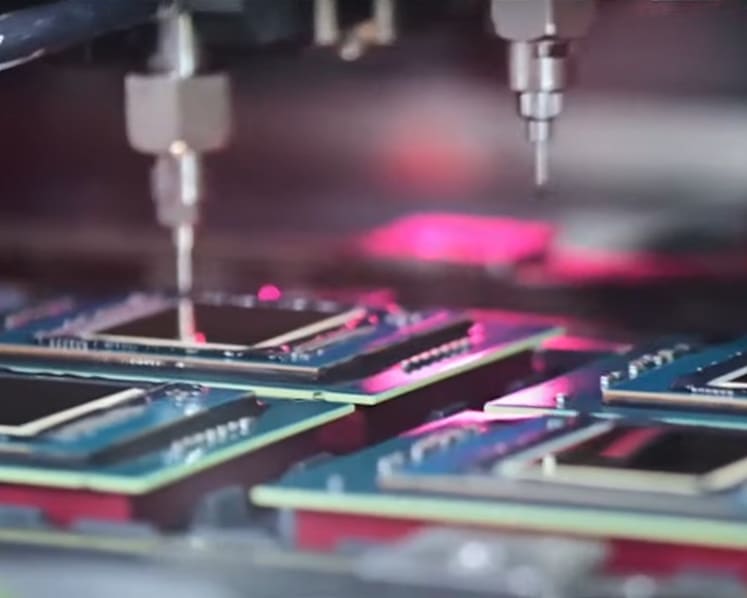
Chips being manufactured at Intel. (File photo)

This audio is generated by an AI tool.


SINGAPORE: Under the bright lights of Davos, India made its boldest case yet for a place at the heart of the global chip industry.
At the World Economic Forum last week, Minister for Electronics and Information Technology (MeitY) Ashwini Vaishnaw positioned the country as a serious semiconductor manufacturing contender.
Earlier this month, Vaishnaw set an ambitious goal for the country to rank among the world’s top four semiconductor manufacturing powerhouses by 2032.





India currently sits in 13th place, according to World Population Review’s ranking of territories with the most semiconductor manufacturing plants in 2025, trailing far behind established hubs like Japan, Taiwan, the United States and China.
Analysts say the push reflects a strategic drive for self-reliance and geopolitical risk mitigation, as India imports 90 per cent of its semiconductor needs while navigating growing uncertainty over US export controls.
The government has rolled out a series of incentives, unveiled the first “Made in India” chip, and approved 10 semiconductor plants over the past four years.
However, past attempts to build wafer fabrication (fab) plants have failed, and key hurdles include mastering chip fabrication, building supply chains and maintaining quality at scale, while competing with lower-cost producers like China.
Experts say the challenge lies in translating ambition into sustained, on-the-ground execution.
India may take at least “10 years to become a global hub”, InCore Semiconductors co-founder and CEO G S Madhusudan told CNA.
At best, he said, India could capture up to 40 per cent of the global market for mature, low-cost chips; at worst, it may remain limited to lower-value activities like assembly, testing and packaging.
THE FAB PLAN: SEEING IS BELIEVING
India’s semiconductor market, currently valued at around US$50 billion, is expected to more than double to about US$110 billion by 2030, which would account for roughly 10 per cent of global chip demand.
The India Semiconductor Mission (ISM), an initiative focused on building indigenous chip development capabilities, has invested more than US$10 billion since 2021.
Much of that investment is directed toward India’s first wafer fabrication plant, now under construction in the western state of Gujarat by local conglomerate Tata Group and Taiwan’s Powerchip Semiconductor Manufacturing Corporation (PSMC) - expected to be completed by this year or next.
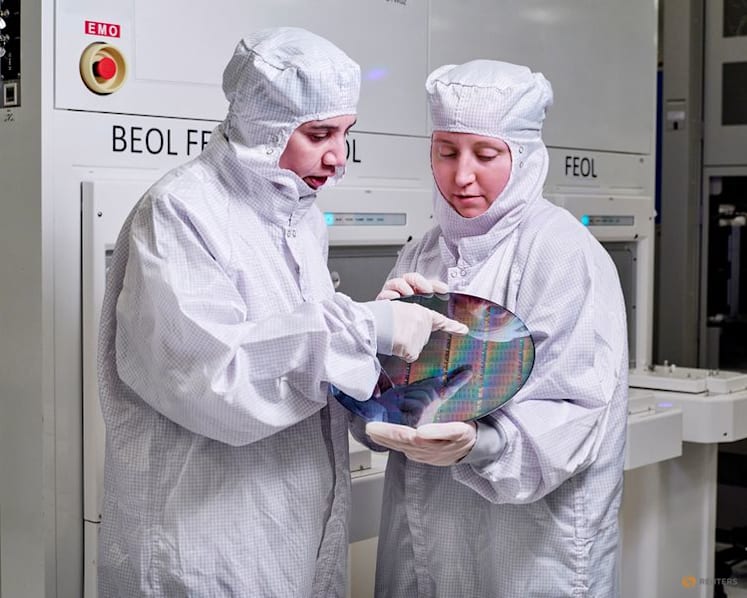
A wafer is a thin slice of semiconductor material, such as crystalline silicon, on which circuits are built – the essential foundation of a chip.
Chips power modern electronics, from smartphones and computers to AI systems.
Chipmaking spans multiple stages, from design and fabrication to assembly and packaging, with the US leading in design, Taiwan in manufacturing, and China rapidly strengthening its position in assembly and packaging.

For India, building domestic wafer manufacturing would signal to global firms that they can rely on Indian hardware, while reducing dependence on imported chips.
But multiple attempts to build a wafer fabrication plant in the past have failed, and doubts persist.
“For fabs, I still have doubts if we will get onto that road,” said analyst Faisal Kawoosa at technology research firm TechARC.
A joint-venture fab project between Foxconn and Vedanta fell apart in 2023, while a US$10 billion chip project between Israel’s Tower Semiconductors and Indian infrastructure firm Adani Group was paused in 2025. Two wafer fab projects announced as far back as 2014 also did not materialise.
A Reuters report on the Foxconn–Vedanta split cited alleged government approval delays as a factor behind the project’s demise.
Many of the recent 10 approved ISM projects have already seen their timelines shifting.
For instance, the opening date of a Micron Technology assembly, testing, marking, and packing (ATMP) plant was pushed from late 2024 to February 2026. Another Tata semiconductor assembly and testing facility in the state of Assam saw its timeline shift from mid-2025 to April 2026.
One bright spot is Kaynes Semicon’s assembly and testing plant, which shipped its first chips to a US customer in October 2025.
Located in Gujarat, the facility became commercially operational just a year after receiving government approval – an encouraging sign that this time it may be different.
There are another eight such ATMP plant projects approved by ISM. Kawoosa of TechARC expects these projects to be completed.
According to industry experts, ATMP plants require far less investment than large foundries – around US$1.5 billion compared with roughly US$10 billion – and rely on widely available technology.
They can also become operational within two years, versus up to six for fabs, significantly lowering investment risk for international semiconductor firms.
SELF-RELIANCE AND DE-RISKING AMID GEOPOLITICAL PRESSURES
India’s semiconductor ambitions hinge on building and operating fabs, rather than ATMP plants, as it seeks self-reliance and tries to derisk amid geopolitical pressures.
Official data show that 48.5 per cent of India’s chip imports came from mainland China and Hong Kong between April and November last year, underscoring efforts to reduce dependence on Chinese supply.
US export controls on advanced chips, which apply to several countries including India, have further highlighted the risks of relying on overseas supplies.
Becoming a global semiconductor hub requires exporting chips at scale.
“Volume is what matters, not the value of the chips,” said Madhusudan, who is also an adviser to the Indian government on semiconductor policy.
This means concentrating on mass-producing and exporting US$5-US$10 chips that power most global electronics, rather than the high-end AI chips made by companies like Nvidia.
He said the key milestone would be shipping one billion chips globally each year.
That, however, is challenging.
“The hardest part of this industry is producing high-quality chips at high volume,” he said.
Semiconductor manufacturing demands extremely stringent quality standards, with competitive large-scale production typically requiring yield rates above 90 per cent.
Yield refers to the proportion of defect-free, usable chips produced from a wafer.
Buyers prioritise reliability and strong after-sales support, Madhusudan added.
“If you can deliver shipments on time and within six months of the order being placed, that matters to global clients,” he said.
India needs to establish a strong supporting supply chain similar to China's, he added.
“China’s ability to create a comprehensive semiconductor ecosystem is something India should emulate.”
When competing with China, Madhusudan acknowledged that Indian chips would initially be more expensive.
“We will have to deal with that reality,” he said.
However, he also sees an opportunity, with US controls restricting China's exports in many markets, creating an opening for India.
“That makes India the only viable player in the low-cost semiconductor space. It is our market to lose if we do not act quickly,” he added.

TALENT-RICH BUT INTELLECTUAL PROPERTY A CONSTRAINT
India produces one-fifth of the chip designers globally, and they work at top companies such as Nvidia, Texas Instruments, Intel, and AMD, said Madhusudan.
Already a dozen executives from top semiconductor and chip firms have quit to launch their own startup, according to a local report.
But designing advanced, competitive chips isn’t that simple.
“(It) requires strong research-and-development-driven teams with their own intellectual property (IP) generation, the capability to design custom chips to differentiate, and the entire software stack on top of it to help customers build solutions quickly,” said Neil Shah, analyst and co-founder at Counterpoint Research.
This, he said, is something missing in the Indian tech ecosystem.
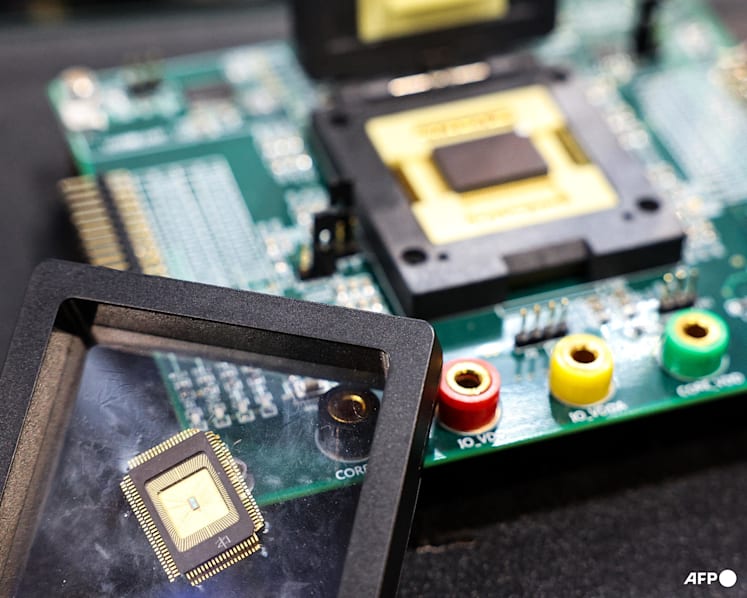
Kawoosa pointed out that in most cases, the chip IP remains with international firms.
“If you ask me, will India be a top global hub for semiconductors and chips? The answer is no as of now,” Kawoosa said.
Semiconductors have become a strategic asset for countries and international firms heavily protect their chip design architecture to see that it isn’t replicated, he added.
Around 20 per cent of revenue earned by Indian chip design firms goes towards licensing IP used in their designs, said Chitranjan Singh, founder and CEO of semiconductor firm Ananant Systems.
The US holds a majority of the core chip design IPs in the world. It received more than 37 per cent of the global semiconductor IP revenue in 2025, as per market research firm Cognitive.
However, this is not stopping Indian firms, including Saankhya Labs, InCore Semiconductors, and Agrani Labs, from building their own chips.
“More engineers are building their own companies, creating Indian IP. That’s a very positive shift,” Vikram Gupta, founder and managing partner at Indian venture capital (VC) firm IvyCap Ventures told CNA.
Another missing element is patient, long-term capital from private investors, said Singh of Ananant Systems.
Developing a core IP design can take around four years, followed by another two to three years to turn it into a product – all without revenue, he said, noting that Indian VC firms, which back early-stage companies, often lack the patience to fund such long timelines.
Singh was able to sustain his company during the initial years without any revenue after raising a first cheque of US$6 million from a US-based investor.
However, this is changing.
VC investment in Indian semiconductor startups has jumped more than 25-fold over the past four years to reach US$569 million in 2025, according to data insights firm Tracxn.
“VC firms like Speciale Invest, Peak XV and Blume Ventures are now backing startups in chip design, IP, and AI hardware, reflecting growing conviction in the sector’s commercial viability,” said Shweta Rajpal Kohli, president and CEO of industry body Startup Policy Forum.
While the Indian government offers up to 150 million rupees (US$1.6 million) in funding for chip design under the Design Linked Incentive (DLI) scheme, the support is reimbursed rather than upfront capital.
The government plans to introduce a new version of the DLI scheme that would provide upfront funding, either in exchange for equity or as a loan.
IvyCap Ventures’s Gupta said he expects more government funding for the semiconductor sector in India’s upcoming Budget 2026 on February 1.
SIZE DOES MATTER IN CHIPS
In January, India’s MeitY Minister Vaishnaw said that the country will be able to produce 7-nanometer (nm) chips by 2030 and 3-nm chips by 2032.
The upcoming Tata–PSMC fab in Gujarat will be able to manufacture chips above 28nm. These are called mature chips, and they are simpler to produce than advanced and smaller 7-nm and 3-nm chips.
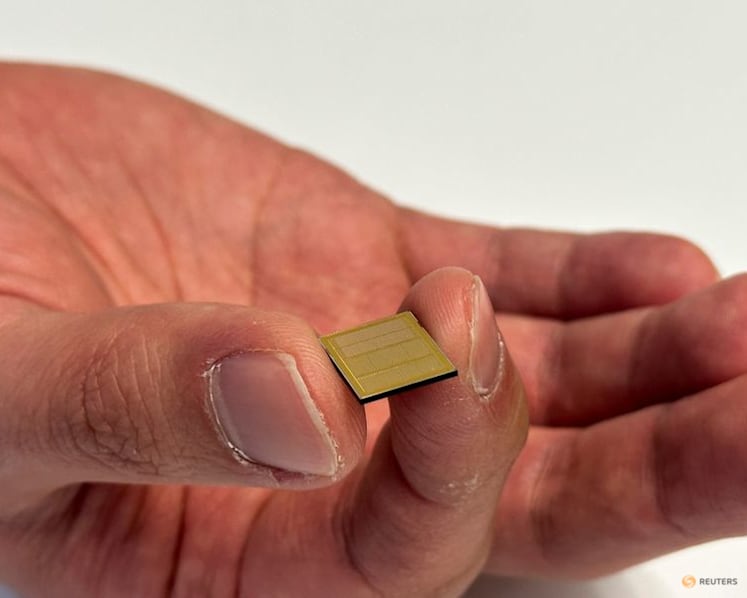
While advanced chips are expensive and in high demand for AI data centres, mature chips are cheaper and widely used across consumer and industrial electronics.
Taiwan leads in producing both advanced and mature chips, while China is rapidly closing the gap in mature chip manufacturing.
Counterpoint Research’s Shah said India would be able to produce advanced chips only if a major player such as Intel, TSMC, or Samsung invests and sets up a fab in the country.
“For indigenous fabs such as Tata or others, it will take at least a decade of consistent investments, a solid customer rolodex, IP or tech transfer, and process innovation to reach advanced nodes.”
Nodes are a measure of how advanced a semiconductor is.
“Just the ability to build 3-nm chips is not enough. Yield and utilisation rates are critical for profitability. Chips need yield rates above 90 per cent, while fabs must operate close to full capacity around the clock,” Shah said.
InCore’s Madhusudan said India should not focus on competing with the likes of Nvidia and AMD in producing 3-nm chips, as most consumer electronics today use 90-nm to 180-nm chips. While the margins are lower, the demand is significantly higher.
“I would bet that most consumer and industrial technology over the next 20 to 50 years will rely on mature chips in the 60nm to 180nm range. It is a myth that technology must keep shrinking and will require 3-nm chips,” Madhusudan said.
He added that only computing-intensive products - such as computers, smartphones, tablets, and AI data centres - require ever-smaller nodes.
TechARC analyst Kawoosa disagreed, saying shrinking physical size of electronics make it essential to target chips below 10nm, which are already used in most smartphones and tablets.
“Going for chips over 28nm doesn’t make sense,” said Kawoosa, who believes that market is likely to shrink over time.
Eventually, India’s goal is not to win the race for the smallest node, said IvyCap Ventures’ Gupta.
“It is about building strategic capability and reducing dependence. Even reaching advanced manufacturing domestically will be a huge achievement.”