India, EU move closer to ‘mother of all deals’ as trade talks gain urgency amid global shifts
Indian Foreign Secretary Vikram Misri said recent global developments have injected fresh urgency into the process.
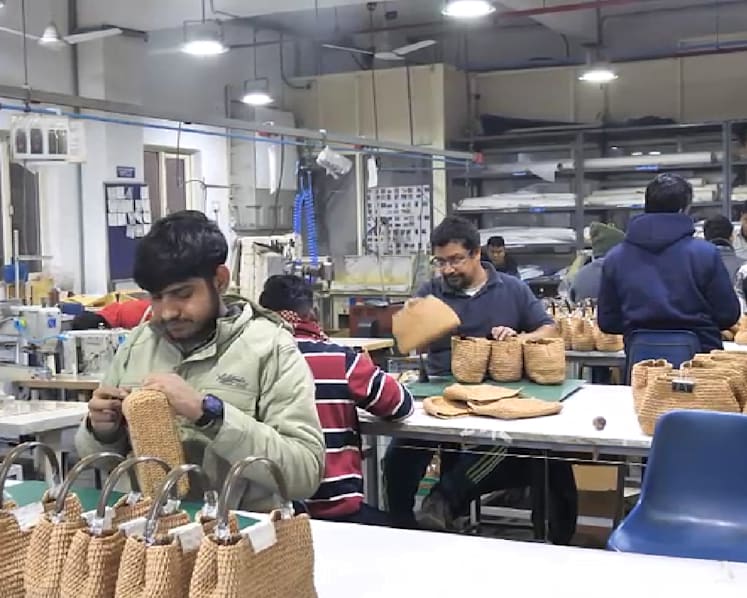
Across factories in India, European fashion products are already being made – from luxury handbags to footwear destined for some of the EU’s top brands.

This audio is generated by an AI tool.




NEW DELHI: India and the European Union are set to push forward a long-awaited free trade agreement (FTA), as the bloc’s top leaders meet Indian Prime Minister Narendra Modi this week for high-stakes talks that could reshape bilateral commerce.
European Commission President Ursula von der Leyen and European Council President Antonio Costa are in New Delhi ahead of the EU-India Summit on Tuesday (Jan 27), where they hope to make progress on what has been dubbed in India as the “mother of all deals”.
For Indian exporters, the timing could hardly be more critical.
Many are grappling with sharply higher United States tariffs – some as steep as 50 per cent – in their biggest export market.





SEEKING NEW MARKETS
A trade deal with the EU could offer a vital alternative.
Across factories in India, European fashion products are already being made – from luxury handbags to footwear destined for some of the EU’s top brands.
But exporters told CNA that import duties continue to weigh on competitiveness.
An FTA could gradually reduce or eliminate many of these tariffs.
Sanjay Leekha, chairman and managing director of apparel manufacturer Alpine Group, believes the deal could help Indian firms compete more effectively with regional rivals such as China and Vietnam.
The latter’s exports to the EU surged by more than 20 per cent in 2024 following its own trade agreement with the bloc.
“With the FTA in place, our landed cost of product in Europe will come down in my estimation anywhere between 5 to 15 per cent – which is a substantial number,” said Leekha.
“And all the brands, all the retailers in Europe, obviously their inclination to buy out of India will substantially increase.”
India’s goods exports to the EU are currently valued at over US$75 billion, a figure that has remained largely unchanged year-on-year.
BARRIERS BEYOND TARIFFS
Exporters are also hoping the agreement will help address non-tariff barriers, including the EU’s stringent sustainability and compliance requirements.
One key concern is the carbon border adjustment mechanism, which came into force this year and could impose duties of more than 15 per cent on Indian steel and cement exports.
“We have to be conscious of that,” said Ajay Sahai, director general and CEO of the Federation of Indian Export Organisations.
“We have to look into in what way we can address those challenges because these kinds of non-tariff measures will be invoked by countries from time to time.”
Negotiations on the EU-India trade pact were relaunched in 2022, nearly 15 years after talks first began in 2007.
Indian Foreign Secretary Vikram Misri said recent global developments have injected fresh urgency into the process.
“There is no doubt that on account of developments in recent years, the urgency in concluding this FTA has increased,” he noted.
Beyond trade, the summit is expected to cover defence cooperation and a potential talent mobility agreement to ease the movement of Indian professionals to Europe.
Observers see the talks as a strategic pivot for both sides – a move to diversify away from a more protectionist US and reduce dependence on Chinese supply chains.