India’s retail investor boom draws millions into stock market, but experts warn of risks
As more Indians trade stocks for the first time, experts say that low financial literacy could lead to losses.
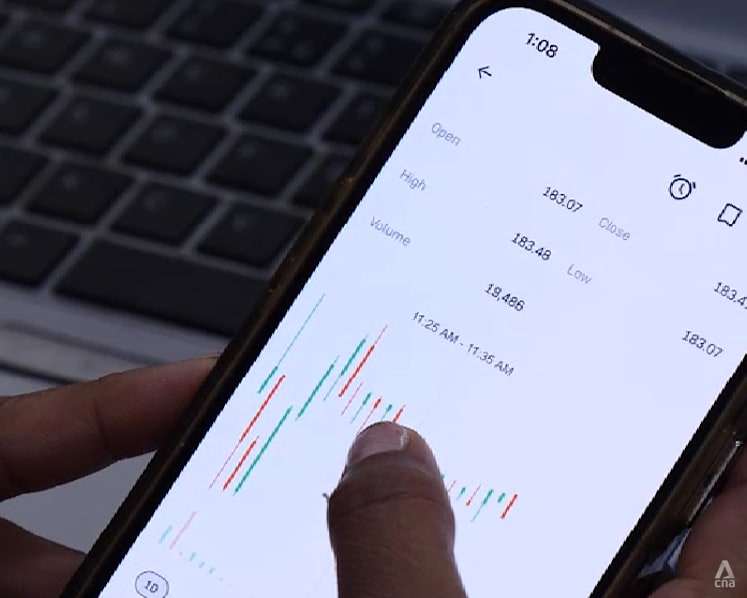
Millions of first-time investors are entering India’s stock market, driven by easy access through smartphones.

This audio is generated by an AI tool.


MUMBAI: Ashita Rawat began trading stocks just three months ago, hoping to tap into India's equity markets, which have surged over the past decade.
The Mumbai-based publicist is part of a growing wave of first-time investors in the country, driven by easy access to trading platforms via smartphones.
Rawat says her family and friends also influenced her decision to start investing.
“I've been seeing people talking about stocks, market, buying this IPO (initial public offering), that IPO, buying these shares … I also (wanted) to be a part of that discussion,” she said.






Rawat signed up with a brokerage app to start trading – cautiously at first – investing about 20,000 rupees (US$220) in Indian equities.
Now, she plans to invest that amount every month, adding that she is learning from her mistakes when it comes to picking companies.
“I checked the chart and everything, oh this is rising, so I'm buying that thing, but it was a bad decision. That has made me learn that I should do proper research,” she said.
MILLIONS OF NEW INVESTORS
Stock trading among ordinary Indians is picking up across the country.
According to the Securities and Exchange Board of India (SEBI), the country’s markets regulator, the number of unique investors rose to about 136 million as of late last year, up from around 40 million seven years ago.
Analysts say this influx of retail investors has helped increase liquidity and boost demand for new listings.
While the Bombay Stock Exchange, Asia’s oldest, has long been the centre of trading, much of today’s activity is happening outside its walls – in middle-class homes and on smartphones.
Easier access to trading platforms has played a key role in the retail investing boom.
“Everyone who has a smartphone can now invest because there are so many options available in terms of trading platforms, the kind of services they require,” said Srishti Gosavi, a personal finance content creator who runs a community focused on improving financial literacy among women.

“There are minimal commission fees that are being charged right now,” she noted.
Gosavi said that fewer than 10 per cent of Indian households currently invest in stocks, highlighting the scale of potential growth.
LOW FINANCIAL LITERACY POSES RISKS
Amid the surge, experts warn that India’s low financial literacy rates pose a serious challenge for retail investors.
Investing in equities can mean losing hard-earned money – even for the most experienced investors.
“If you are just investing with a FOMO (fear of missing out) factor that everybody is investing, I want to invest, then that is not the correct way – and a lot of people are doing that,” said Gosavi.
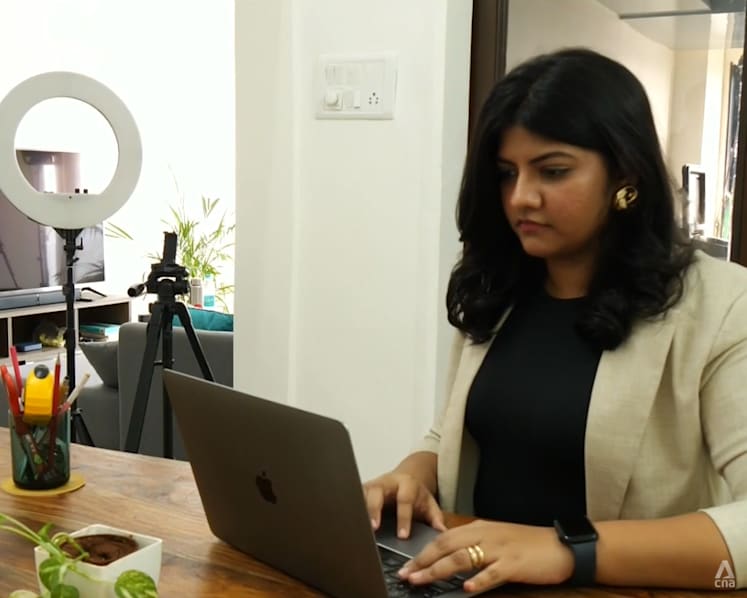

Indian authorities have stepped up efforts to educate investors, urging them to focus on company fundamentals rather than market hype.
SEBI, for instance, has expanded investor education and awareness programmes in recent years, to help retail investors better understand risks.
Despite these efforts, analysts say the surge in retail participation has also fuelled inflated demand for some IPOs and risky speculative activity.
One example is RRP Semiconductor, a stock that became a social media obsession and came under regulatory surveillance last year after an astronomical surge – rising 55,000 per cent in 20 months despite negative financials.
“People are not going through the fundamentals and they are blindly following a few of the people and investing in the stocks,” said Mehul Koradia, senior vice president and head of equity sales and equity products at brokerage firm Mirae Asset Sharekhan.
“But from intermediaries' point of view or regulators, they have been doing a very good job of educating people that it is always fundamentals which you need to focus on and we're seeing the results.”
For new investors, the learning curve can be steep, said experts. But they believe India's market is undergoing a structural change that is likely to continue as more people begin trading equities.