From farms to labs, Indonesia bets on better seeds to boost food security
As Indonesia works to secure its food future, the answer may well lie in something small but powerful: the seeds planted today.
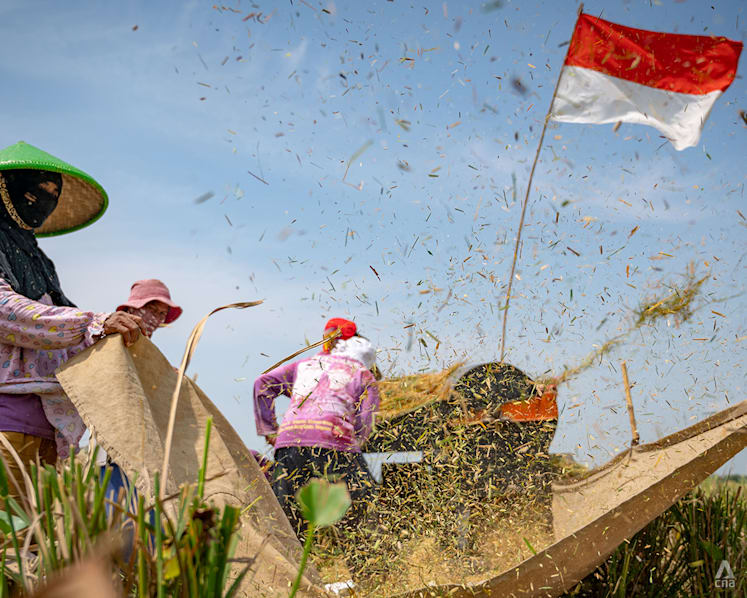
Farmers in Karawang, West Java, Indonesia, on May 2, 2024. (Photo: CNA/Danang Wisanggeni)

This audio is generated by an AI tool.


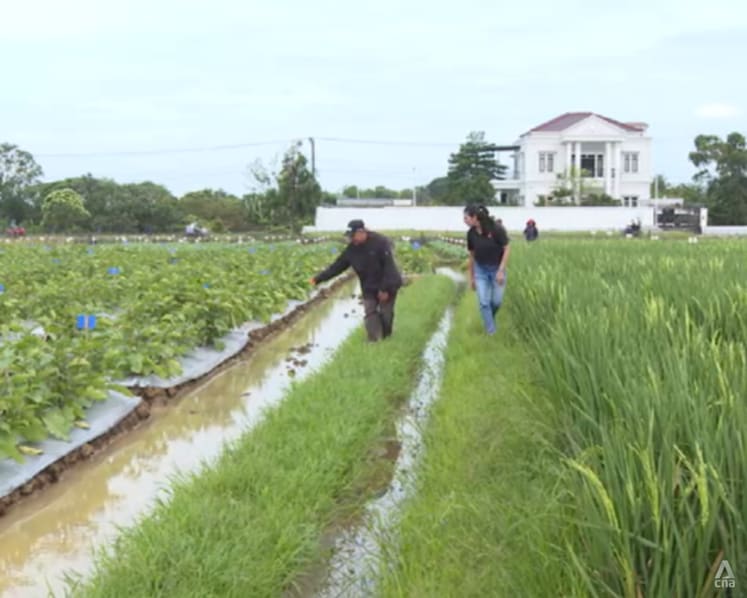
KARAWANG, Indonesia: On fertile fields in Karawang regency in Indonesia’s West Java province, farmer Kang Haji Enda tends to rows of cauliflower, tomatoes and chillies – crops that have sustained his livelihood for more than a decade.
But behind each harvest lies a crucial decision: choosing the right seeds.
Enda says that process is far from straightforward and comes down to trial and error.
“To find out if seeds are of good quality, we must be willing to experiment – comparing different seeds to see which performs best,” he told CNA, adding that the right varieties can mean higher yields, stronger crops and better revenue.





“As farmers, we also need to make a profit, so we focus on high-quality seeds that the market prefers.”
Across Indonesia, farmers like Enda are at the centre of a growing national push to improve agricultural productivity as the government accelerates its goal of food self-sufficiency by 2027.
SEEDS THAT WITHSTAND CLIMATE CHANGE
Among the varieties that Enda relies on is the M72 eggplant, known for its resilience and strong market appeal.
Farmers say it produces fruit with good colour and size, while also being resistant to viruses and extreme weather conditions – an increasingly important trait as climate patterns grow more unpredictable.
The variety was developed by PT East West Seed Indonesia, a major player in the country’s seed industry. Locally known as Cap Panah Merah, it specialises in breeding crops tailored to local conditions and consumer demand.
"M72 is a highly stable eggplant variety, resistant to Gemini viruses and bacterial diseases,” said Nugraheni Vita Rachma, the firm’s deputy general manager of breeding.
She added that the company has also developed long bean and chilli varieties that have been stress-tested in extreme weather conditions.
The firm works with more than 7,000 seed production farmers across West and East Java, and supplies seeds to over 10 million vegetable farmers nationwide.
Aside from meeting local needs, it exports overseas as well, with its biggest markets neighbouring Thailand and the Philippines.
“Exports are driven by international demand. So far, we’ve exported nearly 300 tonnes, with water spinach making up the largest share,” said Ch Atik Setyawati, the company’s export-import manager.
PRESERVING GENETIC RESOURCES
Beyond private-sector efforts, government-backed research institutions are also playing a critical role in transforming the country’s agriculture sector.
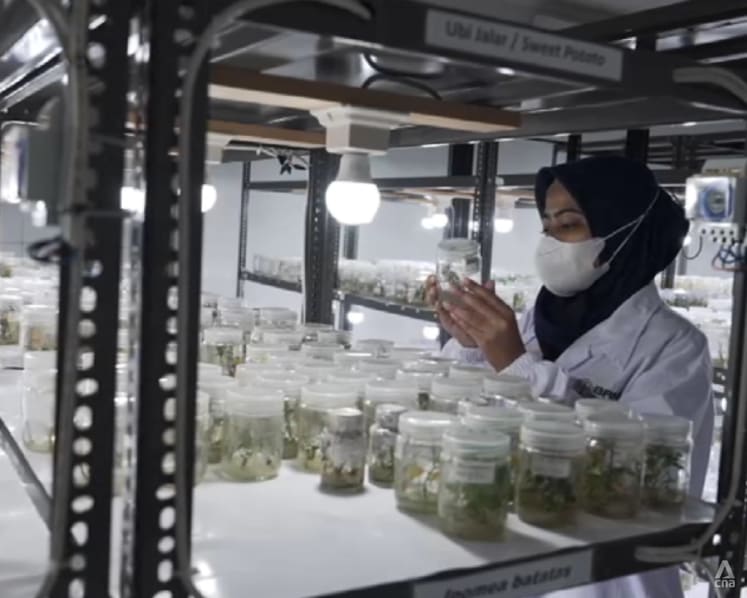
At the Centre for Assembly and Modernisation of Biotechnology and Agricultural Genetic Resources (BRMP Biogen), scientists are working to preserve and develop plant varieties suited to Indonesia’s diverse and often challenging environments.
The agency maintains nearly 11,000 plant genetic samples, serving as a vital resource for breeding stronger crops.
“We have developed rice varieties that are tolerant to salinity, making them suitable for cultivation in coastal areas and rice fields,” said the centre’s head Atekan, who goes by one name.
“We have also developed sorghum and legumes, such as soybeans. One example is Biosoy, (a superior soybean variety) which delivers higher yields.”
REDUCING RELIANCE ON IMPORTS
Improving seed quality is especially critical for crops like soybeans.
With tofu and tempeh being daily staples, Indonesia depends heavily on soy imports to meet demand.
Traditional soybean varieties yield about 1.3 tonnes per hectare on average. Newer, improved varieties like Biosoy can produce more than two tonnes per hectare – offering a path toward greater self-reliance.
Rice production has already shown signs of progress. Authorities say Indonesia did not import rice in 2025 and intends to maintain that position this year.
The government is now expanding its self-sufficiency drive to include other key commodities such as corn and sugar.