‘Sharing the pain’: Domestic airfares in Indonesia soar, but who’s really feeling the pinch?
A recent fuel surcharge hike of up to 38 per cent announced by the government has sent airfares rocketing, disrupting travel plans and fuelling backlash online.
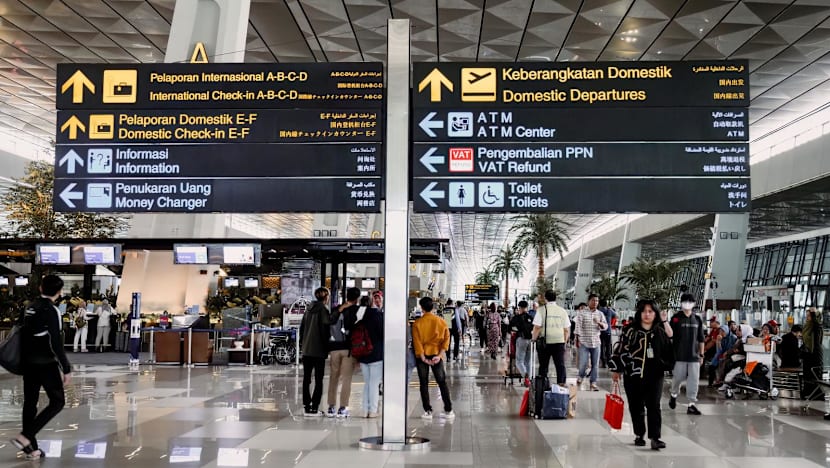
Soekarno–Hatta International Airport, Tangerang, Indonesia. (Photo: iStock/Hendra Galus)

This audio is generated by an AI tool.


JAKARTA: A fuel surcharge hike of up to 38 per cent has sent domestic airfares in Indonesia soaring, with passengers lamenting that prices have shot up by as much as 50 per cent.
This is well above a price hike of 9 per cent to 13 per cent envisaged by the government.
Industry players and analysts attribute the difference partly due to a delay in airlines getting a tax subsidy from the Prabowo Subianto administration after jet fuel prices surged following the Iran war.
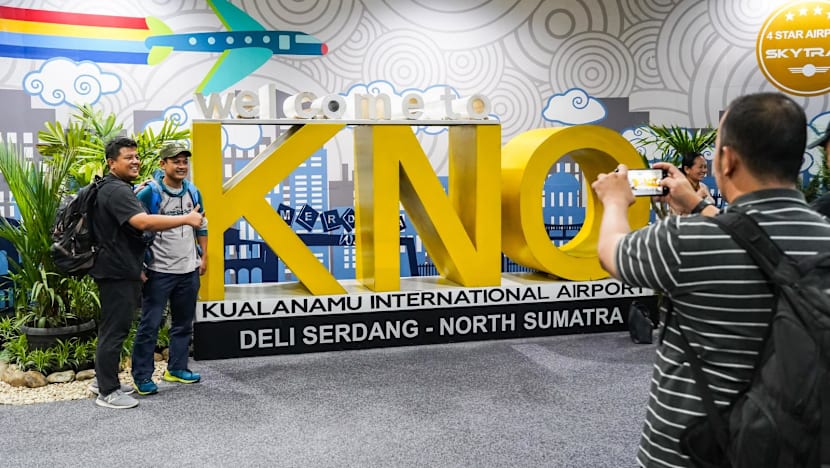
One passenger, Jennifer - who asked that her real name not be used as she does not have permission from her employer to speak to the media - said ticket prices last week for flights from Medan (Kualanamu International Airport) to Jakarta (Soekarno-Hatta Airport) had risen sharply.
“Medan to Jakarta tickets that used to cost around 1.6 million rupiah to 1.9 million rupiah (US$93 to US$111) have jumped to 2.5 million rupiah for economy class, while business class can reach 8 million rupiah to 14 million rupiah,” said the Jakarta-based private sector employee, who frequently travels to Medan in North Sumatra for work.
Jennifer showed CNA ticket records from four different airlines dated Apr 9, 2026, where average fares for the Medan to Jakarta route were above 2 million rupiah, with the highest price listed by Citilink - a low-cost carrier under state-owned flag carrier Garuda - at 2.5 million rupiah for a 9.45pm departure.





The other three airlines were Lion Air, Pelita Air and Batik Air.
A month earlier, Citilink flights on the same route were priced at around 1.6 million rupiah - indicating an increase of more than 50 per cent.
A check on Google Flights on Wednesday (Apr 15) showed the cheapest Medan to Jakarta fare at 1.8 million rupiah with Citilink, while the most expensive ticket, offered by Garuda Indonesia, had reached 2.8 million rupiah.
Jennifer said she also struggled to secure a ticket, forcing her return to Jakarta - originally scheduled for last Wednesday - to be delayed by two days.
In her experience, such difficulties are typically confined to peak holiday periods or the lead-up to major festivities, even though the Idul Fitri travel season has already passed.
“Outside of peak season, you can usually still buy a ticket on the same day,” she said.
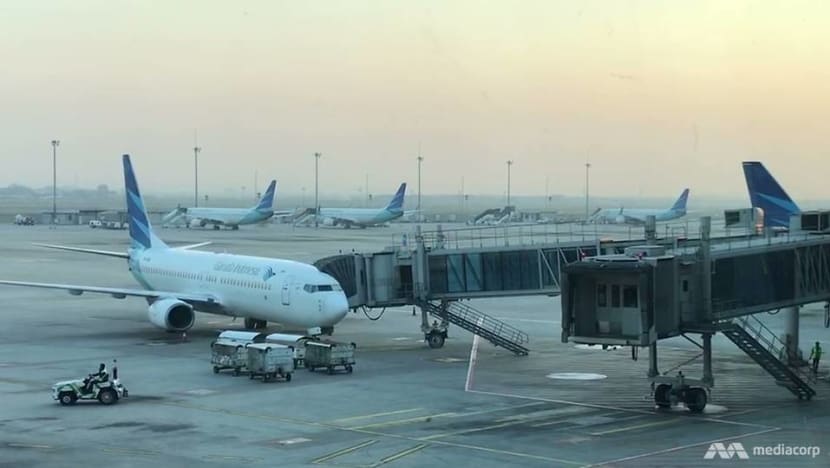
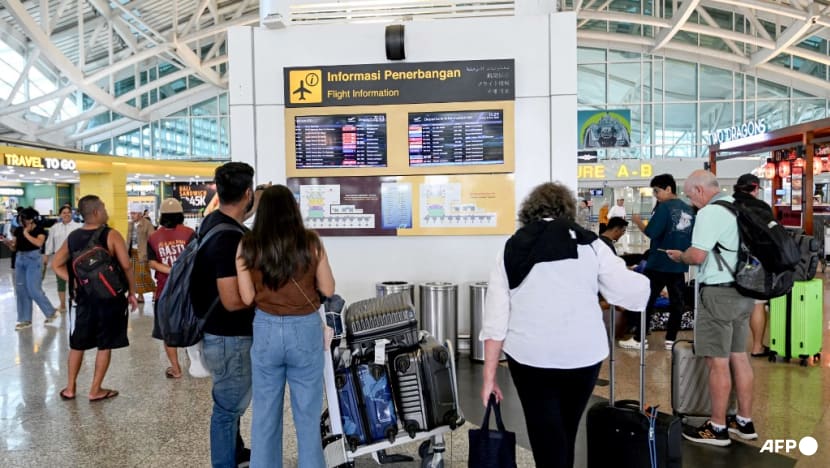
Similar complaints have been echoed by Indonesian netizens across social media platforms, with some opting to cancel or postpone their travel plans altogether.
“I was quite shocked to see airfare prices today. Batam to Jakarta on Batik Air usually costs around 1.5 million rupiah, but now it’s about 2.4 million rupiah,” one Threads user, Dion Haryadi, wrote on Apr 7.
Analysts say the situation could dampen passenger demand and further squeeze airline revenues.
Still, observers say the trend is difficult to avoid amid ongoing tensions in the Middle East, which have driven up jet fuel costs. The impact is being felt across the board - by consumers, airlines and the government.
“This is essentially a case of ‘sharing the pain’. The public is feeling the strain, airlines are under pressure, and the government is showing solidarity by giving up part of its revenue to help ease the burden on both carriers and consumers,” aviation analyst Alvin Lie told CNA.

WHY HAVE FARES RISEN BY MORE THAN 13 PER CENT?
On Apr 6, the government decided to raise the fuel surcharge to 38 per cent across all aircraft types, including jets and propeller planes.
“Previously, the surcharge was capped at 10 per cent for jets and 25 per cent for propeller aircraft. Now, it has been standardised at 38 per cent,” Coordinating Minister for Economic Affairs Airlangga Hartarto said at a press conference.
The move came in response to mounting pressure from the Indonesian National Air Carriers Association (INACA), which had called for a 15 per cent increase in the fuel surcharge.
INACA also asked for a 15 per cent increase to the government’s upper limit on domestic airfares. In Indonesia, prices of domestic flights have distance-based price ceilings set by the government.
A fuel surcharge is an additional fee imposed by airlines on top of base fares to offset rising jet fuel (avtur) costs, with the rate set by the Indonesian government through a formula determined by the Transportation Ministry.
Jet fuel accounts for roughly 40 per cent of total flight operating costs.
The push came after state energy firm Pertamina raised jet fuel prices for the Apr 1 to Apr 30 period, with average increases of around 70 per cent for domestic routes and 80 per cent for international routes, varying across airports.
Data from Pertamina shows that domestic jet fuel prices at Soekarno-Hatta Airport stood at 13,656.51 rupiah per litre in March, before jumping to 23,551.08 rupiah per litre in April - a surge of more than 70 per cent.
To cushion the impact of higher fuel surcharges on ticket prices, the government has agreed to cover the 11 per cent value-added tax (VAT) on economy class tickets for two months.
The subsidy, known as VAT borne by the government (PPN DTP), is valued at around 1.3 trillion rupiah per month.
In addition, import duties on aircraft spare parts have been cut to zero per cent. With these measures in place, Airlangga said the government expects “ticket price increases to remain within the 9 per cent to 13 per cent range”.
While the government approved the increase in the fuel surcharge, it did not grant INACA’s request to raise the fare ceiling, citing the need to preserve consumers’ purchasing power.
Listen:
However, fares on the ground have already exceeded the government’s projected ceiling.
INACA secretary-general Bayu Sutanto said fares have risen beyond 13 per cent largely because the VAT subsidy has yet to be disbursed by the finance ministry.
“So far, the only regulation in place is the 38 per cent fuel surcharge under Ministerial Decree No. 83/2026. There are no new written regulations yet from the Finance Ministry,” Bayu told CNA, referring to the Transportation Ministry’s decree on the surcharge adjustment.
Aviation analyst Lie estimated that ticket prices have climbed by at least 28 per cent, in line with the increase in jet fuel surcharges from 10 per cent to 38 per cent.
Even if the Finance Ministry rolls out the 11 per cent VAT subsidy, Lie said it is unlikely that fare increases will be contained at 13 per cent.
“The only measure that directly affects consumers is the removal of the 11 per cent VAT on tickets. If you take that off a 28 per cent increase, you’re still looking at a 17 per cent rise,” he said.
Lie added that scrapping import duties and taxes on aircraft components and spare parts will not “automatically” bring fare increases down to the 13 per cent range, as the immediate benefits will be felt by maintenance, repair and overhaul (MRO) providers.
“With those import levies removed, aircraft maintenance costs are expected to fall by around 5 per cent, which could eventually help bring ticket prices down,” he said.
However, he added that this was a “longer-term effect” and it could take two to three months for it to feed through and for consumers to feel the impact.
Addressing concerns over the difficulty of obtaining tickets, INACA’s Bayu said airlines may be cutting flight frequencies or temporarily suspending certain routes “as this period through May is typically low season, with softer demand”.
In response to CNA's queries, AirAsia said it has "adjusted flight frequencies across several routes", prioritising operations on those with the strongest performance, without specifying which ones.
“We understand that the aviation industry is currently facing continuously evolving dynamics. Therefore, we are implementing gradual operational adjustments as part of our efforts to ensure that operations remain healthy, adaptive, and capable of delivering optimal services to the public,” said Acting President Director of Indonesia AirAsia, Achmad Sadikin.
AirAsia said affected passengers would be offered compensation, including complimentary rescheduling within a specified period, travel credits for future bookings or refunds.
CNA has also contacted Garuda Indonesia for comment on rising domestic fares and potential schedule reductions.
A BLOW TO AIRLINES
Surging domestic airfares are also expected to weigh directly on Indonesia’s tourism sector, said tourism expert Azril Azahari from Trisakti University.
According to Azril, domestic destinations are becoming less price-competitive compared with overseas options, pushing travellers to consider more affordable trips abroad.
“Flying to Singapore can be cheaper than travelling to Raja Ampat, Komodo Island or even Bali,” he said.
Azril added that if no steps are taken to restore ticket prices to competitive levels, Indonesia’s tourism appeal could continue to erode amid growing regional competition.
Jennifer echoed the view that international routes can sometimes be cheaper.
She noted that last week, a Medan to Jakarta journey via Kuala Lumpur, Malaysia, was priced lower than a domestic route transiting in Padang, which cost more than 3 million rupiah.
“At the time, there were no direct domestic flights to Jakarta, but I didn’t have my passport with me (for a Kuala Lumpur transit),” she said.
Transportation analyst Revy Petragradia from the Indonesian Transportation Society (MTI), a transport advocacy group, said travellers are likely to become more selective going forward, potentially leading to a "10 per cent to 15 per cent drop in air passenger numbers".
“Business trips may continue as usual, but economy passengers and those travelling short distances will certainly think twice. A shift in transport modes - from air to land or sea - is likely for shorter routes,” Revy told CNA.
Rising jet fuel prices, coupled with declining passenger numbers, are expected to further strain airlines’ financial health.
National carrier Garuda Indonesia, for instance, recorded a net loss of 5.4 trillion rupiah in 2025 - nearly five times higher than the previous year.
MTI transportation expert Djoko Setijowarno said the current situation adds fresh pressure on airlines already hit by government restrictions on official travel, first introduced in late 2024 as part of a broader push to cut state spending.
“Passengers travelling on personal funds make up a relatively small portion - around 10 per cent, including leisure trips. The remaining 90 per cent consists of business travel funded by employers, both public and private,” he said.
“However, those travel budgets are now being reduced, as the government curbs such mobility,” he added.
In January last year, President Prabowo Subianto said the reduction in official travel had saved the state budget up to 20 trillion rupiah.
The government is expected to continue cost-cutting measures this year.
Last week, Finance Minister Purbaya Yudhi Sadewa said authorities are preparing an efficiency and budget refocusing scheme to keep the 2026 state budget deficit in check amid rising oil prices and global uncertainty.
Purbaya is targeting savings of between 121.2 trillion rupiah and 130.2 trillion rupiah, focusing on cutting non-essential spending - including official travel, he added.
“SHARING THE PAIN”
Aviation analyst Lie said the government’s decision to roll out incentives reflects a approach where airlines, passengers and the state all shoulder part of the burden.
“To prevent airlines and passengers from bearing the full brunt, the government has scrapped the 11 per cent VAT, foregoing nearly 1.5 trillion rupiah in monthly ticket revenue,” he said.
Coordinating Minister Airlangga said last week that scrapping import duties on aircraft spare parts would result in the state losing about 500 billion rupiah in revenue each year.
“There is no silver bullet, and what Indonesia is experiencing is also being seen in countries such as Vietnam and Thailand, which impose strict controls on flight routes,” he said.
However, MTI’s Revy cautioned that the policy still leaves uncertainty.
“How long will the government continue to absorb the VAT? That uncertainty is a risk airlines will also have to bear going forward,” she said.
In addition to incentives, Revy said the government could help bolster the aviation and tourism sectors by increasing passenger traffic.
For instance, this could be done through integrated travel packages that combine flights, accommodation and tourism activities, created in partnership with the Ministry of Tourism and Creative Economy and hotel associations.
“Airlines and travel agencies can also work together to create attractive and affordable travel packages - that’s the challenge,” she added.