analysis Asia
What’s behind a double whammy of US$318 million loss and Skytrax rating downgrade for Garuda Indonesia?
Garuda Indonesia's financial loss last year was almost five times the loss it recorded in 2024.
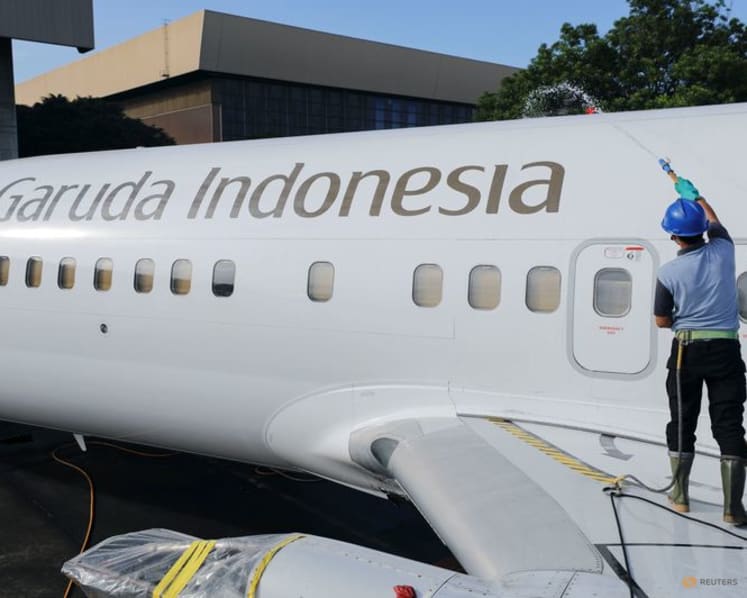
A worker cleans a Garuda Indonesia's aircraft parked at the Garuda Maintenance Facility AeroAsia, at Soekarno-Hatta International Airport near Jakarta, Indonesia on Jan 21, 2022. (File photo: Reuters/Willy Kurniawan)

This audio is generated by an AI tool.


JAKARTA: The double whammy faced by Indonesia’s national flag carrier Garuda Indonesia - which saw the firm reporting a net loss of 5.4 trillion rupiah (US$318 million) in 2025 as well as the recent loss of its 5-Star Skytrax rating - is a reflection of broader structural pressures affecting the country’s aviation industry, analysts have told CNA.
But they added that nearly all airlines in Indonesia are currently facing financial strain, suggesting systemic issues rather than company-specific mismanagement.
“Post the COVID-19 pandemic, the finances of airlines nationally are on the road to recovery, but not yet fully healthy. Other airlines in Indonesia have shown a relatively more stable recovery, particularly low-cost carriers,” said Faik Fahmi, head of Indonesia Aviation Association.
“However, industry-wide challenges remain: high domestic aviation fuel prices, fleet limitations due to the global supply chain, and a price-sensitive market. This means this is not just a Garuda issue, but rather a structural challenge for the aviation industry nationwide.”
AirAsia Indonesia, for example, reported a net loss of 1.29 trillion rupiah in 2025.
However, it is of “particular concern” when Garuda Indonesia is facing financial trouble, as it has been the national flag carrier since 1949, said aviation expert Gatot Raharjo.
“Because Indonesia is an archipelago and Garuda needs to serve the people who live on islands,” said Gatot, who is with consultancy firm Duta Aviasi Nusantara.
“We need to protect it … If its capacity decreases, for example, what about the people who live outside of Java? They will feel the impact,” he added.
While Java remains Indonesia’s most populated island with over 156 million people as of 2024, the country is also home to 17,000 islands - of which about 6,000 are inhabited.





.jpg?itok=hmZdPDJM)
Garuda Indonesia's financial loss last year was almost five times the loss it recorded in 2024. It also comes amid a 23.67 trillion rupiah funding from sovereign wealth fund Danantara, which holds about 91.11 per cent of Garuda Indonesia’s shares.
Chappy Hakim, founder and chairman of the Indonesia Center for Air Power Studies, said Garuda Indonesia has several times received funding from the government, yet has not managed to turn the financial injections into profit.
“The action taken has been the same: pour money, change the management. Again and again,” said Chappy.
“This continues to happen because Garuda’s problems have never been properly investigated, or the difficulties it faces have not been announced publicly.”
Indonesian President Prabowo Subianto appointed Wamildan Tsani, a former air force pilot and Lion Air Group executive, as Garuda Indonesia’s chief executive officer in late 2024.
Less than a year later, he was replaced by Glenny H. Kahuripan in October 2025. At the same time, Garuda Indonesia appointed former Singapore Airlines executive Balagopal Kunduvara as finance director and Neil Raymond Mills, previously with Scandinavian Airlines, as transformation director.
Analysts whom CNA spoke to also said Garuda Indonesia’s crisis may deepen as the Iran war has laid bare a fuel crisis, so the airline must take decisive measures to prevent further losses.
MAINTENANCE SURGE AND CAPACITY CRUNCH
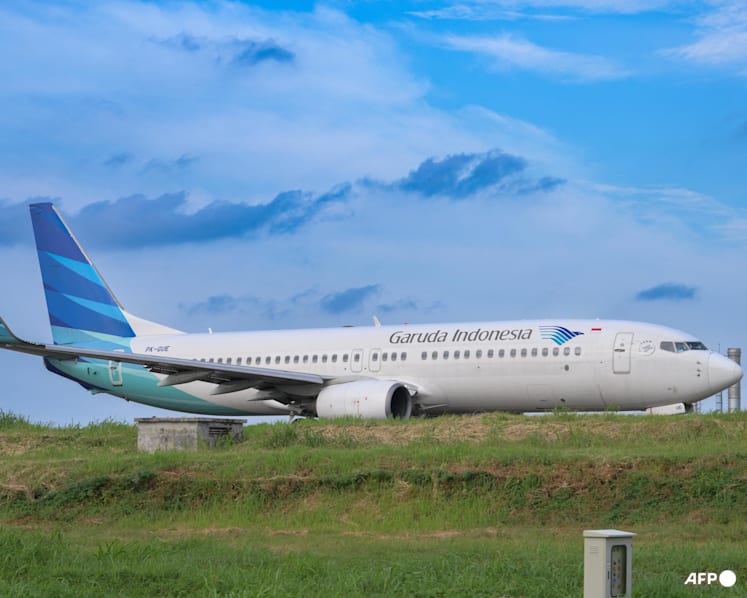
A key factor behind the losses is a sharp increase in aircraft undergoing heavy maintenance in 2025, said analysts.
About 43 or half of Garuda Indonesia’s fleet were undergoing maintenance last year, significantly reducing operational capacity.
“There were too many fleets undergoing maintenance at the same time,” said Gatot.
Danantara’s chief operating officer Dony Oskaria said this has created a double financial burden for the airline, as it led to rising maintenance costs and declining revenue due to fewer active aircraft, he told reporters on Mar 29.
Compounding the issue are ongoing global supply chain disruptions, Dony added, as spare parts shortages mean fleets have to wait for a long time before being deemed fit to fly again.
Gatot said the delayed production is linked to a labour shortage following post-pandemic-era layoffs and raw material constraints stemming from the Russia–Ukraine war.
According to reports, the Russia-Ukraine war has created a severe aviation raw materials constraint, primarily through the disruption of titanium supplies, of which Russia provided roughly 40 per cent of global aerospace-grade needs.
REVENUE CONSTRAINTS AMID RISING COSTS
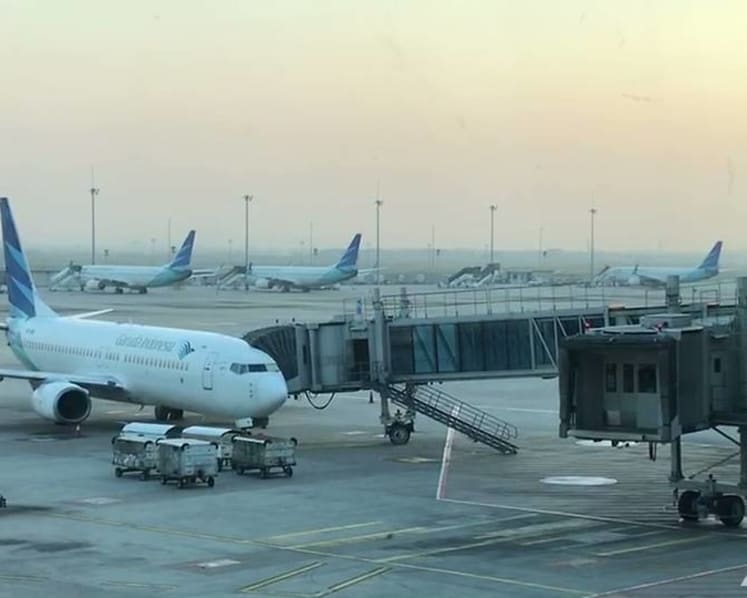
Garuda Indonesia also faces additional pressure from domestic fare regulations, which cap ticket prices.
While costs such as maintenance and fuel continue to rise, airlines are unable to fully pass these increases to consumers on domestic routes due to the Indonesian government's regulation to cap the ticket prices.
“Unlike international routes, domestic ticket prices cannot be freely adjusted,” said Gatot, describing the policy - which was introduced in 2019 -as a structural limitation on profitability.
Increasing fuel prices, paid for by Garuda Indonesia in US dollars to state energy firm Pertamina amid a weakening rupiah, is also a contributing factor to its hardship.
Although Pertamina currently adjusts aviation fuel prices monthly, providing short-term stability, global oil price volatility could lead to higher costs in the near future.
Many carriers worldwide have already increased their airfares due to a global fuel crisis triggered by the Iran war, said Brendan Sobie, founder of Singapore-based independent aviation consulting and analysis firm Sobie Aviation.
“The fuel prices are affecting everyone. It's not individual, airline-specific. The question with higher fuel prices is always whether it is possible to pass on the higher cost to the passenger,” said Sobie.
“In some markets, that's not an issue, but in other markets it is an issue. And if you look at Indonesia's domestic market, which is a big part of the business for Garuda, it is a price-sensitive market.”

SERVICE CUTS AND RATING DECLINE
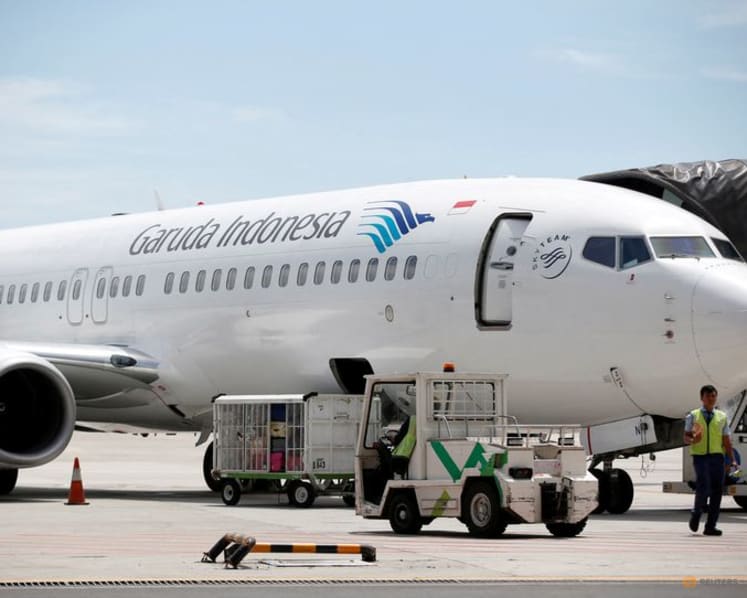
Apart from financial woes, Garuda Indonesia has also seen its 5-Star rating downgraded recently to a 4-Star one by Skytrax, an international air transport rating organisation that provides quality audits, ratings, and quality certification to airlines and airports.
The Skytrax rating measures cabin service, seating comfort and food and beverage provided by airlines, among others. Garuda Indonesia’s rating was downgraded due to a decline in product quality and facilities that were considered outdated, especially in seats and in-flight entertainment.
According to Faik, who worked for Garuda Indonesia from 1994 to 2014, with his last role as the company’s service director, the downgrading signals that financial and operational pressures are beginning to affect service consistency.
The downgrade is the first for Garuda Indonesia since it received the 5-Star rating in 2014.
This reflects a shift in priorities, said analysts, as the airline focuses its limited resources on maintaining safety standards while scaling back service enhancements.
However, Gerry Soejatman, an independent aviation expert based in Jakarta, said the Skytrax rating is not paramount.
“In aviation, safety comes first, then comes profitability. Service is important, but it requires significant investment,” he said, adding that maintaining premium service levels and international ratings involves substantial costs.
Besides, domestically, Garuda Indonesia has no competitors, said Gatot as it is the only full-service state-owned carrier.
BALANCING PROFIT AND PUBLIC SERVICE
As a majority state-owned enterprise, Garuda Indonesia faces a strategic dilemma: operate as a commercially driven airline or fulfil its role in maintaining national connectivity across Indonesia’s vast archipelago, said analysts.
Focusing solely on profitable routes could improve financial performance, but would limit access to air transport in less-developed regions, said Gatot.
Conversely, expanding connectivity often means operating routes with lower demand and higher costs, he added.
Danantara’s Dony said signs of improvement have already appeared this year. He noted that Garuda Indonesia's subsidiary, Citilink, has posted positive results in the first quarter of 2026, an initial indication of Garuda Indonesia Group’s recovery.
However, analysts noted that addressing the crisis will require coordinated government intervention, not just internal restructuring by the airline.
Since Garuda Indonesia is mainly under the sovereign wealth fund Danantara, the latter could help with certain measures, such as reducing exposure to foreign currency fluctuations or improving fuel pricing policies, said Chappy.
Meanwhile, Gatot posited that Garuda Indonesia could also increase collaboration between central and regional governments to support less profitable routes.
Without such reforms, Gatot warned, the financial strain on the airline could eventually impact connectivity, particularly in remote areas where air travel is essential.
Meanwhile, Faik said that Garuda Indonesia could increase its revenue by developing cargo businesses and strategic partnerships to open new revenue streams.
It should also focus on developing customer experience and services by improving its flight schedule and on-time performance, as well as strengthening its loyalty programme.
Ultimately, experts said Garuda Indonesia’s losses should be seen as a warning sign of deeper structural challenges within Indonesia’s aviation system - challenges that will require long-term policy solutions rather than short-term fixes.
This is a serious matter, given that Indonesia is a vast archipelago and many parts of the country are only connected by air, analysts warned.
“This is the unique challenge of Indonesia as an archipelagic nation,” said Gatot.
“Aviation is not just business, it is a necessity.”