Indonesia mulls airlines’ call for 15% fuel surcharge hike, airfare caps over rising costs amid Middle East war
The Indonesian National Air Carriers Association (INACA) urged the government to approve the hikes in fuel surcharge for both jet and propeller aircraft.
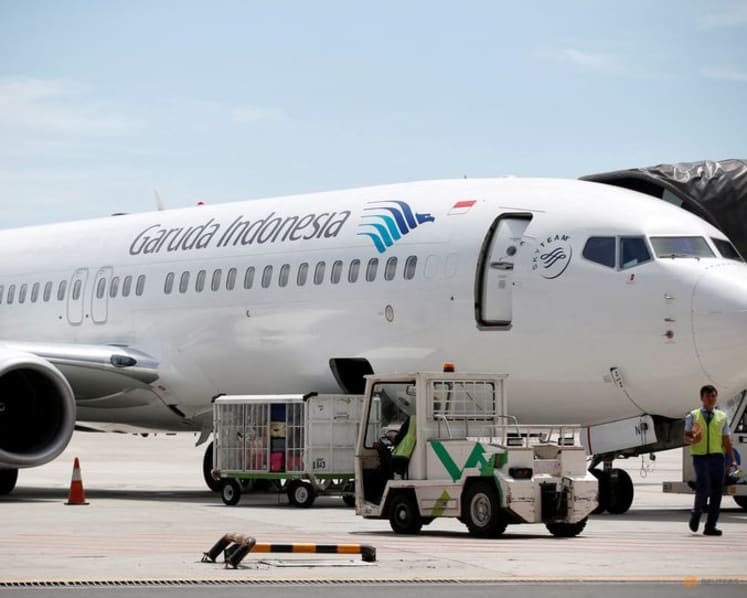
JAKARTA: Indonesia is reviewing a proposal by its domestic airlines to increase fuel surcharges by 15 per cent, as well as the domestic airfare cap, as the aviation industry grapples with higher costs due to the Middle East conflict.
The transport ministry’s air transportation director-general Lukman F Laisa said the government will consider various factors before making a decision.
They include the airlines’ financial condition, consumers’ purchasing power, sustainability of the aviation industry, safety, security and service quality, said Lukman, as reported by local media outlets.
The current fuel surcharge is based on 2023 regulations while the domestic airfare cap is based on a 2019 fare ceiling.
The current fuel surcharge is 10 per cent of the domestic airfare cap for turbojet aircraft, and 25 per cent for turboprop aircraft, according to the Indonesian National Air Carriers Association (INACA), which is requesting for the increases.
INACA is also seeking a 15 per cent increase in domestic airfare cap.
The fuel surcharge is an additional fee on top of the ticket price charged by airlines to cover increases in aviation fuel costs, and is regulated by the government.





INACA urged the government on Wednesday (Mar 25) to approve the hikes for both jet and propeller aircraft amid mounting costs. Aviation fuel has nearly doubled in price, rising from between US$85 (S$108) and US$90 per barrel last month to between US$150 and US$200 per barrel.
INACA secretary general Bayu Sutanto said the move was necessary because the rising exchange rate has burdened national airlines’ finances.
"Fuel costs account for up to 35 per cent of total operating expenses, so the consequence (should be) higher ticket prices," Bayu, who is also president director of private airline TransNusa Aviation, told Nikkei Asia on Wednesday.
“Seventy per cent of airline operational costs are in US dollars, while national airlines’ revenues are in rupiah. So, with the rising US dollar exchange rate, the financial burden on national airlines increases,” Bayu said.
The rupiah has declined more than 20 per cent from 14,136 rupiah per US dollar in 2019 to around 17,000 rupiah in March 2026.
Bayu said tensions between Iran and the US-Israel alliance since February have triggered a spike in oil prices due to disrupted supply from the Middle East after Iran blocked the Strait of Hormuz, a key shipping passage.
The conflict has caused 20 major global airlines to lose up to US$53 billion, marking the largest loss since the COVID-19 pandemic, according to calculations by the Financial Times last Saturday.
Bayu added that some airlines have already increased fuel surcharges by 5 to 70 per cent. They include Cathay Pacific, Qantas, Air India, Thai Airways and Air France-KLM, according to Business Insider.
INACA also proposed several temporary measures including postponing value-added tax (VAT) for aviation fuel and domestic tickets, relief on aircraft landing, parking and storage service fees, and the rescheduling of airport and navigation fee payments.
Director-general Lukman said the government will continue monitoring the country’s fiscal conditions and public interest before granting any proposals, adding that every policy must be balanced between industry sustainability and consumer protection.
“Thus, air transport services will remain maintained in terms of safety, security, affordability, and national connectivity,” he said.
Additional reporting by Denny Armandhanu
.jpg?itok=hmZdPDJM)