analysis Asia
What’s fuelling Grab-GoTo’s merger talk in Indonesia - financial losses, politics or other factors?
Talk of a potential merger between tech giants Grab and GoTo first started in February 2020, but could a deal be now closer with implicit support from the Indonesian government?
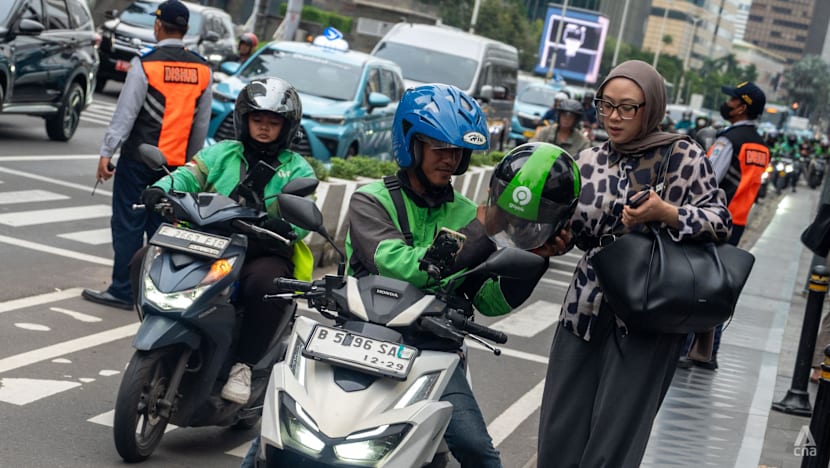
Millions of people in Indonesia use ride-hailing services. (Photo: CNA/Ridhwan Siregar)

This audio is generated by an AI tool.


JAKARTA: Indonesia’s ride-hailing, food delivery and e-commerce firm GoTo will have a new chief executive officer (CEO) this month after Patrick Sugito Walujo stepped down at the end of November following a 2.5-year tenure, further fueling speculation that a merger with rival Grab is on the table and imminent.
A possible merger between the two tech giants first made the news nearly six years ago in February 2020. Citing unnamed sources, news agency Bloomberg reported that Patrick’s departure is a “step forward” toward a deal with Grab as he had opposed it.
Chief Operating Officer Hans Patuwo will be nominated as the new CEO at GoTo's extraordinary shareholders' meeting on Dec 17, the company said in a statement last Monday (Nov 24).
Apart from the leadership change, analysts noted that a stronger sign of a possible deal came from the government’s confirmation of merger talks, unlike in previous years where there was no word from the authorities.
State Secretary and presidential spokesman Prasetyo Hadi said on Nov 7 that several ministries were participating in the discussions about a potential merger between the Indonesia and Singapore-based companies and a decision would be made soon.
He added that the country’s sovereign wealth fund, Danantara, could also be involved in such a deal.
A week earlier, he had also said that the government was drafting a presidential regulation to regulate online motorcycle taxis to address drivers’ welfare and protection, as many Indonesians are gig workers.
A GoTo spokesman said on Nov 12 that it has consistently backed government policies that benefit driver-partners and merchants, including those goals being pursued through mergers or acquisitions.
The Prabowo Subianto administration was rocked by protests by gig workers in August and September that were sparked by the death of one of them who was run over by a police vehicle during a rally on Aug 28 protesting lawmakers’ lavish perks.
Analysts had previously told CNA that the speed by which the gig workers mobilised themselves was quickly noticed by politicians, signalling that the workers were no longer invisible service providers, but a political force to be reckoned with.
This means the plight of gig workers, and indirectly the financial sustainability of key platforms hiring them, is a political issue.
Analysts said that with GoTo suffering significant losses for some years running, a merger with another company has always been seen as a potential way forward for better financial performance.
However, some analysts also raised questions on whether such a deal with Grab would work out and the impact on gig workers.
The experts also noted that talk of the potential deal comes amid reports of a probe by the Indonesian Attorney General’s Office (AGO) into an investment in GoTo five years ago by a state-owned entity, raising questions if there is any link between the two.
Boyamin Saiman, coordinator of non-government organisation Indonesian Anti-Corruption Society (MAKI) said a merger could combine the profit and losses of companies.
“This will also affect the resulting share price, for example, which could be lower or higher.”
WHY IS THE MERGER BACK ON THE TABLE?
GoTo was formed in 2021 through a merger of ride-hailing firm Gojek and Indonesian e-commerce giant Tokopedia.
GoTo listed on the Indonesian stock exchange in April 2022 with a public offering of its shares at 338 rupiah (US$0.02) apiece with a valuation of US$28 billion.
Since then, the stock has fallen by over 80 per cent and now trades at just around 65 rupiah a share.
It suffered a nett loss of 90.5 trillion rupiah (US$5.4 billion) in 2023, double the 2022 figure.
In 2024, it narrowed its losses by 96 per cent to 3.1 trillion rupiah. It reported a nett loss of 742 billion rupiah for the first half of 2025.
By comparison, Grab suffered a full year loss of US$158 million for 2024, down from US$485 million the previous year, according to the company’s financial figures.
The company is listed on the Nasdaq stock exchange. As of Dec 2, it was trading at around US$5.26 a share, down from US$11.01 when it made its debut in December 2021.
Grab’s market capitalisation is around US$21.5 billion currently.
At least 2 million Indonesians are ride-hailing drivers, according to the country’s Social Security Administration Agency for Employment, with some estimates putting the figure at 7 million.
News outlet Kompas reported that based on order volume, Grab has 63 per cent of the rail-hailing market share in Indonesia, while GoTo has 36 per cent. Meanwhile, in terms of food delivery volume, Grab has a 47 per cent market share and GoTo has 52 per cent.
Some much smaller operators in Indonesia include Shopeefood, Maxim and Bluebird.
The sheer size of Indonesia’s gig worker population means that the financial sustainability of the ride-hailing platforms is not something that can be ignored, especially given the poor job market in Indonesia, said analysts.
A GoTo-Grab merger would create a regional ride-hailing giant with around 85 per cent of the US$8 billion market, according to data analytics firm Euromonitor International.
Economist and public policy expert Wijayanto Samirin from Paramadina University said a merger could make the industry more efficient.
”Mergers can increase industry efficiency, which in turn will benefit industry stakeholders, including drivers.”
A deal could value GoTo at around US$7 billion, news agency Reuters had quoted a source close to the matter as saying earlier this year.

Capital market analyst Teguh Hidayat from investment firm Avere Investama said political calculations are likely behind talk of a potential merger.
He believed that talk of a merger has persisted for years because a deal between the two companies is the only realistic option given GoTo’s heavy losses and that there would be wider repercussions if the business fails given its large driver base and potential social impact.
"If the application were to be shut down, not only would the drivers lose their jobs, but it could also cause a social crisis in Indonesia,” said Teguh.
“But if it continues (alone), GoTo will keep burning money.”
Meanwhile, economist Yanuar Rizky from consulting group Bejana Investidata Globalindo (BIG) said the renewed chatter about a Grab-GoTo merger fits a familiar startup playbook: A merger used to lift share prices.
However, some analysts raised questions over the timing of such a potential deal against the backdrop of the AGO’s probe.
On Nov 12, investigative news outlet Tempo quoted AGO’s head of legal information centre Anang Supriatna as confirming such a probe.
"It is still in the investigation stage, so it's still confidential," he was quoted as saying.
Tempo cited a 2023 AGO memorandum it had received as saying that prosecutors suspect alleged wrongdoing in Telkomsel’s US$150 million capital investment into GoTo around 2020 to 2021.
Telkomsel, a subsidiary of Indonesia’s state-owned telecommunications company Telkom, invested another US$300 million after the May 2021 merger of Gojek and Tokopedia.
One factor behind the suspicion that due governance procedures might not have been followed was how Gojek had not made a profit since its establishment in 2010, Tempo cited the AGO document as saying.
Tempo and Jakarta Post have also reported that prosecutors suspected potential conflict of interest involving state officials and board members of state-owned enterprises in the Telkomsel investment.
Boyamin of MAKI wondered if there is any link between the merger talk and the probe.
However, Wijayanto from Paramadina University thinks there is no connection between the two “whatsoever”.
“They're separate issues,” he told CNA. “The merger idea emerged long before the Telkomsel issue arose.”
When contacted by CNA, Grab declined to comment on the potential merger and the AGO probe.
CNA has reached out to GoTo for comment on the probe, though it has declined to comment on the merger issue.
Telkomsel also declined to comment on the probe.

CHANCES OF MERGER SUCCEEDING?
Analysts have mixed opinions on whether a merger would be successful given the current situation.
According to Boyamin, the chances that Grab would want to merge with GoTo are slimmer now, given the AGO probe and GoTo’s losses.
“The chance of merger is still there, but now Grab has bigger bargaining power,” he said.
Yanuar Rizky added that the government would likely want Danantara involved as a type of standby buyer.
The Financial Times had earlier reported that both firms could offer Danantara a “golden share” to gain approval for a merger.
This entails giving Danantara a minority stake in the merged entity, with special rights over the Indonesian arm.
The government has yet to confirm the role of Danantara in the possible merger, but on Nov 28, Danantara CEO Rosan Roeslani said talks about the merger “is ongoing” and is “positive”.
Earlier on Nov 11, Chief Investment Officer of Danantara Pandu Sjahrir said the final decision on the merger lies with GoTo and Grab.
Wijayanto from Paramadina University, on the other hand, said the likelihood of a merger is now higher than previously, but its success depends on several things.
“All parties involved must fix the ecosystem, especially regulatory improvements, otherwise the merger will not create a surplus for stakeholders,” he said.
He also said the law governing competition in industries must be followed correctly, and avoiding reframing the merger as a Singapore-based company taking over an Indonesian one would help prevent resistance.
IMPACT ON LIVELIHOODS
Under the merger, the new company would control payments and the livelihoods of millions of drivers and micro, small, and medium enterprises (MSME), analysts noted.
So, the government must set fair, pro‑national‑interest rules that protect drivers, passengers, and MSMEs while remaining business‑friendly, said Wijayanto from Paramadina University.
“If the merger is followed by an improvement in the ecosystem, including regulations, it could potentially be changed from a lose-lose situation to a win-win for everyone, including drivers,” he said.
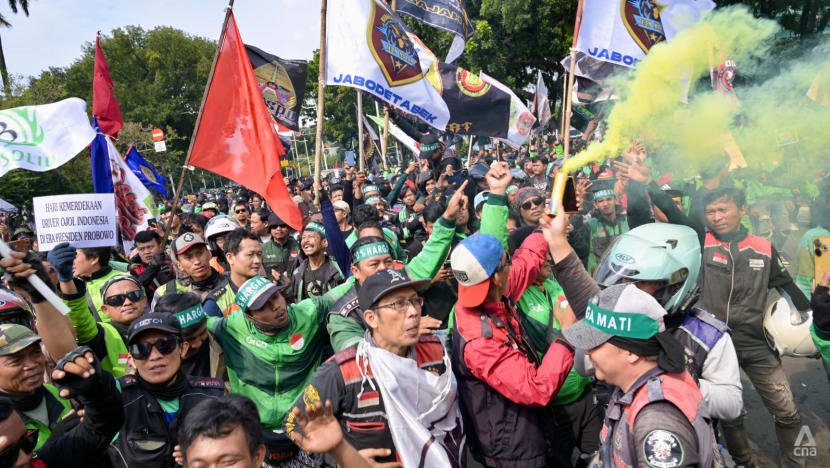
Ride-hailing and delivery services are crucial in Indonesia, especially in traffic-congested big cities, but drivers have been holding protests for years demanding better pay.
Raden Igun Wicaksono, chairman of the Garda Indonesia Online Motorcycle Taxi Drivers Association, told CNA: "The government, as the regulator, must maintain this digital ecosystem's health and prevent it from becoming a monopoly and predatory for new, emerging platforms.
"The impact will be that millions of drivers will become dependent on one giant corporation and have no other options. This will allow the corporation to implement unilateral policies against driver-partners. This will be detrimental to online motorcycle taxi-drivers.”
Boyamin from MAKI also thinks there would be less competition if the two companies merged.
However, over time, he said smaller ride-hailing companies may improve their services as a consequence and said monopoly worries may ease as they grow.
Capital market analyst Teguh even thinks that after the merger, Grab may not need that many drivers.
Therefore, some drivers may lose their jobs, particularly those from GoTo.
“So the Gojek or GoTo drivers may need to find a new job.”
Meanwhile, those on the ground are not overly concerned about the merger but welcome it if it makes their lives better.
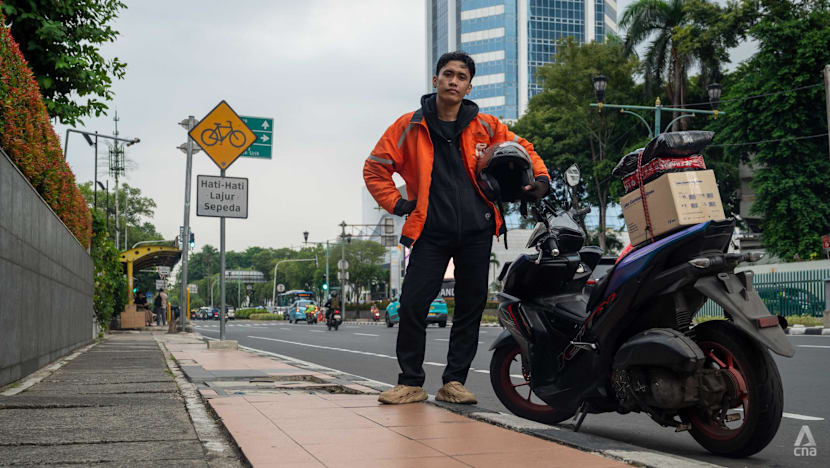
Food and goods delivery rider Adam Hakiki, 24, who works for Shopee, said if a merger between Grab and Goto happens, it will most likely not affect his income.
“Everyone has his own market. It is not a problem.”
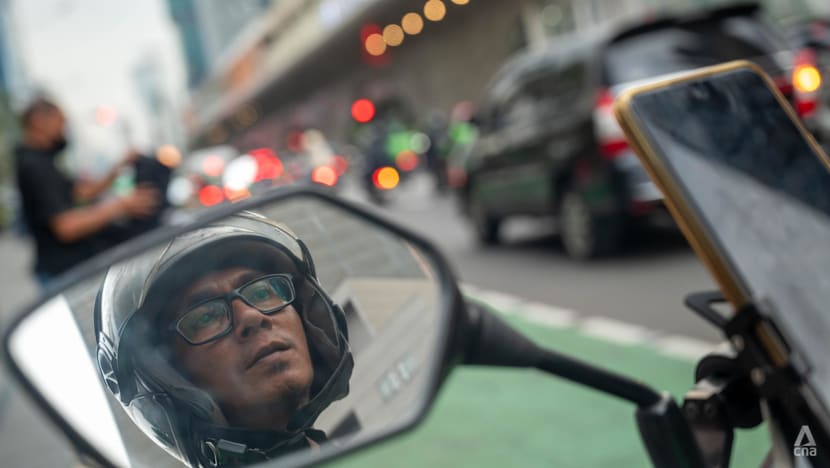
A rider from Gojek, part of GoTo, who only wants to be known as Helmi, 47, is in favour of a merger if it brings positive outcomes to the drivers.
“I just want to have a good standard of living, being able to afford things in my life,” he said.
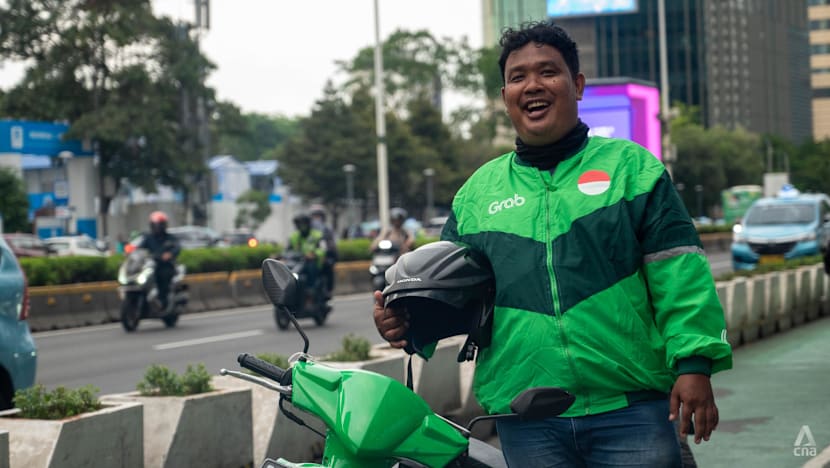
Grab rider Istu Rizki, 36, also has positive aspirations for the merger.
He just became a Grab rider in November, after working as a Gojek rider since 2017.
“I moved to Grab because there are no orders at Gojek. It’s difficult,” he said.
“If the two companies merge, I hope there will be more orders.”
Jakarta resident Lianda Ramadhana, 27, uses e-hailing services from different operators.
She said users will ultimately use whichever application that is more affordable and offers more benefits.
“If a merger brings in more discounts for the users, I agree with it. As long as there are still enough jobs available for the riders.”