‘Vicious cycle’: The good, the bad and the ugly of peer-to-peer loans in Indonesia
According to data from the Indonesian Financial Services Authority, outstanding peer-to-peer (P2P) loans stood at almost 90 trillion rupiah as of September 2025. Just a year prior, the figure stood at about 74.5 trillion rupiah.
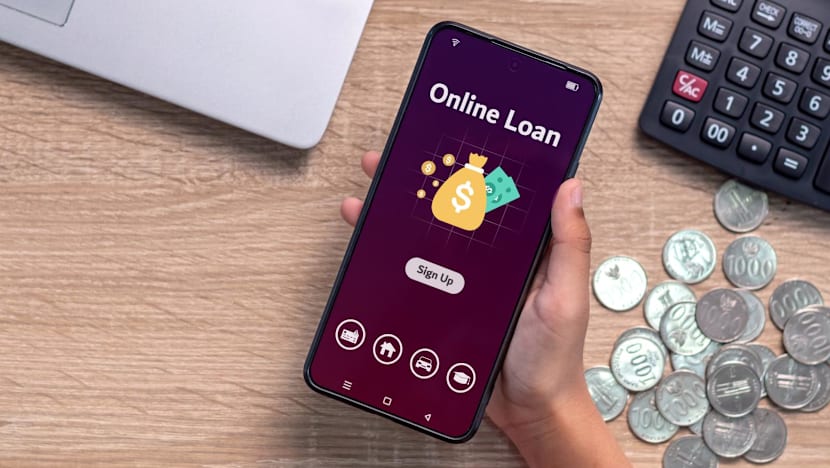
A photo illustration showing an online loan application on a smartphone. (Photo: iStock)

This audio is generated by an AI tool.


JAKARTA: When 43-year-old entrepreneur Dimbon Evans signed up for an account on a digital money lending application in 2019, it felt less like taking on debt and more like unlocking a long-denied convenience.
At that time, a few taps on his smartphone using an app easily secured him the money to purchase air tickets for a holiday with his cousin.
Four years later, he accidentally discovered a “pay-later” button while shopping online and found the feature convenient as he could buy things without having cash on hand.
Since then, his shopping addiction has spiralled as peer-to-peer (P2P) lending platforms have given him access to credit he has never been able to secure from a bank before.
P2P lending refers to the online financial innovation that allows individuals or businesses to borrow and lend money directly, cutting out traditional bank intermediaries.
And within a few months, Dimbon - who did not want to be identified by his real name - became a user of 16 authorised P2P applications and two illegal ones.
The initial loan limits were modest, at just under 10 million rupiah (US$595) per application, but they increased automatically as long as he paid his debt on time.
“It was too easy. The approval was instant, the limits kept increasing, and I didn’t realise how deep I was getting (myself into) until it was too late,” he told CNA.







Within a year-and-a-half, Dimbon had accumulated nearly 100 million rupiah in outstanding loans across more than a dozen legal and illegal digital lending platforms.
What began as manageable monthly instalments to serve his lifestyle - such as buying concert tickets or for holiday purposes - soon ballooned, eventually consuming almost all of his income.
At its peak, Dimbon was paying close to nine million rupiah a month just to service his debt, while his monthly income was just about five million rupiah. To service his debt, Dimbom borrowed from other P2P platforms, leading to what has become a vicious cycle.
Dimbon’s experience sits at the centre of Indonesia’s digital lending boom, which has brought fast credit to millions excluded from traditional banking. But this boom has also raised concerns: it has led to growing peer-to-peer debt in the country which has increased exponentially over the years.
According to data from the Indonesian Financial Services Authority (OJK), outstanding peer-to-peer loans stood at almost 90 trillion rupiah as of September 2025. Just a year prior, the figure stood at about 74.5 trillion rupiah. This was a jump from the 3.9 trillion rupiah in outstanding P2P loans in 2018, according to data from OJK.
The agency has also been cracking down on non-authorised peer-to-peer lenders as well as authorised ones that have been implicated in criminal cases.
On Jan 28, OJK completed its investigation into a criminal case in the financial services sector involving the online lending company PT Crowde Membangun Bangsa and the company's president-director and shareholder identified by the initial “YS”.
Experts told CNA that more needed to be done to protect both customers and peer-to-peer platforms, given the industry's growing trend.
“This year should be the year of better industry governance, prioritising consumer protection and industry health,” said Nailul Huda, director of digital economy at the Center of Economic and Law Studies (CELIOS).
“After all, consumers are the primary driver of the online lending industry development.”
HOW THE SECTOR HAS GROWN
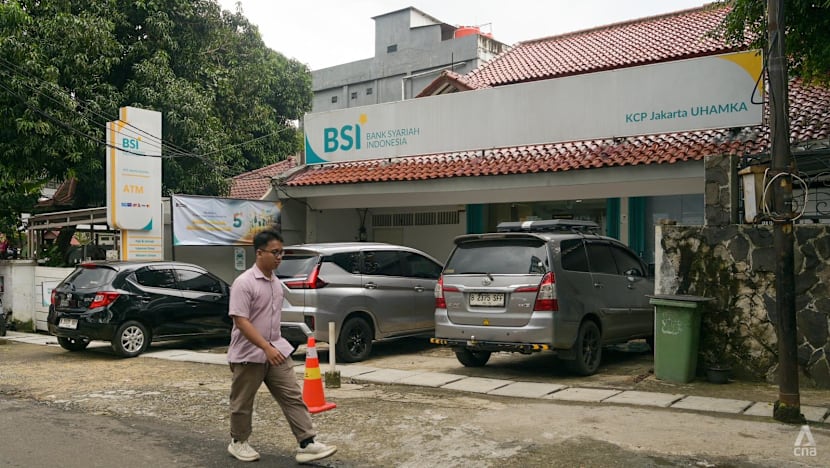
About half of Indonesia’s 280 million people lacked access to formal banking services in 2024, according to the OJK.
Traditional banks remain out of reach due to strict documentation requirements, lengthy approval processes and minimum loan sizes that do not suit small and short-term needs, said analysts.
“Banks won’t process loans of five million rupiah,” said Eko Listiyanto, an economist at the Institute for Development of Economics and Finance (INDEF).
“Digital platforms can. That’s why adoption has been so fast.”
Experts said that Indonesia’s massive population, rising smartphone penetration and unmet credit demand have made it fertile ground for fintech expansion.
The P2P industry boom began around 2015, observers said, and as of today, there are about 97 authorised peer-to-peer lending companies operating in the country. Even more worrying, analysts predict that there are more illegal lenders than legal ones, though the exact number remains unknown.
Borrowers can apply using their phones and often receive funds within minutes - a dramatic contrast to conventional banking.
The COVID-19 pandemic in 2020 also played a role in the P2P industry boom, the experts told CNA.
“Due to COVID-19, there's no mobility, so people (had turned) to fintech,” said Etikah Karyani, who is the digital economy research director at the Center of Reform on Economics (CORE) Indonesia.
“A side effect of COVID-19 is that our economy is experiencing a decline, a slowdown, leading to an increased need for loans. When people couldn’t access banking, they turned to fintech, which is user-friendly,” she added.
The country’s consumer loans, issued by banks for individual use, stood at about 2,800 trillion rupiah as of the middle of 2025, according to OJK.
While P2P loans are still significantly smaller than bank loans, their social impact is enormous, as they primarily target lower-income borrowers with high-interest, short-term loans.
P2P loans in Indonesia mainly consist of unsecured personal and micro-business loans with short tenors and relatively high interest rates, said OJK. Those who get loans from banks typically use the money for mortgages and car loans.
Meanwhile, across Southeast Asia, digital lending has expanded rapidly as governments push for financial inclusion. But Indonesia has the region’s largest population of underbanked adults, at about 140 million, said OJK.
“If we look at Southeast Asia, our underbanked and unbanked population is still quite high compared to other countries,” said Nailul from CELIOS.
“So it's natural that smart lending in Indonesia is thriving, especially among the lower-middle class, who already have limited access to banking.”
Data from the Asian Development Bank show that in 2021, financial inclusion in Indonesia was 52 per cent, lower than Malaysia's 88 per cent and Thailand's 96 per cent.
Compared with smaller, tightly regulated markets such as Singapore or Malaysia, Indonesia faces the challenge of supervising a much broader and more diverse borrower base, said experts.
According to OJK, while most borrowers are on Indonesia’s most populous island of Java, the use of P2P is spread from Sumatra to Papua with a diverse background making it difficult to monitor and conduct background checks on every single case.
THE RISE OF ILLEGAL P2P LENDERS
The rapid growth of the P2P industry in Indonesia does not go hand in hand with financial literacy, leaving many borrowers exposed, experts told CNA.
“When access grows faster than understanding, consumers become vulnerable,” Etikah warned.
“Many borrowers don’t fully understand interest rates, penalties or the long-term consequences of repeated borrowing.”
These borrowers may underestimate how quickly small loans can snowball - especially when credit limits are automatically raised after each on-time repayment.
“The screening is much faster, sometimes too fast,” said Eko from INDEF.
“It reaches very young users and often doesn’t properly assess whether the borrower has the capacity to repay.”
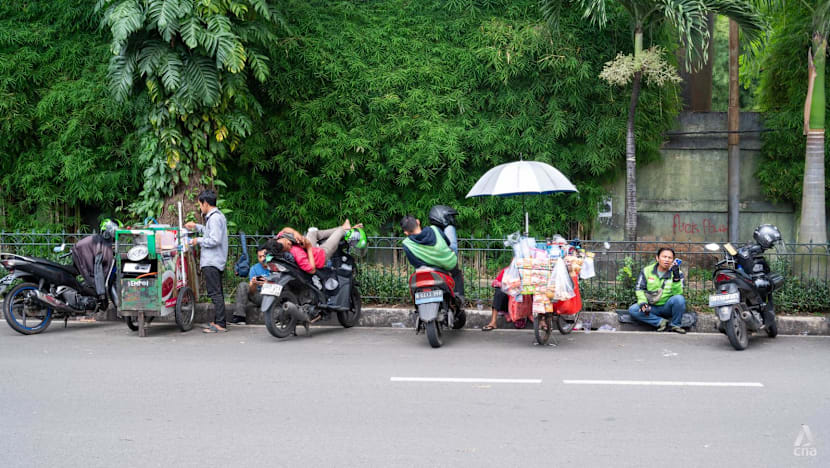
Beyond the regulated platforms, illegal digital lenders also pose a serious problem despite repeated crackdowns by authorities.
Once a borrower’s repayment record deteriorates and is flagged in the OJK’s credit database, access to regulated platforms can be closed off, pushing some users toward illegal alternatives.
“These (illegal) platforms exist because there is demand,” Eko said.
“People who are desperate and already blacklisted still need money.”
Illegal operators often rely on harassment, threats and public shaming to ensure repayment. Experts say these aggressive tactics help keep them profitable despite high default risks.
“They use debt collectors. And they usually also hold private data of the borrower which they can use to intimidate or threaten the borrower (to expose them if no payment is made),” said Eko.
Dimbon encountered this when he unknowingly borrowed from illegal lenders, whom he came across on his social media feeds.
“One loan of 2.5 million rupiah paid out only 1.8 million,” he said. “After four days, they threatened to spread my personal data if I didn’t pay.”
When he hesitated, his photo and personal details were sent to contacts stored on his phone, labelled as a loan defaulter.
“I paid immediately,” he said. “I was scared (of the shame).”
Dimbon eventually cleared his debts in early 2024, settling nearly 100 million rupiah after months of financial strain.
His repayment delays mean he can no longer access legitimate digital lending platforms, a consequence he says he has come to accept.
“Maybe it’s a blessing,” he said. “The door is closed now.”
Authorities have blocked thousands of illegal lending apps and websites in recent years, but new ones continue to emerge, often rebranded or hosted overseas.
Andry Yoga, not his real name, is a 35-year-old freelance online driver in Jakarta.
He also has negative experiences with both legal and illegal peer-to-peer lending applications, but this has not stopped him from reaching out to them as a stop-gap measure for his monetary woes.
Andry began using them after being abruptly let go from a state-owned enterprise in 2019, leaving him without income. While looking for new employment, he started doing odd jobs, earning about 1.5 million rupiah a month.
But he needs at least 4 million rupiah to get by, he told CNA. Thus, Andry decided to borrow money from P2P platforms and, to this day, remains reliant on them.
“The problem is that once I fail to pay on time, there is an interest. The amount of money I need to repay keeps growing, and it becomes a vicious cycle.
“I struggle to repay all the loans and so am now dependent on them.”
WHEN DIGITAL LENDING HELPS BUSINESS GROW
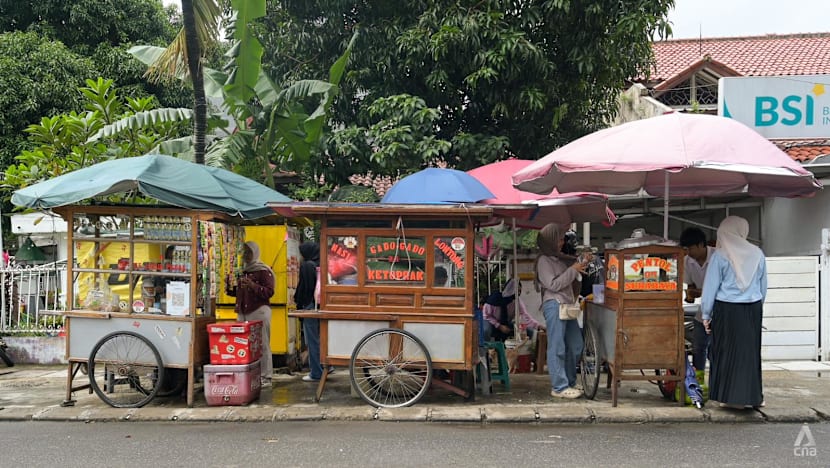
Industry players argue that the problems stem not from digital lending itself, but from how it is used and regulated. Not all borrowers have had negative experiences.
In Sumba, East Nusa Tenggara province, 36-year-old businesswoman Antika Ngguna Pandaung has been using money borrowed from a legal P2P platform to expand her small business and stabilise her household finances.
Once a scavenger, Antika decided to become a weaver with the limited money she got from scavenging waste.
In 2024, a friend of hers told her to get a loan from fintech company Amartha.
She received five million rupiah in loans, which she used to purchase weaving thread.
“I'm really grateful for Amartha's willingness to lend me capital without collateral. I'm not worried about defaulting,” said Antika.
“I believe that when we work hard, the money we invest isn't a burden, but rather a way to help us grow," said Antika.

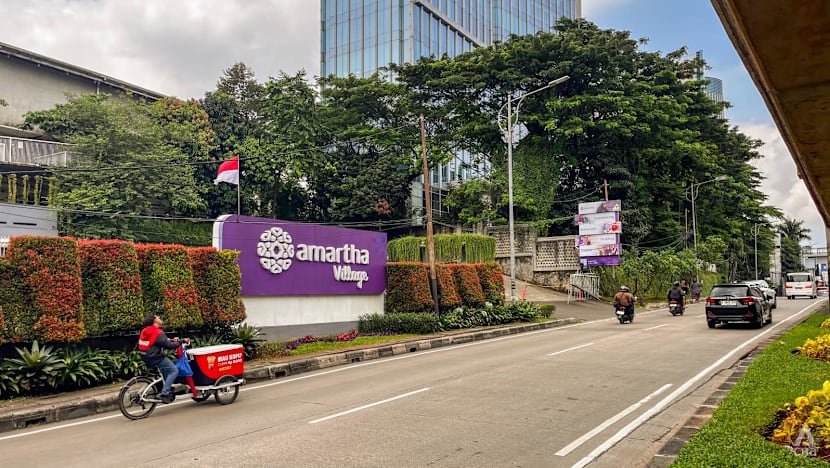
Founded in 2010, Amartha focuses on productive microloans for rural women entrepreneurs who usually farm, trade or produce handicrafts.
Amartha said it has disbursed loans to grassroots micro-businesses across many rural villages.
Unlike consumer-focused lending apps, Amartha uses a group-based lending model that emphasises collective responsibility and financial mentoring.
In serving millions of micro, small, and medium enterprises (MSME), the risk of default must be addressed in the fintech business, said Harumi Supit, Amartha’s vice-president of public relations.
Amartha implements a joint liability system where one lender must form a group with other MSME entrepreneurs in her village, consisting of 10 to 20 people.
Each of them will receive a working capital loan, typically five million rupiah per person in the first year, with the amount gradually increasing in subsequent years.
“If one member is unable to pay, the remaining members will share the burden equally. Payments are made weekly,” said Harumi.
“Occasionally, one or two members may be unable to pay that week, for example, due to illness or a disaster. In this case, the other group members will cover the cost first, and the group will then reimburse the remaining members the following week.”
The joint liability system is particularly suitable for rural communities in Indonesia, she added, where the spirit of mutual cooperation remains strong.
TACKLING THE NEGATIVES, SEEKING POSITIVE MEASURES
Indonesia’s financial authorities have tightened regulations, capping interest rates, strengthening credit-scoring requirements and intensifying enforcement against illegal platforms.
OJK said these measures may slow growth in the short term but are necessary to improve the industry’s long-term health.
Platforms are also under pressure to improve underwriting, limit automatic credit increases and strengthen borrower education.
Still, experts caution that regulation alone will not solve the problem.
“This is not just a fintech issue, it’s a social issue,” said Etikah from CORE Indonesia.
“Aggressive debt collection, data privacy violations and the psychological toll on families are real risks.”
Observers noted the government also needs to do more.
“The government also needs to collaborate with peer-to-peer lenders to provide alternative financing for communities not yet served by banks,” said economist Nailul from CELIOS.
“The government must also create supportive regulations for the industry, lenders, and borrowers.”
While P2P providers in Indonesia are required to conduct credit scoring on prospective borrowers to protect themselves from having to deal with borrowers who cannot repay a loan, this seems to not be enough, said Etikah.
She added that the providers themselves need to be protected against those who may take advantage of the system or those who do not understand the P2P scheme.
Dimbon - who has been debt-free and has not used any P2P applications in the last two years - has learnt his lesson the hard way and will only tap on the platform when urgently needed.
“I believe digital loans can be helpful when used carefully. If it’s for emergencies or business, it can really help,” he said.
“But if it’s for lifestyle spending, like I did, it becomes a boomerang and should be best avoided.”