‘Dukono erupts every second’: Local guides warn of risks on volcano hike
While authorities have warned people not to come within 4km of Mount Dukono’s crater, the lack of an official ban means many climbers still make the trek.
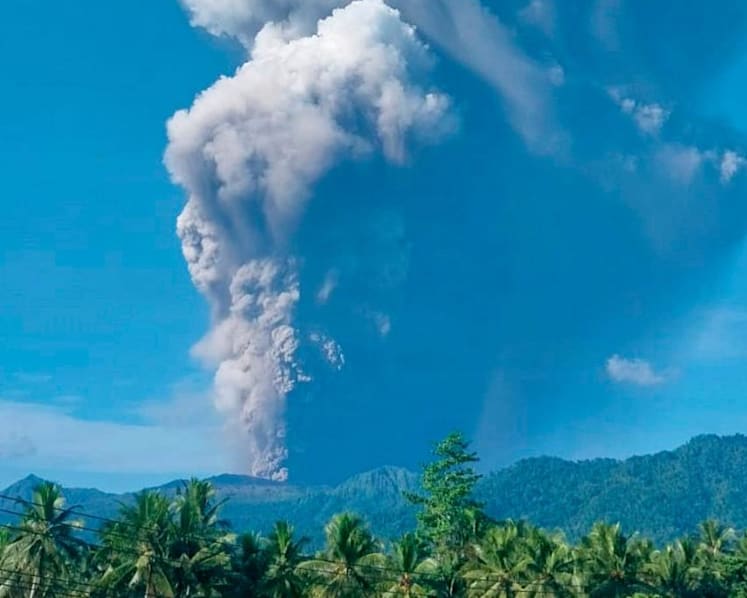
In this photo released by the Badan Geologi, the geological agency of Indonesia's Ministry of Energy and Mineral Resources, Mount Dukono releases volcanic materials during an eruption in North Halmahera, Indonesia, on May 8, 2026. (Photo: Badan Geologi via AP)

This audio is generated by an AI tool.


Indonesian tour guides say the hike up Mount Dukono carries risks, with some refusing to take guests who do not understand the dangers of active volcanoes.
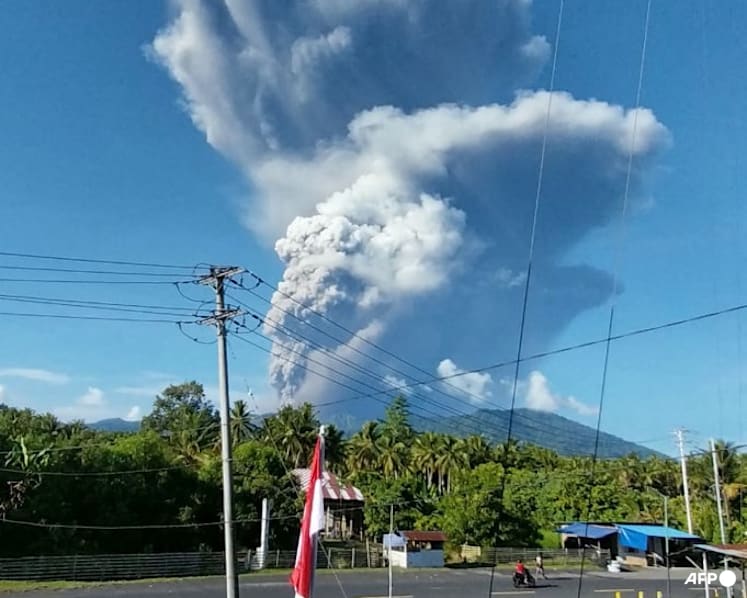
Mount Dukono erupted on Friday (May 8), sending an ash cloud about 10km into the air.
Twenty hikers, including Singaporeans, were caught in the eruption on Halmahera island in North Maluku province, with three still missing, according to Indonesian authorities. Singapore's Ministry of Foreign Affairs has said it is working with Indonesia to provide assistance and support to Singaporeans affected by the eruption.
Access to the area has been restricted since Apr 17 after scientists observed increased volcanic activity. Authorities have also warned people not to come within 4km of the crater, but without an official ban, many climbers still make the trek.
Former Mount Dukono guide Yanto Aris, 50, told CNA that only a handful of guides used to take climbers up the volcano.
"They were equipped with full safety gear such as helmets and gas masks. Nowadays, that standard is rarely followed," said Yanto, now based in the city of Malang in East Java province.
"I may have been one of the first to bring guests to Mount Dukono, around 2005. After that, I went there about five to six times a year, bringing researchers, filmmakers, or photographers - mostly from Europe."
Yanto said he refuses “to take guests who do not understand the dangers of volcanoes”.
"Dukono erupts every second. In fact, it is most dangerous when it is not erupting - even staying quiet for just an hour is dangerous, let alone a whole day."
Volcanologists CNA spoke to said Mount Dukono has highly intense eruptive activity. It erupts every day, though eruptions generally occur in the crater area. Since 2008, eruption plumes have ranged from 50m to as high as 10km.
“However, under certain conditions when pressure increases, larger explosive eruptions can occur, such as today,” said Heruningtyas Desi Purnamasari, head of the volcano team at the geological agency in Indonesia's Ministry of Energy and Mineral Resources.
“Today’s eruption reached a height of 10km, with incandescent material projected up to an estimated distance of 2km to 3km”.
Mount Dukono has been at Level II (Alert) in Indonesia’s four-tier alert system since 2008. Mount Ibu, also on Halmahera island, is at Level II, while Mount Semeru, the highest volcano on Java and which can erupt every five minutes, is at Level III. Level IV indicates the highest level of volcanic activity.
"If asked whether it can be predicted, Mount Dukono does erupt every day. Its activity has been considered elevated or abnormal since 2008," Heruningtyas said.
"Our recommendation at Level II (Alert) is to avoid any activity within a 4km radius from the centre of activity. This means no human activity is recommended within that range, including climbing or other activities."
DANGEROUS DRAW
Despite the risks, the eruptions are a draw for many visitors.
M Ichsan, a guide with travel agency Kelana Malut and an organiser of open trips to Mount Dukono, said he took 20 tourists to the mountain last month. The company holds at least two open trips every month, not including private trips, the 34-year-old told CNA.
“This mountain erupts every second - sometimes small, sometimes moderate, sometimes large,” he said.
“What attracts people to Dukono is its eruptions; that’s what visitors are looking for. They can see eruptions up close, even on a smaller scale. The scenery is stunning, making it one of the most beautiful mountains in North Maluku.”
A receptionist at a hotel in Tobelo, the closest town to Mount Dukono, said local authorities have issued no advisories on restrictions or warnings for guests against climbing the volcano, even as it continues to erupt.
Speaking on condition of anonymity and requesting not to name his hotel, the staff member said that in the absence of official guidance, any decision to hike Mount Dukono is treated as the responsibility of those who choose to do so.
He said that no guests at his hotel were currently known to be climbing the mountain, although a tourist from Spain was a recent guest and left Tobelo three days ago after climbing Mount Dukono to travel to another island.
"For the Spanish tourist ... the tour guide said it was safe. We only asked the tour guide for information to make sure, such as how long the hike would take, which route they would take, and what would happen if it rained," he said.
According to the man, his hotel, which is located more than 20km from Mount Dukono, does not provide transportation or tour guide services to the site, although it is aware of independent guides who regularly take visitors there.
Even so, the hotel still makes an effort to ensure that guests who plan to hike are properly prepared. It does so mainly by asking detailed questions about their plans through the hired tour guides.
TWO ROUTES - ONE RISKIER
From his conversations with tour guides, he learnt that there are two access routes to Mount Dukono - an official hiking trail and an alternative, unmonitored route. He said the unguarded route is still frequently used by tourists, even while the volcano is erupting.
"It passes through residents’ homes and plantations, so there are areas with no guards. And they (tourists) often go up through this unguarded route. The location is probably about 10km to 15km from the guarded route."
M Ichsan said the two access routes were via Ruko Village and Mamuya Village.
According to his fellow guides, the victims were tourists who apparently took the Mamuya route.
“I have never taken tourists via Mamuya because it is dangerous. Although it is a faster route to the crater, it lies at a lower elevation relative to the crater, increasing the risk of being hit by large rock ejecta,” he noted.
“If you want to climb Dukono, it should be done in the morning between 7am and 9am. After that, the eruptions tend to be larger.”
Additional reporting by Amanda Puspita Sari, Denny Armandhanu, Ericssen and Adhitya Ramadhan