Malaysian opposition party Bersatu sacks deputy president Hamzah Zainudin
Analysts tell CNA the latest move shows Bersatu president Muhyiddin Yassin still runs the show and could be eyeing a return as chairman of the opposition coalition Perikatan Nasional.
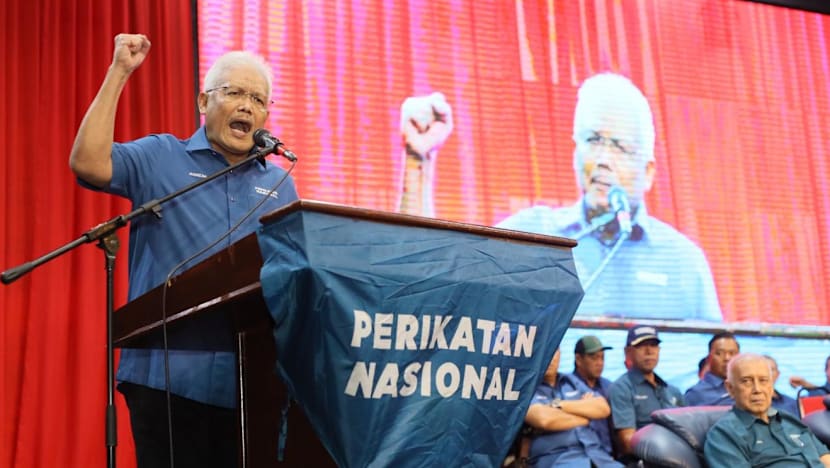
Bersatu deputy president Hamzah Zainudin in Sabah in November 2025. He was sacked by Bersatu on Feb 13, 2025. (Photo: Facebook/Hamzah Zainudin)

This audio is generated by an AI tool.




KUALA LUMPUR: Malaysia’s opposition Parti Pribumi Bersatu Malaysia (Bersatu) has sacked its deputy president Hamzah Zainudin amid ongoing infighting and a purge of dissenting senior party members.
According to a letter dated Friday (Feb 13) addressed to Hamzah that was circulated on messaging platforms, he was expelled for allegedly breaching the party’s constitution.
The letter, signed by Bersatu’s disciplinary board chairman Mohd Radzi Manan, said Hamzah retains the right to appeal the decision within 14 days.
He said the decision was made by the disciplinary board, which had convened on Thursday.
Bersatu secretary-general Azmin Ali confirmed Hamzah’s sacking in a statement on Friday.
Analysts told CNA the latest move shows Bersatu president Muhyiddin Yassin still runs the show in the party and could be eyeing a return as chairman of the opposition coalition Perikatan Nasional.
Alongside Hamzah, Bersatu also terminated the memberships of Gerik MP Fathul Huzir Ayob, Padang Rengas MP Azahari Hasan, Gerik MP Fathul Huzir Ayob, and Machang MP Wan Ahmad Fayhsal, who was previously suspended from the party.
Hamzah, Malaysia’s leader of the opposition, is a former minister of home affairs.
His sacking comes after another top leader, Saifuddin Abdullah, was expelled on Jan 6.





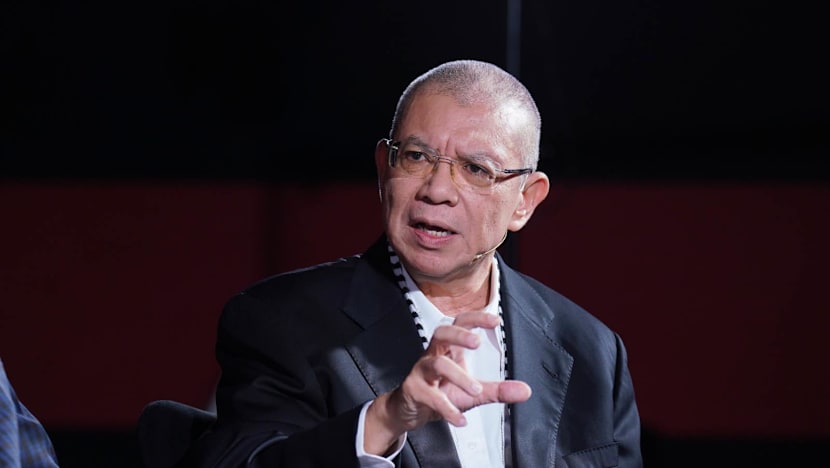
Saifuddin, a former foreign affairs minister, had led 15 other MPs in writing a letter appealing the party sanctions against members who were pushing for Hamzah to take over as president from Muhyiddin Yassin.
In November, Saifuddin was summoned by Bersatu’s disciplinary board for an investigation into allegations of involvement in a movement to overthrow Muhyiddin.
Bersatu has been divided into at least two main camps: One aligned with Muhyiddin, and another with Hamzah, who is currently Larut MP.
A third faction is reportedly loyal to secretary-general Azmin Ali, who is aligned with Muhyiddin.
Muhyiddin, a former prime minister, has faced pressure to step down and make way for new leadership in recent years. In 2023, he caused a stir when he backpedalled on his announcement not to defend his presidency at Bersatu’s internal polls.
In September last year, there was a show of dissent against Muhyiddin at Bersatu’s annual general meeting, with some delegates heckling him to step down as president.
At the meeting, Muhyiddin had criticised efforts to topple him via the collection of statutory declarations from party members, saying that this was against Bersatu's constitution.
Still, the party unanimously endorsed him as the party’s prime ministerial candidate for the next general election.
Bersatu’s troubles extend beyond the party. There are tensions with its Perikatan Nasional (PN) coalition partner Parti Islam Se-Malaysia (PAS) following the resignation of Muhyiddin as PN chairman, which was supposed to have taken effect on Jan 1 this year.
Muhyiddin had resigned after a political crisis in the northeastern state of Perlis, whose state assembly is controlled by the coalition.
Since then, PN has yet to pick its next chairman, with Muhyiddin and PAS issuing conflicting statements on the matter.
PN was formed in February 2020 and is currently made up of four component parties: Bersatu, PAS, Parti Gerakan Rakyat Malaysia (Gerakan) and the Malaysian Indian People’s Party (MIPP). The latter two are largely considered to be minor players in the coalition.
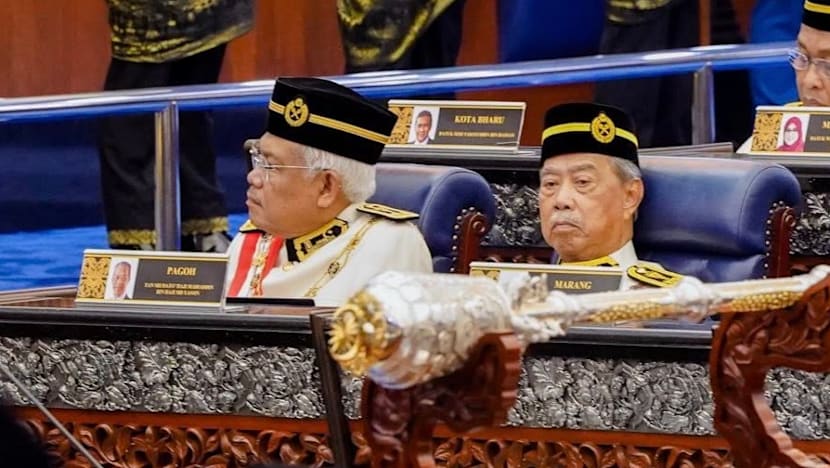
CAN BERSATU BE SAVED?
With the latest sackings, political analysts said Bersatu will be further weakened. This is because of Hamzah’s significant influence and deep support within party ranks, they said.
Universiti Malaya political analyst Awang Azman Awang Pawi believes the rift in the party to be irreparable, especially as Hamzah had the majority support of Bersatu’s lawmakers.
While Bersatu secured 31 seats in the 2022 general election, its share of seats has dropped to 25, after six MPs unhappy with Muhyiddin’s leadership switched allegiance to Prime Minister Anwar Ibrahim’s government in 2023.
With Friday’s sackings, the number is set to drop even further.
Sixteen Bersatu MPs issued a statement on Friday backing a call by party vice-president Ronald Kiandee for Muhyiddin to step down as president and give way to Hamzah.
Kiandee, who is Beluran MP and the party’s parliamentary whip, had claimed earlier in the week that Muhyiddin had failed to effectively handle the party’s internal crisis.
“It seems that the party cannot be saved as not all (its) parliamentarians are with Muhyiddin. This has serious implications for Bersatu and it is going to be very ugly,” said Awang Azman.
Muhyiddin, meanwhile, could be eyeing a return as chairman of PN, a role that remains vacant amid disagreements with PAS, analysts said.
The role is effectively seen as the coalition's de facto prime ministerial candidate for Malaysia’s 16th General Election (GE16) that has to be held by February 2028.
While PAS has officially stated it will not interfere in Bersatu’s internal affairs, it is widely seen as being much more comfortable working with Hamzah, Awang Azman noted.
PAS was the driving force behind PN's success in the 2022 GE, securing 43 parliamentary seats, a substantial gain of 25.
WHO WILL BE NEXT OPPOSITION LEADER?
Azmi Hassan, a senior fellow at the Malaysia-based think tank Nusantara Academy for Strategic Research, said the dismissals would further deteriorate the relationship between Bersatu and PAS.
He foresees a wrangle over the position of opposition leader with Hamzah’s sacking.
PN must urgently identify a successor, he said, suggesting that the position looks increasingly likely to be filled by a candidate from PAS.
“(Hamzah) cannot be the leader of the opposition (as an) independent (MP) since he has been sacked (by Bersatu). Already PN is facing issues choosing their chairman, now they will have another problem choosing their opposition leader,” he said.
Syaza Shukri, a political science professor at the International Islamic University Malaysia, said PAS could put forward its secretary-general Takiyuddin Hassan as opposition leader. He is someone she described as having traits “similar to Hamzah’s combativeness”.
Syaza doubted that PAS would get involved in Bersatu’s internal problems and could instead wait and see if Bersatu regains stability before having further negotiations.
“Bersatu needs to shift the party’s focus from this internal bickering to appear as a government in waiting,” she said.
“To ensure longevity, the party still needs to figure out its next tier leadership. So now Hamzah is gone, who is the second-in-command? Azmin?”
While the dismissals show Muhyiddin is still “in control” of Bersatu, they bring “into question his legitimacy as president”, she added.
University of Tasmania Asian studies professor James Chin said Bersatu will probably emerge stronger if Muhyiddin regains his position as PN chairman.
“It could be this was his plan all along - create a crisis and get rid of Hamzah, his number one nemesis,” Chin said, referring to Muhyddin’s decision to quit as PN chairman and the uncertainty that followed.
As for Hamzah, while Bersatu could request that the parliament speaker declare his seat vacant, Chin said the speaker was unlikely to agree, citing the precedent with the six MPs Bersatu sacked earlier.
In July 2024, Dewan Rakyat Speaker Johari Abdul ruled that the six MPs who backed Anwar could retain their seats as their dismissal did not trigger the anti-hopping law.
It is unlikely that Hamzah would join another party as this would trigger the anti-hopping law and automatically vacate his seat, Chin said, adding that he would likely remain as an independent MP.
This is despite United Malays National Organisation (UMNO) president Ahmad Zahid Hamidi reportedly saying on Tuesday that UMNO is open to welcoming back former members including Hamzah. UMNO is part of Anwar’s unity government.
According to Chin, Hamzah’s status as an independent MP would likely benefit the government, as Hamzah could fire salvos at Muhyiddin in parliament and will no longer be required to toe the opposition line during debates.
“Of course, this will benefit Anwar, but I don't think he wants to be seen as getting too involved in Bersatu (affairs),” Chin added.
Syaza said the opportunity now lies with the Anwar administration to “produce tangible outcomes” that can be felt by the people ahead of the next general election. This would “show (it) can govern while the opposition is still in a mess”, she said.