analysis Asia
Under growing pressure to hand over Bersatu reins, former Malaysia PM Muhyiddin fights for political survival
Facing growing calls in Bersatu to step down as president, Muhyiddin Yassin risks isolation and permanent damage to his party, analysts say.

This audio is generated by an AI tool.


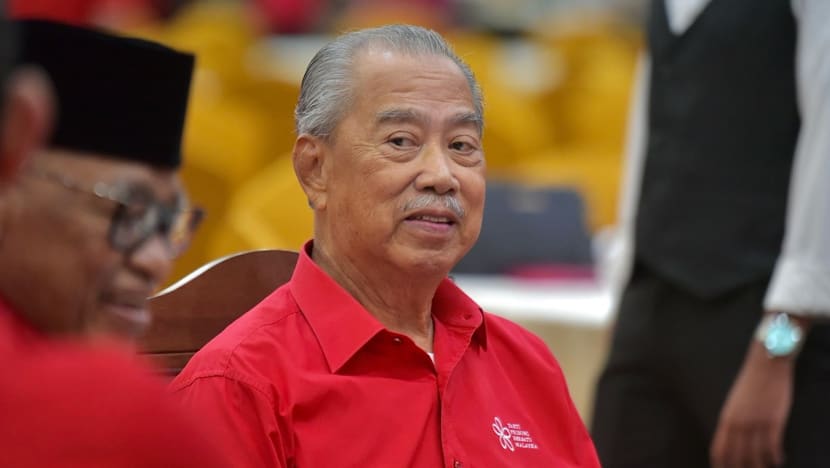
KUALA LUMPUR: Former premier Muhyiddin Yassin, a warhorse and survivor of multiple battles in Malaysia’s political arena, is in a fight for his political survival, say analysts.
At 78, Muhyiddin is battling to hold on to the presidency of Parti Pribumi Bersatu Malaysia (Bersatu), which had named him its PM candidate for the next general election at a party congress in September.
But in recent weeks, turmoil has swept through Bersatu over Muhyiddin’s leadership of the party. There are now growing calls by his one-time loyalists for him to step down as president in favour of deputy Hamzah Zainuddin, 68, say political observers.
Even leaders from Bersatu’s chief ally in the opposition, Parti Islam Se-Malaysia, have stated that a younger candidate would be more palatable as the potential PM candidate for the alliance.
But Muhyiddin is digging in.
In recent weeks, he has fought back against the revolt with Bersatu sacking and suspending members aligned to Hamzah, a strategy analysts said could further hurt the party, which has lost some support among the country’s politically dominant ethnic Malay Muslim community.
“A majority of the Bersatu politicians are young and they want to project a new brand without Muhyiddin ahead of the next elections,” said A Kadir Jasin, a veteran journalist who has written on Malaysian politics for more than five decades.
Malaysia’s next general election must be called by February 2028.
Kadir, who was media advisor to then PM Mahathir Mohamad in 2018 when Muhyiddin was also part of the Cabinet, noted that Muhyiddin’s move to purge his detractors from the party was “a sign of desperation” and could leave him isolated.






POLITICAL BRUSHFIRES
Muhyiddin's latest woes come at a time when he is facing other serious political brushfires.
On Monday (Nov 10), a Malaysian High Court declared that Muhyiddin’s corruption trial would begin in early March. He is facing charges of abuse of power and soliciting bribes amounting to RM232.5 million during his 17-month premiership that ended in August 2021.
Separately, the authorities are turning up the heat on Muhyiddin's fugitive son-in-law, Muhammad Adlan Berhan, who is wanted by the Malaysian Anti-Corruption Commission for alleged criminal breach of trust.
Muhammad Adlan’s passport has been revoked and the authorities are working with Interpol to locate him.
Public bickering in Bersatu has revolved around the Oct 14 decision by the party’s disciplinary board to sack Wan Saiful Wan Jan, the Member of Parliament of Tasek Gelugor constituency in Penang, and to suspend Wan Ahmad Fayhsal Wan Ahmad Kamal, who is the MP for the Machang seat in Kelantan.
This is believed to be linked to the collection of statutory declarations from divisional chiefs purportedly to topple Muhyiddin, though Wan Saiful had since denied that the declarations were for such a purpose.
Muhyiddin had spoken of such a plot at the party’s annual congress on Sep 6, which was marred by a show of dissent against him.

Since Wan Saiful’s sacking, tensions within Bersatu have continued to build up.
Bersatu sources told CNA that 16 of the party’s 25 elected MPs had signed a declaration to oppose the actions by the Bersatu disciplinary board, which party sources said is dominated by Muhyiddin’s allies.
Saifuddin Abdullah, who was one of the MPs who signed the document and has publicly called on Muhyiddin to quickly initiate a peaceful handover of power in the party, told CNA that Bersatu’s supreme council had decided last week that rival groups have “agreed to a cease fire”. He declined further comment.
BERSATU’S BRAND
Bersatu is very much a splinter party of the long-established United Malays National Organisation, and was born out of the 1Malaysia Development Bhd (1MDB) scandal where billions were siphoned out of the state-linked fund.
Muhyiddin was sacked as deputy premier in 2015 by his former boss, now-jailed Najib Razak, for questioning Najib’s handling of the scandal.
Muhyiddin then joined forces with Mahathir to group defectors from UMNO and form Bersatu.
The party made a pact with the opposition alliance at the time and succeeded in defeating the UMNO-led Barisan Nasional coalition in the historic general election in 2018.
But Bersatu’s bid to offer itself as an alternative to UMNO struggled to find traction in the Malay community, which is now largely divided in its support between UMNO and PAS.
In the 2022 general election, Bersatu secured 25 parliamentary seats and the victories were largely because of its election pact with PAS, which currently has 43 seats in the 222-member lower house.
In a series of by-elections since the November 2022 general election, Bersatu failed to secure victories for seats that fell vacant following the passing of incumbent candidates.
The last defeat in September 2024 was for the Mahkota state assembly seat in Johor and it marked the third straight electoral loss for Muhyiddin’s party.
Ibrahim Suffian, chief of opinion pollster Merdeka Centre, described the headwinds buffeting Bersatu as “the most serious facing the party and also Muhyiddin”.
“The Bersatu brand isn’t very strong. It failed to win control of any state (government) in the last election to establish a base,” he said, adding that “the party’s prospects in the next general election don’t look good”.
POLITICAL WARHORSE
Muhyiddin may have been less in the public eye than two-time former premier Mahathir and current PM Anwar Ibrahim, but he has nonetheless been a serious and influential player in the turbulent world of Malaysian politics.
He joined the government service after graduating from Universiti Malaya in 1971 with honours in economics and Malay studies.
Veteran UMNO politicians noted that Muhyiddin quickly caught the eye of then Johor chief minister Othman Saat, a powerful party warlord who grafted the young civil servant as his senior political aide.
Muhyiddin went on to become Johor’s chief minister before being appointed to the federal Cabinet in 1995.
In the early 2000s, during the tail-end of Mahathir’s first stint as premier, Muhyiddin became a firm supporter of then deputy premier Abdullah Ahmad Badawi.
He was widely seen as the politician most likely to take over the Number 2 position in government when Mahathir stepped down in favour of Abdullah.
But that did not happen.
When Abdullah assumed the premiership in November 2003, he came under strong public pressure from Mahathir to appoint Najib as his deputy.
A dejected Muhyiddin bided his time and when Malaysians denied the ruling Barisan Nasional coalition a two-thirds majority for the first time in the 2008 general election, Muhyiddin publicly called for Abdullah to take responsibility for the defeat and resign.
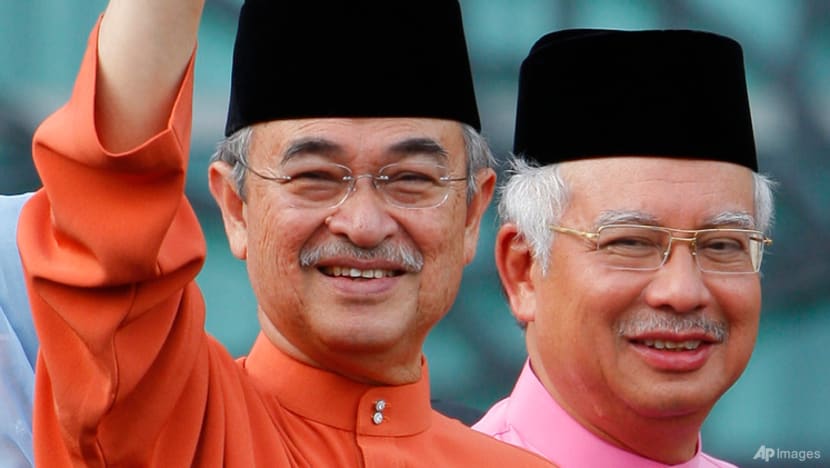
When Najib took over the premiership a year later, he appointed Muhyiddin as his deputy.
But the relations between the two politicians were testy and turned sour over the fiasco at 1MDB. Najib sacked Muhyiddin as his deputy premier in July 2015.
TWISTS AND TURNS TO THE PREMIERSHIP
Muhyiddin returned to government after the 2018 general election and Mahathir, who became premier for the second time, appointed him as Home Minister.
But the new coalition was always fragile because Bersatu leaders were reluctant to work together with multi-racial based parties, such as Anwar’s Parti Keadilan Rakyat (PKR) and the Democratic Action Party (DAP).
Tensions came to a boil in February 2020 and, in a series of behind-the-scenes realignments, Muhyiddin broke ranks with Mahathir and withdrew Bersatu from the struggling coalition government, pushing the country’s politics into a crisis.
The political wrangling eventually saw Muhyiddin being appointed by the then King, Sultan Abdullah Ri'ayatuddin Al-Mustafa Billah Shah, as the country’s eighth premier.
His appointment came after Bersatu, without Mahathir, formed a coalition with UMNO, PAS and a coalition of parties from Sarawak.
The new government was never stable and to stay in power, Muhyiddin embarked on a series of controversial moves, aided largely by the upheaval from the COVID-19 pandemic.
Muhyiddin leveraged on the health crisis to prorogue Parliament for more than six months, enacted nationwide lockdowns and declared a state of emergency.
After a troubled 17 months as premier, Muhyiddin was forced to resign in August 2021 after UMNO withdrew its support for his leadership.
UMNO later took a lead role in a new coalition that also included Bersatu and elevated its then vice-president Ismail Sabri Yaakob as the next prime minister.
Following the 2022 general election, Bersatu deputy president Hamzah has served as Leader of the Opposition.
In an interview with radio station BFM last week, Hamzah claimed Muhyiddin intends to hand over the Bersatu presidency to him once he decides to step down.
Some analysts interpreted the comment as a subtle reminder to Muhyiddin on leadership transition.
The coming weeks are set to be crucial for Muhyiddin, analysts noted.
Merdeka Centre’s Ibrahim said that Muhyiddin’s prospects of clinging on to the party presidency are dim.
“Several Bersatu members feel that Muhyiddin wants to hold on to the presidency as some kind of insurance against his corruption cases, but a majority (of Bersatu members) want to move on,” said Ibrahim.
Kadir, the veteran journalist, added: “If these tears are not stitched up soon, the crisis could permanently damage Bersatu, which is already struggling.”