







Malaysia’s influencers deem new tax guidelines impractical, but experts say they ‘ensure fairness’
Some content creators welcome the latest income tax guidelines - including the need to declare gifts - though they call for more clarity on what exactly should be declared and how.

Malaysia content creators (from left) Nuridah Mohamed, Ainaa and Dharshamini Kesavan. (Photos: Nuridah Mohamed, Ainaa, Dharshamini Kesavan)

This audio is generated by an AI tool.

KUALA LUMPUR: Nuridah Mohamed, 39, earns extra pocket money on the side by promoting beauty and lifestyle products on TikTok.
Sellers on the social video app will sometimes send free product samples to content creators like herself for them to promote without payment. Creators will then get a commission on product sales made through the app.
Content creators who do this are often beginners or part-time operators in the influencer space, a far cry from the glitzy collaborations between prolific brands and popular figures with hundreds of thousands of followers on social media.
So when Nuridah read through new guidelines by Malaysia’s Inland Revenue Board (LHDN) for influencers released on Jan 14, she had some concerns.





The guide reiterated that social media influencers must declare all their income, including free products and services received for reviews or promotions. It did not specify a minimum value for such freebies.
It also defined individual influencers as anyone who produces content on social media for the purposes of advertising or promotion. These could include politicians, artists, athletes, religious figures and housewives.
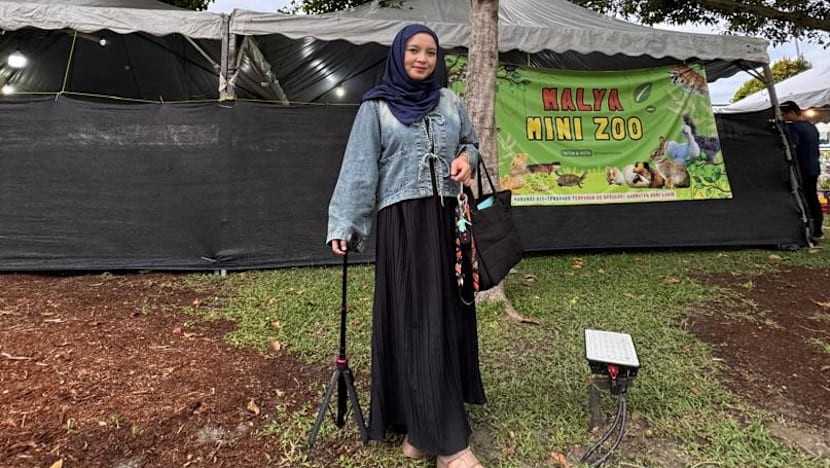
Nuridah, who has a full-time job as a tenant coordinator, told CNA that content creators get multiple inexpensive product samples from a wide range of TikTok sellers, making it impractical to keep track of everything.
She suggested that only free gifts of services worth more than RM200 (US$51) should be declared to the taxman.
“The free samples that we get won't necessarily sell very well. So, the new guidelines will make the job even more challenging,” said Nuridah, who has about 13,000 followers on TikTok and 3,400 followers on Instagram.
Nuridah's number of followers puts here squarely as being a micro-influencer - someone with a following of between 10,000 and 100,000 people - according to CMSWire, an online publication that covers customer and digital experience methodologies, tools and operations.
Meanwhile, those who have between 100,000 and 1 million followers are called macro-influencers while those with a following of more than 1 million people are called mega or celebrity influencers.
Nuridah told CNA that many creators starting out their career were willing to promote these lower-value products for free to grow their profile. She fears that asking for payment in cash will make her lose out to the competition.
"From now on, I have to be really selective about the jobs I take," she added, explaining that many creators were now afraid of accepting free samples to avoid running afoul of the law.
“Small content creators like us are just trying to earn some side income, and to think that even this will be taxed.”
What should influencers and businesses do to comply?
With the new LHDN guidelines, KPMG Malaysia head of tax Soh Lian Seng advised influencers and content creators to think of their jobs as running a “small business”.
That means keeping proper records of everything received, including cash payments, free products, hotel stays, sponsored services or any other perks.
“When you receive sponsored items, note down their value at the time you receive them. Even if you did not pay for them, they are still considered part of your income,” he said.
“If your transactions go through an agency or management company, make sure you have clear contracts and written confirmation of the arrangement and payments. This will protect you and help avoid compliance issues afterwards.”
Businesses that engage influencers should “put everything in writing”, including issuing proper contracts, invoices and documentation to remove ambiguity about what is being given or paid, Soh said.
“If you provide sponsored products or services, record their value clearly in your internal system,” he added.
“Make sure your processes align with LHDN’s e-invoicing requirements, especially when e-invoicing becomes mandatory for your company.”
SMALLER CREATORS HIT
To be clear, under Malaysia’s existing income tax law, income derived from a business or profession has always been taxable. This includes benefits received in kind if they arise from income-generating activities.
“However, in practice, the treatment of gifts, free products, or sponsored experiences was often unclear, especially for influencers operating informally,” tax partner Nur Syafinaz Vani and senior legal associate John Van Huizen from law firm Zul Rafique & Partners told CNA.
“Many creators did not view these items as taxable income, and there was uncertainty over valuation, documentation and reporting obligations.”
Zul Rafique & Partners said the clarity encourages influencers to voluntarily comply with tax obligations and brings the growing creator economy more firmly within Malaysia’s tax framework.
“As more people earn real income through social media, treating influencers like other income earners helps ensure fairness in the tax system,” they said.
According to a 2025 report on Malaysia’s digital landscape by outsourced business services firm AnyMind, 54 per cent of Malaysians prefer to engage with influencer-led short videos when discovering new brands.
Influencer marketing in Malaysia had a market value of RM150 million in 2023 and is projected to exceed RM300 million by 2026, driven by widespread use of social media and increasing trust consumers place in influencers, according to a December 2024 blog post by digital marketing agency MYSense.


Observers and industry players told CNA the new guidelines will make the influencer ecosystem more transparent and accountable, and protect content creators from clients who do not offer fair remuneration by encouraging cash payments instead of just gifts.
But they raised concerns that the guidelines will put more burden on smaller creators who are more likely to accept free products and services instead of cash as payment for the jobs they have completed.
They also raised questions about public relations (PR) gifts received not as part of an official job, products or services featured as an unpaid favour, and whether influencers should declare retrospectively for the upcoming tax season.
In Malaysia, tax returns of individuals with no business income are required to be filed by Apr 30 of the following year. As for those who are carrying on business, the deadline for filing the tax returns is Jun 30 of the following year.
Zul Rafique & Partners said smaller creators face a “heavier compliance burden” as opposed to larger influencers who typically command fixed cash fees and have established accounting systems.
“(Smaller creators) must now determine the market value of items received, keep detailed records, and potentially pay tax on benefits received in kind, even when no cash changes hands,” they said.
“For creators with modest or irregular earnings, this can raise cashflow concerns and increase compliance anxiety, especially where guidance on valuation and record-keeping is not fully clear.”
INFLUENCERS ASK FOR CLARITY
A full-time content creator who only gave her name as Ainaa, 31, said the job is not just about recording videos. Rather, it involves time, effort, equipment, content planning, and ongoing operational costs.
“So, any changes to guidelines naturally require some adjustment in terms of additional administrative work, such as keeping more detailed records of collaborations and assessing the value of goods or services received,” she told CNA.
“For content creators, this could potentially increase operational costs, whether in terms of time or the need to seek accounting assistance. However, I see this as a step towards more professional management in the long run.”
Ainaa, who has about 36,500 followers on Instagram under the handle @n.ainaafiqahh, called for smaller creators to be given “clear guidance and support” with the new guidelines to help them continue to grow in a more professional and sustainable manner.
Fellow full-time content creator Dharshamini Kesavan said the new tax guidelines will make content creators more responsible and protect them from clients who have “no budget, but only (want to deal in a) product or services exchange scenario".
“Honestly, there’s no big difference for me … Since I became a full-time content creator (in 2023), I have kept filing my taxes. For me it’s business as usual, except declaring the gifts and services,” the 37-year-old told CNA.
However, Dharshamini noted that since the COVID-19 pandemic, she has helped small businesses promote their products or services for free as part of her corporate social responsibility. She wonders if the gifts she gets under this initiative need to be declared too.
“How do we differentiate a genuine support post for family and friends by a content creator?” she asked.
Another scenario that raises questions, Dharshamini said, is when influencers are paid to create content for business like spas, restaurants or hotels, where they have to experience the services offered at these places.
“I will be declaring tax for the remuneration I receive. How about the services? For me it’s part of the requirement for the job delivery. Should I declare (the value of the services) as well?”
Dharshamini, who has more than 79,000 followers on Instagram under the handle @dharshamini_kesavan, feels LHDN should give clearer guidelines and further educate creators on the dos and don’ts, such as if there will be a minimum threshold for products or services to be declared.
“Once we have clear, binary guidelines, it’s going to be easier for everyone,” she added.

Timothy Tiah, who founded social media advertising network Nuffnang, believes a large segment of influencers in Malaysia are “not very educated” on their tax obligations and could continue not declaring their gifts.
Those in the know will start requesting for cash terms instead of free products or services, meaning businesses must rethink their marketing budgets and strategies when engaging influencers, he told CNA.
Tiah, who now runs a co-working space, said this could reduce opportunities for smaller creators and pose more challenges for small- and medium-sized enterprises (SMEs).
“Those affected more by this are the SMEs. Normally, they don't have a lot of budget (for advertising),” the 41-year-old said.
“They can give some products, and normally, influencers are quite kind in supporting local and everything. But now they can’t, because they get taxed.”
Tiah also posts videos about Malaysian affairs on his social media platforms, which attract a considerable following. He already has an eye on the new guidelines when considering whether to take up any paid promotions.
“I’ve started telling clients, ‘Don't send me your product, please. I need to pay tax on that. Or if you loan me the product, I'll give it back to you if you need (me to) review or something like that,’” he said.


Tiah questioned if PR gifts and goodie bags given without obligation should be declared too, and whether influencers should declare the gifts they got in the past year or only those received from January.
“It would be really helpful if they say, maybe, (gifts) below RM1,000 don’t need to be taxed, because I can't imagine it being worth the trouble if it’s below that. But so far, it hasn't come out like that,” he added.
“I have more questions than answers, really.”
While the lawyers from Zul Rafique & Partners acknowledged that LHDN’s policy direction is “sound”, they said it also raises “practical concerns”.
“These include the difficulty of valuing non-cash benefits, the burden on smaller creators, and uncertainty over record-keeping and cross-border income,” they said.
“Without clearer guidance, the rules may unintentionally create confusion and discourage voluntary compliance.”
CNA has reached out to LHDN for comment.
SOUTHEAST ASIA TAXING INFLUENCER INCOME
Malaysia’s attempt at strengthening its tax system in the digital age follows a regional trend.
Across Southeast Asia, tax authorities are increasingly formalising how influencer and content creator income should be taxed, said Soh Lian Seng, head of tax at KPMG Malaysia.
“While each country has its own approach, the general trend is the same: Influencer income, whether cash or freebies, is taxable. What differs is how clearly each country explains the rules and how strictly they enforce them,” he told CNA.
Malaysia has released a “very detailed and comprehensive taxation” framework for influencers, Soh said, noting that it is the only country that explicitly includes object-based influencers, such as mascots or virtual characters.
Meanwhile, Singapore uses a more traditional and less prescriptive approach, Soh said, allowing a practical exemption for one-off gifts under S$100 (US$79), as long as they are truly ad-hoc and not recurring.
“Everything else - sponsored products, paid partnerships, ambassadorships - is taxable and must be declared,” he said.
While Indonesia has not published dedicated guidelines for taxing influencer income, it has announced major reforms for 2026, in the form of an enforcement-focused, digital surveillance model, Soh said.
Indonesia plans to rely heavily on data analytics, real-time information from digital platforms, and social media monitoring to detect undeclared income.
“Business entity creators may be taxed at 0.5 per cent, with small businesses exempted if annual revenue is below a set threshold,” Soh said.


The Philippines has one of the earliest and strictest compliance influencer tax regimes, Soh highlighted, citing how creators must declare all income from social media and the “fair market value” of free products or services received for promotion.
“In the Philippines, influencers are regarded as businesses and must handle receipts, maintain bookkeeping, and follow strict reporting regulations,” he said.
Malaysia’s approach puts it between Singapore’s and Indonesia’s, said Zul Rafique & Partners, noting that Indonesia imposes withholding tax on local endorsements, with the obligation falling on the company that engages the influencer.
Withholding tax requires businesses to retain a specific portion of certain payments as tax and remit it directly to Indonesian tax authorities, reducing the risk of tax evasion.
“While LHDN does not generally impose withholding obligations on brands, it provides detailed guidance on what constitutes taxable income, including non-cash benefits, foreign platform income, and gifts or products received in kind,” the law firm said.
When it comes to enforcement, the law firm explained that LHDN can identify influencers earning income through promotions, sponsored posts or affiliate links by monitoring publicly available social media data. These include the frequency, reach and type of posts.
“Businesses that pay or provide benefits to influencers also play a key role by keeping proper records of cash payments and non-cash benefits, which allows LHDN to verify reported income,” it added.

KMPG’s Soh said Malaysia’s move towards e-invoicing will play a “big part” in how LHDN keeps track of influencer income moving forward.
Introduced as a digital platform to streamline invoicing and improve tax compliance, e-invoicing requires businesses to generate and submit invoices electronically, improving reporting and tax collection efficiency while reducing leakage.
“In simple terms, e-invoicing creates a digital paper trail for payments and sponsored items, making it much easier for both taxpayers and LHDN to stay aligned,” Soh said.
“With cleaner data, LHDN doesn’t have to audit everyone. They can focus only on cases where the data doesn’t match or looks unusual.”
Malaysian newspaper the Star reported in 2024 that more online influencers, fearing repercussions, were coming forward to declare their taxes.
The report cited official LHDN figures that showed tax compliance among influencers and those on TikTok and Instagram had increased almost four-fold, from 390 files in 2023 to 1,250 files as of April 2024.
Under Malaysia’s Income Tax Act, those convicted of failing to declare income could be fined between RM200 and RM20,000, jailed up to six months, or both.
Those who fail to declare their income for two years or more without reasonable excuse face higher fines and an additional penalty of up to three times the amount of tax charged.
Tiah, the social media advertising network founder, welcomed LHDN’s move as one that was in line with policies in other countries.
“But I do think that it'd be great if we have some more clarity, like on how strict they (LDHN) are going to be?” he said.
“I think in reality, it's quite likely they'll be like, ‘Okay, small gifts don’t count.’ But we just don't know. And because the penalties are so heavy, it's so tough (to ignore).”





