Pakistan commuters switch to EV scooters as petrol prices soar
The shift towards electric bikes has accelerated following sharp increases in fuel prices linked to volatility in global oil markets amid tensions in the Middle East.
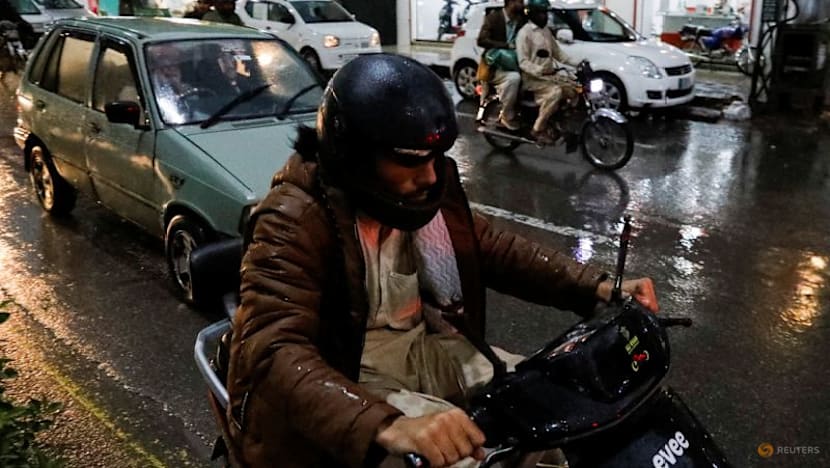
A man rides on an electric motorcycle along a road in Rawalpindi, Pakistan, Mar 30, 2026. (Photo: Reuters/Yasir Rajput)

This audio is generated by an AI tool.
ISLAMABAD: Every morning, Misbah Younus takes the same route to work through the busy streets of Pakistan’s capital.
But in recent months, one thing has changed dramatically: the cost of getting there – or anywhere in Islamabad.
As fuel prices soar and inflation squeeze Pakistani household budgets, the sports consultant found it increasingly difficult to afford petrol for her car.
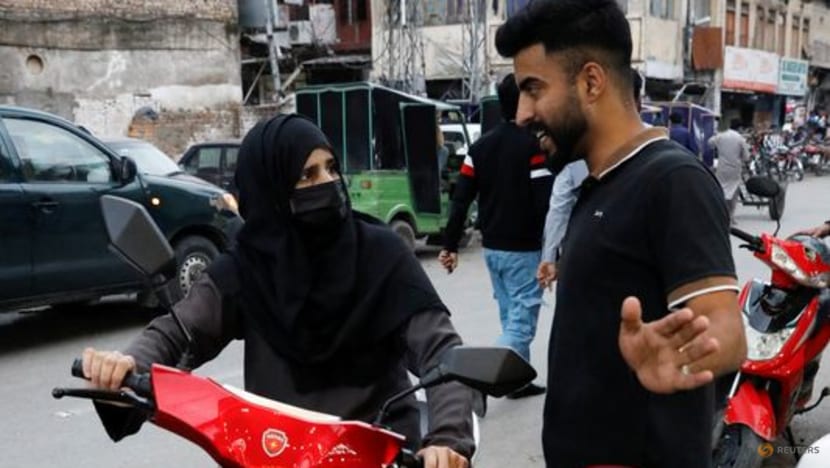
So, she made a decision that more commuters across the nation are now considering: she changed to an electric scooter.





She told CNA the switch has brought immediate financial relief.
“Petrol prices were increasing day by day. It was becoming difficult for me to afford fuel on my salary. I realised I needed an electric scooter,” said Younus, who works at Right To Play, an international non-profit organisation supporting children.
“Because of (my e-scooter), more of my budget now goes into savings as my commuting petrol costs have come down.”
Younus is among a growing number of Pakistanis turning to electric scooters and bikes as commuters seek cheaper ways to travel.
The shift follows sharp increases in petrol prices linked to volatility in global oil markets and supply disruptions amid tensions in the Middle East.
LOWER RUNNING COSTS DRIVE DEMAND
Dealers say demand has risen sharply, particularly among office workers, students and delivery riders. Some retailers and conversion workshops reported sales surging by as much as 70 per cent in March.
“The inconsistency in the world economy … the supply chain problems, all of those things are definitely leading the trend towards EVs,” said Saad Farrukh, chief executive of EVEE Electric, a Lahore-based firm that assembles electric bikes locally.
He added that the difference in daily running costs is significant.
“(Riding) a regular motorcycle 50km will cost around 400 (Pakistani) rupees which is US$1.50. EVs are only going to (cost) US$0.50 (worth of) electricity,” he said.
The economics of EVs are becoming increasingly attractive in a country where motorcycles are the main mode of transport for millions and public transport options remain limited.
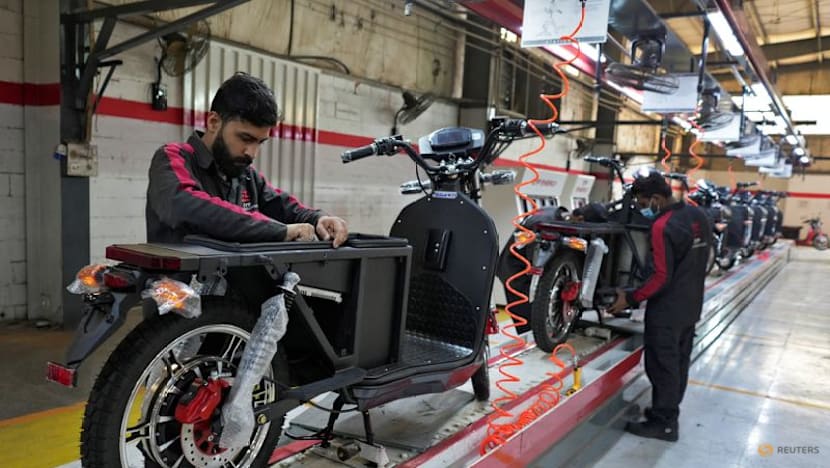
According to consultancy Renewables First, Pakistan’s electric two-wheeler sales nearly tripled last year to about 90,000 units, accounting for roughly 5 per cent of all two-wheelers sold.
This year, EVs account for more than 10 per cent of monthly two-wheeler sales for the first time, said industry analysts.
Much of Pakistan’s emerging EV industry relies heavily on Chinese technology, components and expertise.
Industry players say those partnerships are helping local manufacturers scale up production and develop the sector more quickly.
Kevin Lee, a Chinese shareholder in EVEE, said Pakistan’s EV sector has significant room for growth, from research and development to manufacturing and servicing.
“We (the Chinese) have experience in this industry. We are confident in shifting (our) experience, which we’ve learned in the last 30 years, to Pakistan,” he said.
PUSH TO CUT FUEL IMPORTS
Pakistan’s push towards EVs also carries broader economic significance.
The country depends heavily on imported fuel. Motorcycles and autorickshaws are reportedly estimated to account for about 40 per cent of national petrol consumption, according to analysts.
Pakistan aims for EVs to make up 30 per cent of all new vehicle sales by 2030 as part of efforts to reduce fuel imports and cut emissions.
Earlier this year, the government launched its Pakistan Accelerated Vehicle Electrification (PAVE) plan, offering subsidies and interest-free loans for electric bikes and autorickshaws. Officials say the scheme has already attracted hundreds of thousands of applications.
But analysts say stronger government support may be needed to accelerate the transition.
“The government can provide some capital incentives to the households because EVs are expensive and require a lot of capital investment upfront,” said Khalid Waleed, a research fellow at Islamabad-based non-profit Sustainable Development Institute and Policy.
“This will return the benefit (to) the government as well because it will decrease the import dependence of Pakistan.”
Still, challenges remain, including limited charging infrastructure, concerns over battery life and the higher upfront cost of electric bikes.
Industry observers also warn that rapid market growth without adequate servicing and after-sales support could undermine consumer confidence in EV technology.
But for daily commuters like Younus, the savings are already making a difference. And as fuel prices continue to rise, electric scooters are expected to become even more prominent on Pakistan’s roads.