'Too expensive' or 'fair price' for convenience? Day 1 of cross-border taxi scheme elicits mixed reactions
Commuters and drivers on both sides of the Causeway say the new service – with more pick-up and drop-off points among other features - offers more choices but at a higher cost, while experts say it would reduce the “first-mile and last-mile friction”.
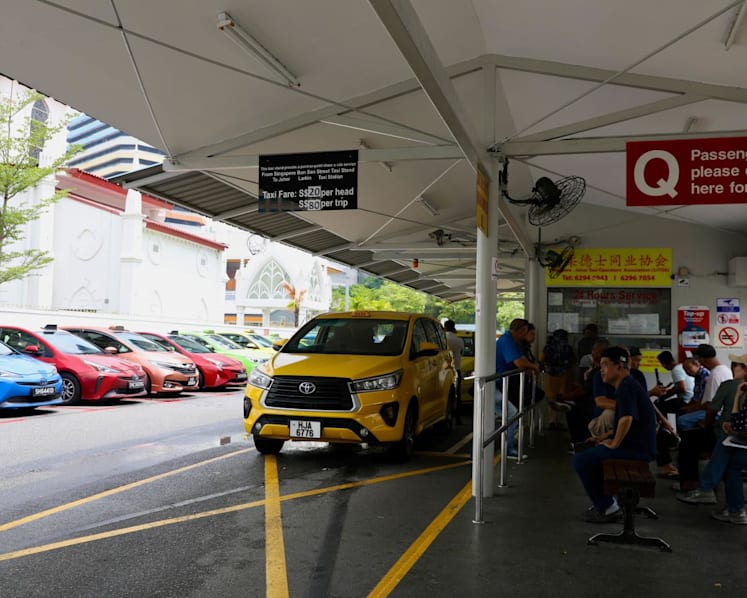
Passengers boarding a cross-border taxi at Ban San Street Terminal, where updated fares are displayed, on May 4, 2026. (Photo: CNA/Mak Jia Kee)

This audio is generated by an AI tool.




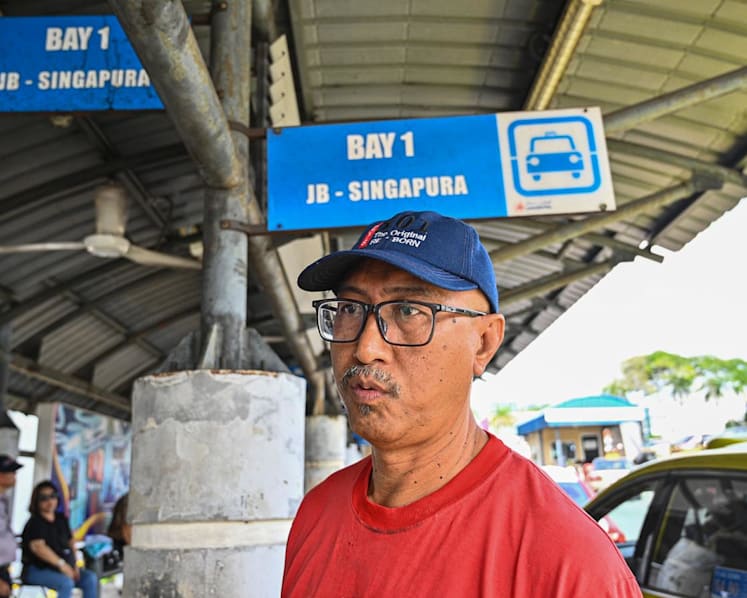
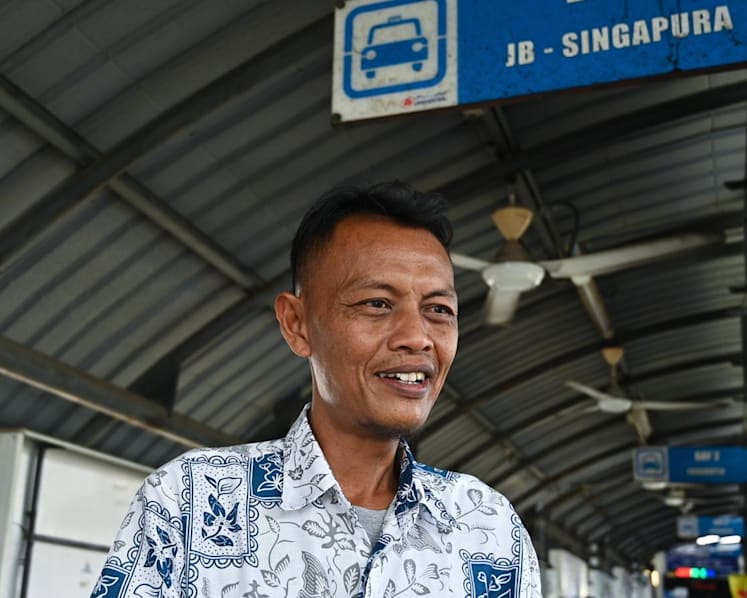
JOHOR BAHRU/SINGAPORE: At 10am on Monday (May 4), 57-year-old Malaysian taxi driver Shaban Shawal was still waiting for his first passenger at Johor’s Larkin Terminal to take across the border to Singapore.
“Usually by this time, I would have made my first trip … Just this morning, I saw four people walk away because they were shocked by the new price,” he told CNA.
A new enhanced cross-border taxi scheme which took effect on Monday, has introduced a range of new flexible drop-off points and additional pick-up locations. But the change comes at a cost.
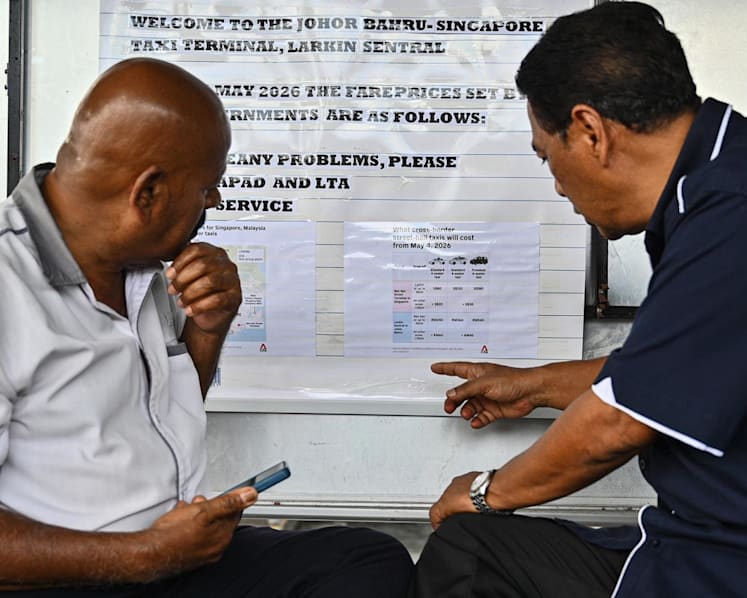
Fares for street-hail rides from Ban San Street Terminal are now S$80 (US$63) for a standard four-seater, while trips from Larkin Terminal in Johor Bahru cost RM240 (US$61).
Previously, fares were S$60 or RM120 per trip, cross-border taxi drivers from both countries told CNA.





“While there are now more choices for passengers, it is too expensive for them so we have yet to see any positive impacts but it is only the first day. Maybe after a month, we can better assess,” said Shaban.
The enhancements to the cross-border taxi scheme were announced on Thursday by the transport ministries of both countries.
Under the new rules, Singapore taxis with a Cross Border Ride Hail Service Operator Licence can now pick up passengers not only at Larkin Terminal, but also at Toppen Shopping Centre, Mid Valley Southkey Mall and Angsana Mall.
The Land Transport Authority (LTA) in Singapore has awarded the first of this licence to GrabCar, with the licence valid for three years from Apr 30. This means that only drivers under Grab's platform can pick up passengers at the three additional locations.
In Singapore, Malaysia taxis can now pick up passengers near VivoCity, Century Square Shopping Centre and Joo Koon MRT, in addition to Ban San Street Terminal.
Malaysian taxis can drop off passengers anywhere in Singapore, while Singapore-registered taxis can drop passengers anywhere in Johor Bahru, Iskandar Puteri, Forest City, Kulai and Senai.
Malaysian taxis are also allowed to drop off passengers anywhere in Malaysia, including areas outside Johor, such as capital Kuala Lumpur and Melaka, Mohd Suhaimi Saidi, the president of the Singapore-Johor Taxi Association who manages Malaysia-registered cabs at Larkin Terminal, told CNA.
For years, cross-border taxis travelling between the two countries could only pick up and drop off passengers at a single designated point in the other country - the Ban San Street Terminal in Singapore’s Bugis area and the Larkin Terminal in Johor Bahru.
The fact that taxis could not offer door-to-door services allowed illegal operators to fill the gap, drivers previously told CNA.
Both countries have acknowledged the demand for more convenient cross-border transport services, and the changes are part of efforts to increase transport connectivity between them.
But Suhaimi said that while his industry is “grateful” for the added flexibility, he expects some teething problems, especially as some passengers and drivers raise concern over higher fares and potential operational challenges.
“With any change, there may be some initial adjustment at the beginning, including the fare changes approved by both governments which may feel burdensome to passengers,” Suhaimi said.
COMMUTERS WORRY ABOUT HIGHER PRICES
CNA spoke to commuters, drivers and businesses at key pick-up points, including Larkin Terminal and Ban San Street Terminal, as well as newly designated locations such as Mid Valley Southkey Mall and VivoCity, on the first day of the enhanced scheme.
For 39-year-old Singaporean Hartini Hamzah, the new rules could make cross-border travel more convenient.
“We don’t have to come all the way here to Ban San (Street Terminal) and we may also be able to drop off nearby our location,” she told CNA, adding that she would prefer to be picked up at Century Square mall in Tampines, which is among the additional pick-up points.
The same fares of S$80 or RM240 for a standard four-seater will apply for trips up to 35km, with an additional $20 charge for longer journeys.
However, some other travellers CNA spoke to felt the price hike was too high to make the cross-border trip worthwhile.

Singaporean librarian, Faizah Sulaiman, 59, who used to accompany her sister to get groceries at the market at Larkin Terminal said that the price increase was too steep, after she was told by the licensed taxi drivers that her ride back to Tampines would cost about $100, as it is located more than 35km from Larkin.
“Even if I have the money, I think it is expensive … it might be more worth it to get groceries at NTUC (a supermarket in Singapore) than to come here,” she told CNA.
Singaporean Benson Hariman, 68, is a regular at Ban San Street Terminal and a familiar face to cross-border taxi drivers – but instead of waiting his usual 30 minutes for a cab, he found himself waiting nearly two hours on Monday morning.
While there were plenty of taxis at the terminal, there were no passengers arriving who could share the S$80 fare to Larkin Terminal, and he attributed this to the price hike.
“The increase is not a little bit, it is a lot. What is the reason to increase the price?” he said.
He eventually left for Larkin Terminal in a shared two-person cab and paid S$40. If all four seats are filled, the lowest possible fare comes to S$20 per passenger.
Listen:
Larkin Terminal and Ban San Street Terminal are the only two locations where passengers can share a ride and split the cost, as long as they are going to the same destination.
For trips beyond 35km, which can go up to around S$100, drivers are not allowed to make multiple drop-offs along the way. So passengers who want to share and split the fare for these longer journeys would not be able to do so.
While some passengers bemoaned the increased fares, some drivers whom CNA spoke to defended the hike.
Malaysian taxi driver Mohd Rizal said the price increase is reasonable due to the increasing cost of operations, describing it as “fair and square”.
“Passengers say fares are more expensive and think we are earning more but they don’t realise our overhead costs have also gone up,” he said.
Agreeing, Suhaimi, the president of the Johor-Singapore cross-border taxi association said that drivers have long struggled due to higher petrol costs, for instance.
“We have suffered for a long time - travel costs have gone up, fuel and other expenses too,” he told CNA.
DRIVERS WORRY ABOUT OPERATIONAL CHALLENGES
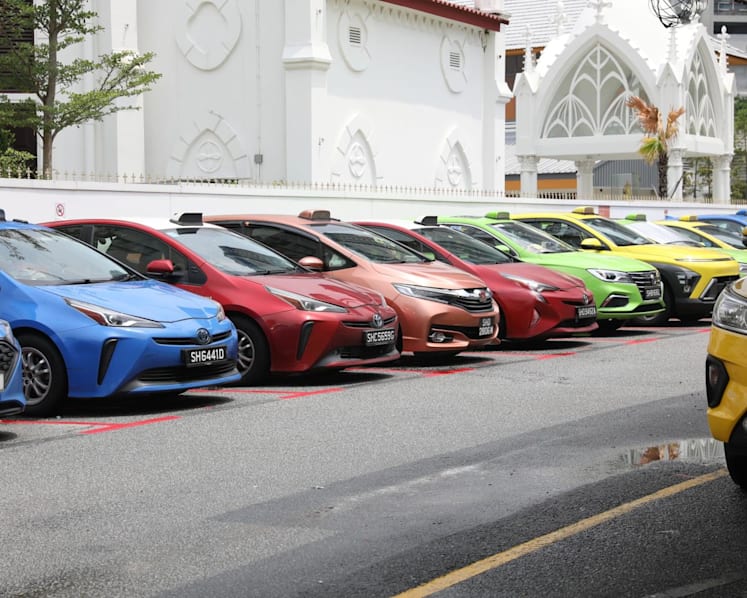
Over at Ban San Street Terminal, CNA observed some 30 Malaysian and Singapore taxis - in shades of red, green, black and white - alternating in queue since 9am, waiting to ferry passengers across the border.
Some drivers told CNA they had waited close to three hours as the queue inched forward well past noon, with about 20 passengers arriving intermittently in the three hours to share rides, while rain drizzled over the shelter.
Singaporean taxi driver Chamkour Singh, who drives a yellow-top taxi, said the new measures to drop passengers off anywhere in Malaysia will increase convenience, but warned that causeway congestion will remain an issue.
He also expressed concerns over competition between cross-border taxis waiting for street-hail passengers at Ban San Street Terminal and those taking ride-hail bookings.
“I think on booking platforms, there will be more customers, but here at Ban San Street Terminal it might go down because it’s mostly for budget shared taxis,” he said.
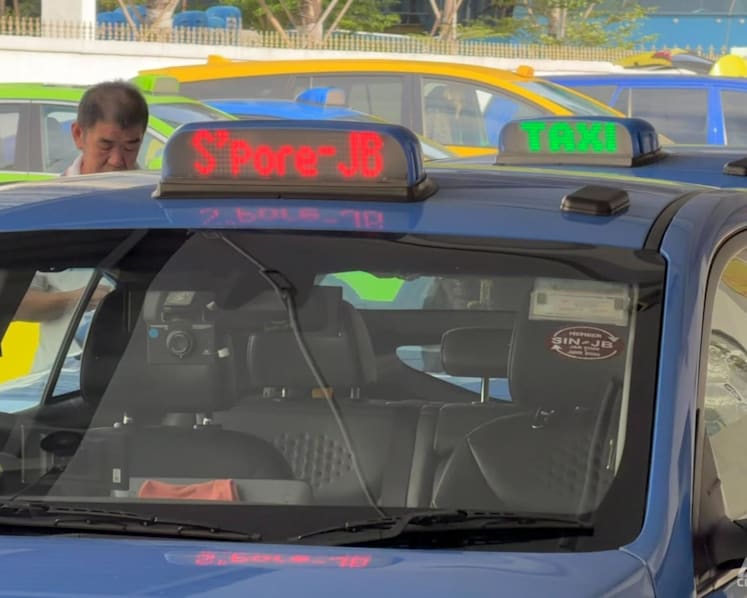
Others, such as Malaysian taxi driver Tony, who only wanted to be known by his first name, expressed concern that the RM120 fare hike, which doubled fares to RM240, could deter Malaysian passengers, especially customers who are Malaysian workers in Singapore.
Singaporean taxi driver Sheikh Zaini, 62, welcomed the additional drop-off points in Malaysia for Singapore passengers, but lamented the restrictions preventing vehicles entering a foreign country with an empty car under the new enforcement will be a big hit to business.
“In the past, after waiting four, five hours at Ban San (Street Terminal) and (if there are) no passengers, we could go into Malaysia with an empty car to take passengers there,” he said, adding that the increase of an additional 100 taxis in the Malaysia and Singapore fleets will cause more competition.
Sheikh added that while drop-off points are more flexible, restricting drivers to just four designated pick-up locations could pose challenges for regular passengers.
“Now we can send them to their home in Johor Bahru, right? But then once he reaches home, he might say, ‘I need to go back to Singapore in two hours, can you come pick me up?’ But we can’t do that,” he said.
“This is a big issue. Our regular customers will be unhappy.”

From May 4, an additional quota of 100 taxis from Malaysia and Singapore have taken to the roads, up from 200 taxis from each country. This means the total cross-border taxi fleet will be 300 for each country.
Others, such as Singaporean taxi driver Md Yazid, 58, said that the move could potentially lead to a loss of income in the long run.
“Sometimes we already have bookings from regular customers returning to Singapore from JB, especially during public holidays. If we are only allowed to enter JB with passengers, it could limit the number of trips we can make,” he told CNA.
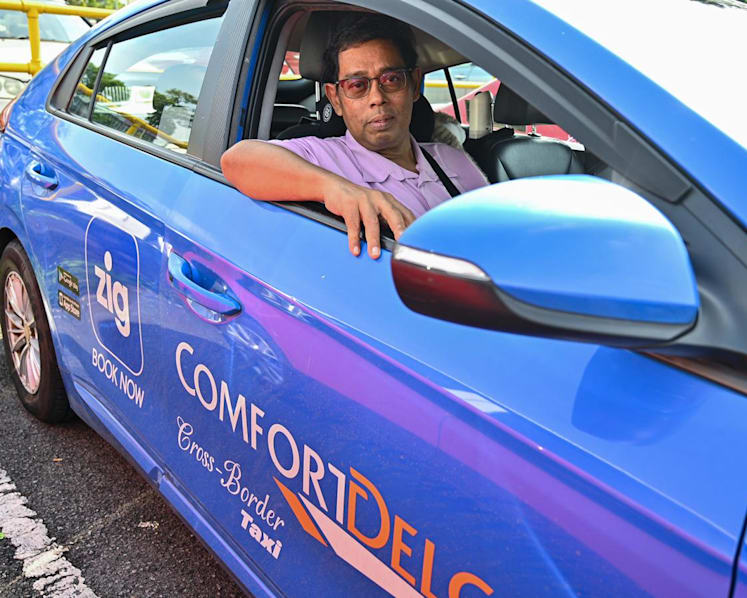
He also expressed concern that, with drop-offs now allowed anywhere in Johor Bahru, Iskandar Puteri, Forest City, Kulai and Senai, drivers would be required to travel unfamiliar routes, and that the fixed additional charge capped at S$20 for any trips above 35km would make longer journeys unprofitable.
“It might not be worth it for us to travel all the way to areas like Senai, knowing that we still need to drive back to Larkin (Terminal) to get another passenger,” he added.
It takes about 30 minutes to get to Senai International Airport from Larkin Terminal.
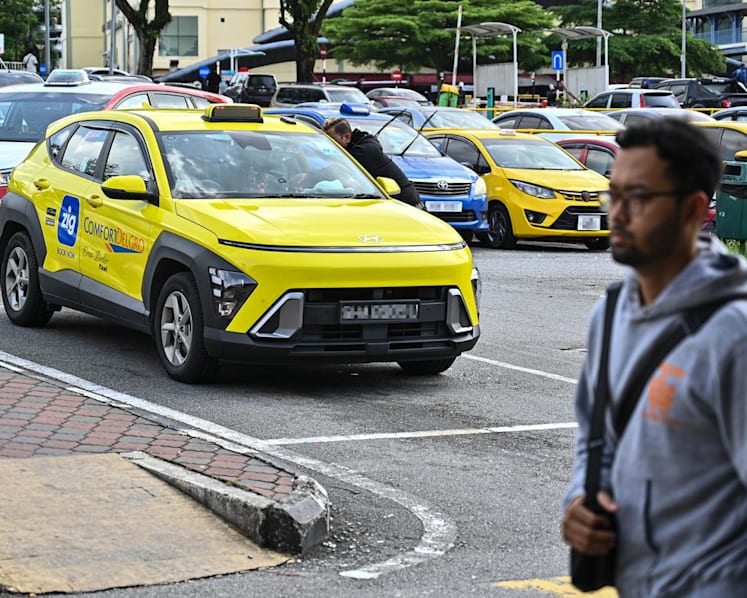
At Ban San Street Terminal, another Singaporean taxi driver, Mohd Abu, 65, observed a new issue emerge today with the additional drop-off points in Malaysia – that some Singapore drivers were unfamiliar with the expanded drop-off locations requested by passengers, resulting in these trips being taken up by their Malaysian counterparts instead.
“The problem is not all Singaporean drivers know these places (in Malaysia). If they reject the passenger, the second car will go. The first car has to go out, it cannot stay there and wait for a passenger to go to Larkin (Terminal).”
On drop-off locations in Malaysia, Singapore taxi driver Mimah Muamad, 50, also noted that the map demarcations for available drop-off points in Malaysia are unclear.
“I’m also not sure where I can and cannot drop off. For example, if a passenger wants to drop off at Kulai, then I need to check the map whether it is inside the border,” she said.
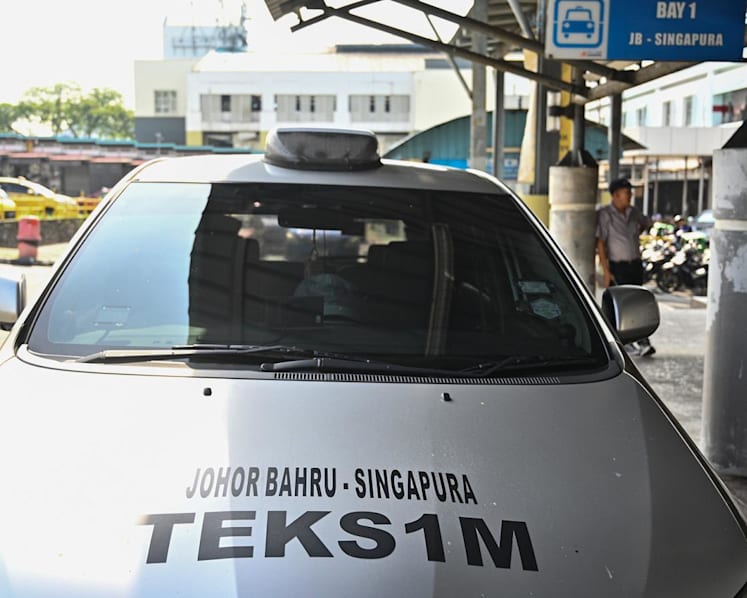
While these licensed taxis can now drop off passengers more freely, cross-border pick-ups made at the newly designated points must be made via ride-hail or e-hailing bookings.
According to LTA's licensee Grab, pricing will take reference from the existing fixed fares for street-hail cross-border taxi trips.
For Suhaimi, the president of the Johor-Singapore taxi association, ride-hailing apps like Grab can help smooth and facilitate cross-border travel, making taxi movement between the two countries more efficient, he told CNA.
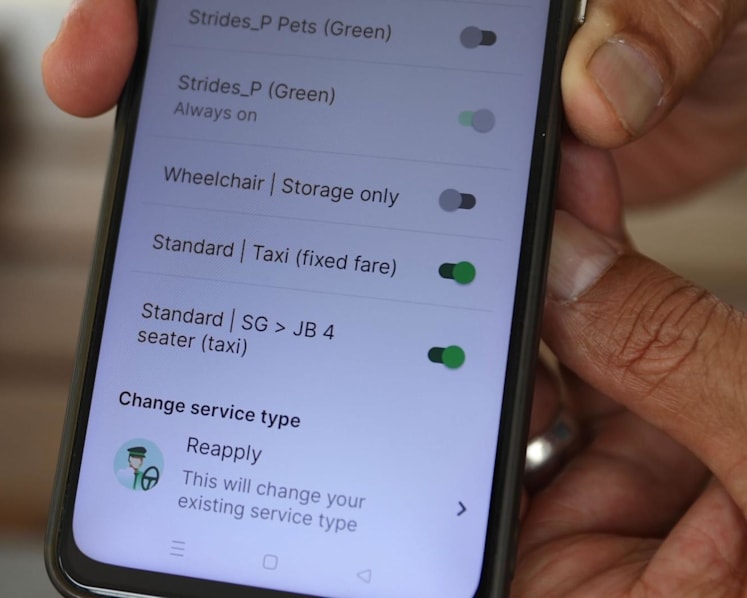
But some drivers of both countries told CNA that they would still prefer to do foreign pickups at the original key designated locations in both countries (Ban San Street Terminal and Larkin Terminal) due to the lack of clarity on how Grab bookings will work and the commission rates.
“I am not sure if it has even started yet so I will still go to Ban San Street Terminal to pick my passengers up,” Malaysian taxi driver Jaffery Daimin, 58, told CNA.

Another Malaysian taxi driver who wanted only to be identified as Din, 40, highlighted the risk of no shows for app-based pick-ups at the new locations.
“What if the passenger does not show up? At least in Ban San (Street Terminal), we can still pick up other passengers in the queue. But at the new pickup locations, we are not allowed to,” he told CNA when met at the taxi stand at Larkin Terminal.

WHAT EXPERTS AND BUSINESSES SAY
Rosli Khan, managing director of MDS Transport Consultancy based in Malaysia, said that more flexible dropoff rules and expanded pickup points reduce the “first-mile and last-mile friction” that had long deterred passengers, and could bring back demand from families, elderly and business travellers.
Timothy Wong, a senior lecturer at the National University of Singapore (NUS) Department of Economics, said commuters stand to benefit the most, as door-to-door journeys are now possible. But price remains a key factor.
“Current prices are still higher than those charged by illegal cross-border taxis,” he told CNA.
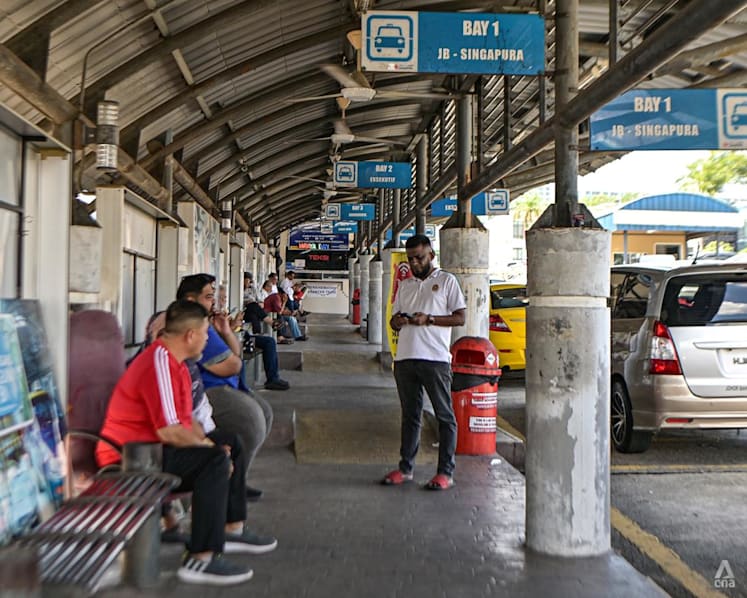
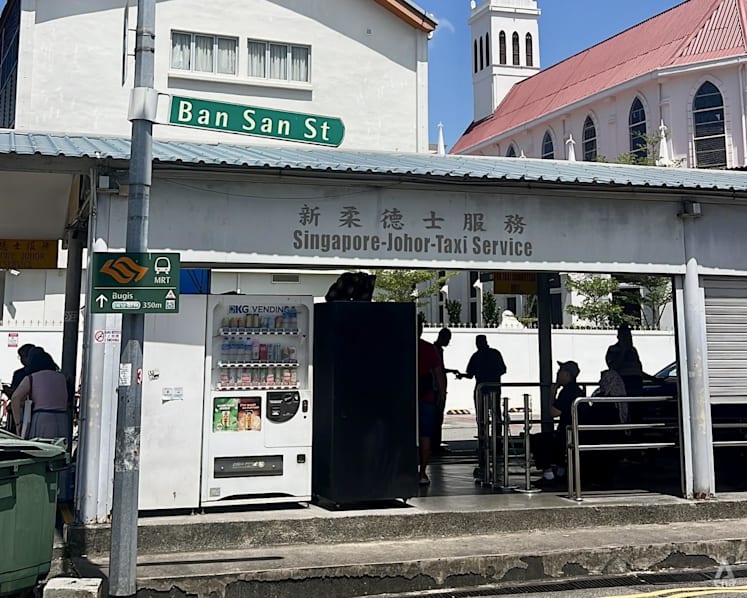
He added that technology could help address some of these concerns, noting that ride-hailing platforms and on-board units in Malaysian taxis would allow taxi movements and pick-ups to be tracked.
Taxis must also install a device, as required by the other country, to enable enforcement. For instance, Malaysian taxis have to install Singapore’s ERP2 on-board unit to enter Singapore.
However, Rosli said that cross-border enforcement remains “inherently tricky”, citing the need to coordinate across Malaysia and Singapore which have different enforcement approaches and resource constraints at already congested checkpoints.
Wong added Grab’s entry could help strengthen compliance and improve the overall system.
“Grab has the technology to track its drivers and ensure they follow the prescribed rules … (The) Grab app also has the ability to implement finer grain pricing mechanisms, which could be accounted for in future pricing regulations to allow for more flexible distance based fares,” the transport economist told CNA.
However, Rosli said that while integrating e-hailing services like Grab could make booking more seamless, this could also put traditional cross-border taxi operators under pressure, citing risks of pricing power losses and pressure on taxi operators to modernise.

With more pickup points for foreign taxis beyond Larkin Terminal, some businesses do not expect a significant impact.
“Larkin Terminal offers a unique value that other malls may not have so I think we will still have customers,” said Maharani, a 48-year-old shopowner of a provision shop in Larkin.
“For those who are already used to shopping at Larkin Terminal, they will still come here no matter what, so I am not worried.”
At Mid Valley Southkey Mall, one of the newly designated pickup points, Elaine Wong, a manager at a local store selling premium natural honey welcomed the move.
“It is very good news … About 90 per cent of our customers are Singaporeans so we are excited about the improved transport convenience,” she told CNA on Monday afternoon.