analysis Asia
‘Fear of being left behind’: Why Thailand is joining Indonesia in OECD membership push
Bidding to join the international Organisation for Economic Co-operation and Development shows Southeast Asian economies are trying to use global standards to raise credibility, attract investment and lock in domestic reforms, experts say.

A group of visitors walks outside Bangkok's Grand Palace complex. (File Photo: CNA/Jarupat Karunyaprasit)

This audio is generated by an AI tool.


BANGKOK: In late 2023, Thailand’s new government was on an international investment blitz.
Then-Prime Minister Srettha Thavisin had framed himself as Thailand’s economic fixer, a leader with genuine business-world credentials that could turn around the country’s years of sluggish performance.
The former property tycoon had become national leader after the election that year, heading a Pheu Thai-led coalition that promised to revive growth through headline-grabbing policies such as its digital wallet stimulus, a mass, one-time cash handout to 50 million people.
And in the background officials were taking early steps to try and fundamentally fix Thailand’s economic systems and structures through a very different kind of project: a bid to enter the OECD.





The Organisation for Economic Co-operation and Development (OECD) is an international organisation of mainly advanced economies that develops policy standards and advice on how countries can better run their economies, institutions and public services.
By June 2024, Thailand had become an OECD candidate country and officially launched its accession process a few months later in October.
Srettha would not see that day as leader; he was removed as prime minister by the courts for violating the constitution's ethical standards in August that year.
But Thailand’s long journey to joining the elite economic grouping sometimes called the “rich countries' club" has carried on.
The bid has passed through successive governments and has now become a priority agenda item under Prime Minister Anutin Charnvirakul.
In May, Thailand’s Cabinet approved the establishment of a national steering committee chaired by him to oversee its accession process.
“When Thailand becomes an OECD member, people will see Thailand in new dimensions,” Anutin said at an event earlier this month.
“No one will be able to point a finger at Thailand and say it is a dishonest country, a country without scrutiny, an undeveloped country or a country moving backwards.”

Beyond just membership to a grouping with high cachet, experts told CNA that Thailand is trying to use its bid to force reforms it has long struggled to deliver on its own.
“Although reforms to many dimensions of regulations in Thailand have been discussed continuously, progress has been limited,” said Archanun Kophaiboon, a professor of economics at Thammasat University.
In the region, it is not alone.
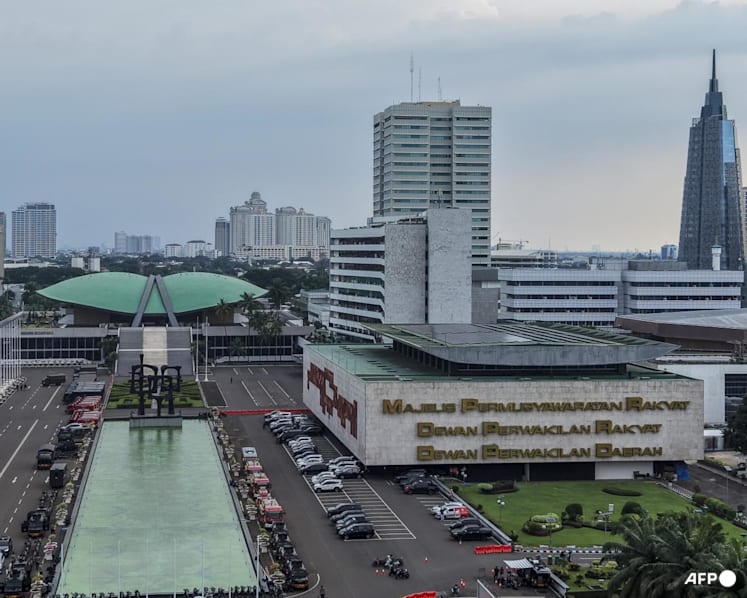
Indonesia is also pursuing accession with its roadmap welcomed by the OECD in May 2024, after three months of discussions as the region’s first accession candidate.
It has incorporated OECD accession into its 2025 to 2029 National Medium-Term Development Plan, with it more likely to be targeting the end of decade to finish the required technical review, according to observers.
“In the midst of global uncertainty, Indonesia’s membership in the OECD is expected to help navigate uncertainty or the current multipolar environment,” said Indonesia’s coordinating minister for economic affairs, Airlangga Hartarto in December last year.
Six other countries are also currently in the accession process: Peru, Argentina, Brazil, Romania, Bulgaria and Croatia.
It is a sign that Southeast Asian economies are trying to use global standards to raise credibility, attract investment and lock in domestic reforms, experts said.
Importantly, a key driver is the nature of the Association of Southeast Asian Nations (ASEAN), in which member countries have continually competed with one another to attract foreign direct investment, Archanun said.
“Therefore, when one country such as Indonesia begins expressing interest in joining the OECD, it creates pressure for Thailand to seek membership as well,” he said.
Indonesia and Thailand are Southeast Asia’s largest and second largest economies respectively.
Anutin personally submitted Thailand’s initial memorandum to the OECD last December, moving the country into the technical review phase.
The national committee he chairs wants to fast-track the bid towards an ambitious 2028 target.


The Thai government says the aim is modernising the country’s systems: regulation, governance, anti-corruption, public services, investment rules, labour standards and environmental policy.
Accession is a multi-year technical dialogue aimed at bringing a country’s laws, policies and practices closer to OECD standards, a process that could take up to a decade, but most likely five to seven years, according to experts.
There are 25 different OECD committees - focused on all aspects of the economy and governance, from financial markets to fisheries - that perform policy checks during the technical review process.
They will evaluate Thailand’s willingness and ability to adhere to OECD legal instruments and compare its policies with best practice.
It is a “catalyst for national reform and long-term competitiveness” and “a systematic way to do structural reform”, said Rujikorn Saengchantr, the director-general of the Department of International Economic Affairs at Thailand’s Ministry of Foreign Affairs.
“To move to the next stage of development, Thailand needs to upgrade the foundations of our competitiveness,” she said.
According to the Thailand Development Research Institute, OECD membership could help raise Thailand’s gross domestic product (GDP) by 1.6 per cent during the first five years of membership.
“We have started to reform ourselves, but it's not at a good pace when the world has changed a lot. We try our best and are still in the middle income trap,” Rujikorn said.
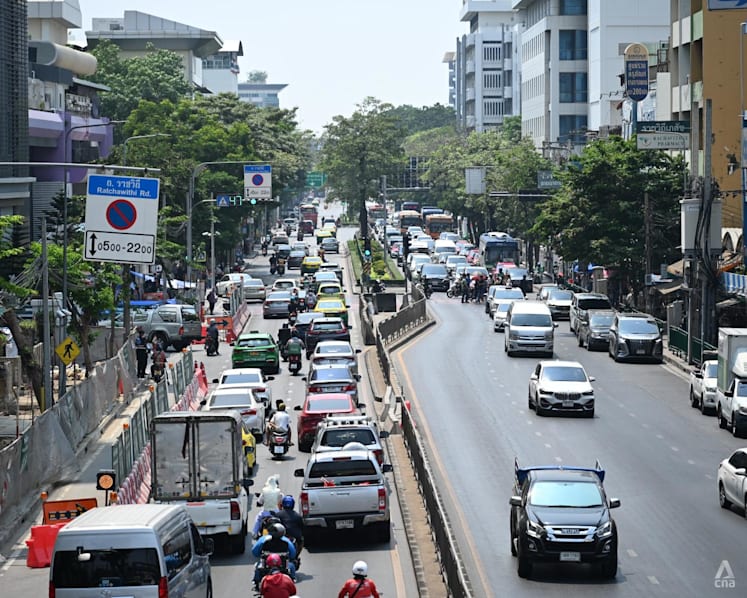
A DOUBLE-EDGED SWORD?
Thailand is trying to reposition itself at a time when supply chains are shifting. Companies are reducing overdependence on China, reacting to geopolitical tension and looking for more resilient production bases in Southeast Asia, according to experts.
Thailand used to be one of Southeast Asia’s great manufacturing success stories.
From the 1980s through the 2000s, it turned itself from a largely agricultural economy into an export leader, with a strong auto industry complemented by food processing, petrochemicals and consumer goods.
But growth has slowed sharply. Thailand's GDP growth was 2.4 per cent based on National Economic and Social Development Council (NESDC) figures in 2025 and forecast to be just 1.7 per cent in 2026, according to the World Bank.
Its old model has struggled to keep up with new dynamics and been stymied by “stringency of regulations”, said Vibeke Lyssand Leirvåg, the chairperson of the Joint Foreign Chamber of Commerce Thailand (JFCCT).
Still, Leirvåg remains optimistic about the OECD push, saying the efforts are welcomed by foreign investors, both existing and new.
“Thailand is ready to compete. We are not in a manufacturing age from 40 years ago, 50 years ago,” she said.
“It will force change, because if they want to join OECD, they will have to do reforms, they will have to change regulations, they will have to do some cleanup in areas like anti-corruption and on the rule of law in general.”
Alongside the OECD bid, the Thai government is also in negotiations with the European Union on a free trade agreement that covers many of the same issues. This month, it also agreed to strengthen trade and economic cooperation with the United Kingdom.
Archanun said Thailand could use the OECD process to show investors it is serious about improving the business environment.
Those signals are important, he said, because Thailand has struggled for years with weak perceptions on corruption, and in 2024 ranked below Indonesia in Transparency International’s 2024 Corruption Perceptions Index.
OECD accession could strengthen confidence that reform is genuine, but it also raises the stakes, he said.
“If the government fails to follow through, the backlash could be equally severe - a double-edged sword.”
Joining the OECD could make Thailand more competitive, attract higher-quality investment and reassure companies looking for predictable rules, said Sineenat Sermcheep, director of the ASEAN Studies Center at Chulalongkorn University.
But the reforms could be politically difficult, costly for some businesses and slow to translate into benefits for ordinary people, she warned.
“In the short term, changes may feel gradual, but over time people are likely to experience benefits,” she said.
Collectively, she said, these changes are expected to improve quality of life through better education opportunities, improved living conditions and rising income supported by faster and more sustainable economic growth.
However, the transition may create adjustment pressures and compliance costs for small and medium-sized enterprises (SMEs), and pose challenges for workers in the informal sector.
Rujikorn said Thailand’s large informal economy is one of the country’s structural weaknesses.
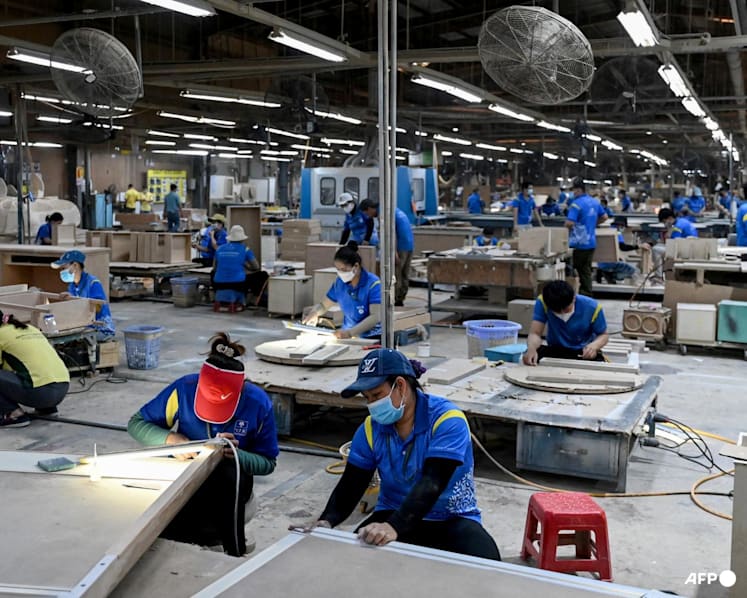
She estimated it at around 48 per cent of GDP, compared with about 18 per cent in Indonesia, and said that when workers and businesses remain outside the formal system, it becomes harder for the state to tax them, protect them and address rising debt problems.
Thailand's high household debt levels are one of several symptoms of deeper structural weaknesses that policymakers hope OECD-style reforms can help address.
Thailand’s household debt now stands at nearly 90 per cent of GDP, among the highest in Asia, according to the International Monetary Fund.
“With such high household debt, combined with domestic political instability, Thailand risks standing at the back of the line when it comes to regional attractiveness,” said Pavida Pananond, a professor of international business at Bangkok’s Thammasat University.
OECD accession is also likely to increase pressure for greater formalisation of Thailand's economy, bringing in more businesses and workers into regulatory, tax and social-protection systems.
LOCKING IN REFORMS
The “fear of being left behind” is an important regional factor influencing governments’ moves to level up their economies, Archanun said.
It will probably be beneficial for all countries involved, as OECD membership is likely to be more advantageous than competing on investment incentives, he said.
But there are different factors at play in different countries.
Taking a different path, Vietnam has continued to attract major investment without membership. That may change some time in the future, according to Jayant Menon, a visiting Senior Fellow at the ISEAS - Yusof Ishak Institute in Singapore.
“There are still a lot of reforms that Vietnam would need to undertake in order to gain membership. Not least of which is to deal with its huge SOE (state-owned enterprise) sector and its reformation, which will be a long-term exercise,” he said.
OECD accession for Indonesia could help “lock in” reforms because countries must make legally binding commitments and regulatory adjustments to accede and remain members, said Maria Monica Wihardja, a fellow and co-coordinator of the Media, Technology and Society Programme at the ISEAS - Yusof Ishak Institute.
“Indonesia’s institutional reforms are ‘fickle’ in a sense that they can be reversed or undermined by any one administration or president,” she said.
Supareak Charlie Chomchan, the vice-chairman of the JFCCT, sees Indonesia’s calculus as opening up market access and opportunities for its very large economy.
Thailand, by contrast, is worried about the middle-income trap and rising costs of living and labour, and needs to transition towards advanced manufacturing and future technology industries.
“So it makes sense for the Thai government to enter the OECD, just to lift the standard of the overall economy,” he said.
The potential benefits lie not only with the rising member states, the experts agreed.
The OECD as an organisation and its existing members may benefit from regulatory convergence of those ASEAN economies “given their rising economic and geopolitical clout on the international stage”, Wihardja said.
“It gives these ASEAN economies international reputation and stature, although it may come with some politically costly regulatory adjustments and policy rigidity. It works both ways,” she said.
Leirvåg said the timing may work in Southeast Asia’s favour, as companies reassess supply chains and look for stable production bases amid tariffs, geopolitical tension and global uncertainty.
“The fact is that the region has a lot of opportunities now,” she said.
“If we look at tariffs and global unrest, I would say that the region has a huge opportunity to increase trade and strengthen its position globally.”
For Thailand, the OECD bid is seen as one way to compete for that opportunity. But the accession process will test whether the country can turn a signal of reform into changes investors, businesses and citizens can actually see.
Additional reporting by Jarupat Karunyaprasit.