Airlines hike ticket prices as Iran war propels fuel costs
Australia's Qantas Airways, Scandinavia's SAS and Air New Zealand are among the airlines that have hiked ticket prices, citing the spike in fuel costs.

An Air New Zealand Airbus A320-200 plane takes off from Kingsford Smith International Airport in Sydney, Australia, on Feb 22, 2018. (File photo: Reuters/Daniel Munoz)
Australia's Qantas Airways, Scandinavia's SAS and Air New Zealand announced airfare hikes on Tuesday (Mar 10), blaming an abrupt spike in the cost of fuel caused by the Middle East conflict.
Jet fuel prices, which were around US$85 to US$90 per barrel before US-Israeli strikes on Iran, have soared to between US$150 and US$200 per barrel in recent days, New Zealand's flag carrier said, adding it was suspending its financial outlook for 2026 due to uncertainty over the conflict.
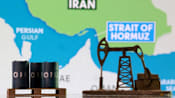
The war, which disrupted shipping via the world's most vital oil export route, has sent oil prices surging, upending global travel, pushing airline tickets on some routes sky-high, and sparking fears of a deep travel slump that could lead to widespread grounding of planes.
"Increases of this magnitude make it necessary to react in order to maintain stable and reliable operations," an SAS spokesperson said in a statement to Reuters, adding it had implemented a "temporary price adjustment".





The largest Scandinavian airline said last year it had temporarily adjusted its fuel hedging policy due to uncertain market conditions and that it had no fuel consumption hedged for the following 12 months.
Several Asian and European airlines, including Lufthansa and Ryanair, have oil hedging in place, securing a part of their fuel supplies at fixed prices.
Finnair, which had hedged over 80 per cent of its first-quarter fuel purchases, warned, however, that even the availability of fuel could be at risk if the conflict dragged on.
"A prolonged crisis could affect not only the price of fuel but also its availability, at least temporarily," a Finnair spokesperson said, adding that it had not seen this happening yet.
Kuwait, a major jet fuel exporter to north-west Europe, has faced output cuts.
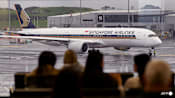
In response to CNA's queries, a Singapore Airlines (SIA) spokesperson said on Wednesday that the carrier and budget airline Scoot do not impose a fuel surcharge on their flights.
"SIA and Scoot’s airfares are determined by supply and demand, and therefore dynamic and subject to change," they said.
AIRSPACE CHAOS IN THE MIDDLE EAST
Highlighting the airspace chaos in the Middle East, planes arriving in Dubai were briefly placed in a holding pattern on Tuesday due to a potential missile attack, flight tracking service Flightradar24 said on X. The planes eventually landed.
Qantas said in addition to increasing international fares, it was exploring redeploying capacity to Europe as airlines and passengers seek to evade disruptions in the Middle East, where drone and missile fire have curtailed flights.
Airfares have soared on Asia-Europe routes due to airspace closures and capacity constraints, and Hong Kong's Cathay Pacific Airways said on Tuesday it was adding extra flights to London and Zurich in March.
Air New Zealand said it had raised one-way economy fares by NZ$10 (US$6) on domestic routes, NZ$20 on short-haul international services and NZ$90 on long-haul, with more adjustments to prices and schedules possible if jet fuel costs remain elevated.
Hong Kong Airlines said on its website it would raise its fuel surcharges by up to 35.2 per cent from Thursday, with the sharpest increase on flights between Hong Kong and the Maldives, Bangladesh and Nepal.
On Wednesday, Bloomberg reported that Thai Airways would be raising its ticket prices by 10 to 15 per cent to offset rising fuel costs, citing its chief financial officer Cherdchom Therdthirasak.
This comes amid "overwhelming" demand on its European routes from customers who are shifting travel plans to fly to Europe instead of the Middle East, she said. Most of the airline's flights to Europe this month have been about 90 per cent full, she added.
Cherdchom said that Thai Airways has room to raise the fuel surcharge further if oil prices continue to climb.
"Passengers planning to travel should secure their tickets as soon as possible before fares rise further," Bloomberg reported her as saying.
"Over the next two weeks, tickets will be extremely limited across both European routes and other destinations."
Still, some European airlines said they saw no near-term need to act yet. A spokesperson for British Airways-owner IAG said it was well-hedged for the immediate future and had no plans to change ticket prices.
AIRLINE SHARES STABILISE AFTER SELLOFF
Some airline stocks rose and oil prices fell to around US$90 a barrel on Tuesday from a high of US$119 on Monday after US President Donald Trump said on Monday the war could be over soon.
When markets opened in Europe, airline shares were up between 4 per cent and 7 per cent. Shares of major US carriers Delta Air Lines, United Airlines, Southwest Airlines and American Airlines were down between 2 per cent and 4 per cent in early trading.
US airlines rely less on hedging than their European and Asian rivals in managing their fuel costs, making their shares more vulnerable to oil's volatility.
In Asia, Qantas closed 0.5 per cent higher, Korean Air Lines rose 3 per cent and Cathay Pacific was up 3.6 per cent. All had recorded sharp declines on Monday.
Fuel is the second-largest expense for air carriers after labour, typically accounting for a fifth to a quarter of operating expenses.
CONFLICT TAKES TOLL ON TRAVEL INDUSTRY
In addition to high fuel costs, tightening airspace also threatens to derail the global travel industry, as pilots reroute to avoid the Middle East conflict and capacity on popular routes fills up.
Emirates, Qatar Airways and Etihad typically jointly account for about one-third of the passenger traffic between Europe and Asia and fly more than half of all passengers from Europe to Australia, New Zealand and nearby Pacific Islands, according to Cirium.
European airlines have already struggled with the shortage of available airspace created by the war in Ukraine, with many avoiding Russian airspace and flying longer international routes. Now, with even less available airspace, they say their business has become even more challenging.