Asia-Pacific growth remains resilient, but job creation is critical: International Finance Corporation
In an interview with CNA’s Elizabeth Neo, the International Finance Corporation's vice president for Asia and the Pacific Sarvesh Suri shares how investment-driven growth could unlock the potential of Asia’s demographic surge.
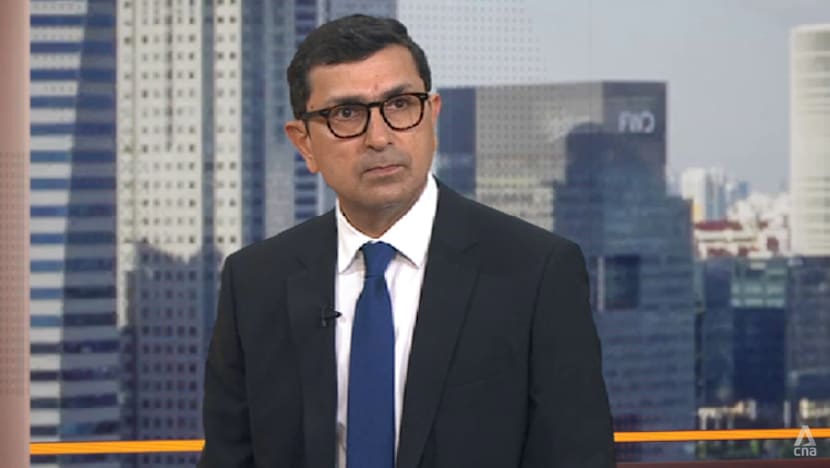
International Finance Corporation (IFC) vice president for Asia and the Pacific Sarvesh Suri.

This audio is generated by an AI tool.
SINGAPORE: Despite global economic headwinds, parts of Asia and the Pacific remain among the world’s fastest-growing regions, said Sarvesh Suri, vice president for Asia and the Pacific at the International Finance Corporation (IFC).
But economic growth alone is not enough, he added, stressing that the true test of success lies in whether growth translates into jobs.
South Asia remains the world’s fastest-growing region, with growth estimated to have strengthened to 7.1 per cent in 2025. It is expected to moderate to 6.2 per cent in 2026, according to the World Bank’s global economic prospects report released this month.
Growth in East Asia and the Pacific has been more measured, at around 4.8 per cent in 2025, and is projected to ease slightly in 2026 to 4.4 per cent amid global macroeconomic pressures and trade uncertainty.





Still, Suri said the region remains resilient in the face of tough tariffs by the United States.
JOBS AT CENTRE OF DEVELOPMENT STRATEGY
Job creation is at the centre of the IFC’s development strategy, Suri said, noting that the private sector accounts for the majority of new jobs created globally. This underpins the IFC’s role within the World Bank Group – mobilising private capital at scale to drive inclusive growth.
“The best way to tackle poverty is to create jobs – by providing the dignity of a job … allowing (people) to be productive members of the society, improve their incomes and lives,” he said.
His comments came as the World Bank warned that the global economy faces a defining jobs challenge over the next decade. It estimates that 1.2 billion young people will enter the workforce in developing economies by 2035, with South Asia and East Asia at the centre of this surge.
The institution cautioned that without faster job creation, investment and reforms, the influx could fuel unemployment and unrest. It added that infrastructure spending and improved business conditions are key to turning the youth wave into growth.
AGRICULTURE & AI
Agribusiness remains among sectors with the strongest potential to generate employment, accounting for about 30 per cent of the workforce in Asia-Pacific economies, said Suri. Tourism and healthcare also offer significant job opportunities.
He added that through its AgriConnect initiative, the World Bank aims to improve incomes for 300 million farmers across developing countries by 2030.
Digital tools and artificial intelligence are increasingly central to this effort, he said. AI is being deployed to help farmers boost yields, predict weather and irrigation patterns, and connect more efficiently with buyers.
“The idea is that we are connecting the farmers to the markets, and within that we are aiming to tackle each part of the value chain … from upstream production to value addition,” he said.
Beyond agriculture, AI is reshaping multiple sectors critical to employment, he said.
“The MSME (Micro, Small, and Medium Enterprises) sector … has a US$3 trillion financing gap across the world. In that sector, AI could be transformative,” Suri said.
“(For example,) we are seeing companies come up with new credit models to reach that sector of (businesses) that are not connected to the (formal) banking sector.”
However, the rapid expansion of AI and data centres also raises sustainability concerns, particularly around energy and water use. Suri said the IFC ensures such investments are supported by sustainable power generation and responsible water management.
Suri said the IFC’s long-term roadmap, known as IFC 2030, is built on three pillars.
The first is becoming a stronger “mobilisation machine” – leveraging its balance sheet to attract significantly more private capital, he said. In Asia-Pacific last year, IFC mobilised US$13 billion in business, using US$5 billion of its own funds. By 2030, it aims to mobilise five times its capital.
The second pillar is expanding equity investments to help build and scale companies across the region. The third is deepening support for MSMEs, including through AI-driven financing solutions.