Oil prices surge as supply fears offset IEA's record stockpile release
Oil prices jumped more than 9 per cent on Thursday to break back above US$100 a barrel as Iran struck two tankers in Iraq and threatened to bring down the global economy.
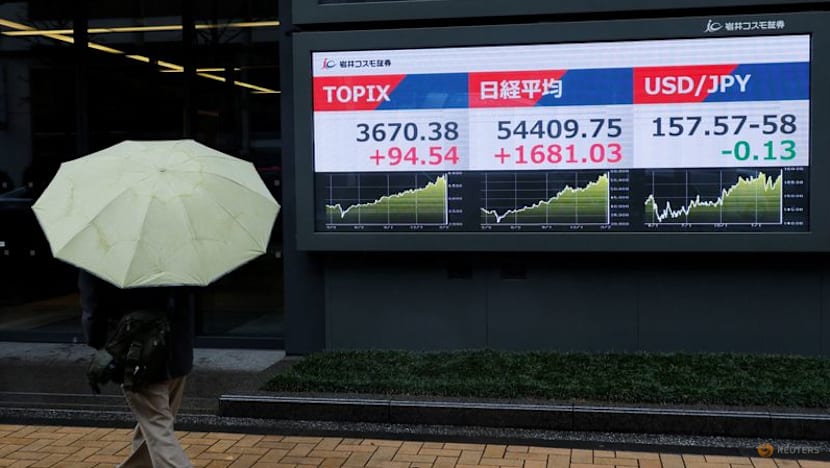
A pedestrian looks at a stock quotation board showing the Topix average, the Nikkei share average and the exchange rate between Japanese yen and US dollar outside a brokerage in Tokyo, Japan, Mar 10, 2026. (Photo: Reuters/Kim Kyung-Hoon)
TOKYO: Oil prices rose and stocks sank in Asia on Thursday (Mar 12) as Iran struck two tankers in Iraq and threatened to bring down the global economy, overshadowing a record release of strategic crude by the International Energy Agency (IEA).
As the US-Israel strikes on the Islamic Republic approached their third week, the conflict showed no signs of letting up, with Tehran responding with more retaliatory attacks across the Gulf.
The IEA said on Wednesday that its members had agreed to unlock 400 million barrels of oil from their reserves - their largest release ever - with 172 million coming from the United States.
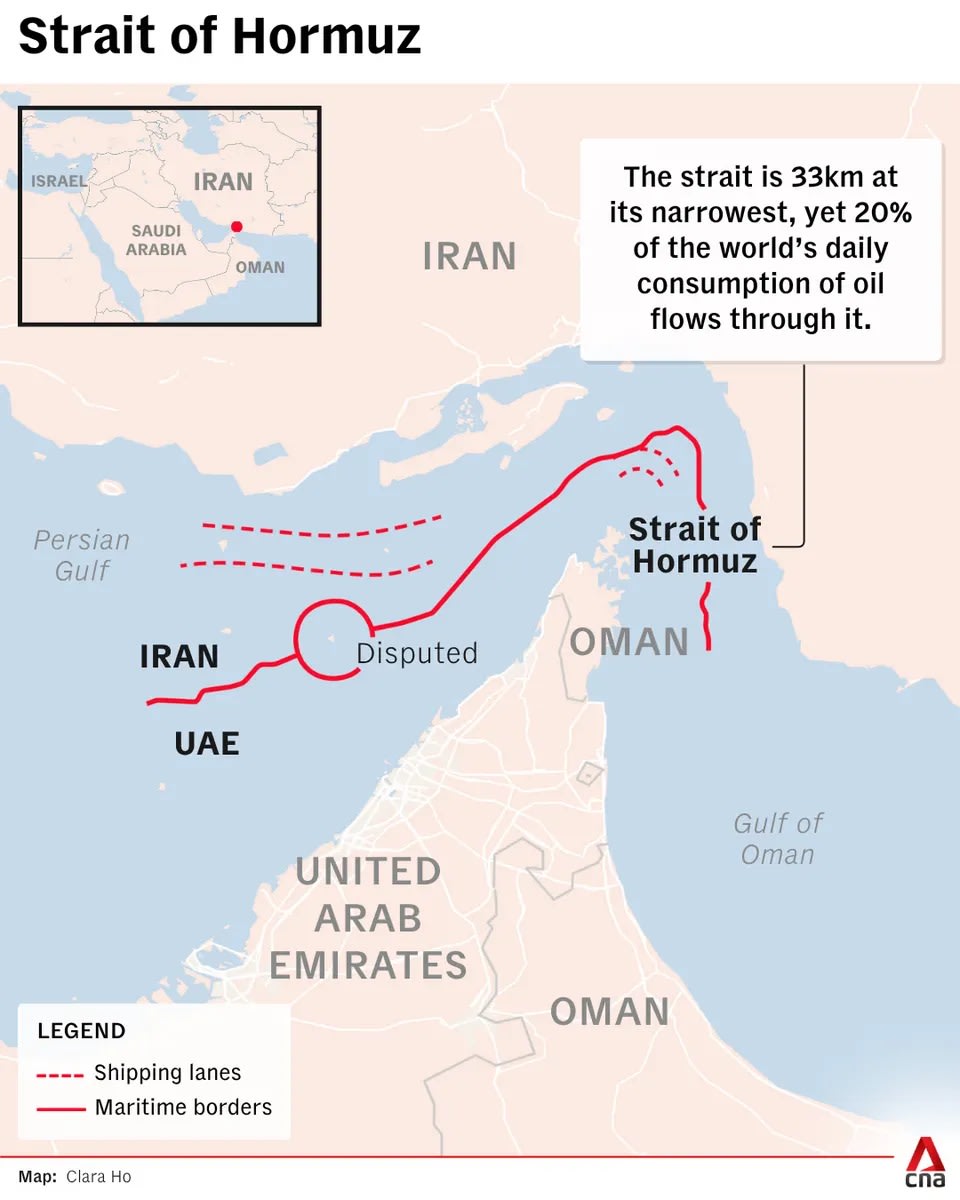
However, the move was unable to overcome fears about the choking of energy supplies from the Middle East, with the Strait of Hormuz - through which a fifth of global crude passes - effectively shut down.
The surge in oil prices has fanned fresh fears about another spike in inflation and warnings that central banks might have to hike interest rates again, having been contemplating cuts just last month.
That has weighed on equities, which resumed their retreat on Thursday.
Tokyo, Hong Kong, Sydney, Seoul, Wellington, Singapore, Taipei, Manila, Jakarta and Shanghai were all down.
Oil prices surged more than 9 per cent on Thursday to break back above US$100, extending the previous day's 4 per cent spike that broke a brief period of relative calm on markets.
They had rocketed as much as 30 per cent on Monday to a peak of nearly US$120.
Brent crude jumped 9.3 per cent to US$100.50 on Thursday, while West Texas Intermediate was up 8.8 per cent at US$94.92 at around 3.05am GMT.
"For traders, this is not a contradiction but a familiar pattern," said Stephen Innes at SPI Asset Management, referring to the oil price rise after the IEA move.
"When the geopolitical fire alarm is still ringing around the Strait of Hormuz, dumping barrels from emergency stockpiles is less a solution than a symbolic gesture.
"It might dampen volatility for a few hours but it cannot change the geometry of risk when the world's most important shipping artery is under threat.
"In trading desk language, the IEA release is the equivalent of pointing a garden hose at a refinery blaze."
Meanwhile, Iran said it was ready for a long war of attrition that would "destroy" the world economy.
The Revolutionary Guards warned on Wednesday that they would strike "economic centres and banks" linked to US and Israeli interests.
Iran has also carried out attacks on merchant ships in the Strait of Hormuz, telling the world to get ready for oil at US$200 a barrel.
"Get ready for oil to be US$200 a barrel, because the oil price depends on regional security, which you have destabilised," Ebrahim Zolfaqari, spokesperson for Iran's military command, said in comments addressed to Washington.
Three vessels were reported to have been hit in Gulf waters as the Revolutionary Guards said their forces had fired on ships in the Gulf that had disobeyed their orders.
A Thai-flagged bulk carrier was set ablaze, forcing the evacuation of crew, with three people reported missing and believed trapped in the engine room.
Two other ships, a Japanese-flagged container ship and a Marshall Islands-flagged bulk carrier, were also reported to have sustained damage from projectiles, bringing the number of merchant ships that have been hit since the war began to 14.
In Iraqi waters, two tankers were set ablaze on Thursday.
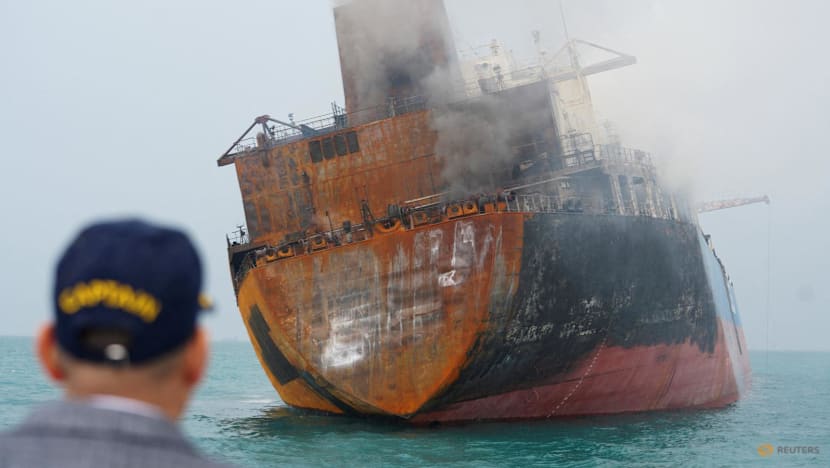
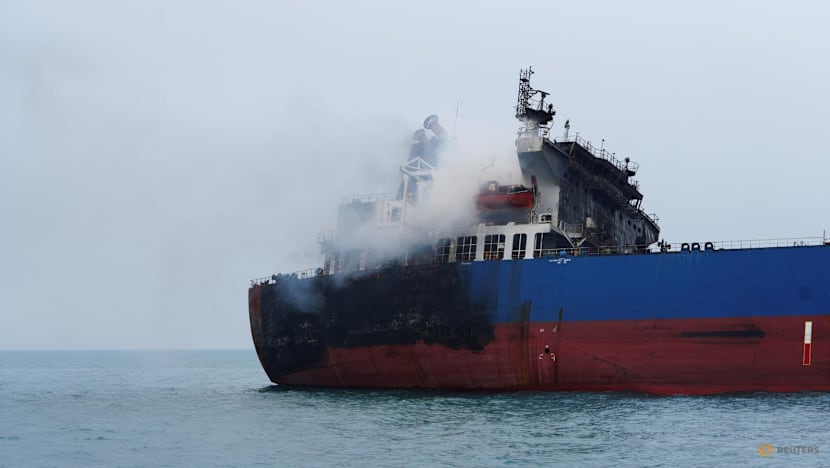
Images, verified by Reuters as having been filmed from the shore of the port of Basra, showed the ships engulfed in massive orange fireballs that lit up the night sky.
Iraqi authorities said the vessels had been attacked overnight by Iranian boats laden with explosives. At least one crew member was killed.
US President Donald Trump, who has not committed to a timeline for military operations, suggested on Wednesday he was not yet ready to call an end to the war.
At a rally in Kentucky, he said "we won" the war, but the US didn't want to have to go back every two years.
"We don't want to leave early, do we?" he said. "We got to finish the job."
Trump said the US would now "look very strongly" at the Strait of Hormuz, adding: "The straits are in great shape. We've knocked out all of their boats. They have some missiles, but not very many."
Despite Trump's words, there has been no sign that ships can safely sail through the strait. An Iranian military spokesperson said the strait was "undoubtedly" under Iran's control.
According to Saxo Markets' Neil Wilson, the war had already caused the loss of around 200 million barrels.
And, he said, "reserves are stockpiles sitting as existing inventory - the market is more concerned about flows. Moving barrels from point A to point B is not the same as producing new oil".
Observers now warn that with no end in sight to the hostilities, the US$90-US$100 a barrel range could be the new normal for a while.
IEA RELEASE OFFERS JUST BRIEF RELIEF: ANALYST
The IEA’s move may calm markets briefly but is unlikely to fully offset a prolonged disruption along the Strait of Hormuz, according to Sushant Gupta, research director for Asia Pacific refining and oils at consultancy Wood Mackenzie.
Speaking to CNA’s Asia First, Gupta said the headline figure of 400 million barrels appears large, but the blocked strait typically handles around 15 million barrels per day of crude flows. On paper, that equates to about 26 days of cover, he noted.
“Even though 400 million barrels is a big number, but in reality, the market is still nervous about how long this will last and how fast (IEA's release) can reach the market,” he said.
He added that logistical delays, auction processes and crude quality differences could slow deliveries.
Without timely deliveries, Gupta warned that global refinery runs could be cut by around 20 per cent, tightening fuel supplies further.
On Iran’s warning of oil at US$200 a barrel, Gupta said: “It can't be ruled out, but the disruption and the severity has to be significant for that to happen.”
He said sustained prices above US$100 per barrel could prompt consumers and businesses to cut back on travel and fuel use, helping to reduce demand and ease pressure on the market.