Wall Street stocks rise after court ruling against US tariffs
Some analysts said they expect the Supreme Court ruling to lead to lower inflation, but others described the situation as fundamentally uncertain.
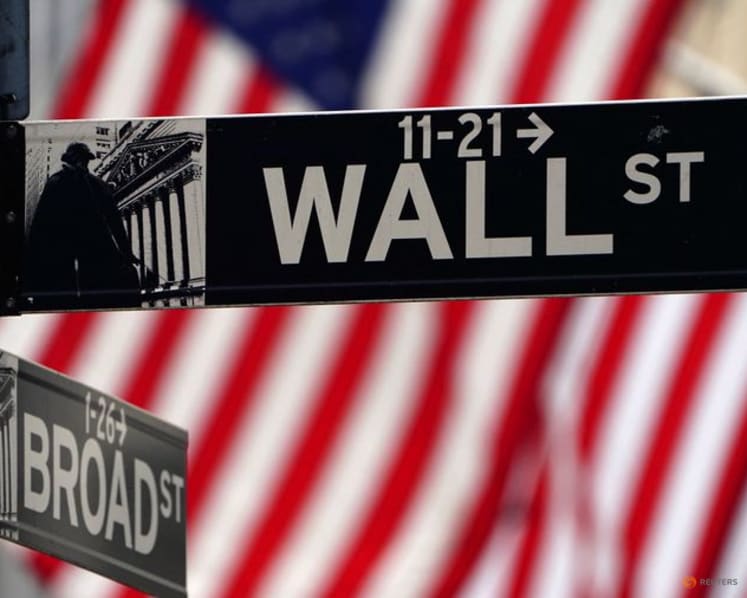
A Wall Street sign is pictured outside the New York Stock Exchange. (Photo: REUTERS/Carlo Allegri)
NEW YORK: Wall Street stocks advanced on Friday (Feb 20) as markets digested a US Supreme Court decision striking down some of the White House's sweeping tariffs and President Donald Trump's response vowing new levies.
The conservative-majority top court ruled six-three that a 1977 law known as the International Emergency Economic Powers Act Trump has relied on "does not authorise the president to impose tariffs".
Wall Street stocks, which had opened lower following disappointing US economic data, pushed into positive territory and also ended higher following a choppy session. The S&P 500 ended up 0.7 per cent.
Many on Wall Street were likely expecting such a ruling from the Supreme Court, according to Brian Jacobsen, chief economic strategist at Annex Wealth Management.





That likely led to the relatively muted reactions across financial markets, and trading remained tentative as investors tried to figure out the long-term effects.
Some analysts said they expect the ruling to lead to lower inflation, but others described the situation as fundamentally uncertain.
The market is not "surprised by what it heard from the Supreme Court and at the same time, it's not surprised that the Trump administration is already touting its ability to make up for the lost revenue that would come from revoking the tariffs", said Briefing.com analyst Patrick O'Hare.
Mark Malek, chief investment officer at Siebert Financial, described the ruling as throwing a "pretty large wrench into the policy machine", predicting that policy uncertainty would remain "elevated".
Jeff Buchbinder, chief equity strategist for LPL Financial, predicted Trump would likely pivot to a different legal strategy.
"However, if lower tariffs help cool inflation, it could firm up expectations for Fed rate cuts later this year," Buchbinder said in a note.
In Asia, Hong Kong fell as it reopened from a three-day break for the Chinese New Year, and Tokyo was also down. South Korea’s Kospi jumped 2.3 per cent to a record, led by major defense contractors like Hanwha Aerospace.
In Europe, a closely watched survey on Friday showed that business activity in the eurozone accelerated in February, indicating that the region's economy is on a more stable footing.
London's FTSE 100 stock index hit a fresh record high, as did the CAC 40 in Paris.
Oil prices, which surged to multi-month highs this week on US suggestions of military action against Iran, moved sideways as markets kept an eye on geopolitics.
Trump had suggested on Thursday that "bad things" would happen if Tehran did not strike a deal within 10 days, which he subsequently extended to 15.
Asked by a reporter on Friday whether he was contemplating a limited military strike, Trump said: "The most I can say - I am considering it."
Friday's data also showed the US economy expanded at a 1.4 per cent annual rate in the October to December period, significantly below the 2.5 per cent pace that analysts had forecasted for the quarter.
The period included a lengthy US government shutdown amid a budget fight between Trump and Congress.
"At first glance the first reading of fourth quarter GDP was very disappointing," said Chris Zaccarelli, chief investment officer at Northlight Asset Management.
"However, the government was shut down for almost half the quarter," he added.