Asia’s real masters of the sea, from Indonesia’s forgotten kingdom to Vietnam’s ancient empire
The Mark Of Empire follows the traces of Asia’s maritime civilisations, from Srivijaya to Sulu, exploring how they continue to shape faith, identity and craft today. Here’s why the series will grab you.
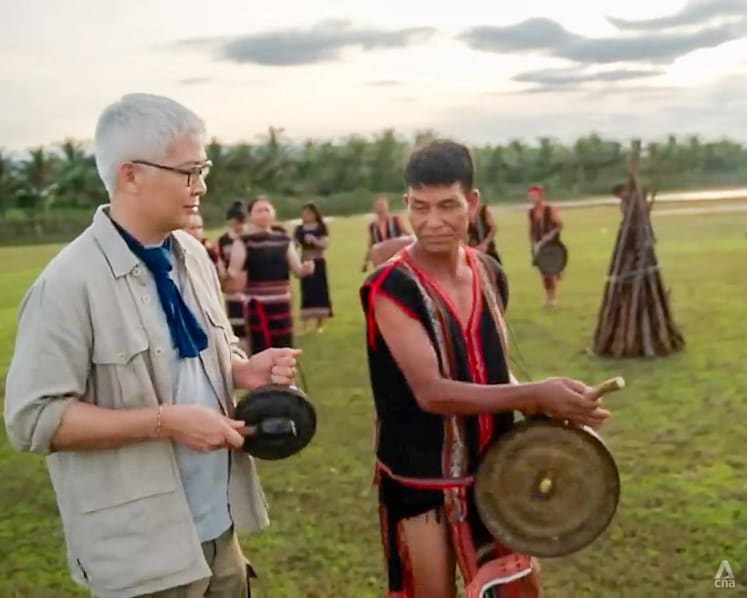
Curator and scholar Peter Lee meets descendants of ancient empires in the region, like this Jarai tribesman in Vietnam.

This audio is generated by an AI tool.


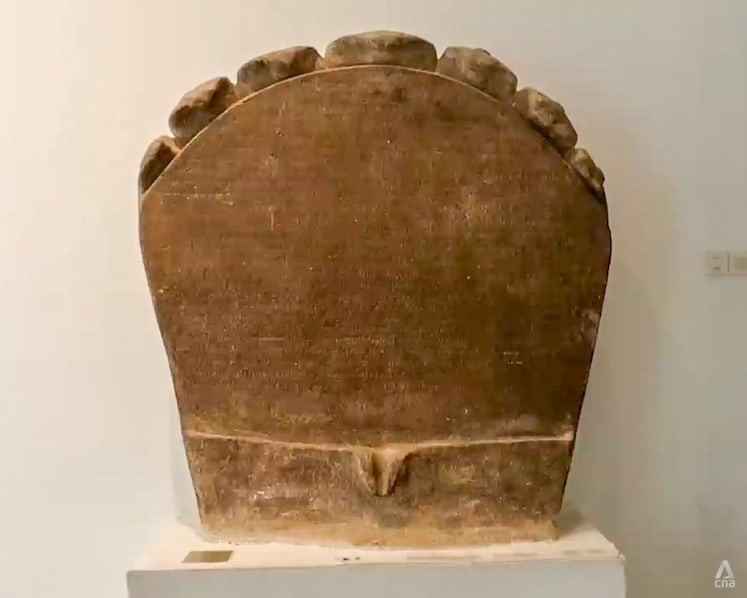
JAKARTA/DA NANG/ANURADHAPURA/ZAMBOANGA CITY: Inside the National Museum of Indonesia, inscribed on a stone slab is a chilling message from the 7th century.
Its carved lines are worn out, but epigraphist Andriyati Rahayu can make out the warning in ancient Malay. “Whoever disobeys the king will be cursed and killed,” she translates.
Fragments such as this inscription offer insight into the Srivijaya empire, a seafaring power that dominated trade in much of Southeast Asia more than a millennium ago.
From its base in Sumatra, Srivijaya controlled the Straits of Malacca and the Sunda Strait, vital sea routes linking India and China, and built its influence on the movement of goods, ideas and people.





Yet, much of Srivijaya’s story remains elusive. Since 1918, when modern scholars first identified it as a kingdom, its history has been assembled only from scattered inscriptions, trade artefacts and references preserved beyond its shores.
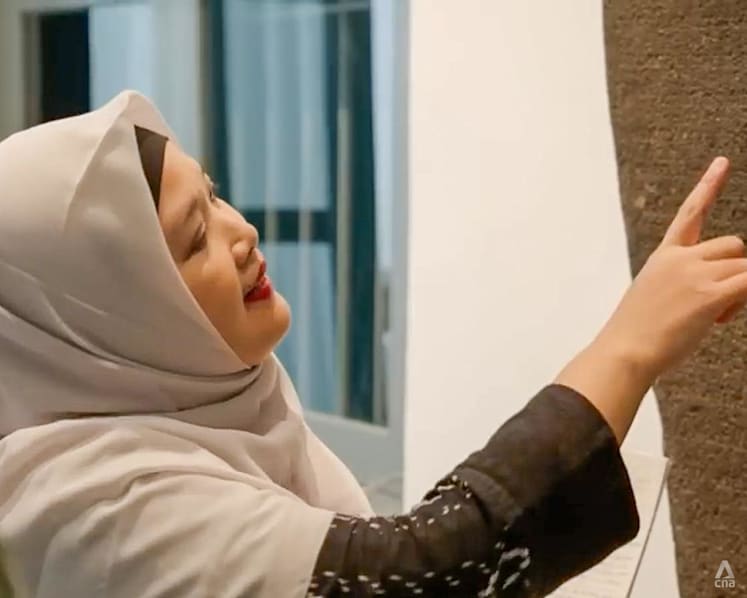
“There’s a lot left to uncover,” says Singaporean curator and scholar Peter Lee, 63. And this challenge extends beyond Srivijaya. Other maritime kingdoms in Asia have also left behind fragments hinting at past reigns.
In the third season of The Mark Of Empire, he follows those traces across the region, from the Champa kingdom in Vietnam to the Sultanate of Sulu in the Philippines to the Anuradhapura kingdom in Sri Lanka.
Taken together, their stories reveal how these kingdoms of the sea shaped Asia’s past and how their legacies have endured. Here are three things that make the series compelling viewing.
1. STUNNING RELICS OF THE ANCIENT WORLD
Through the objects, sites and technologies that were left behind, Lee pieces together how these kingdoms rose to power.
WATCH: Indonesia’s mysterious Srivijaya kingdom, which thrived over 1,000 years ago (46:29)
Along the Musi River in Palembang, South Sumatra, which is believed to have been at the heart of Srivijaya’s maritime might, recovered artefacts point to an ancient capital enriched by commerce linking India, China and Southeast Asia.
Among the ceramics and coins, a gold necklace hints at the wealth that underpinned Srivijaya’s dominance at sea — a necklace so heavy it “could’ve been worn by a king centuries ago”, Lee remarks.
Much of the kingdom’s wealth came from trading commodities. Among them was agarwood, a fragrant, resinous wood used in incense, perfumery and traditional medicine. Even today, Indonesia is one of the world’s largest producers and exporters of this raw material.
Over in Da Nang, Vietnam, a sacred artefact at the Museum of Cham Sculpture offers a window on the Champa kingdom. It is a sculpture of the Hindu god Shiva carved with the features of a Cham king.
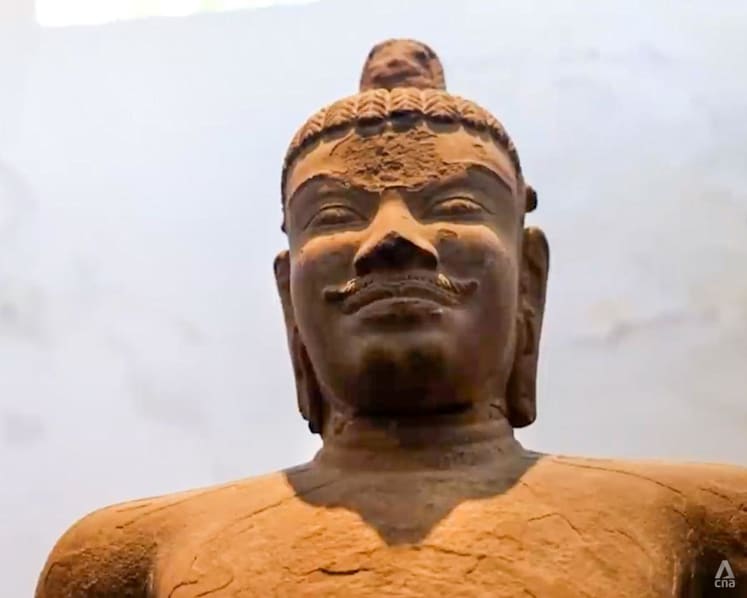
Champa emerged in the 2nd century and endured for more than 1,500 years along Vietnam’s central and southern coast, drawing on Hindu beliefs to legitimise and expand royal authority.
By presenting themselves as divine figures in temples and sacred art, Champa’s rulers fused kingship with religion to project power across communities. Reflecting on their “aspirations at that time”, Lee says: “You really wanted to be a god.”
Elsewhere, the story of Sri Lanka’s Anuradhapura kingdom, which ruled from its capital city of the same name, shows how mastery of engineering could reinforce the power of a maritime state.
Founded in the 5th century BC, the city served as the island’s centre of power for roughly 1,400 years.
WATCH: The engineering marvels of Sri Lanka’s ancient kingdom, Anuradhapura (46:58)
And amid the ruins of a 5th-century rock fortress rising nearly 200 metres above the central plains — called Sigiriya or Sinhagiri (Lion Rock) and built by King Kasyapa — the technology to channel rainwater into a pond for storage can still be seen.
“It never ran dry — what a miracle!” says Lee, describing it as “really sophisticated engineering for that time”.
Not far away, in Mihintale, medicinal stone troughs in the archaeological site of one of the world’s earliest hospitals indicate how profits from trade were reinvested into civic life, allowing the kingdom to flourish for centuries.
2. DESCENDANTS KEEPING TRADITIONS ALIVE
Beyond artefacts and monuments, the series comes alive through people whose knowledge and practices have been passed down for generations.
WATCH: Vietnam’s 1,500-year empire lost to history — Living relics of Champa kingdom (46:53)
In Sumatra, there are Orang Laut (“people of the sea” in Malay) whose ancestors were tied to the rise of the Srivijaya kingdom. Historically, these seafaring communities helped guide ships and safeguard vital waters.
A 64-year-old fisherman called Pak Cecep tells Lee his navigational knowledge came from his ancestors.
“Nowadays it’s easier, using a compass and GPS (global positioning system). But back then, … we looked at the sun during the day and the stars at night,” he says. “(Our ancestors) were the true experts.”
In southern Philippines, Lee encounters a martial art called “kuntaw”, believed to have been used to defend the Sultanate of Sulu, a maritime Islamic kingdom that was founded in the 15th century and resisted colonial rule for over three centuries.
WATCH: The Philippine sea empire that dominated southern maritime trade for centuries (46:55)
“We took (kuntaw) and prepared it as a way to face the Spaniards, the Japanese and the Americans,” says master practitioner Salip Said, 73.
Lee also meets Muedzul-Lail Tan Kiram, the crown prince of the Sultanate of Sulu and North Borneo — as recognised by the Philippine government — and claimant to the throne.
Though his family no longer rules politically, the 59-year-old speaks of pride in his lineage and a responsibility to the community. His wish is for them to “live in harmony”.
In Vietnam, the practices of the Champa kingdom live on through descendants like the Jarai in the central highlands, one of several ethnic groups with part-Cham roots. Their rituals honour mountain and water spirits, belief systems that predate modern borders.
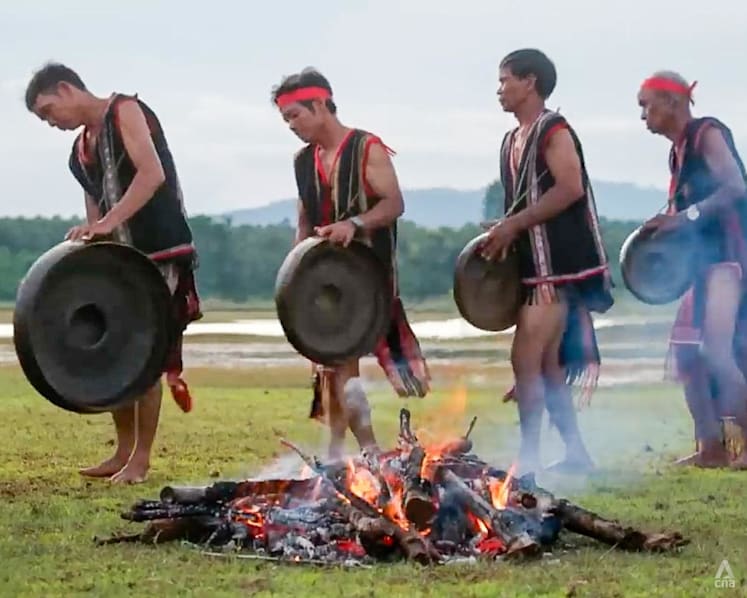
At one gathering where Jarai performers sing and dance to the rhythm of gongs, which are central to their ceremonial music, a dancer shares: “My parents taught me (this dance) so that I can pass it down to my brothers and my children.”
3. YOUNG PEOPLE RETELLING THEIR HERITAGE
Season 3 also turns to the future, showing how young generations are reimagining their ancient cultures.
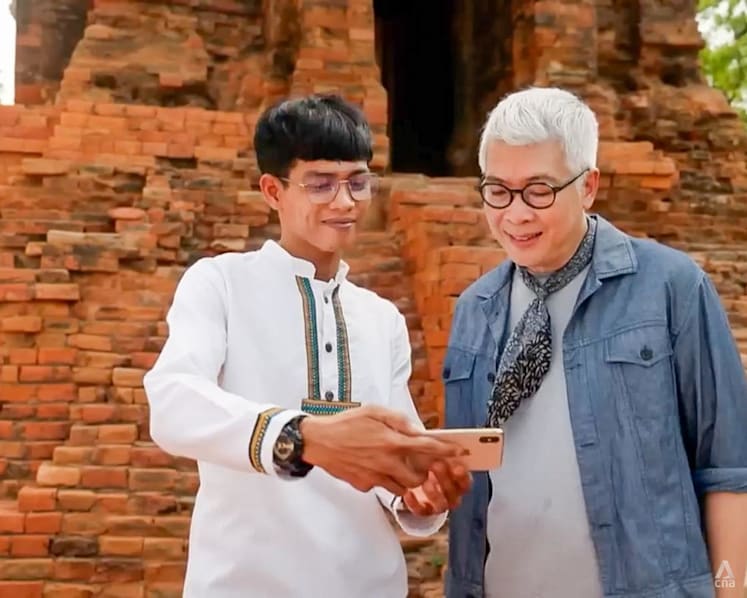
Vietnamese car mechanic and rapper Truong Ngoc Phat, 27, shares a music video he filmed at the Po Klong Garai Temple, which was built more than 700 years ago and named after a Cham king.
Performing in front of the temple, he is dressed in traditional clothing paired with sneakers, rapping about identity, resilience and pride. “When people see this tower, they think of Champa,” he says.
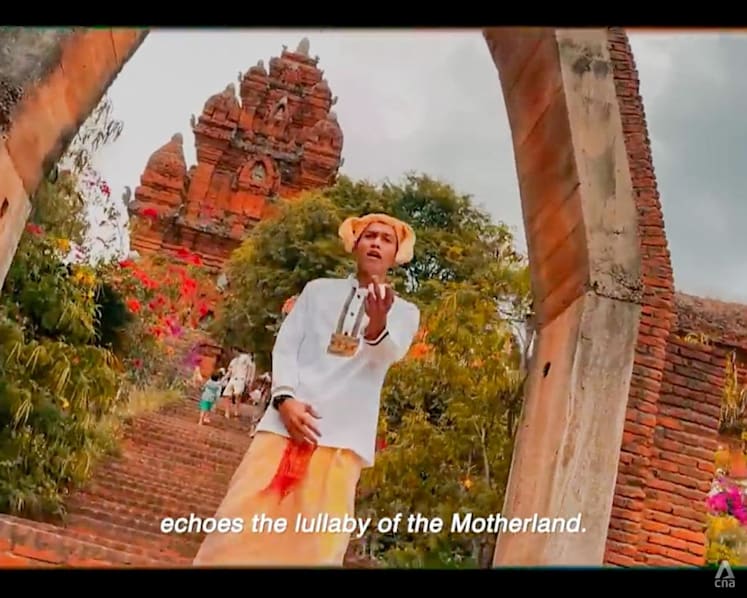
Although he raps in Vietnamese to reach a wider audience, he incorporates Cham language into his lyrics, along with gestures honouring his roots.
“I’m proud to be a Cham person and … (part of) one of Vietnam’s 54 ethnic groups,” he adds.
In Indonesia, choreographer and dance troupe founder Surtia Ningsih, 33, uses dance to retell Srivijayan history, such as the story of King Dapunta Hyang Sri Jayanasa’s journey by sea to erect his capital in Palembang.
By blending ceremonial dances with contemporary and Malay-style movements, she creates works that connect age-old ritual with present-day expression.
“Srivijaya is a great civilisation whose knowledge I think should be passed down,” she says. “Young people need to know that they have such powerful ancestors.”
Watch this season of The Mark Of Empire here: Indonesia, Vietnam, Philippines and Sri Lanka.