Why Japan’s right wing is on the rise and what it means for the country
Frustration with Japan’s ruling elite, among other things, has fuelled the growth of a party that began on the fringes. CNA’s Insight finds out why its right-wing message resonates with its supporters and what others are starting to fear.

This audio is generated by an AI tool.




TOKYO: She is a housewife in her 40s who voted for the first time in 2024. He is 25 years old, for whom “voting just wasn’t on (his) radar” until Japan’s Upper House election last year.
And the party that pulled them to the ballot box was Sanseito, a right-wing party that has been making waves in Japan’s political scene.
In a country where the Liberal Democratic Party (LDP) has been in power for decades, “Tadami” the housewife — who preferred to use a pseudonym — finally felt empowered enough to vote.
“The people who really speak for me aren’t some hereditary elites. … They’re just regular mums and dads,” she said, citing two Sanseito members elected to Japan’s Lower House in 2024.






For the 25-year-old, Masato Yanagihara, one of his concerns was food security, following a rice shortage that sent prices to their highest in more than 30 years.
“The minister of agriculture released emergency rice stockpiles and acted as if he’d saved the people,” said Yanagihara, whose family is from the rice-growing region of Niigata.
“But I thought, ‘No, no, that’s not the point.’ The real issue is (about) increasing production, supporting farmers more. If (the government) can’t even do that, releasing stockpiles and acting proud of it just feels wrong.”
Sanseito’s leader, meanwhile, was “speaking about everything I’d been thinking we should do”, added Yanagihara, who was fired up to vote.
The right-wing party’s upstart image and its challenge to the status quo have drawn supporters like him and Tadami.
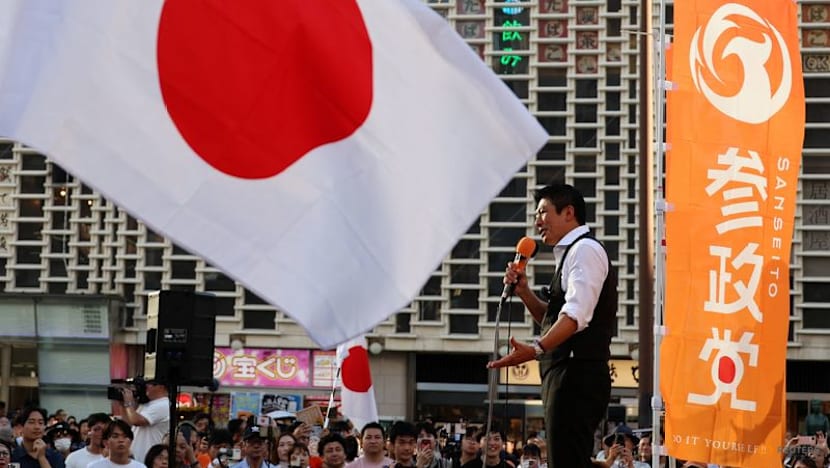
It began on the political margins in 2020 — founded by former LDP member Sohei Kamiya — but has since gained traction with its hard line on immigration and the cost of living.
From one seat in the Upper House, it captured 14 more seats last year. For this Sunday’s Lower House election, Sanseito is fielding as many as 190 candidates, the third-largest number among parties contesting the 465 seats at stake.
The rise of Japan’s right wing has upended the country’s politics and has already led to Prime Minister Sanae Takaichi’s political ascension.
CNA’s Insight looks at what is driving this surge and what it means for a Japan battling slow growth and a shrinking population.
WATCH: Why right-wing ideology is gaining popularity in Japan (46:23)
THE SHIFT AWAY FROM THE RULING PARTY
One of Sanseito’s voting blocs consists of those who have turned away from the ruling party.
One former LDP supporter, who was even an LDP member for a period, is financial consultant Hirotaka Ueki, 43. He is now Sanseito’s Lower House candidate for Tokyo’s 3rd District, which includes the affluent Shinagawa ward.
While he thought “things improved significantly” under ex-PM Shinzo Abe, the latter’s death in 2022 marked a change for Ueki.
“Considering the prime ministers and members at that time, I started to feel that perhaps we couldn’t really expect much from the LDP,” he said.
The investigation into Abe’s assassination revealed links between the LDP and the Unification Church, after the attacker claimed the church’s donation tactics had bankrupted his mother, for which he blamed Abe because of the latter’s perceived ties to the group.


The lawmakers linked to the church — which has long had mass wedding ceremonies besides being accused of taking large sums of money from believers — included several members of the then PM Fumio Kishida’s Cabinet.
“When such a suspicious group as the Unification Church appeared to have deep ties with the LDP,” said Kokugakuin University political scientist Kentaro Yamamoto, “for Japanese voters, it naturally translated into a sense of distrust.”
Then there were LDP factions, including the right-leaning Seiwakai group, found to have mishandled campaign funds.
“From the public’s perspective, while ordinary people are struggling, politicians seem to be benefiting from financial scandals,” said Yamamoto. “This provoked genuine anger among voters.”
And when the moderate, Shigeru Ishiba, took the reins of office in 2024, more conservative supporters of the LDP felt alienated.
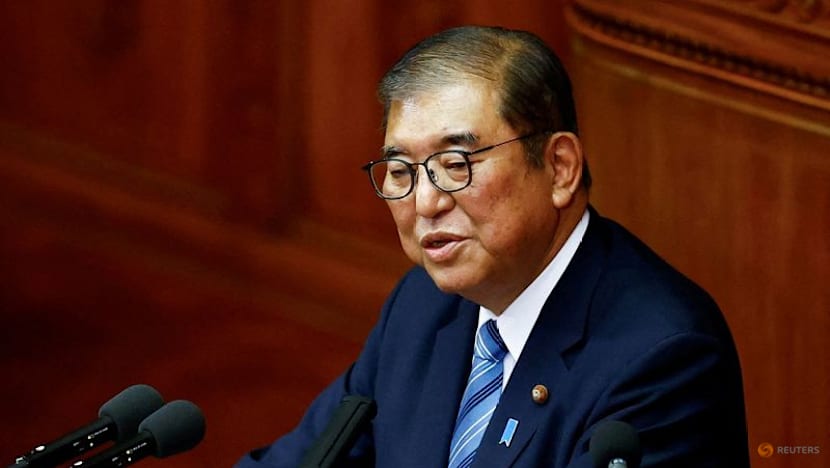
“At that time, I think the liberal faction held more power within the government,” said Ueki, who cited the enactment of an Act in 2023 to promote understanding of diversity in sexual orientation and gender identity.
“There was a strong sense that they weren’t valuing Japanese culture.”
ANTI-IMMIGRATION, ANTI-GLOBALIST RHETORIC
Given his conservative-leaning views, there was another thing Ueki “really wanted” the ruling party to do: “Properly protect the position of the Japanese people.”
For those in the Sanseito camp, this includes stopping what the party calls the “silent invasion” of foreigners.
And many Japanese might agree. A poll conducted last June by public broadcaster NHK found that 64 per cent of respondents believed foreigners were receiving preferential treatment.
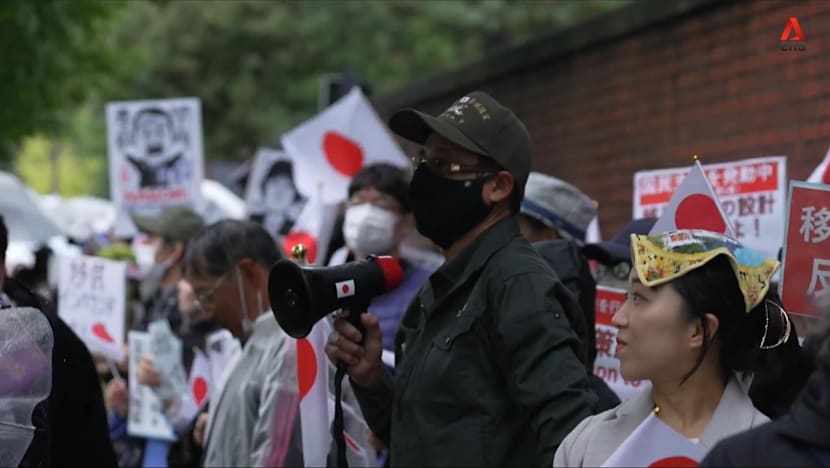
“It’s no longer just the external threat of China, of North Korea or even South Korea … that the far right plays up,” observed Sophia University political scientist Koichi Nakano. “It’s also economic migrant workers, even tourists, (and) wealthy foreigners.”
One focal point of the right’s anti-immigration rhetoric is China, the largest source of long-term migrants and international students for Japan.
Already, with geopolitical tensions in the region, a Sasakawa Peace Foundation survey in 2024 found that 73.1 per cent of Japanese respondents did not have friendly feelings towards China.
“If a certain country wants to control Japan, they just send in a lot of people,” opined Tadami. “As the number grows, … their opinions gain greater weight. … The original residents get pushed around more and more by those opinions.”

Record-breaking tourist arrivals mean more daily encounters with non-Japanese people — fuel for her frustration.
“If they’d just slow down a bit, make an effort to speak Japanese properly and try to blend in, then maybe there wouldn’t be so much friction,” she said.
“When communities form completely in their own language, … it makes me feel a sense of crisis, as if another country might be forming within Japan, bit by bit.”
As with like-minded movements elsewhere in the world, such as Make America Great Again, Japanese right-wing ideology is also driven by nationalist sentiment, especially among those who feel that globalisation has failed them, leading them to turn inward.

Rising prices have become a “serious problem”, for example, and the LDP-led government has not been able to address it, according to Yamamoto.
And after years of Japan’s flatlining growth, Sanseito’s anti-globalist politics, captured in its nation-building vision, are increasing in popularity.
“We Japanese people need to rebuild that foundation ourselves, from the ground up — not be controlled by outside pressure or directions,” said Yanagihara.
GAINING GROUND AMONG THE YOUNG AND ONLINE
Young voters such as Yanagihara have become important to Sanseito — and are one of the reasons why an observer like Yamamoto was “very surprised” by the party’s breakthrough last year in the Upper House.

A rule of thumb in Japan is that roughly 30 per cent of its population have “little to no interest” in politics, and they have “tended to be younger people”, said the professor.
In the 2024 Lower House election, for example, the turnout of voters aged 21 to 29 was 34.6 per cent, compared with roughly 74 per cent of voters aged 60 and above.
But in last year’s Upper House race, the turnout rate rose to 42.6 per cent for voters aged 20 to 24, and to 52 per cent for those in their late 20s.
“Many of these young people are now being exposed to politics through social media,” said Yamamoto. “Therefore, gaining visibility and a positive reputation on social media has become increasingly essential for expanding one’s supporter base and winning more seats.”


Indeed, Sanseito’s social media advantage is showing up strongly. During last year’s Upper House race, party leader Sohei Kamiya gained more than 1,000 new X followers daily, outstripping his competition. He now has close to 413,000 followers.
Sanseito has also grown its YouTube channel to become the party with the most subscribers, numbering 571,000 and surpassing the left-wing Reiwa Shinsengumi’s 402,000 subscribers. The LDP, meanwhile, has 198,000 YouTube subscribers.
At the same time, issues concerning foreigners have become widely discussed on social media, observed Yamamoto.
“People with feelings of discomfort tend to resonate with the negative commentary on foreigners that they see on social media. As a result, some (Japanese) have become more conservative in their attitudes.”
He cited stories about foreigners buying “large amounts of property for investment purposes, thereby driving up real estate prices”.

“Such rumours — whether true or not — spread online, leading people to feel that the government is doing nothing about these issues while their own lives get harder,” he said.
The right’s online advantage is not just a numbers game. Their opponents are finding it hard to appeal to people in “short, less-than-one-minute videos”, observed Nakano.
The left and the liberals tend to be more long-winded, and they try to be more accurate. … Therefore, they’re not playing the same game, and they’re certainly not winning.”
It is much to the chagrin of former internal affairs and communications minister Seiichiro Murakami that “many younger people aren’t thoroughly verifying what’s true”.
“They’re just accepting what they see. I think that tendency poses a real danger,” said the 73-year-old. “Misinformation spread through social media is beginning to influence election outcomes, and that makes me feel a strong sense of crisis.”

A NEW POLITICAL ERA?
The rise of Sanseito has already reshaped Japan’s mainstream politics. With the LDP’s losses in last year’s Upper House election, many of the party’s rank-and-file members rallied behind Takaichi — one of Abe’s most loyal proteges — as Ishiba stepped down.
But the centrist Komeito party, disagreeing with her conservative views — such as her support for the revision of Japan’s pacifist Constitution — ended its 26-year partnership with the LDP.
Lacking enough seats to form the government, the LDP then entered into a coalition with the right-wing Nippon Ishin (Japan Innovation Party) for Takaichi to become prime minister.
“As a result, the LDP will likely continue shifting rightward, giving more weight to conservative voters, including those mobilised through social media,” said Yamamoto.
“The LDP’s identity as a catch-all party, one that embraces a wide range of views, will gradually fade.”
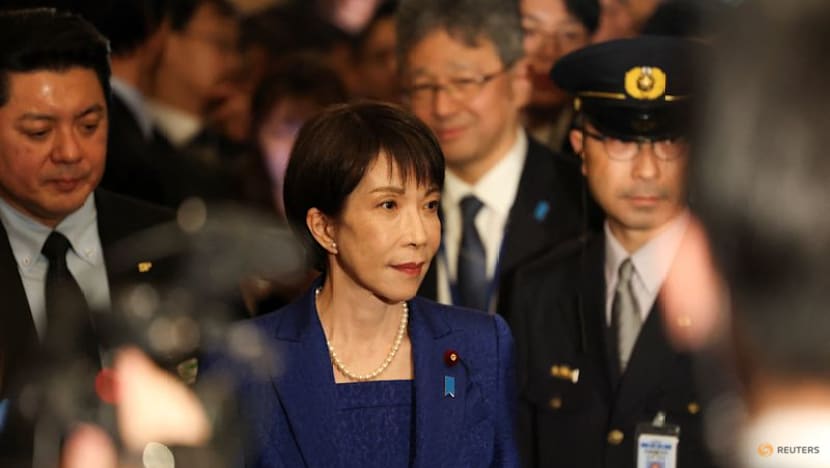
Without Komeito in the coalition and the party’s traditionally stronger ties with the Chinese government, there is also some doubt about whether the LDP will have a “proper communication channel” with Beijing, highlighted Nakano.
With the Sino-American relationship “fraught with the possibility of a sudden change” for better or for worse, “Japan can be left in the dark and either get entangled or get abandoned … with very little leverage”, he said.
“Takaichi doesn’t seem to be calculating any of that. Or her advisors simply seem to think that just embracing (Donald) Trump would be enough for Japan to somehow work its way through in Asia.”
Since taking office, she has pledged heavy spending on defence and nuclear energy, two areas prioritised by Japan’s conservatives. She has also taken a hard line on immigration, reversing the previous administration’s embrace of immigrants to offset Japan’s declining population.

“The reality is that Japanese society simply can’t function without foreign workers,” said a concerned Yamamoto. “Japan’s primary sectors, like agriculture and fisheries, are also being supported by foreign technical trainees.
“Despite this, negative perceptions of foreigners are spreading. And if such attitudes begin to manifest in actual policy … that could make Japan a far more difficult place to live for the foreigners who are helping to sustain its economy.”
As with trends in the West, he thinks there is every likelihood of that happening. “Parties now have to give greater attention to policies concerning foreigners,” he said. “That’s the doorway that Japanese politics have entered.”
PUSHBACK AGAINST THE PAST AND PRESENT
For its part, Sanseito insists that it is not anti-foreigner.
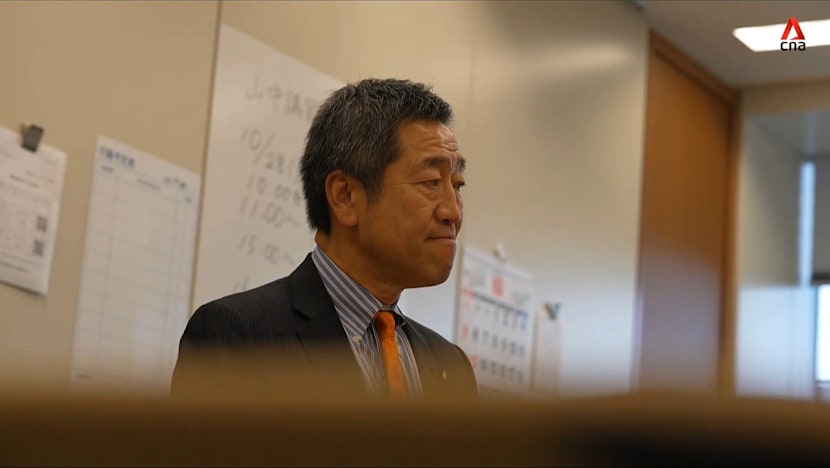
“We’re not really against all foreigners coming here or against foreigners staying here legally,” said Sen Yamanaka, who heads its international arm. “But many of them are illegally overstaying. And many of them are sometimes not welcomed by the society.”
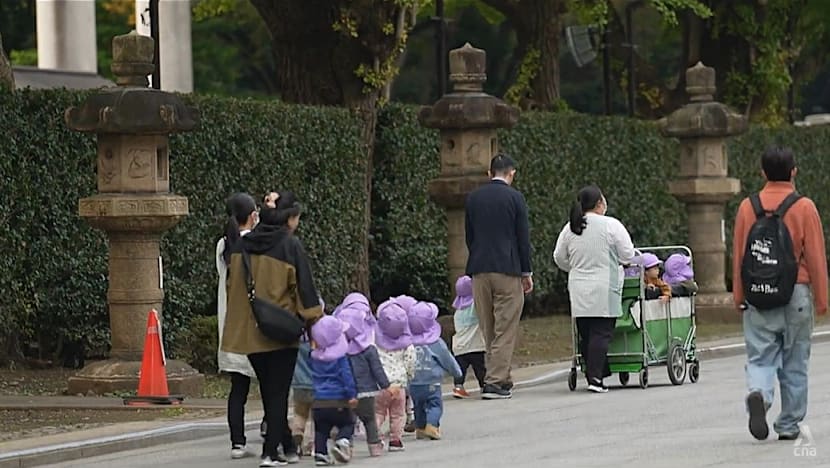
Some locals, for example, associate Kurdish refugees — who have fled ethnic persecution in Türkiye — with crime and disorder. The largest Kurdish enclave is in Kawaguchi City, on the northern outskirts of Tokyo and home to around 2,500 Kurds.
Yamanaka referred to the party’s “Japanese First” slogan, likening it to United States President Trump’s “America First” policies, and said that many of Japan’s past administrations did not put the Japanese, the country’s “most important” people, first.
“That doesn’t mean … foreigners are less or last,” he told Insight. “But that’s what we are, who we are.”
And one of the most important things Japan needs more of, he highlighted, is Japanese children. “Many young couples … can’t marry because they can’t have good jobs,” he said.
“So we have to have economic incentives for people, like less tax for those working parents. … We’ve got to do everything to gain the kids. That’s the most (profound) existential crisis in this country.”
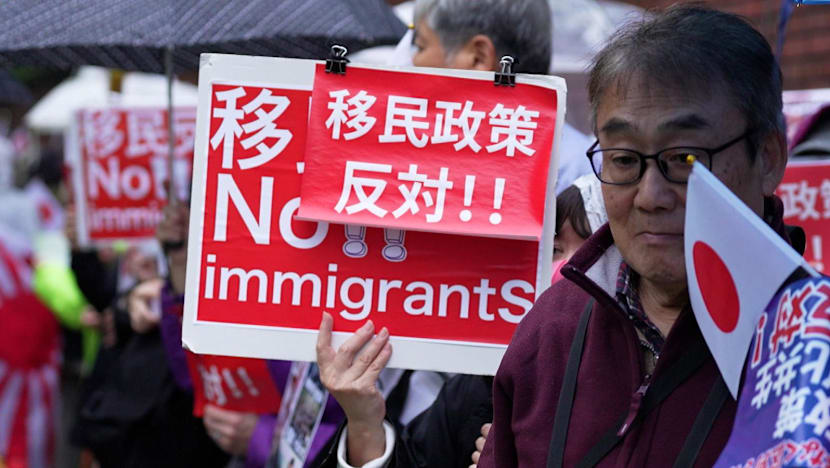
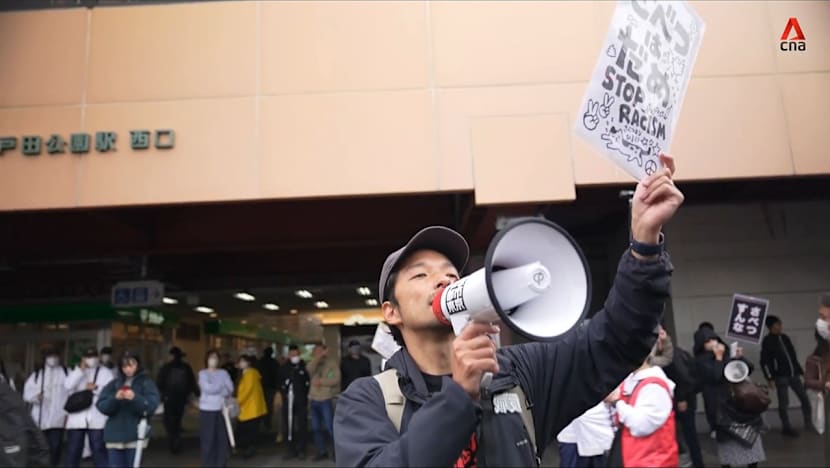
But others are more concerned about how the rightward march will shape Japan. Across the country, progressive groups have decried far-right ideology and matched anti-immigration rallies — including those targeting the Kurds — with counter-protests.
One familiar face at progressive rallies is restaurateur Taichi Fujimori, 43, who wants to show that there are “people who value human rights”.
Those who are anti-immigration “aren’t making proper arguments”, he said. “It’s as if they’re mocking society, mocking democracy and human rights, just to grab attention. That’s truly unforgivable.”
His activism has come at a price. As the manager of Enotera, a wine-focused restaurant in Tokyo, he has been on the receiving end of silent calls “ringing constantly from the moment we’re preparing to open” until closing time.
Then there are the one-star Google reviews — with comments like, “the manager here is left-wing” — causing his restaurant’s overall rating to drop. “We haven’t had anyone come in directly to say anything, so I don’t really mind it,” he shrugged.
What worries him the most is that “the threshold for hate and discrimination is falling”, he said. “Hate speech, if left unchecked, leads to people being killed. … We’ve reached that stage now, perhaps just short of war or people dying.”
Watch this episode of Insight here. The programme airs on Thursdays at 9pm.