Commentary: I was struck by climate fatigue until I listened to this Oscar-winning filmmaker
The string of recent disasters should not be written off as just routine bad weather, says CNA's Charles Phang.
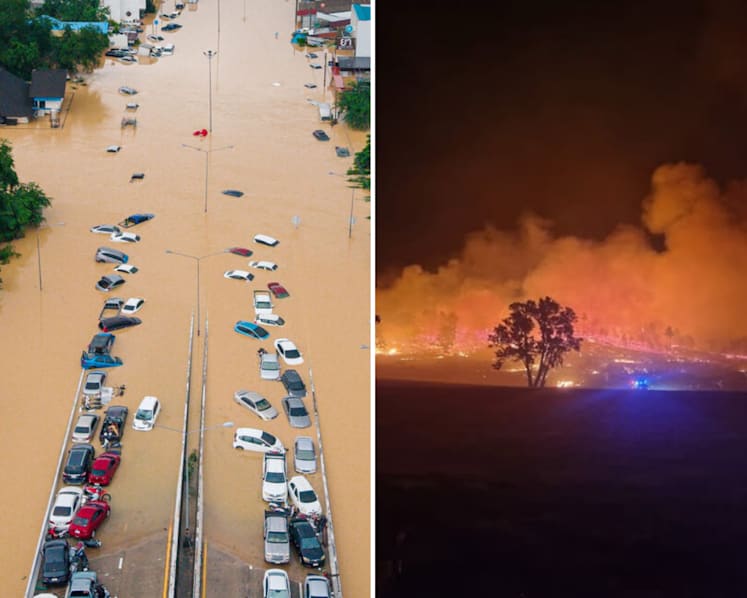
Composite photo of (left) Submerged cars and houses in floodwaters in Songkhla province, southern Thailand, on Nov 26, 2025 and (right) bushfire near the town of Longwood, Australia, posted on Jan 8, 2026, by Victoria Premier Jacinta Allan. (AP Photo/Arnun Chonmahatrakool, Facebook/Jacinta Allan)

This audio is generated by an AI tool.


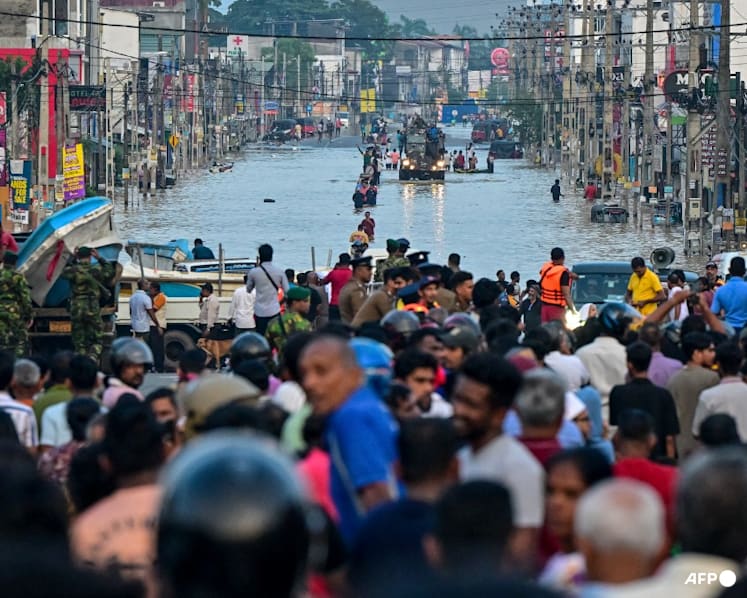
SINGAPORE: Over the past week, wildfires ripped through southeast Australia, scorching 4,040 sq km – or more than five times the size of Singapore, as one Australian media outlet put into perspective – destroying properties and forcing thousands to evacuate. At the end of last year, deadly floods and landslides also claimed over 2,000 lives and displaced millions more across Indonesia, Sri Lanka, Thailand and Malaysia.
Because bushfire and monsoon seasons happen every year, there’s always a danger that even weather events as severe as these are brushed off as routine.
But this time, the science is clear. Scientists stress that while no single fire or storm can be pinned entirely on climate change, Australia’s bushfires are being fuelled by hotter, drier conditions and longer heatwaves, and Asia’s floods are intensified by warmer-than-usual seas and heavier rainfalls – the things climate projections have long warned about.
Though global surveys say that far more people believe climate change is real than a hoax, it’s still worrying just how frequently we encounter denialist claims online. As a journalist who tracks climate, that worries me – and not just because of the sting of seeing sustainability content I produced, struggle to find its audience online.





The latest data shows global action is still lagging dangerously: Temperatures are on track to rank among the highest ever recorded. Recent assessments of current global policies put them far short of what’s needed to keep warming within safe limits.
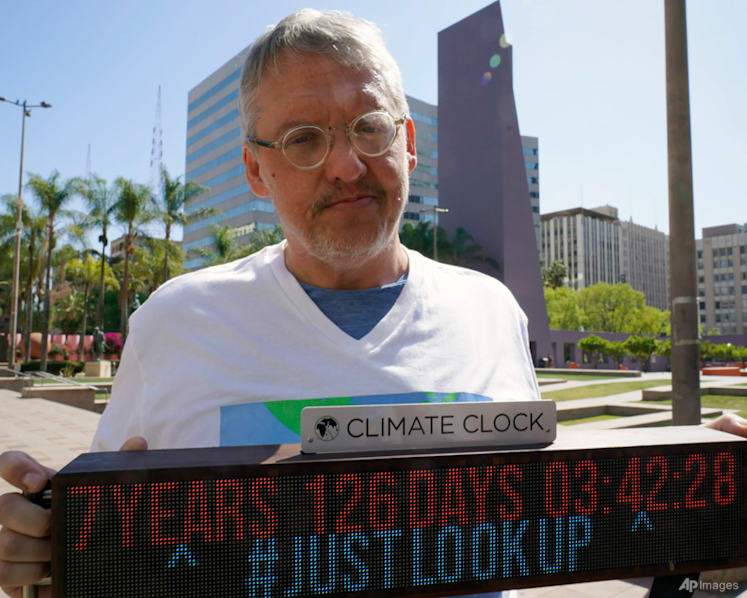
I carried that unease into a recent group call with Oscar-winning filmmaker Adam McKay and journalists from the Oxford Climate Journalism Network. McKay – best known for Anchorman, The Big Short and the climate satire Don’t Look Up – ended up saying things everyone who cares but is struck by climate fatigue needed to hear.
CLIMATE DENIAL
McKay began with his experience of the Los Angeles wildfires, which burned through much of January 2025. Not unlike the ongoing blazes in Australia, those fires ran out of control fast, destroying homes and other structures, and killing at least 30.
Watching the flames from his neighbourhood, he turned to local news, only to see coverage fixated on arson and downed power lines.
“We’d experienced this climate fire,” he said, “and yet all of the local news… the entire conversation revolved around how did the fire start.” The hotter, drier conditions that made the fire so destructive, he added, were barely discussed.
This drove home how important it is that recent disasters are not dismissed as routine bad weather. Doing so may limit response efforts to adaptation and minimising the damage of the next storm or bushfire.
In McKay’s view, the instinct to treat disasters as isolated accidents is reinforced by powerful institutions that thrive when the larger climate story remains blurry.
“We’re up against trillions of dollars,” he said, calling the fossil fuel industry “the blood of the industrial revolution” and describing today’s economic system as a “blind foraging creature” now destroying itself.
That framing helped me better understand his approach to Don’t Look Up, the critically acclaimed 2021 film that used characters’ response to a rogue comet as a metaphor for climate denial. The movie became one of Netflix’s most-watched titles, clocking about 360 million viewing hours in less than a month.
In a previous interview, McKay has described the collective denial surrounding climate change as the “Great Pretend”, an era where societies act as though the acceleration of global warming isn’t happening. He has also urged the world “not to wait for the United States”, arguing China has moved ahead in some areas of state-led climate policy.
SINGAPORE’S FIGHT AGAINST CLIMATE CHANGE
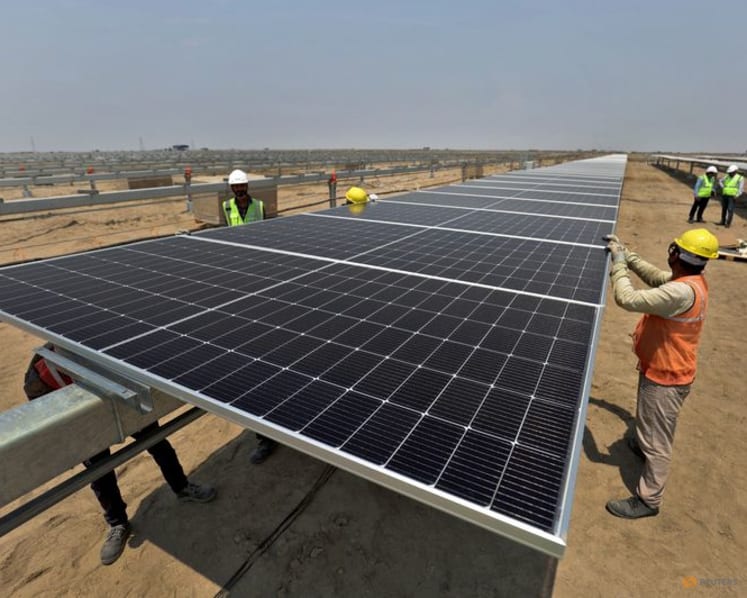
What gives Asia both urgency and agency is that the region sits squarely on the frontlines of climate impact. It is also home to some of the world’s largest emitters and fastest-growing clean-energy markets.
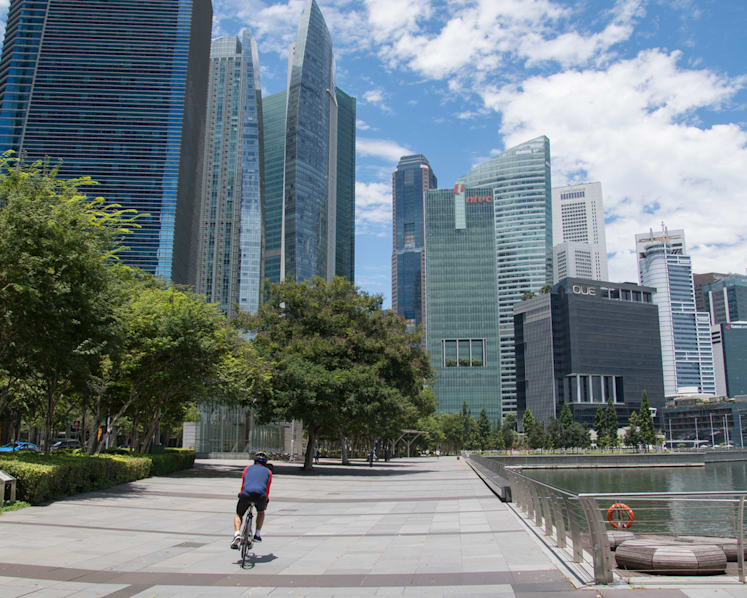
McKay’s call not to wait for the US resonated with me because in Singapore, waiting has never been an option. As a low-lying island vulnerable to rising seas, the country has moved early and decisively on climate action.
In 2025, the government submitted a new 2035 target to the United Nations, aiming to cut emissions to between 45 and 50 million tonnes of carbon dioxide-equivalent as a meaningful step toward achieving net-zero by 2050.
Singapore has also raised its carbon tax to S$25 per tonne and plans to lift it to S$45 by 2026, and potentially up to S$80 by 2030 to strengthen incentives for emission reductions. A new Coastal Protection and Flood Resilience Institute is also preparing the country for stronger storms and rising seas.
Still, I often struggle to reconcile the broader question of how Singapore’s efforts fit into a global system where the world’s major carbon emitters remain slow to act. It was this frustration, the sense of pushing uphill against much larger forces that made McKay’s words feel especially timely.
“ALARM AND ACTION BEATS VAGUE HOPE”
The filmmaker spoke about resisting the urge to soften climate messages simply because some audiences may not want to hear them. “It’s really important to be aware that alarm and action beats vague hope every time,” he said.
Drawing on years of lobbying and absorbing criticism, he acknowledged how emotionally draining the work to counter climate disinformation and increase acceptance for climate action can be. Yet he remains defiant. “In this moment, I’m not going to go down quiet or not helping,” McKay said.
I was reminded that as global citizens, we have a collective responsibility to remind the people around us that the heavy downpour that hit Asia last November and December, weren’t just another round of year-end monsoon weather. They’re connected to the same forces that intensified the recent fires in Victoria, California and other parts of the world.
Recognising that extreme weather is intensifying as a result of human activity, is a necessary starting point. Equally important is ensuring that actions go beyond disaster response to include sustained efforts to curb carbon emissions and address the key drivers of climate change.
If this really is the age of the “Great Pretend”, then we need to keep telling the climate story honestly and passionately, to help shift mindsets and behaviours, even when the climb feels steep.
Charles Phang is a Senior Producer in CNA’s documentary team, specialising in geopolitics and sustainability. He’s also a member of the Oxford Climate Journalism Network, founded by Oxford University’s Reuters Institute.