Commentary: The haze over Southeast Asia clouds more than the sky
The annual haze blanketing Indonesia, Malaysia and Singapore is the visible outcome of political and economic choices, says this researcher.
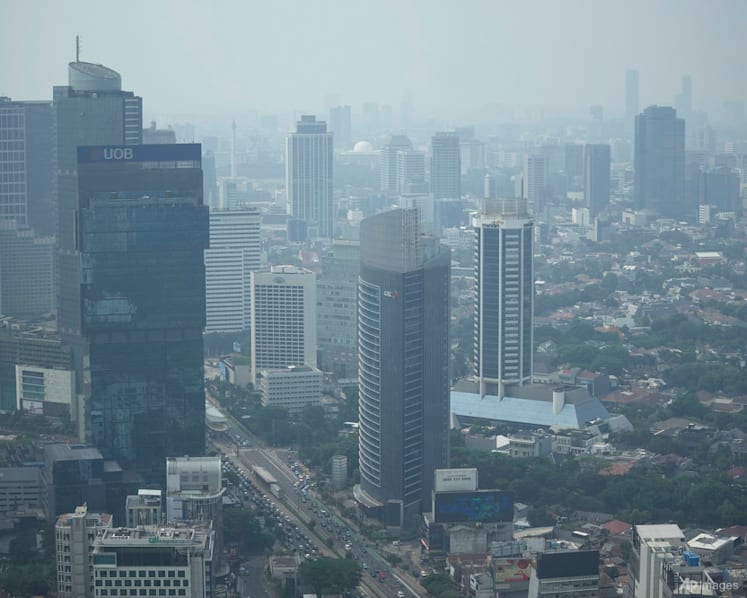
PEKANBARU, Indonesia: As warnings grow over the possible arrival of a “Godzilla” El Nino in Southeast Asia later this year, rising temperatures and intensifying drought conditions are once again increasing fire risk across the region’s vast carbon-rich peatlands.
In Indonesia alone, more than 32,600 hectares had already burned by Feb 2026, around 20 times higher than during the same period last year, even though the dry season had not yet fully begun.
Yet, climate is only the accelerant, while the deeper causes remain political and economic. Dry weather alone does not automatically produce catastrophic fires, because fires reach this scale after landscapes have been systematically drained, degraded, and converted over many years. At the same time, fire remains embedded in land-clearing practices across plantation frontiers, repeating a pattern that has persisted for decades.
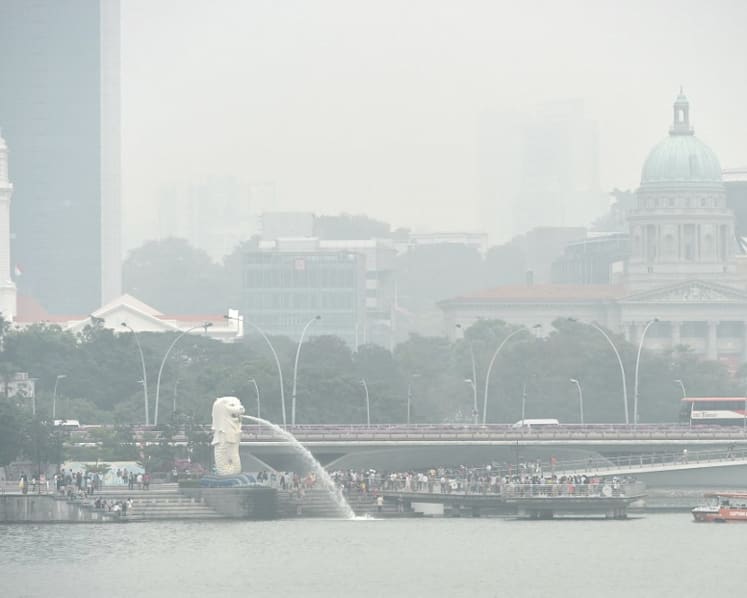
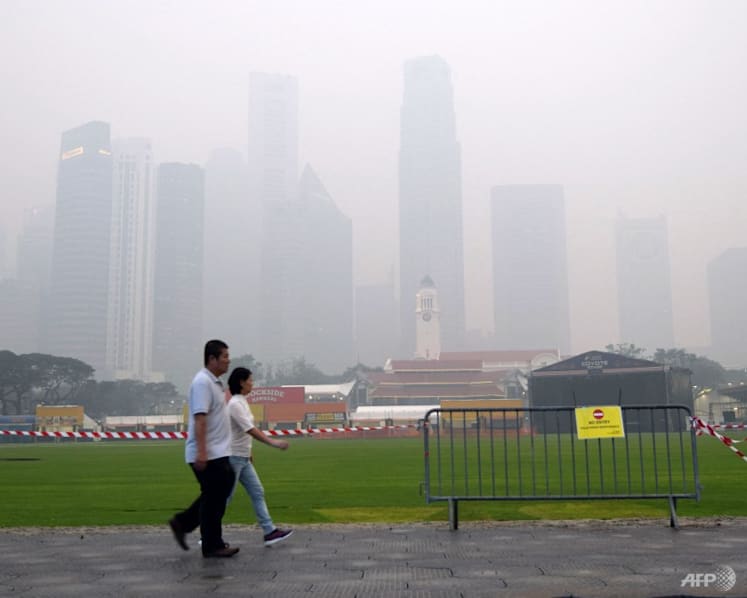
As a result, the annual haze blanketing Indonesia, Malaysia, and Singapore is not simply a weather event intensified by global warming, but rather the visible outcome of political and economic choices. When the crisis is framed primarily through the lens of climate change, it risks transforming a preventable governance failure into something that appears natural, inevitable, and beyond human control.





This distinction matters. When climate change is treated as the main driver, policy responses tend to be reactive, including water bombing, burn bans, and emergency preparedness. These measures are necessary but insufficient.
Meanwhile, when governance failures and land-use incentives are recognised as co-equal causes, a deeper set of questions emerges, such as who benefits from the system, which institutions sustain it, and why prevention remains so weak.
POLITICAL AND ECONOMIC INTERESTS
The answers point to entrenched political and economic interests. In Indonesia, governments rely heavily on land-based revenue and resource-linked growth. Plantation agriculture and other land-intensive sectors remain central to the national economy, generating tens of billions of dollars annually in export earnings. These incentives favour continued land conversion, often at the expense of long-term environmental stability.
These political and economic dynamics also shape how responsibility for fires is assigned and enforced. Satellite analyses consistently show that a substantial share of large-scale fires occurs within or adjacent to industrial concessions, even as smallholders are frequently blamed.
This overlap can complicate attribution and, in practice, contribute to uneven enforcement outcomes, particularly in contexts where economic and political considerations are closely intertwined. Evidence from West Kalimantan, Indonesia, shows many farmers are willing to adopt fire-free practices when viable alternatives exist.
Current programmes, however, often fail to address constraints such as insecure land tenure and limited access to finance. Fire bans alone are unlikely to succeed.
The limits of Indonesia’s restoration efforts reflect these broader governance challenges. Indonesia’s Peatland Restoration Agency, established in 2016, was assigned to restore around 2 million hectares of degraded peatland at an estimated cost of US$3.2 billion to US$7 billion.
While the agency has achieved progress, it has struggled against the scale of degradation, fragmented concession systems and uneven local implementation. Fires declined between 2015 and 2018, only to surge again in 2019.
Similar limitations exist at the regional level. The ASEAN Agreement on Transboundary Haze Pollution, signed in 2002 and fully ratified only in 2014, contains no sanction mechanism for non-compliance. It reflects ASEAN’s longstanding preference for consensus and non-interference over enforceable accountability. Singapore’s decision to introduce its own Transboundary Haze Pollution Act in 2014 underscored the limitations of the regional approach.
The consequence is a recurring cycle of temporary gains followed by renewed crises. Hotspot numbers often fall during wetter years and rise again when dry conditions return, even as the structural drivers of fire risk remain intact.
BREAKING THE CYCLE
Breaking this cycle will require confronting a deeper trade-off. Large-scale fire prevention is unlikely to coexist with continued peatland conversion and land-intensive commodity expansion. As long as cheap land clearing remains economically attractive, fire will remain embedded in the political economy of the region.
Southeast Asia needs a bigger shift in financing, incentives, and enforcement. Recent regional initiatives such as the Measurable Action for Haze-Free Sustainable Land Management in Southeast Asia (MAHFSA) point in this direction. Yet current efforts remain fragmented, time-bound, and heavily dependent on donor funding and pilot programs.
Financial accountability alone, however, cannot resolve the governance fragmentation that continues to undermine enforcement. Regional platforms have improved coordination, yet hotspot monitoring, concession maps and legal processes remain only partially aligned across borders.
This gap allows responsibility to diffuse, especially where fires occur near concession boundaries or within layered landholdings. Complex ownership structures and multi-layered subsidiaries often obscure ultimate control over fire-affected land. This weakens both regulatory enforcement and market discipline.
Greater transparency through shared concession databases, harmonised monitoring systems, and coordinated legal cooperation would likely deliver stronger results than new agreements that lack enforceability.
Climate change will intensify Southeast Asia’s fire risk. But it is governance failures, distorted incentives and weak accountability that determine whether those fires become regional disasters.
Until those structural drivers are addressed, the haze will remain not just an environmental problem, but a recurring failure of political and economic governance.
Mohd Yunus is an independent researcher hailing from Riau Province, Indonesia, and is currently pursuing a master’s degree in biological sciences at Khon Kaen University, Thailand. This commentary first appeared on Lowy Institute's blog, The Interpreter.