Commentary: Why North Korea is modernising its conventional arsenal
Russia’s war economy is fuelling Pyongyang’s most ambitious military upgrade in decades, says an academic.
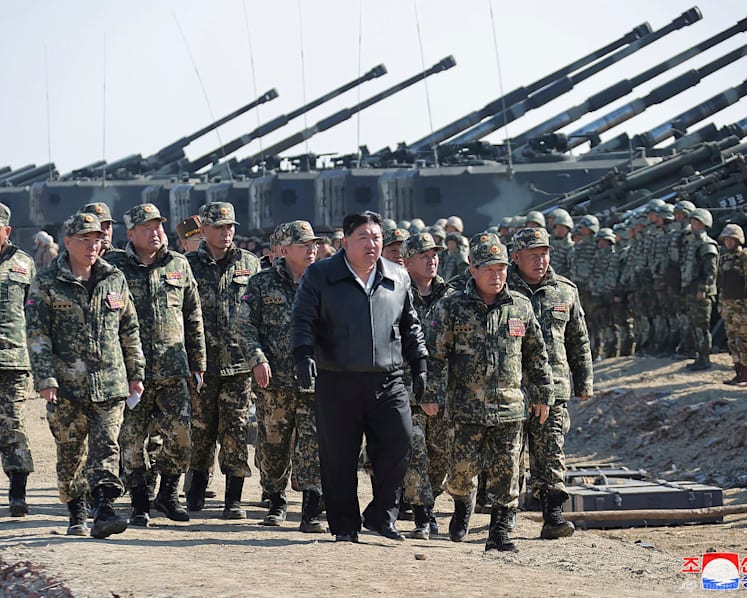
In this photo provided by the North Korean government, North Korean leader Kim Jong Un, center, supervises artillery firing drills in North Korea on March 7, 2024. (Korean Central News Agency/Korea News Service via AP, File)
BOSTON, Massachusetts: For North Korea's nuclear arsenal, 2025 has been a relatively quiet year. It neither tested a nuclear weapon nor fired an intercontinental ballistic missile.
The story is different with regard to its conventional arsenal. North Korea kick-started an ambitious modernisation programme by unveiling its biggest warships yet, upgrading its tanks, producing a new type of artillery shell, introducing AI-enhanced suicide attack drones and launching new air defence systems.
North Korean Chairman Kim Jong Un also promised to equip the air force with “new strategic military assets”.
Since the end of the Cold War, North Korea has neglected its conventional forces in pursuit of a nuclear deterrent to compensate for the growing military gap with South Korea. North Korea’s defence industry operational rate decreased from 50 per cent in the mid-1980s to approximately 20 per cent in 1991 due to economic hardship.





The collapse of the Soviet Union deprived Pyongyang of a reliable supply of spare parts and expertise for maintenance and upgrading of its conventional arsenal. Russia, with its equidistant policy towards both Pyongyang and Seoul, did not assume the Soviet Union’s role as North Korea’s main arms supplier.
REVIVAL OF NORTH KOREA’S DEFENCE INDUSTRY
North Korea acknowledged the dire state of its conventional arsenal. In 2017, it laid out five modernisation priorities for its force and declared that the push for a nuclear missile deterrent was “complete”.
However, a lack of expertise and capital meant modernisation was not prioritised over nuclear forces. North Korea’s conventional arsenal still relies on decades-old Cold War era weaponry that is no match for that of the South.
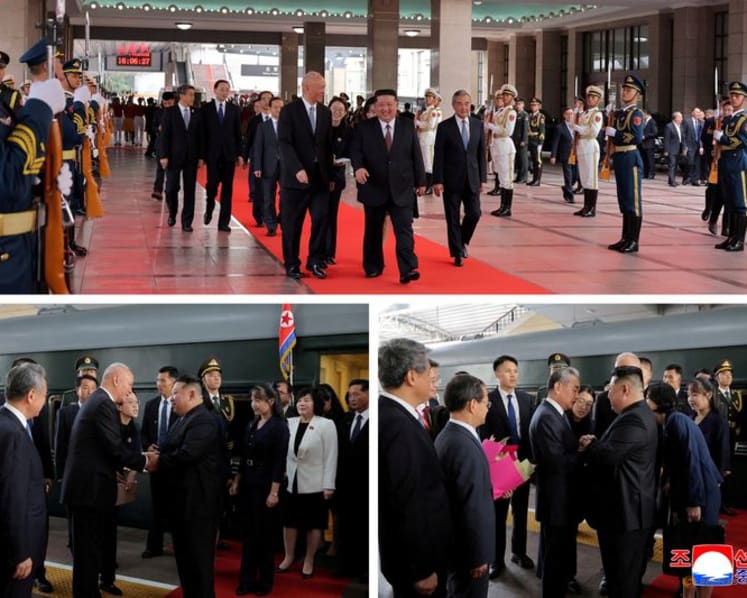
But North Korea’s fortunes changed when it inked an alliance treaty with Russia in June 2024. Thanks to an influx of Russian capital, estimated at between US$5.6 billion and US$9.8 billion, North Korea’s defence industry is being revived to meet Russia’s needs for its war against Ukraine.
North Korean arms factories are producing a diverse array of weapons systems for export, including artillery shells, self-propelled guns, short-range ballistic missiles and rocket launchers. Pyongyang keeps some of these systems for domestic use too.
Russian expertise and the experiences of North Korean soldiers fighting in Kursk are guiding North Korea’s conventional modernisation. North Korean troops familiarised themselves with the use of drones in modern combat and encouraged the government to accelerate a new AI drone programme and new air defence platforms.
First-hand experience with North Korean artillery shells on the battlefield also prompted development of a new type of shell. Russian mechanised assaults against Ukraine demonstrated the importance of electronic warfare and additional armour for modern tanks, which North Korea’s fleet of T-54/55 and T-62 tanks lack. North Korea introduced new tanks with modern electronic warfare equipment in its military parade in October.

MORE OPTIONS FOR ESCALATION
The influx of cash and expertise spilled over into other areas of North Korea’s conventional arsenal too. North Korean naval modernisation is a case in point. The new Choe Hyon class destroyers primarily serve a political goal and are vulnerable to attack on the open ocean, but they are relatively modern vessels that can carry tactical ballistic missiles and land attack cruise missiles.
While still early, the extent of air force modernisation beyond the current fleet of MiG-21s, MiG-29s, and Su-25s will demonstrate how Pyongyang will counter US-South Korean plans to use stealth fighters for pre-emptive strikes.
North Korea’s conventional modernisation should not be taken as a departure from its pursuit of a nuclear deterrent. Indeed, it can reinforce it by offering North Korea options that don't require nuclear escalation.
Increasing the threat that North Korea’s long-range artillery and short-range ballistic missiles pose to Seoul and its vicinity offers North Korea a non-nuclear deterrent. At the same time, a modernised conventional force can showcase North Korean capabilities to foreign clients beyond Russia.
For now, the conventional military balance is still in Seoul’s favour, but North Korea has signalled that it will double down on the conventional force. A conventional arms race between the two Koreas will spill over to the nuclear arms race. North Korean attempts to build a nuclear-powered submarine and South Korea obtaining US approval for a similar programme is a harbinger of more arms racing to come.
Khang Vu is a visiting scholar in the Political Science Department at Boston College. This commentary first appeared on Lowy Institute’s blog, The Interpreter.