







Commentary: Pritam Singh’s removal as Leader of the Opposition reflects importance of higher standards in Singapore politics
At a time of concerns about the eroding integrity of political leaders around the world, Singapore must demand more of its public institutions and officials, says SMU law professor Eugene K B Tan.

This audio is generated by an AI tool.


SINGAPORE: Although it is tempting, we should resist seeing the parliamentary motion on Workers’ Party chief Pritam Singh through the prism of partisan politics.
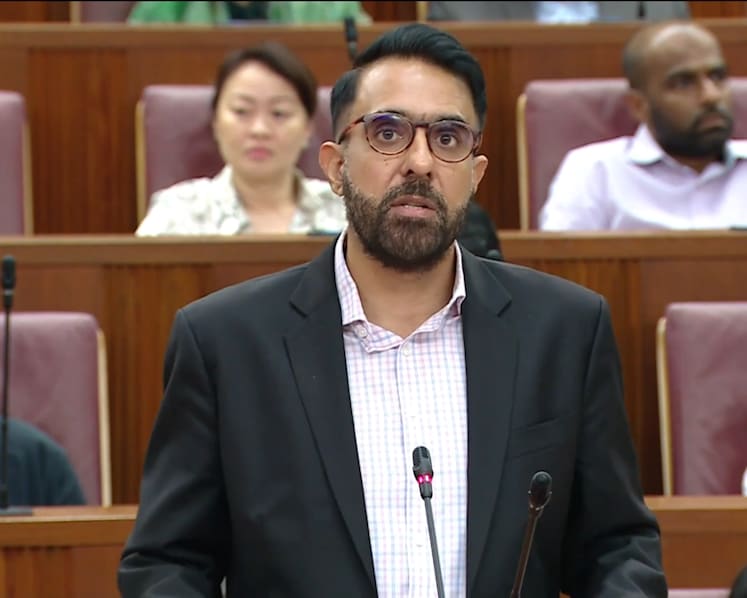
That the debate took place was of utmost importance, even if the exchanges and the voting outcome were unsurprising – finding Mr Singh unsuitable to continue as Leader of the Opposition given his court convictions for lying to a parliamentary committee. Mr Singh was removed from the position by Prime Minister Lawrence Wong on Thursday (Jan 15).
Wednesday’s debate on public life standards mattered as much as those over jobs, cost of living, and geopolitical concerns. For parliament to be able to engage these issues and rally Singaporeans behind relevant key policies and laws requires steadfast trust and confidence of parliament’s capability and, more importantly, its integrity to steward and to lead.
If trust and confidence in our key institutions and officeholders like parliament, the courts and the public service are eroded, then the resultant loss in standing and legitimacy of these institutions will be our collective loss.





The motion to express regret at Mr Singh’s conduct and his unsuitability to continue as the Leader of the Opposition was thus necessary.
COMMITMENT TO RULE OF LAW
Why should we expect less of our elected officials? Parliament would, in fact, be remiss in its duty if it turned a blind eye.
The adoption of the motion signifies Singapore’s commitment to the rule of law, for elected officials to abide by the law and conduct themselves with integrity.
Some may have forgotten that there was an outstanding resolution made by parliament on Feb 15, 2022, on sanctions, following the Committee of Privileges’ findings and recommendations in relation to untruths spoken by then Workers’ Party Member of Parliament Raeesah Khan in parliament in August and October 2021.
Discussion on sanctions was deferred until after the conclusion of police investigations and criminal proceedings against Mr Singh – which was the case in December 2025.
HELD TO A HIGHER BAR
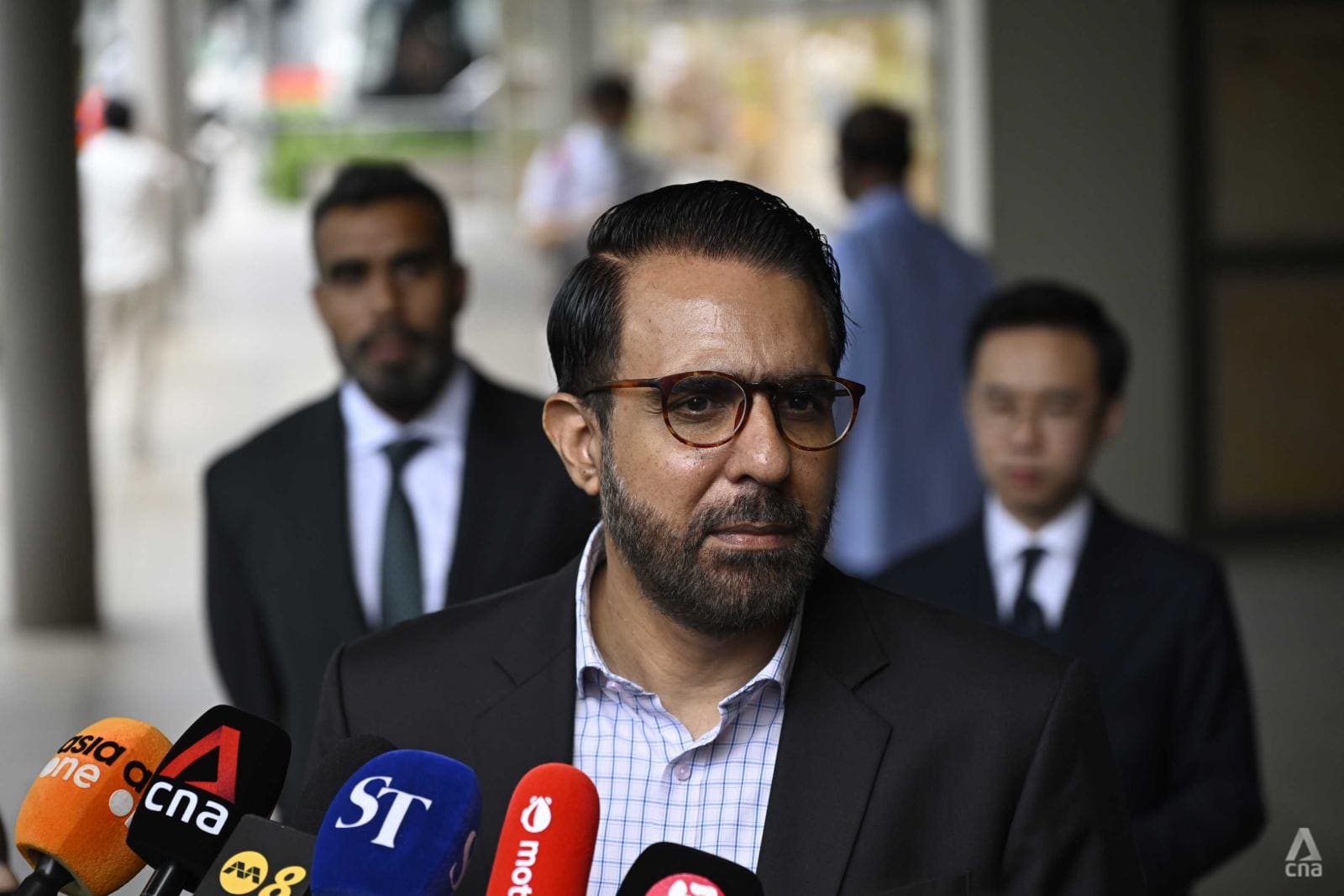
There is also the matter of Mr Singh’s assertion that while he accepted the high court’s ruling, his guilty verdict handed down by the court does not deny him the ability to claim that he is innocent.

In our criminal justice system, the presumption of innocence in a criminal trial means that an accused is legally innocent until the prosecution fulfils its obligation to prove its case beyond reasonable doubt. Thus, when a court of law finds an accused guilty of an offence with which he has been charged, this means that the court is satisfied beyond reasonable doubt that the accused had indeed committed the offence charged. A judge is bound by law and duty to acquit a person if the prosecution does not prove its case beyond a reasonable doubt.
It is, therefore, clearly illogical that a person who has committed a crime to be factually innocent at the same time. A guilty verdict signifies that the judge is certain that the accused is guilty in law and in fact. It is not correct in law and in logic, therefore, for any suggestion to be subsequently raised about the convicted person's “factual innocence” once he has been found guilty.
Such a bald assertion undermines the court’s guilty finding and may even replace it with an insidious and open-ended suspicion that the verdict is unsafe or even a travesty of justice. If the public assumes that a person isn't guilty even if the judge says so, or that a finding of guilt is not conclusive, this will throw the administration of criminal justice into disrepute.
While the courts cannot stop anyone from holding a personal view of the verdict, this takes on a different dimension when it is a member of the legislative branch casting an aspersion on the judicial process.
That the WP parliamentarians voted against the motion and that the party subsequently posted a graphic on their social media with the words, “#WeContinue”, suggests the party lends its weight to such aspersions and raises legitimate concerns over their commitment to the rule of law.
NORMS AND VALUES CANNOT BE TAKEN FOR GRANTED
At the general election in July 2020, the WP turned in its best electoral showing since independence winning 10 seats, including a second group representation constituency (GRC). In a first such appointment, then Prime Minister Lee Hsien Loong formally designated Mr Singh the Leader of the Opposition.
Mr Lee explained that “Singaporeans want the PAP (People’s Action Party) to form the government, but they – and especially the younger voters – also want to see more opposition presence in parliament”. The Leader of the Opposition office goes some way in institutionalising the opposition’s role in Singapore’s system of constitutional government and enabling the opposition to better scrutinise government laws and policies.

Wednesday’s debate indicates that much still needs to be done to sensitise Singaporeans on the norms and values of Singapore’s system of government that have been instrumental in Singapore’ success. Singaporeans must not take honesty and integrity in our system of government for granted; they are not preordained.
We must demand them of our public institutions and public officials so that the virtuous circle of good governance, good politics and good leaders will continue to define our exceptionalism and strength at a time when there are real and growing concerns about the eroding integrity of political leaders around the world.
Eugene K B Tan is associate professor of law at the Yong Pung How School of Law, Singapore Management University. He is also a former Nominated Member of Parliament.




