







Commentary: Still no sign of an off-ramp for US in Iran war
Will being “bombed back to the Stone Age” or getting backlash from soaring petrol prices drive Iran or the US to climb down? NUS Middle East Institute’s Carl Skadian weighs in.
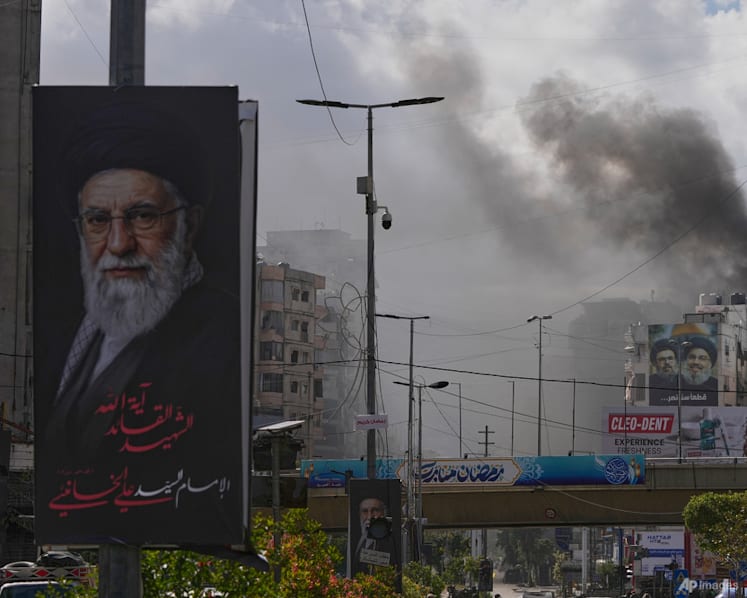
A portrait of Iran's late Supreme Leader Ayatollah Ali Khamenei, left, is seen, as smoke rises following an Israeli airstrike in Dahiyeh, Beirut's southern suburbs, Lebanon, Mar 30, 2026. (Photo: AP/Hassan Ammar)


SINGAPORE: “Eviscerated.” “Overwhelming.” “Bombed back to the Stone Age.” Much of United States President Donald Trump’s much-awaited speech to Americans on Wednesday (Apr 1) was given over to superlatives.
But the answers to the questions on much of the world’s lips – when and how the war against Iran would end – were not forthcoming.
The oil and stock markets, early and mostly reliable indicators of how news is received, delivered their verdicts: Brent crude rose over 6 per cent, to US$107.50 a barrel at the time of writing; Asian stock markets reversed the gains they racked up on Tuesday – which were made in anticipation of a speech that would perhaps mark the beginning of the end of the war.
Instead, all we got was more of the same. The war is “nearing completion”, as the United States military has delivered “victories like few people have ever seen before”. Yet, the US is going to continue to hit Iran “extremely hard … over the next two to three weeks”.
Another familiar threat followed – all of the Islamic Republic’s electricity-generating plants, and its oil, are now fair game. If Mr Trump does carry through on this, legal experts say, it would constitute a war crime.
After 19 minutes, Mr Trump revealed no off-ramp for what will be an increasingly messier war, one in which either side could plausibly claim victory.
JUSTIFYING A DOMESTICALLY UNPOPULAR WAR
Mr Trump’s speech was meant as a reminder to Americans of two things to justify his actions in an increasingly unpopular war – one that has sent US petrol prices surging and dragged his approval rating to a record second-term low.
The first is that the war against Iran is a short one in the litany of US military adventures, at 32 days old. Mr Trump did this by contrasting it with other US wars, including World War II, Vietnam and Iraq, all of which lasted years, “to keep this conflict in perspective”.
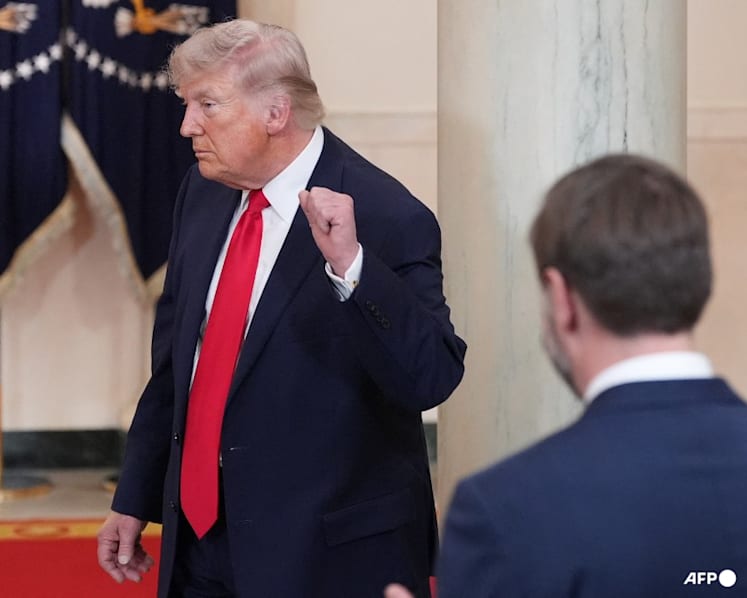
The second is that he took pains to cast the Islamic Republic as a dangerous and implacable foe of the US and Israel. He did not reference the 1979 hostage crisis, which lasted over a year, but dated the Iranian threat to the Beirut Marine barracks bombing in 1983, which killed 241 Americans, through to the October 7, 2023 Hamas attacks on Israel. He called Qassem Soleimani, the former head of the Islamic Revolutionary Guard Corps, “an evil genius, brilliant person, a horrible human being”, and said the decision to kill him – which Mr Trump took in his first term – was a “most” important one.
There was another “very” important decision he took: terminating the nuclear agreement signed by former President Barack Obama. If he did not pull out of the “terrible deal”, Mr Trump asserted, Iran would have had “a colossal arsenal of massive nuclear weapons … and would have used them”.
WALKING BACK THREATS TO ABANDON STRAIT OF HORMUZ?
Though his primary audience was the American public, there were messages for US partners too.
He threw a small concession to the Gulf countries which were ostensibly against a conflict to begin with, but are now reportedly pushing the US – by varying degrees – to finish the job. He praised Bahrain, Kuwait, Qatar, Saudi Arabia, and the United Arab Emirates, though perhaps surprisingly, he left out Oman, which has also been hit by Iranian attacks aimed at damaging the economies of the six Gulf Cooperation Council states.
He gave assurance that the US would not allow them to get hurt or fail in any way, shape or form, although the consensus view is that the various economic transformation programmes that all GCC nations have embarked on for a post-oil future have been badly shaken, if not seriously damaged, by Iran’s attacks on them.
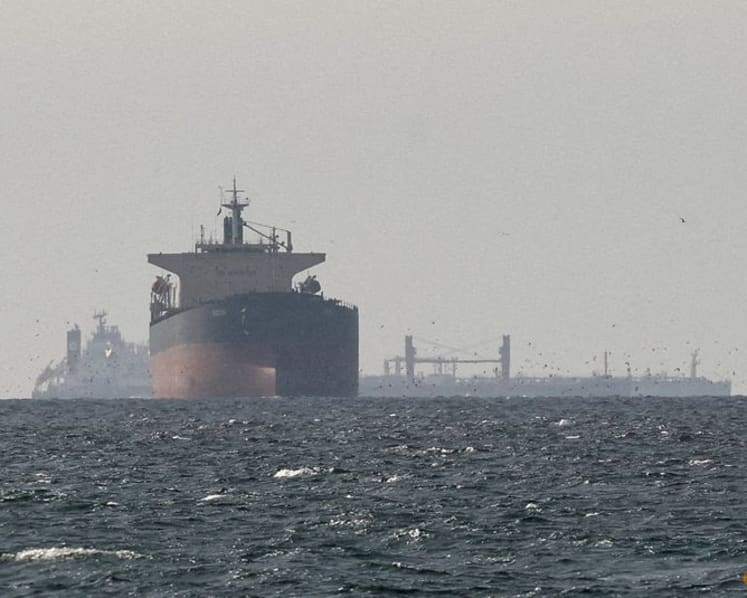
Perhaps the final point worth noting by countries grappling with the fallout of disruption in the Strait of Hormuz is that he walked back – only somewhat – earlier threats to abandon it. He had chastised countries who relied on shipping through this important waterway yet were reluctant to join an American-led effort to reopen it.
This time, though he exhorted countries which receive oil through the Strait to “cherish it”, and should therefore “take the lead in protecting the oil they so desperately depend on”, he offered that the US would be “helpful” in any such effort.
Still, he lobbed some parting shots via two suggestions: Buy oil from the US, and build up some “delayed courage”. After all, Americans had done the hard part, he said, so what is left is easy.
A LOOMING DEADLINE
But while Mr Trump claimed that the US has decimated Iran’s capabilities, the Islamic Republic still has cards to play. These could well include an ace: a chokehold on the global economy.
Whether being bombed “back to the Stone Age” or American petrol prices rising above US$4 per gallon will cause either side to climb down is a matter of conjecture, for now.
But there is another signpost that will be worth paying attention to for further clues on how the conflict will unfurl. On Mar 26, Mr Trump announced a 10-day extension of an ultimatum for Iran: Re-open the Strait of Hormuz or risk placing its energy infrastructure in American crosshairs.
That deadline expires at 8am on Tuesday, Apr 7, Singapore time.
Carl Skadian, a former journalist and editor for 30 years, is deputy director at the Middle East Institute, National University of Singapore.




