







Commentary: A US war with Iran is close. But what's the goal?
This is a war that both sides are choosing, despite it being in neither US or Iranian interests to fight it, says Marc Champion for Bloomberg Opinion.
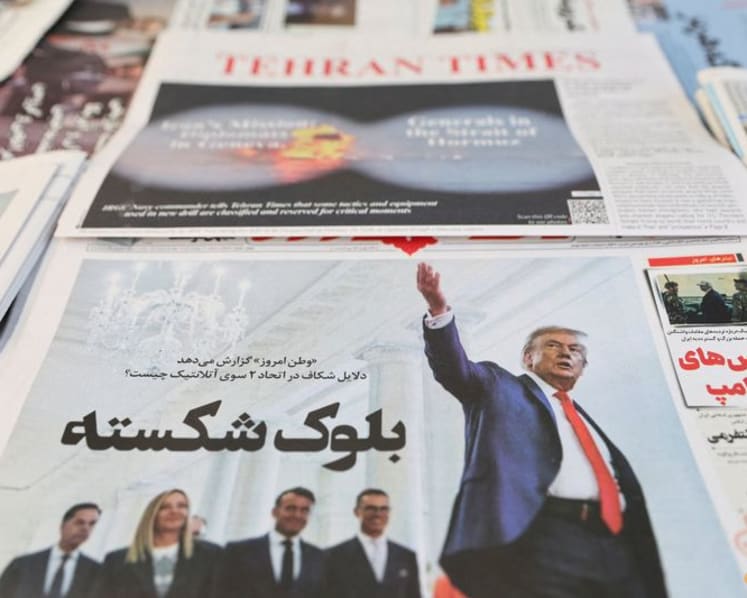
An Iranian newspaper with a cover photo of US President Donald Trump, in Tehran, Iran, on Feb 17, 2026. (Photo: Majid Asgaripour/West Asia News Agency via REUTERS)
LONDON: It looks increasingly likely that the United States will go to war with Iran again, and this time it might not just be targeted airstrikes and calibrated responses, but an open-ended conflict with no clearly communicated or readily attainable outcome for either side. For both countries that would be a high-stakes roll of the dice.
I’m not sure US President Donald Trump would have chosen this path if he were starting from scratch, which may be why he’s reportedly considering a limited strike aimed at encouraging Iran to return for talks with concessions.
Nevertheless, he finds himself boxed into a corner toward which he’s been headed since his first term in office when he revoked the 2015 nuclear deal with Tehran. He has little room for escape unless he eases his demands, having set the bar higher than the US needs or the Islamic Republic was ever going to accept.
With two carrier strike groups sitting off the coast of Oman, each costing in the region of US$8 million per day to operate, Trump is likely to use them rather than appear indecisive, possibly sooner than the 10 to 15-day deadline he has set.





The only way out is for the other side to back down, and soon.
Unfortunately, Iran’s Supreme Leader Ali Khamenei has been corralling himself into his own corner of anti-American defiance for a lifetime. He may also see war as offering a better chance for his regime’s survival than the disarmament that the US and Israel appear to be demanding.
This is a war that both sides are choosing, despite it being in neither US or Iranian interests to fight it. Americans say they don’t want it by 70 per cent to 18 per cent, with a similar proportion saying Trump should first ask Congress, according to a January poll by Quinnipiac University. Iran will only suffer, even if Khamenei and the Islamic Revolutionary Guard Corps that surround him see that in terms of resistance and martyrdom.
For Israel, there’s a stronger case for gambling to remove a leadership in Tehran that works toward the Jewish state’s destruction – even if what comes next is so uncertain that the ultimate costs could prove the decision reckless.
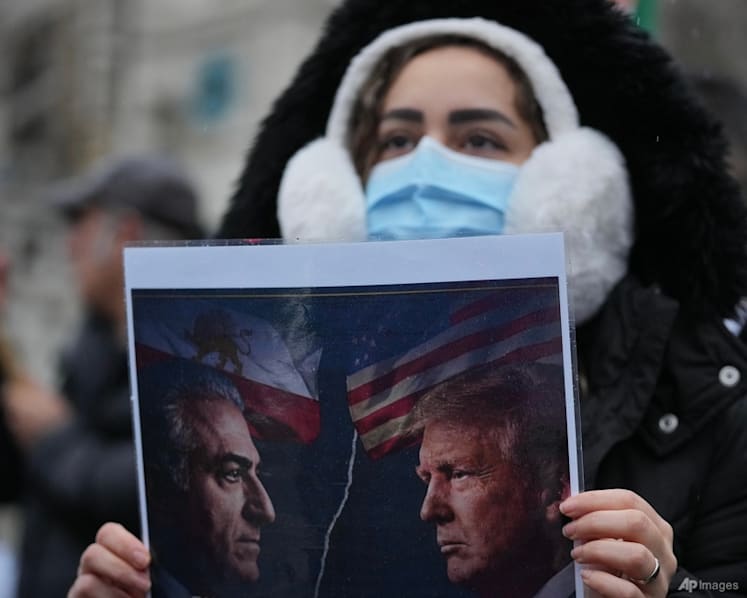
Iranians, who Khamenei had slaughtered by the thousands last month for protesting against his regime’s incompetence, corruption and ideological despotism, may also have more reason to want a US attack that may bring him down.
NO BLOWBACK FROM PAST IRAN, VENEZUELA OPERATIONS
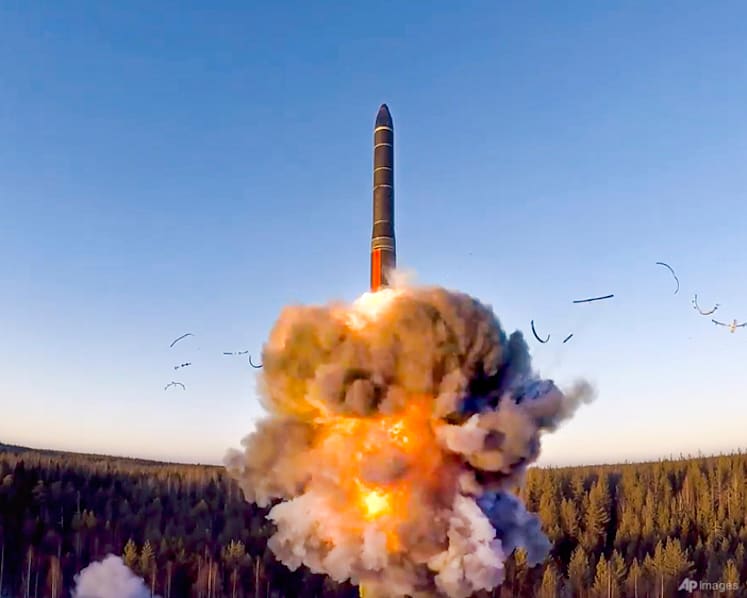
One cause of Trump’s rashness is that success is the father of hubris. The ease with which Israeli forces dealt with Hezbollah in Lebanon, and then Iran’s vaunted missile threat, enticed Trump to join in the brief war on the Islamic Republic last June — and, as he kept repeating afterward, the American B2 stealth bomber operation was executed perfectly.
So, too, the lightning-quick operation to abduct Venezuela’s President Nicolas Maduro. In both cases, there was no meaningful military or political blowback, no painful spike in oil prices that might have spurred inflation and anger at home.
But, as my Bloomberg Opinion colleague Javier Blas has said of assuming energy markets will again remain unruffled, past performance is no guarantee – and that’s as true of war and politics as it is of commodity prices.
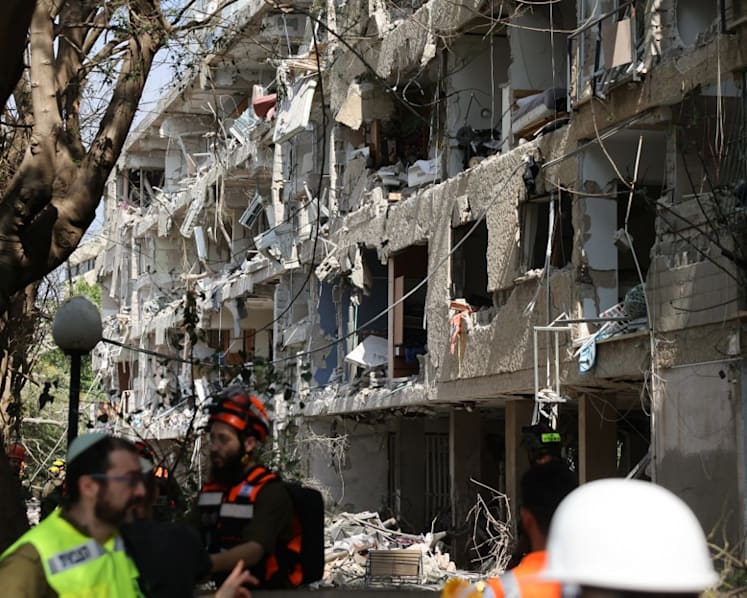
Last year, Israel’s air strikes were limited to 12 days and the US involvement to a much smaller number of sorties against just three nuclear sites. Even so, 28 Israelis and 1,190 Iranians died. Of those, 27 Israelis and – according to figures from the US-based non-profit Human Rights Activists In Iran – probably half of the Iranian casualties were civilians.
THE FIRST STEP BEFORE UNLEASHING WAR
As the US assembles its largest expeditionary force since the 2003 invasion of Iraq, there are several steps the White House should take before unleashing war.
The first is to clearly explain to American taxpayers, Congress, Iranian citizens and other nations why the Trump administration considers this attack – which would have no obvious backing in international law – as strategically necessary and morally justified. Or, in simpler terms, the US needs to make clear what this would be for and why it’s the right thing to do.
This is something the US and its North Atlantic Treaty Organization (NATO) allies did when they launched a 70-day campaign of air strikes against Serbia in 1999, aimed at forcing then president Slobodan Milosevic to withdraw his forces from his country’s mainly ethnic Albanian province, Kosovo.
The goal – to prevent ethnic cleansing and a potential genocide at a time when Serbia had committed both crimes in Bosnia, and more than 100,000 ethnic Albanian Kosovars had already fled – was clearly stated. Bill Clinton made the case to Congress and got its support.
But even with domestic backing and the operation’s success, the decision to use NATO air power to aid the Kosovars has cast a long shadow. Russia’s President Vladimir Putin cites it as a precedent for his own far less justifiable actions in Georgia and Crimea.
NO CLARITY OF US GOALS
Will the US, by launching more air strikes on Iran, be trying to force a better deal on nuclear and ballistic missile limitation?
Or will it be trying to force regime change? Or would it be intervening to prevent any further slaughter of protesters? Or just to take another crack at degrading Khamenei’s nuclear and missile programs?
The lack of clarity surrounding Trump’s preparations for war may account for doubts at home and among US allies in the region.
Knowing the goals of the attack might also help Khamenei’s tens of millions of domestic opponents decide how to prepare and react. If the US wants regime change, it should limit strikes to security forces and carefully targeted leaders, leaving space for protesters to come into the streets without fear of being killed – not just by the Revolutionary Guards and Basij thugs who shot them in January, but by American and Israeli bombs.
It might even help Khamenei decide whether it makes sense to cut a deal to avert war. And if not him, then greater US clarity could also help potential replacements – inside or outside the regime – to organise for power and avoid the worst of all possible worlds for Iran and the wider region: chaos in a heterogeneous nation of 92 million people.




