Commentary: What Asia risks now that the last nuclear guardrails are gone
Discussions about the need for independent nuclear capabilities are no longer seen as fringe ideas in some parts of Asia, says Patricia M Kim from Brookings Institution.
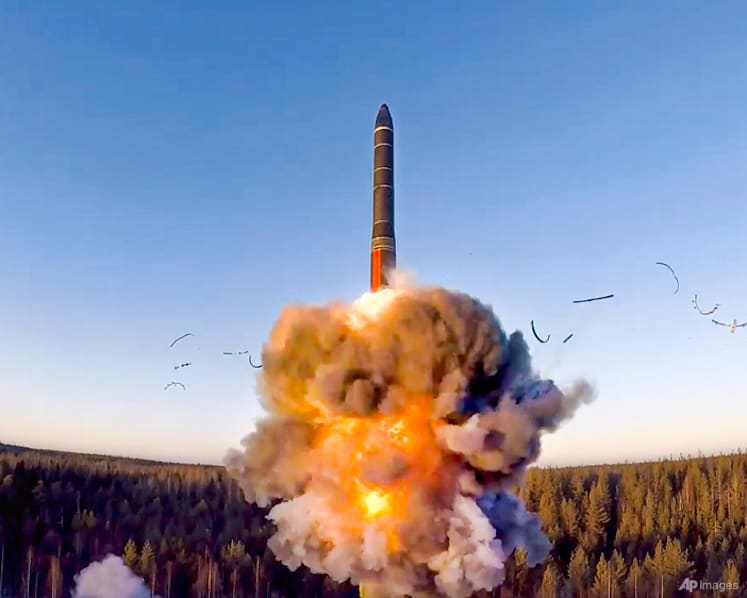
A rocket launching as part of a ground-based intercontinental ballistic missile test at the Plesetsk facility in northwestern Russia. (Photo: AP/Russian Defense Ministry Press Service)

This audio is generated by an AI tool.


WASHINGTON DC: Thursday (Feb 5) marks the end of an era of nuclear restraint – and the beginning of a far more uncertain one. With the expiration of the New START treaty, the last remaining limits on US and Russian nuclear forces have fallen away. There are now no legally binding caps on the number of deployed strategic nuclear warheads and delivery systems, nor any formal mechanisms for inspections, verifications or dispute resolution between the world’s two largest nuclear powers.
But the consequences will not be confined to Washington and Moscow. They will be felt acutely in Asia, where great power rivalry is intensifying and long-held assumptions about the region’s security architecture are already under strain.
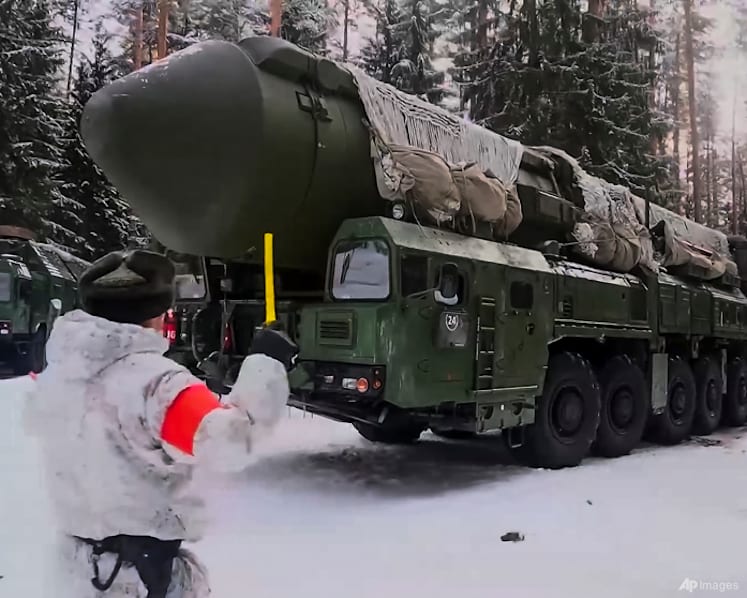
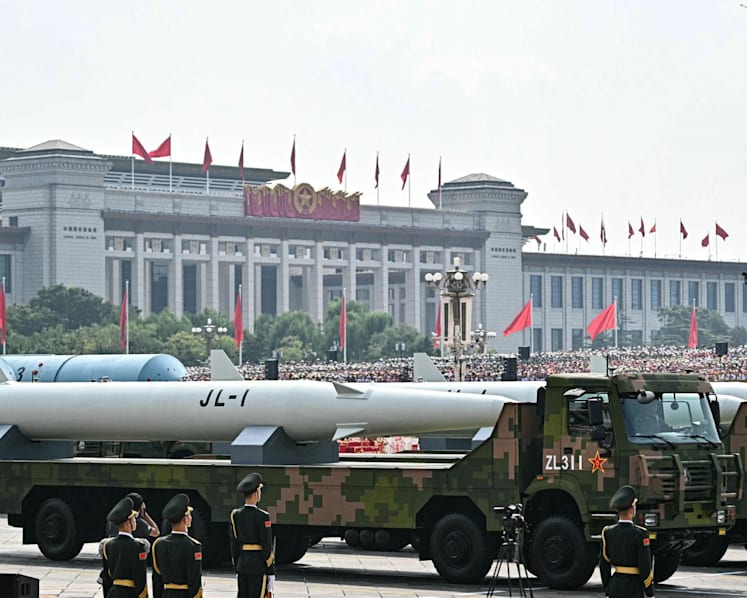
Meanwhile, all three great powers are moving decisively away from restraint. The United States and Russia are modernising their nuclear forces, while China is expanding its arsenal at an unprecedented pace – without transparency requirements or limits of any kind.
These trends point toward the emergence of a new world order – one in which the most powerful states are increasingly free to do as they please. Spheres of influence are openly asserted. International rules are treated as optional, even irrelevant. Military expansion, including in the nuclear domain, is no longer an exception but the norm.





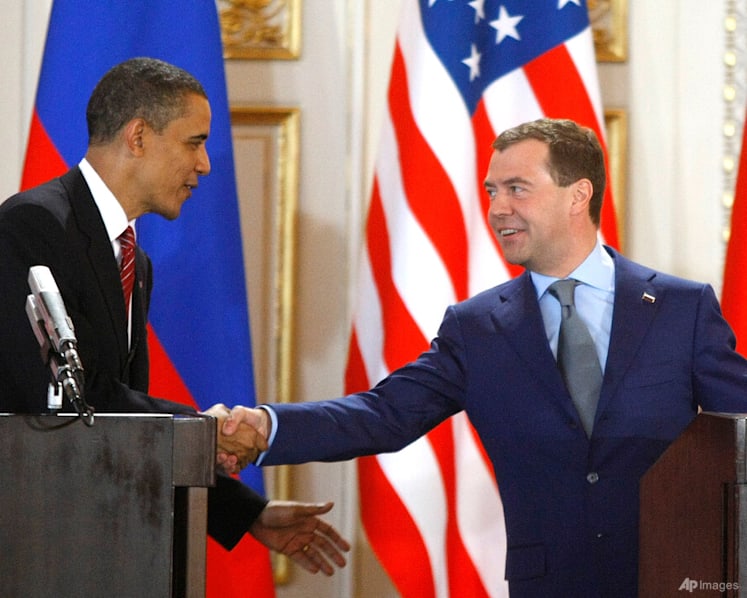
RULES ARE SECONDARY TO RAW STRENGTH
For Asia, the implications will be profound. Power politics have, of course, always shaped world affairs. But what is new is the explicit embrace of this logic.
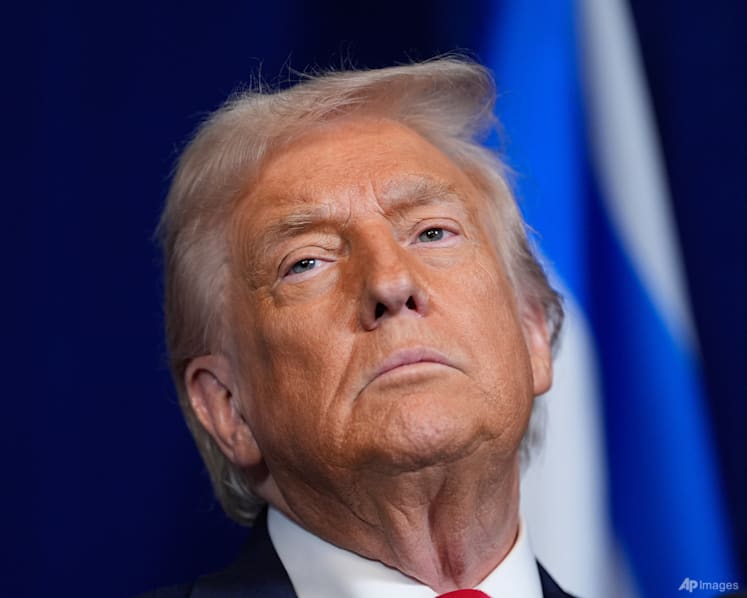
The Trump administration made this worldview unmistakably clear in its most recent National Security Strategy, which declared that “the outsized influence of larger, richer, and stronger nations is a timeless truth of international relations”.
That framing did not merely describe reality: It legitimised it, normalising the idea that restraint, cooperation and rules are secondary to raw strength.
For decades, US presence in Asia has served as a stabilising force. America’s security commitments – and its nuclear umbrella – helped reassure allies that they did not need their own nuclear weapons. It acted as a counterweight to China’s growing military prowess and as a check on North Korea’s nuclear sabre-rattling.
Today, that stabilising role is increasingly questioned. Across Asia, US allies and partners are no longer certain that Washington will continue to play the same security role it once did. The United States’ shifting priorities - from its focus on the Western Hemisphere to a more transactional approach to relationships – along with signs of self-retrenchment, have fuelled doubts across the region.
As a result, conversations that were once politically unthinkable are now entering the mainstream. In South Korea – and even in Japan, where the nuclear taboo runs especially deep – public and elite discussions about the need for independent nuclear capabilities are no longer dismissed as fringe ideas. They are increasingly framed as realistic, if undesirable, options that must at least be debated.
The logic is straightforward: If the credibility of US extended deterrence weakens, and if regional threats grow unchecked, states may have no choice but to conclude that their security rests solely in their own hands.
RISK OF REGIONAL NUCLEAR CASCADE
There is little reason to believe such dynamics would stop with Japan and South Korea. In a world where rules give way to the law of the jungle – where might makes right and no great power reliably enforces order – the incentives for nuclear proliferation multiply.
Asia is rife with longstanding territorial disputes, unresolved historical grievances, and intensifying military competition. Against the backdrop of China’s expanding military and nuclear capabilities, North Korea’s own growing arsenal, and the absence of effective arms control, the risk of a regional nuclear cascade becomes very real.
Proliferation is rarely a solitary decision. If one state crosses the nuclear threshold, others are likely to follow.
As more countries consider joining the nuclear club, pressure builds on those that remain outside it. What begins as a debate in one capital can quickly become a regional rush.
WHERE MIDDLE POWERS MUST STAND TOGETHER
If the great powers are unwilling to uphold rules, others must insist on them. Standing against nuclear proliferation is precisely the kind of issue on which middle powers must step forward.
As Canadian Prime Minister Mark Carney warned recently at Davos, “middle powers must act together, because if we’re not at the table, we’re on the menu”.
Asia’s middle powers and regional leaders – working alongside partners beyond the region – have a clear stake in preventing a nuclear free-for-all.
Acting together, they should press the three great powers to embrace greater nuclear transparency and renew arms control efforts, making clear that continued cooperation on trade and security depends on great power restraint and predictability. Even with limited leverage, Asian leaders can still collectively reaffirm non-proliferation norms and work to strengthen regional stability among themselves.
Sceptics may ask what the point of international treaties or rules is if great powers no longer believe they need to abide by them. The answer is simple: Rules do not eliminate danger, but they reduce it. They establish standards, create expectations, and allow violations to be named and challenged.
And when a different strategic calculus takes hold at some point in Washington, Beijing or Moscow – one that favours common-sense limits on weapons of mass destruction and enhancing strategic stability – existing rules can serve as a crucial starting point for renewed cooperation.
For now, if great powers will not lead, others must push them – collectively, persistently, and publicly – back toward responsibility.
The alternative for Asia is a region where power replaces principle and nuclear weapons spread not because they make anyone safer, but because no one is left to keep order.
Patricia M Kim is a Fellow with a joint appointment to the John L Thornton China Center and the Center for Asia Policy Studies at the Brookings Institution.