CNA Explains: Why China mattered in the expiry of the last US–Russia nuclear treaty
Concerns over China’s rapid nuclear buildup have increasingly shaped US thinking on arms control, said an expert.
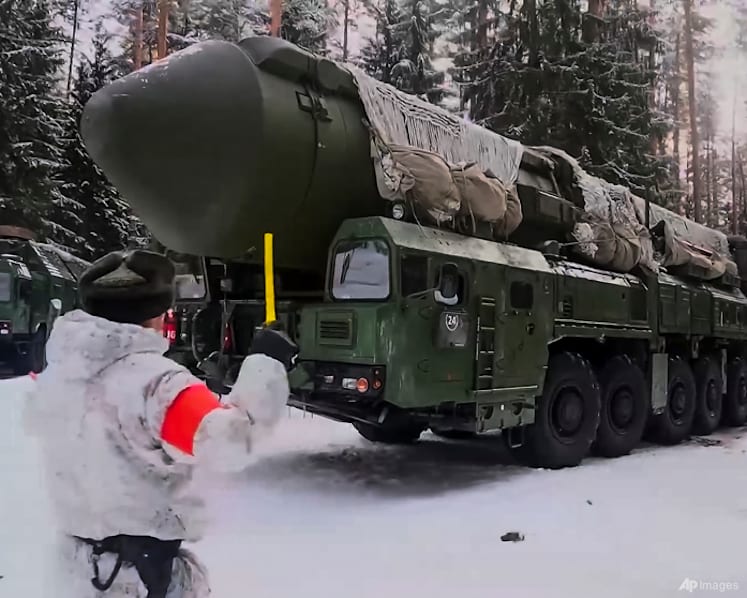
In this photo taken from a video distributed by the Russian Defense Ministry Press Service on Feb 6, 2025, a Yars mobile nuclear-tipped intercontinental ballistic missile is seen during drills at an undisclosed location in Russia. (File photo: Russian Defense Ministry Press Service via AP)

This audio is generated by an AI tool.


SINGAPORE: The last nuclear treaty between the United States and Russia, the New Start agreement, lapsed on Thursday (Feb 5), ending decades of formal limits on how many nuclear warheads the two powers can deploy.
The pact's expiry has sparked concerns of a renewed global arms race.
United Nations Secretary-General Antonio Guterres described the moment as a "grave moment for international peace and security" and urged Washington and Moscow to head quickly to the negotiating table.
Russia had offered to extend the agreement, but received no formal response from the US.





CNA takes a look at why Washington appeared reluctant to preserve the treaty – and how China may have factored into its calculations.
What is the New Start treaty?
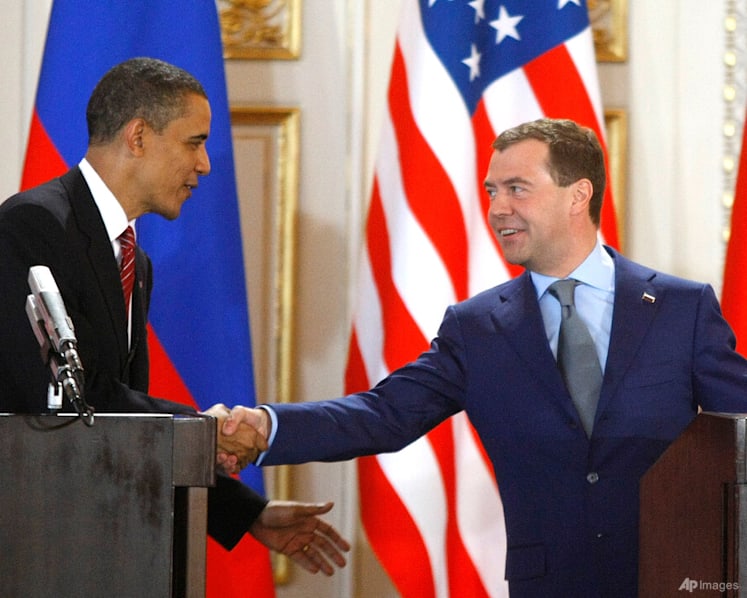
Signed in 2010 by then US President Barack Obama and his Russian counterpart Dmitry Medvedev, the New Start treaty placed caps on the number of deployed strategic nuclear warheads and the missiles and bombers used to deliver them.
Under the pact, each country was limited to 1,550 deployed nuclear warheads and no more than 700 deployed intercontinental ballistic missiles, submarine-launched ballistic missiles and heavy bombers.
Crucially, the treaty also established a detailed verification regime, including data exchanges and short-notice, on-site inspections, allowing both sides to monitor compliance and reduce the risk of miscalculation.
The inspections, however, were stopped during the COVID-19 pandemic and never resumed.
In 2023, Russian President Vladimir Putin said Russia could not allow US inspections of its nuclear sites when Washington and its NATO allies had openly declared Moscow’s defeat in its war with Ukraine as their goal.
This forced each side to rely on its own intelligence assessments of what the other was doing.
Despite this breakdown, both Washington and Moscow said they would continue to observe the treaty’s numerical limits until its expiration.
The treaty followed a long line of US-Soviet and later US-Russian nuclear arms control agreements dating back to the Cold War, beginning with the Strategic Arms Limitation Talks (SALT I) in 1972.
Why did the treaty expire?
The New Start treaty allows the US and Russia to extend it for up to five years. That option was exercised in early 2021, shortly after former US President Joe Biden took office, pushing the treaty’s expiration date to Feb 5, 2026.
Last September, Putin proposed that both sides informally agree to continue observing the treaty’s central limits for another year. However, the US did not offer a formal response, and no agreement was reached before the deadline.
“Washington has little incentive to preserve New Start,” said Dr Tong Zhao, a senior fellow at Carnegie Endowment for International Peace.
The US, he explained, is increasingly focused on keeping its options open to expand its number of deployed nuclear warheads if needed.
“Russia … is becoming a lesser concern for the US in the context of major-power nuclear relations, particularly given Moscow’s limited resources for meaningfully expanding its nuclear arsenal," he added.
How does China come into play?
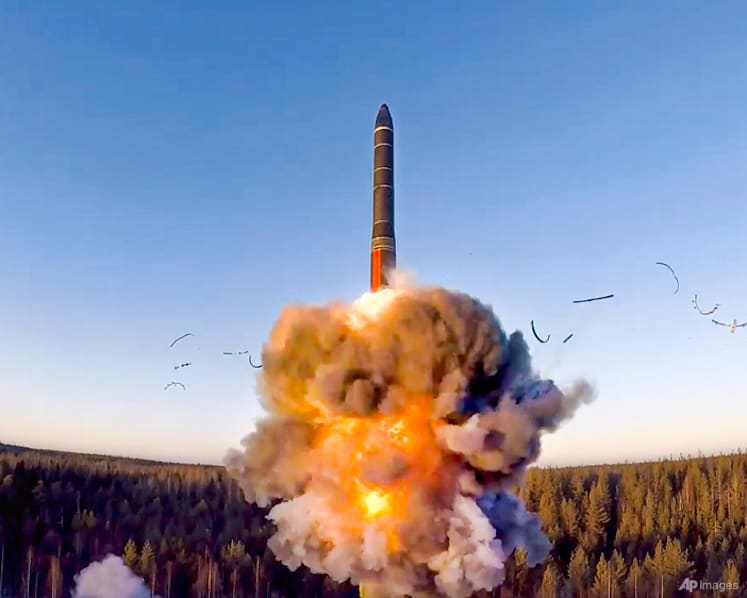
Concerns over China’s rapid nuclear buildup have increasingly shaped US thinking on arms control, said Dr Zhao.
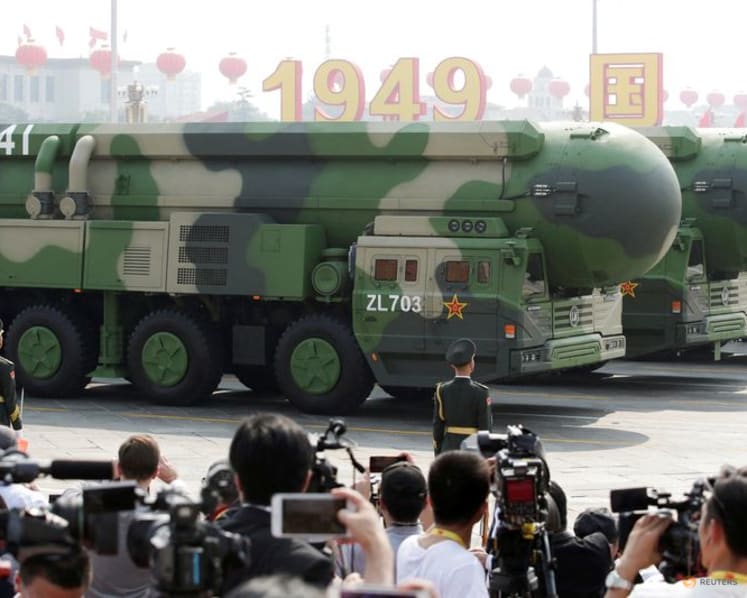
Although China remains far behind the United States and Russia in terms of the size of its nuclear arsenal, it is expanding its capabilities at a pace that worries Washington.
Some analysts warn that the US risks facing a “two nuclear peer problem", in which it must deter both Russia and China simultaneously. Being bound by a treaty that limits only US and Russian forces could therefore constrain American options, they argue.
Russia and the United States together control more than 80 per cent of the world's nuclear warheads.
China is estimated to have at least 600 nuclear warheads, according to the Stockholm International Peace Research Institute. That's well below the 800 each at which Russia and the United States were capped under New Start.
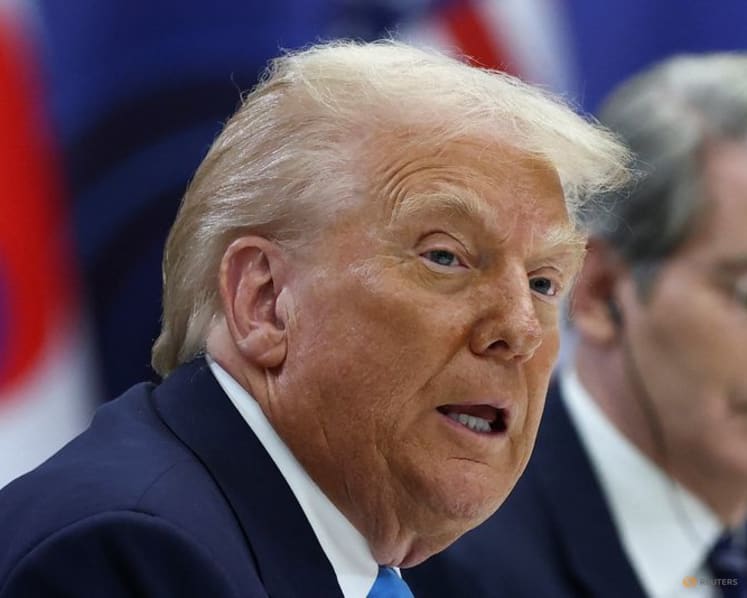
During his first term, US President Donald Trump seemed ready to let the treaty lapse as he insisted that a pact needed to include China.
US Secretary of State Marco Rubio said on Wednesday that Trump would decide on the treaty later.
"The president's been clear in the past that in order to have true arms control in the 21st century, it's impossible to do something that doesn't include China, because of their vast and rapidly growing stockpile," he said.
China, however, said on Thursday that it would not join nuclear talks “at this stage”.
"China has always maintained that the advancement of arms control and disarmament must adhere to the principles of maintaining global strategic stability," foreign ministry spokesman Lin Jian told a news conference.
"China's nuclear capabilities are of a totally different scale as those of the US and Russia (and) will not participate in nuclear disarmament negotiations at this stage."

What are the implications?
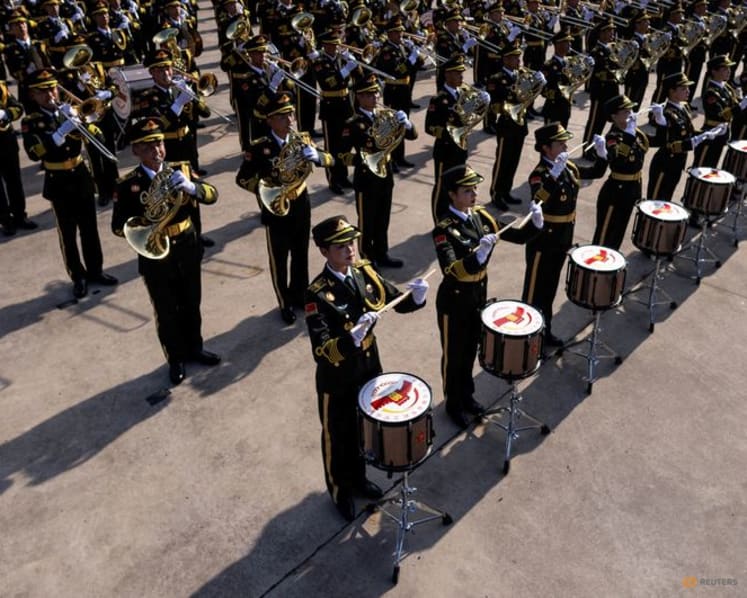
The expiry of New Start marks the end of more than half a century of formal constraints on US and Russian long-range nuclear arsenals, raising fears of a renewed arms race.
Experts say the value of such treaties lies not only in setting numerical limits but also in creating a stable, transparent framework to prevent arms races from spiralling out of control.
“In the absence of the predictability of the treaty, each side could be incentivised to plan for the worst or to increase their deployed arsenals to show toughness and resolve, or to search for negotiating leverage,” said Mr Kingston Reif of thinktank RAND Corporation during an online discussion.
Mr Daryl Kimball, executive director of the Arms Control Association in Washington, believes that the treaty’s expiry would encourage an increase in deployed nuclear weapons.
“This would open up the possibility of an unconstrained, dangerous three-way arms race, not just between the US and Russia, but also involving China, which is also increasing its smaller but still deadly nuclear arsenal,” he said.
Dr Zhao added that China’s persistent reluctance to be more transparent about its ongoing nuclear expansion pushes the US towards responses that Beijing might interpret as threatening.
This underscores “the dangers of a negative action–reaction cycle that advances no party’s security interests”, he said.
What can we expect next from the top three nuclear powers?
With the treaty gone, Russia could move ahead with developing new nuclear delivery systems, including nuclear-powered cruise missiles and long-range underwater nuclear torpedoes, Dr Zhao said.
Such systems are “nontraditional capabilities that are especially dangerous and pose unprecedented risks to the global environment and public health, even during their development and testing”, he said.
“Washington, meanwhile, would gain greater freedom to upload additional nuclear warheads onto its existing missile forces.”
Medvedev, who signed the treaty in 2010 and is now deputy head of Putin's Security Council, said Russia would promptly and firmly fend off any new threats to its security.
“If we are not heard, we act proportionately seeking to restore parity,” he said in recent remarks on the pact’s expiry.
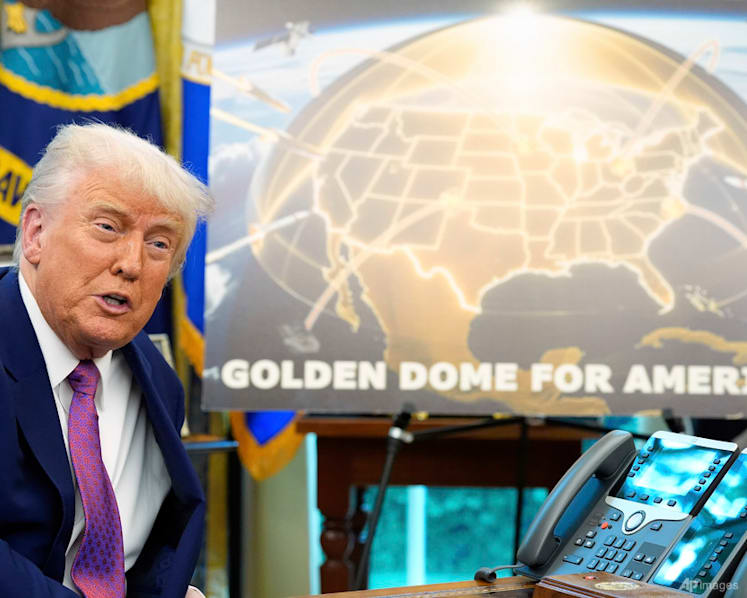
He also criticised Trump’s plans for a Golden Dome missile defence system as a potentially destabilising move by the US.
The project, which envisages missile-interception capabilities based in space, worries Moscow because it could challenge the principle of mutual vulnerability, a cornerstone of deterrence dialogue.
Trump’s plan has worried Russia and China, Mr Kimball said.
“They’re likely going to respond to (the) Golden Dome by building up the number of offensive weapons they have to overwhelm the system and make sure that they have the potential to retaliate with nuclear weapons,” he said, adding that offensive capabilities can be built faster and cheaper than defensive ones.
Kremlin adviser Yuri Ushakov said Putin discussed the pact’s expiration with Chinese President Xi Jinping during their call on Wednesday.
With the treaty gone, China is likely to place greater emphasis on sustaining investment in its own nuclear expansion, said Dr Zhao.
“President Xi appears to believe that China’s ability to build and demonstrate enhanced strategic military power can help check what Beijing perceives as strategic ‘arrogance’ in Washington,” he said.
“As long as Xi sees broad geopolitical value in a stronger nuclear force - one capable of compelling US acceptance of China’s rise and deterring challenges to China’s core interests - he is likely to continue funding China’s nuclear expansion.”
While the treaty’s expiry has raised fears of a renewed arms race, it could be seen as an opportunity to rethink arms control, said Ms Heloise Fayet of the French Institute of International Relations.
Rapid technological change is “creating new ways to deter and constrain an adversary”, complicating strategic calculations, she noted.
Including new technologies in the framework, regulating types of delivery systems rather than simply counting warheads or agreeing not to include AI in nuclear weapons are some considerations that could be adopted for a new approach to arms control, she suggested.
The New Start treaty was designed for the past 15 years, but not the next 15, said Ms Christine Wormuth, president and CEO of nonprofit Nuclear Threat Initiative.
The strategic landscape has become more multipolar and multidimensional, she wrote in a statement on Tuesday on the pact’s expiry.
“New Start(‘s) expiration presents an opportunity to prioritise efforts to prevent nuclear use in an increasingly dangerous world,” she said.
Want an issue or topic explained? Email us at digitalnews [at] mediacorp.com.sg. Your question might become a story on our site.