analysis East Asia
‘No absolute relationships’: What makes China’s probe of top general Zhang Youxia ‘unusual’ and ‘remarkable’?
China said on Saturday (Jan 24) that Zhang Youxia, top-ranked vice-chair of the Central Military Commission, is under investigation alongside fellow member Liu Zhenli. Analysts say it underscores how no one is immune in President Xi Jinping’s remaking of the military.

This audio is generated by an AI tool.


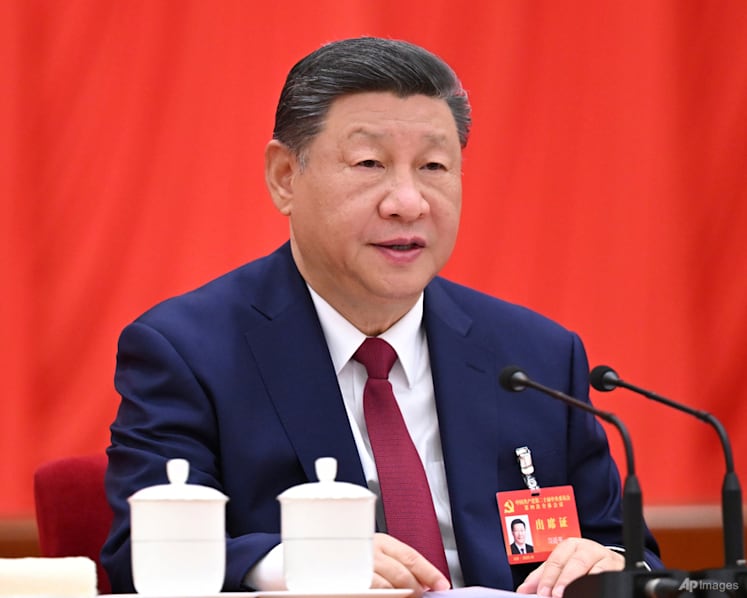
BEIJING: The investigation into China’s highest-ranking general Zhang Youxia marks one of the most extraordinary turns in the country’s long-running military shake-up, given his background, rank and proximity to President Xi Jinping, say analysts.
A war veteran, the son of a founding People’s Liberation Army (PLA) general and one of Xi’s longest-serving allies in uniform, Zhang had widely been seen as politically secure - even untouchable - within the armed forces.
That perception has now been shattered.
China said on Saturday (Jan 24) that Zhang, a serving vice-chair of the powerful Central Military Commission (CMC), has been placed under investigation for “serious violations of discipline and law”, a common euphemism for corruption.





Liu Zhenli, a fellow CMC member and chief of its Joint Staff Department, was also placed under investigation, according to the announcement carried by state media.
Analysts say Zhang’s plight may reflect a confluence of factors, such as a possible erosion of trust between him and Xi as well as the Chinese supremo’s broader effort to consolidate control over the military and reshape the CMC ahead of the 21st Party Congress in 2027.
The episode underscores how no one is immune in Xi’s remaking of the PLA, not even those once regarded as trusted insiders, they further point out.
“The fact that Zhang Youxia, the son of a founding general, has now been placed under investigation shows that red second-generation or military second-generation networks are not a priority for Xi,” said Lin Ying-yu, an associate professor at the Graduate Institute of International Affairs and Strategic Studies at Tamkang University in Taiwan.
“For Xi now, there are no absolute relationships, no absolute friends and no absolute subordinates,” he told CNA.
Turbulence at the top of the military could ripple through the chain of command, affecting readiness and operational tempo by slowing decision-making and encouraging risk aversion, at least in the short term, warned observers.
WHY ZHANG YOUXIA’S CASE STANDS OUT
Saturday’s announcement came after about a week of speculation, largely confined to overseas Chinese-language and Taiwan-based media, that Zhang could be in trouble.
The reports highlighted his absence on Jan 20 from a high-level study session on the fourth plenum that was attended by senior party and military leaders.
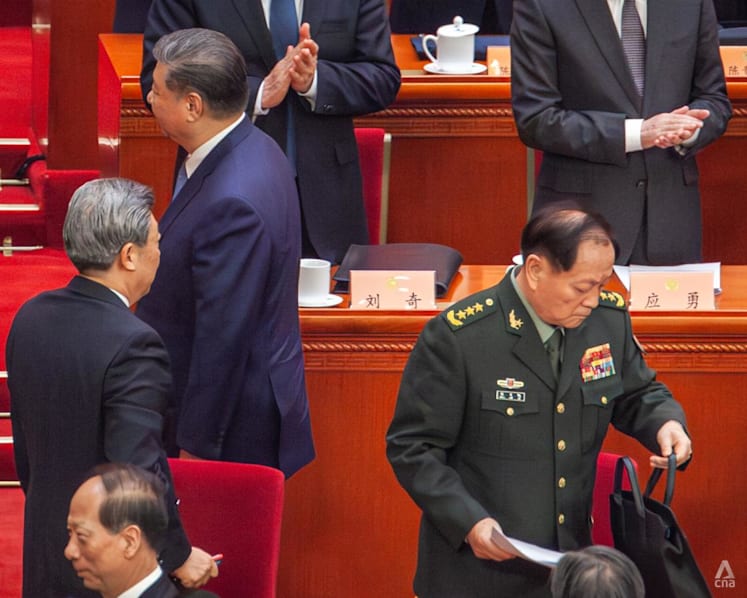
In footage of the event broadcast by CCTV, newly minted CMC vice-chair Zhang Shengmin appeared seated in the front row alongside other Politburo members. Zhang Youxia, a Politburo member, was not seen.
He and Liu were last seen in public on Dec 22, when they attended a CMC ceremony conferring the rank of general on two senior officers.
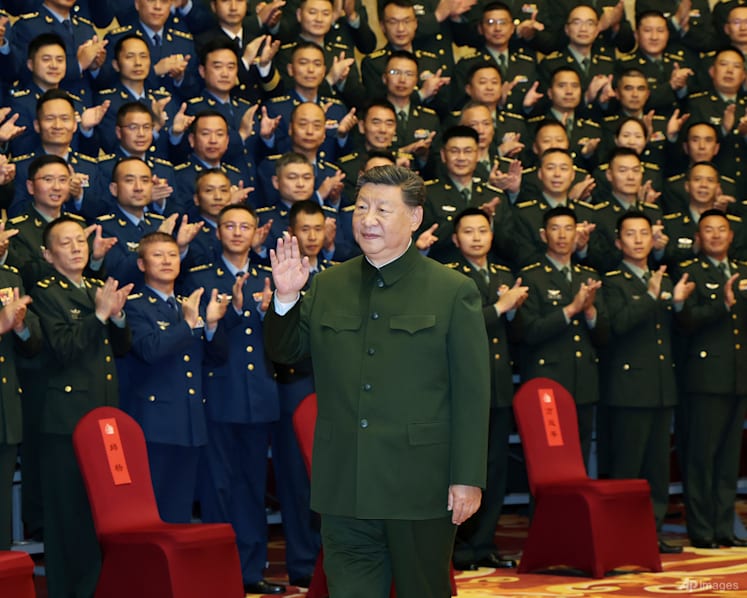
Xi - who is also CMC chairman - was present at the event, and Zhang Youxia read out the promotion orders signed by the president, according to state broadcaster CCTV.
The investigation into Zhang Youxia carries particular weight, considering his senior position and long-standing ties to Xi, noted analysts.
“Very unusual to see someone like Zhang Youxia, with such a long record of service and deep personal ties to Xi, being taken down,” Yang Zi, a research fellow at Singapore’s S Rajaratnam School of International Studies (RSIS), told CNA.
“Something severe must have happened. Xi likely views him as disloyal and a potential threat.”
A veteran of the 1979 Sino-Vietnamese border war and later commander of multiple key military regions, Zhang Youxia, 75, had risen through both combat and organisational tracks of the PLA, eventually overseeing operations, training and weapons development.
Dylan Loh, an associate professor in the Public Policy and Global Affairs programme at Singapore’s Nanyang Technological University (NTU), described the move as one of the most consequential at the top of the PLA in decades.
Zhang Youxia’s investigation, he said, could represent “the highest-ranking serving military figure to be targeted since the late 1980s,” when senior officers were purged or sidelined in the aftermath of political turmoil surrounding the 1989 Tiananmen incident.
Those earlier episodes saw sweeping shake-ups within the military leadership, as the party reasserted control and removed figures deemed politically unreliable.
Since then, Xi’s anti-corruption drive has ensnared former defence ministers such as Li Shangfu and Wei Fenghe, as well as retired CMC vice-chairs such as Xu Caihou and Guo Boxiong. The campaign had also extended to a serving CMC vice-chair, namely the second-ranked He Weidong, who was removed in October last year.
But Zhang Youxia stands out as one of the most senior serving uniformed leaders to face investigation.
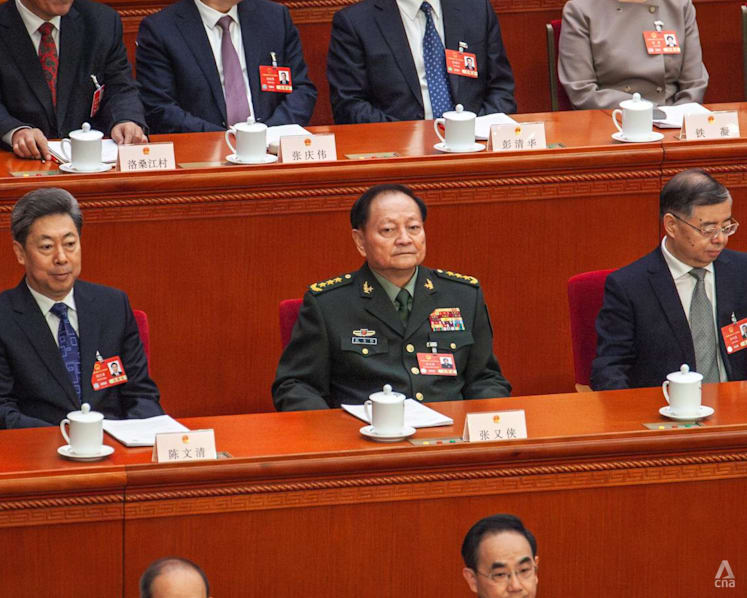
His latest plight is all the more striking given that he had frequently been cited by observers as a key figure behind earlier purges of senior officers, particularly those linked to military networks in Fujian and China’s southeastern theatre commands.
Analysts said that role may have helped consolidate his influence at one stage, but also potentially left him exposed as Xi continues to dismantle power centres within the PLA.
Lin from Tamkang University said Zhang Youxia’s background had long been viewed as a source of political insulation.
“He was relatively stable in political terms,” Lin noted, pointing to his status as a military second-generation figure and his overlapping service history with other senior officers in southeastern China. “But none of that mattered in the end.”
Lin added that Zhang Youxia’s predicament reflects a deeper recalibration at the top of the system.
“For Xi now, there are no absolute relationships,” he said. “What matters is control.”
A HOLLOWED-OUT CMC
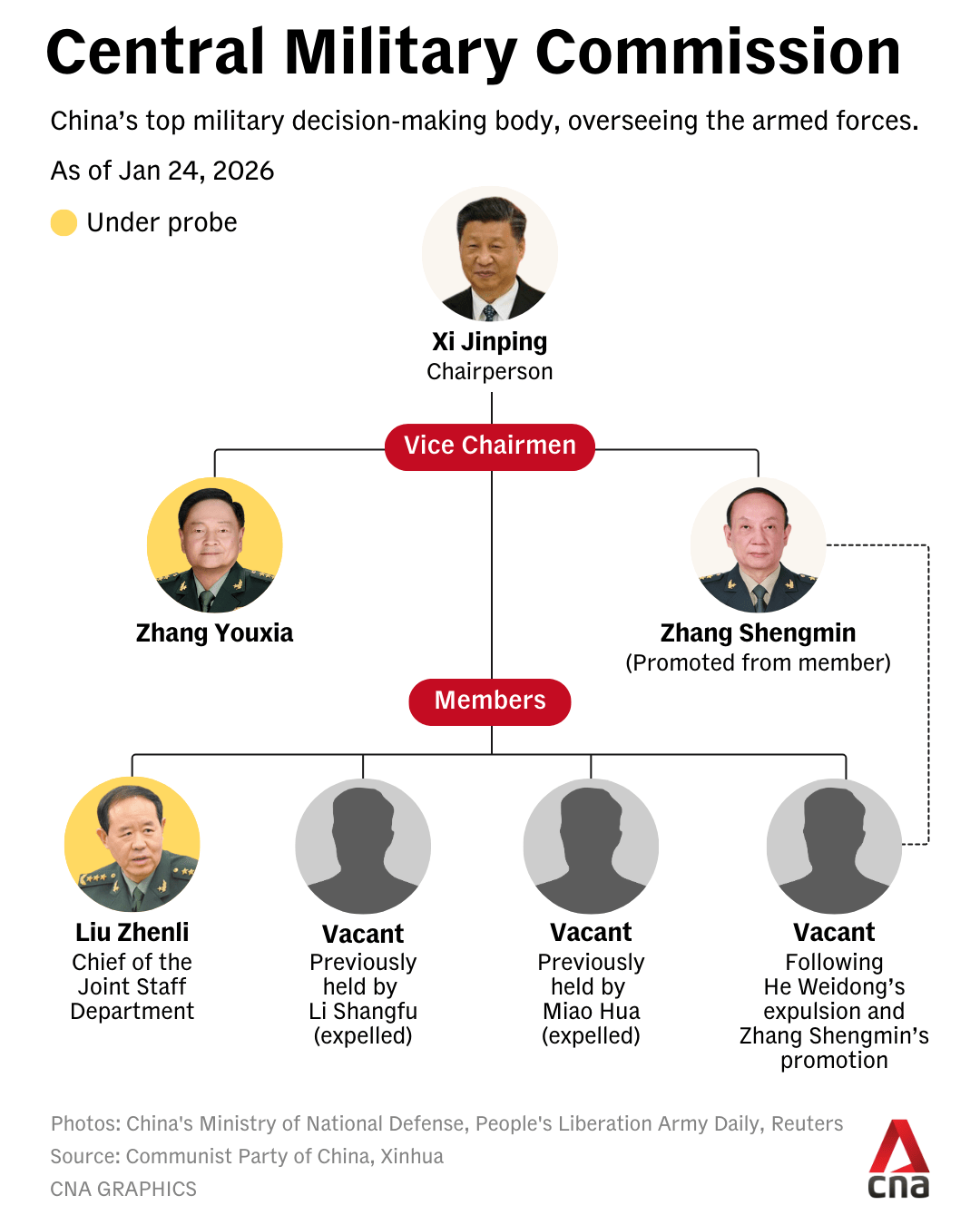
The latest development further pares down an already diminished CMC, which began its current term after the 20th Party Congress in 2022 with seven members - Xi as chairman, two vice-chairs and four other members.
Since then, three members have been removed against the backdrop of a sweeping anti-corruption campaign within the PLA that has intensified since 2023, ensnaring senior figures across the Rocket Force, the People’s Armed Police and multiple theatre commands.
Li, the former defence minister, was expelled from the Communist Party in June 2024 after being investigated for serious violations of party discipline and the law, and his case was transferred to the military judiciary for criminal prosecution.
Just months ago, a string of high-ranking generals, including former CMC vice-chair He and former CMC Political Work Department chief Miao Hua, were formally expelled from both the Communist Party and the military.

Saturday’s revelation means the top military decision-making body is now effectively centred on Xi himself and vice-chair Zhang Shengmin, a long-time graft buster.
“The CMC is essentially left to two people, one of whom is Xi,” said NTU’s Loh, calling it a “remarkable” situation.
The CMC is now effectively dominated by political oversight rather than operational experience, analysts said.
The current configuration is unprecedented in that it leaves the CMC without a single senior figure known for frontline combat command, said Lin.
“This is the first time the CMC has been so heavily dominated by officials with political backgrounds, without any field commanders or officers with real battlefield experience,” he said.
For instance, Zhang Shengmin, the second-ranked CMC vice-chair, is a long-time discipline chief whose career has been rooted in political supervision rather than battlefield command.
The 67-year-old spent much of his career in the military’s political and disciplinary system and has served as secretary of the CMC’s Discipline Inspection Commission since 2017, overseeing Xi’s sweeping anti-corruption drive in the armed forces.
That imbalance, analysts said, reflects Xi’s overriding priority of tightening control over the military, even at the cost of sidelining operational expertise.
Lim Tai Wei, an East Asian affairs observer and professor at Soka University, said the developments signal that loyalty to the Chinese supremo now outweighs all other considerations in determining who survives at the top.
The result is a CMC that is more centralised and politically reliable, but also narrower in experience, he added.
Yang from RSIS noted that such concentration of authority carries risks, as Xi cannot run the PLA alone and must ultimately rely on subordinates he trusts to implement decisions across a vast and complex organisation.
IMPLICATIONS FOR THE PLA
Analysts said the hollowing out of the CMC reinforces the sense that the leadership’s focus has shifted inward toward consolidation and control, rather than outward projection of military power.
With the 21st Party Congress due next year, they said the unfolding purge points to a leadership intent to further consolidate Xi Jinping’s authority over the PLA, while creating room to reshape the senior command structure.
In the short term, the turbulence at the very top is expected to encourage caution rather than adventurism, noted observers.
Disruption within the command structure tends to ripple downward, complicating coordination and slowing decision-making across the force, they added.
Command instability is likely to affect morale and confidence throughout the ranks, reducing the appetite for high-risk moves even if the PLA’s underlying capabilities remain intact, said Yang.
“As a result, the likelihood of a major military conflict in the near term is seen as low, particularly given the leadership’s current preoccupation with internal control,” he added.
Lin from Tamkang University said large-scale operations are likely to be put on hold while personnel issues are sorted out, but stressed that pressure on Taiwan - the self-ruled island that China views as its territory - would not disappear.
Instead, Beijing is likely to rely on routine patrols, joint combat readiness drills and grey-zone activities to maintain signalling without crossing escalation thresholds, he added.
At the same time, Lin cautioned that the reshuffle could produce uneven effects at lower levels.
“Some younger commanders, eager to demonstrate loyalty and competence in a system where promotions may soon open up, could become more active in air and maritime operations,” he said.
Such behaviour, Lin asserted, would be driven less by strategic intent than by personal incentives to stand out during a sensitive transition period.
Others pointed to longer-term implications for how military advice is generated.
With the CMC now heavily weighted toward political oversight, questions remain over whether operational concerns and risk assessments will be conveyed as candidly as before, analysts said.
Even so, the shake-up does not necessarily signal a weakening of the PLA’s ability to act, but rather a phase of inward focus as Xi seeks to restore discipline and shape a command structure aligned with his priorities before the next political cycle, observers added.
Looking ahead, analysts said the next key signal will be who is promoted, as new appointments will offer the clearest clues about the direction of the PLA under Xi.
The identities, ages and career backgrounds of any replacements will be closely scrutinised, particularly whether they come from operational commands, political and disciplinary bodies, or newer joint structures, they added.
Promotions of younger officers with longer runways ahead of them could signal an effort to lock in influence beyond the current political cycle, Lin noted.
The timing of those appointments will also matter. Prolonged vacancies or acting roles could point to continued internal jockeying, while swift confirmations would suggest a priority on restoring stability at the top, said observers.
Beyond personnel moves, Lin said it would be important to watch whether China’s military activities around Taiwan and in nearby waters show any noticeable shifts.
“While large-scale exercises or escalation appear unlikely in the near term, changes in the tempo or intensity of patrols, drills and grey-zone operations could reflect how lower-level commanders respond to the shake-up,” he said.
The key variable is whether uncertainty at the top translates into caution or overcompensation further down the chain, noted Yang from RSIS.
“The command system is hierarchical, and uncertainty at the top inevitably affects behaviour below.”