China's export engine stutters as Iran war wipes out AI-driven gains
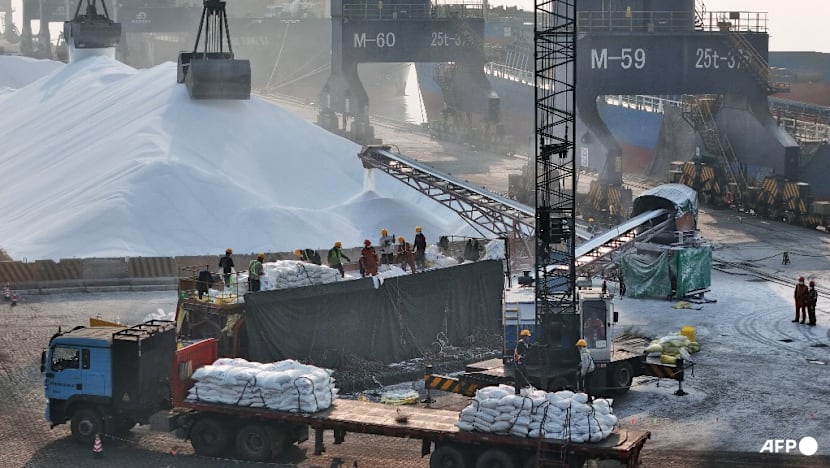
Urea fertiliser is loaded onto a cargo ship for export at a port in Yantai, in China’s eastern Shandong province on Mar 26, 2026. (File photo: CN-STR/AFP)
BEIJING: China's export engine slowed in March as buyers chasing an AI-fuelled future ran into the hard reality of war in the Middle East, which has sparked an energy shock and complicated Beijing's push to keep growth on track.
Outbound shipments from the world's second-largest economy grew an annual 2.5 per cent, customs data showed on Tuesday (Apr 14), a five-month low, and slowing from a 21.8 per cent gain in the January-February period. They sharply undershot forecasts for 8.3 per cent growth in a Reuters poll.
Imports rose 27.8 per cent, the best performance since November 2021, compared with a 19.8 per cent increase over January and February and forecasts for 11.2 per cent growth.
March marks the first real stress test of whether enthusiasm for artificial intelligence - and the chips and servers it demands - could offset gloom unleashed by the global energy shock after Iran's closure of the Strait of Hormuz, the strategic waterway for the world's 20 per cent of oil and gas flows.





Natural gas imports for March dropped an annual 10.7 per cent, the lowest level since October 2022, while crude imports fell 2.8 per cent, with Chinese vessels also getting stuck in the strait.
China roared into 2026 with outbound shipments far outstripping forecasts, powered by tech exports, raising the prospect it could smash last year's record US$1.2 trillion trade surplus. The Iran war casts doubts about that trajectory.
Even China, long criticised by trading partners for subsidy-backed, cut-price manufacturing, is not insulated from the hit to buyers' purchasing power as fuel and transport costs rise.
Still, Chinese producers may yet gain ground as buyers seek cheaper options, said Fred Neumann, HSBC's chief Asia economist.
Decades of commodity stockpiling have also helped blunt the impact of raw-material shocks on factory gate prices, he said.
China's exports of refined oil products rose 20.5 per cent month-on-month, totalling 4.6 million metric tons.
The figures were further muddied by the seasonal effects of a late Lunar New Year national holiday, said Xu Tianchen, senior economist at the Economist Intelligence Unit, during which factories shut as workers down tools to celebrate.
"This explains the decline across the low-value added sectors, textiles, garments, bags, toys, furniture, as they are reliant on migrant workers," Xu said.
A high base is also a drag, after Chinese factories rushed shipments a year earlier to beat US President Donald Trump's Apr 2 “Liberation Day” tariff deadline.