







4G leaders have set tall order for themselves, must create own brand: Analysts
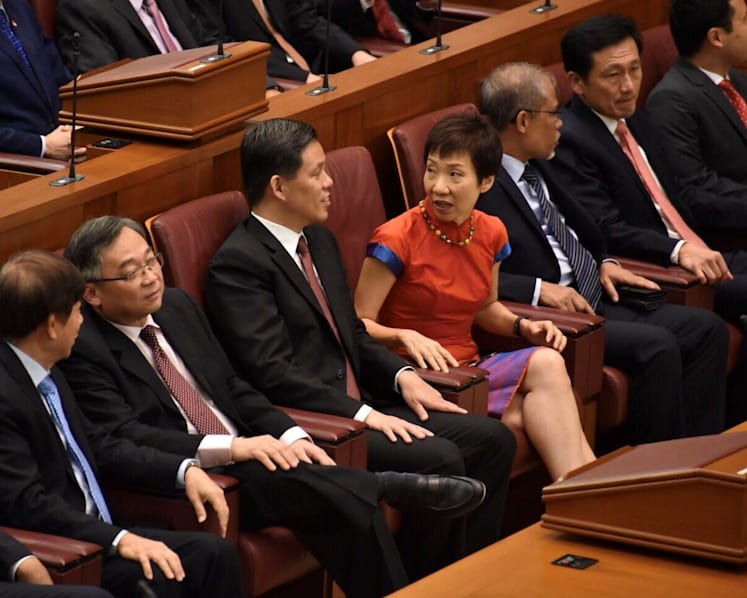
The fourth generation of leaders could encourage people to speak up and make bold moves in tackling inequality, said Members of Parliament.




SINGAPORE — The need for the fourth-generation (4G) leaders to listen to Singaporeans’ views, but not be afraid to rally support for difficult policies was singled out by Deputy Prime Minister Tharman Shanmugaratnam as the “most important theme” in the President’s Address on Monday (May 7).
This, and resisting the temptation not to go for bold changes, were among the key takeaways of Members of Parliament (MPs) and political observers from President Halimah Yacob’s inaugural address at the second session of the 13th Parliament.
The 4G leaders will have to “fire up and mobilise the spirit and energy of young Singaporeans”, who hold different dreams, hopes and fears from their parents and grandparents, said Madam Halimah in her 25-minute speech.
Noting that the 4G leaders’ path will not be easy, she said: “They will need to listen to the views and feelings of the people, and by their words and deeds, show that they have heard; yet never fear to lead and mobilise public opinion to support difficult policies in the long-term interest of Singapore.”





The speech was largely drafted by the 4G leaders, a task given by Prime Minister Lee Hsien Loong as he felt it would give Singaporeans a better sense of the next generation of political officeholders and their thoughts.
Writing on Facebook after the Parliament sitting, Mr Tharman said there were several themes in the President’s Address, but “this on the 4G leadership was the most important”.
Singapore Management University law don Eugene Tan said the idea that Singapore needs to be bold to continue to be exceptional also came across strongly.
“It is a frank assessment, as with wealth and prosperity comes some level of complacency. We also lower our desire to take risks,” noted Assoc Prof Tan.
“(The 4G leaders) strike me as being fairly concerned with complacency, the lack of boldness. I felt they certainly have set up a tall order for themselves, writing their own job description – that will be how Singaporeans might measure the caliber of leadership,” he added.
The call for the new leaders to be bold suggests that they will have to “create a brand for themselves”, said Dr Felix Tan, an associate lecturer at SIM Global Education.
“They cannot just rest on the laurels of the achievements of the previous few generations. They have to strike out and be able to create a kind branding of who they are and what they could do. They should be gutsy enough, daring enough to make changes when there is a need to do so,” he said.
Also key was the point about forging trust with a new generation that was born and raised in post-independence Singapore, said Dr Gillian Koh, deputy director of research at the Institute of Policy Studies.
“The line from Madam Halimah that they will have to earn the right to lead is quite an important one — so that the leaders do not take their positions for granted… You have had a standing down of some 3G leaders and therefore 4G leaders put in place as full-fledged ministers, this is now an opportunity for them with work with one another and build up as a team,” she said.
Nanyang Technological University political scientist Woo Jun Jie said the speech’s focus on the next generation of leaders emphasises a need to form “a new social compact” between the 4G leaders and the citizens, particularly the younger ones.
“This social compact is essential for carrying Singapore into the next few decades of its development, since the 4G leadership will need the collaboration of citizens (so) that its policy programmes can be successful in tackling future policy issues,” he said.
MOBILISE AND BRIDGE DIVIDES, SAY MEMBERS OF PARLIAMENT
Nee Soon MP Louis Ng said that the “days when the Government solves everything are over” and the challenge for 4G leaders and MPs is in encouraging people to speak up.
“I hope that we continue to have a spirit of speaking up. The best ideas are out there and it is up to us to go out there and have public consultations and listen to the voices on the ground. I think that is the best process,” said Mr Ng. “We need to mobilise people to join us in making sure no one is left behind.”
Chua Chu Kang MP Zaqy Mohamad, who is now Minister of State for National Development and Manpower, said that the challenge is for the Government to build a bridge between them and the people in the midst of a changing culture.
“In the old days, it was easy to cultivate a sense of rootedness... through public housing, home ownership,” he said. “Today people have divergent goals. We need to explore the social compact between the Government and Singaporeans moving forward and work on that joint sense of purpose. Having the mutual purpose will make the difference in bringing the community together... allowing the nation to be aligned in its goals.”
Nee Soon MP Lee Bee Wah said more bold moves can be made to tackle social inequality and the issues related to race.
“How can we ensure that people continue to mix together and economic class, race and religion don't become a dividing point?” she asked.
“For example, even though we encourage multi-racial values in school, we also see from the ground feedback, that children of certain races still clique together, for example, the Chinese will play basketball together, while Malays will play soccer,” said Dr Lee.
Sport competitions could encourage teams to be made up of students from different races, she suggested.
The public will now be watching to see what moves the 4G leaders make and whether any “sacred cows” will be slaughtered, said Nominated MP Mahdev Mohan. Ministers with new portfolios could come under more scrutiny, he said.
For instance, for the education portfolio now fully helmed by Mr Ong Ye Kung, the public might be wondering if significant changes are in order for the Primary School Leaving Examination, he said. “I think he is up to the challenge,” added Assistant Professor Mahdev.




