







Accreditation for skills picked up during NS in the works: MINDEF
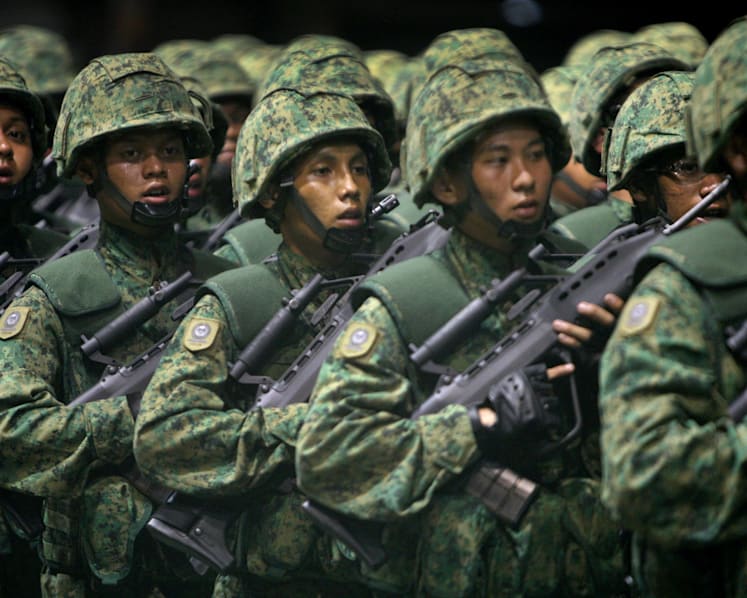
Soldiers at National Day Parade preview in 2009. TODAY file photo


SINGAPORE — Full-time National Servicemen (NSFs) may see smoother transitions into the civilian workforce as the Singapore Armed Forces (SAF) looks into accrediting leadership, technical and specialist skills picked up over their two-year NS stints. Vocations that could benefit from this move include signal operators, soldiers who serve as transport operators and those in the medical field, such as SAF combat medics.
The Ministry of Defence (MINDEF) said it is working with the Singapore Workforce Development Agency (WDA) to finalise the training institutes and courses that will be accredited, and more details will be released over the next year. The accreditation process for each course will take about six months and consist of three phases.
First, the training syllabus will be matched to relevant domains within industries. Next, the proficiency of trainers and training institute will be benchmarked to WDA’s requirements. The final phase involves auditing training delivery for consistency.
From November, enhanced career and education fairs jointly organised by MINDEF and the Ministry of Home Affairs (MHA) will also give NSFs more opportunities to interact with a wider pool of prospective employers and education institutions.





Skills accreditation and enhanced career fairs are among the Committee to Strengthen National Service’s (CSNS) raft of 30 proposals put up after a year-long engagement exercise which gathered feedback from more than 40,000 members of the public on how to improve NS. Twelve CSNS recommendations have been rolled out since June last year, including increasing the number of regular trainers at the Basic Military Training Centre and the establishment of the SAF Volunteer Corps.
To boost physical fitness standards among pre-enlistees, some 1,000 male students at four post-secondary education institutions will also undergo more rigorous physical fitness programmes and assessments. For instance, weaker students at the Institute of Technical Education (ITE) Colleges East and West will undergo up to three additional physical training sessions each week. ITE Colleges East and West will have more staff to help students manage their fitness.
MINDEF also announced that an upgraded fleet of F-16 fighter jets will be equipped with new radars with a longer detection range, weapons such as laser-guided bombs that strike with greater precision, and modern missiles that can engage a wider range of air threats.
Advanced helmet-mounted displays that project flight, targeting and cueing information in front of the pilot will enhance situational awareness and flight safety. This upgrade programme, understood to be the largest yet in the 46-year history of the Republic of Singapore Air Force, will start next year and complete by 2022.
The ministry did not say how much the upgrade would cost. According to the Pentagon’s Defence Security Cooperation Agency, the United States State Department has thus far approved arms sales amounting to US$2.56 billion for the upgrade.
The F-16s first entered service in 1998 and have been deployed in most of RSAF’s war games at home and overseas. Pilots from the RSAF’s aerial display team, the Black Knights, also fly the F-16s to perform aerobatics.
Correction: In an earlier version of this report, we reported that Anderson Junior College will have more staff to help students manage their fitness. This is incorrect. It will have staff dedicated to help students manage their fitness. We apologise for the error.




