







'Nutrition labels' for AI apps among measures being studied to boost online safety: Josephine Teo
The labels could help users better understand what AI-enabled services are designed to do, their intended uses and limitations – similar to how labels for food or medicine inform consumers.
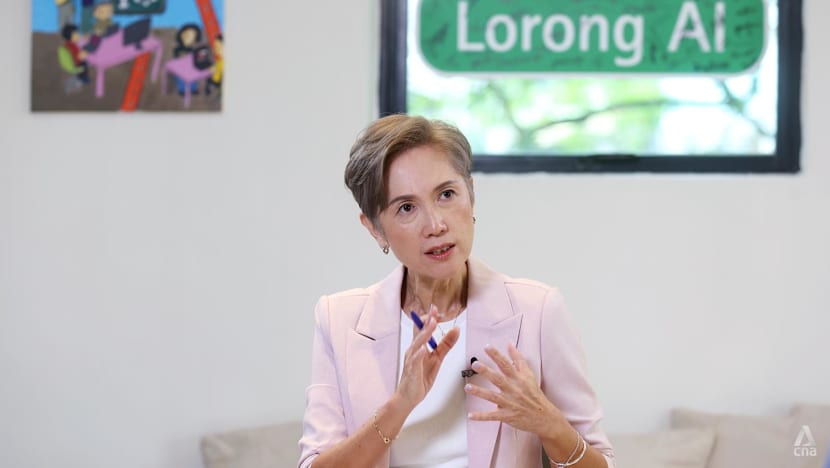
Minister for Digital Development and Information Josephine Teo speaking to reporters at Lorong AI@One-North Space on Mar 27, 2026. (File photo: CNA/Ooi Boon Keong)

This audio is generated by an AI tool.


SINGAPORE: Labels that clearly spell out what artificial intelligence applications can do – and where their limits lie – could be introduced as part of broader efforts to strengthen trust and safety in the digital space, said Digital Development and Information Minister Josephine Teo.
This is in view of the potential challenges posed by the abuse of AI tools such as AI chatbots, according to a factsheet released by the Ministry of Digital Development and Information (MDDI) on Tuesday (Mar 31).
Speaking to reporters ahead of the second Online Safety Assessment Report, which was also released on Tuesday, Mrs Teo said the proposed labels would help users better understand what AI-enabled services are designed to do, their intended uses and limitations, similar to how labels for food or medicine inform consumers.
“The nutrition label comes as … a declaration of the intent and what goes into it and what you are able to use it for,” she said.





“The other way of thinking is when you buy medication, they tell you very specifically what this can fix … and if you’re buying medication to fix a cold, it's not going to fix a cough. So if you go and use this medication for a cough, it won't do the job.”
She added that the ministry is “actively exploring” how such a system could be implemented, alongside other safeguards for AI tools.
NO SILVER BULLET
The idea comes as Singapore pushes ahead with AI adoption under its Smart Nation 2.0 strategy, where growth, trust and community are seen as equally important priorities.
Mrs Teo stressed that while AI presents significant economic opportunities, safeguards must be built in.
Likening online safety to road safety, which relies on multiple measures – from seat belts and airbags to speed limits and traffic rules – she said these must be developed over time. Likewise, the fast-evolving digital space requires a combination of safeguards, not a single “silver bullet”, to build trust and protect users.
Rather than relying on a single solution, the government is taking a layered approach, strengthening governance frameworks and introducing testing mechanisms, to improve transparency and accountability.
Turning to the latest Online Safety Assessment report, Mrs Teo said the Ministry of Digital Development and Information (MDDI) is looking to strengthen protections further, particularly for young users.


The annual report evaluated six social media services – Facebook, HardwareZone, Instagram, TikTok, X and YouTube – on how thoroughly and effectively their measures met the Code of Practice for Online Safety.
It also raised concerns about child safety, noting that children could still access age-inappropriate content on several platforms.
Mrs Teo said age assurance measures to better verify users' ages online will be implemented as part of enhancements to the online safety regulations.
“You need to be able to tell quite accurately the age of the user, in order for whatever protections you intend to apply to them, to be actually made available,” she said.
Additional safeguards under consideration include tighter controls on platform features such as direct messaging and autoplay, which may expose users, especially youths, to harmful interactions or excessive use.
Mrs Teo added that authorities are prepared to take stronger action if platforms fail to meet safety standards.
“If a particular service, just like a particular make of a car, is not safe to use, you must seriously then think about taking it off, and so that's the kind of approach that we are prepared to take.
“We would have to look at the specific design of the service, we would have to look specifically at the kind of child safety features that can be introduced and then we will assess.
“If we need to take this vehicle off the road, we may have to,” she said.
At the same time, she acknowledged the complexities of regulation, including challenges such as migration to other platforms and difficulties in enforcing age-based restrictions.




