







Arts, sports ‘can rally S’poreans, help overcome fault lines’
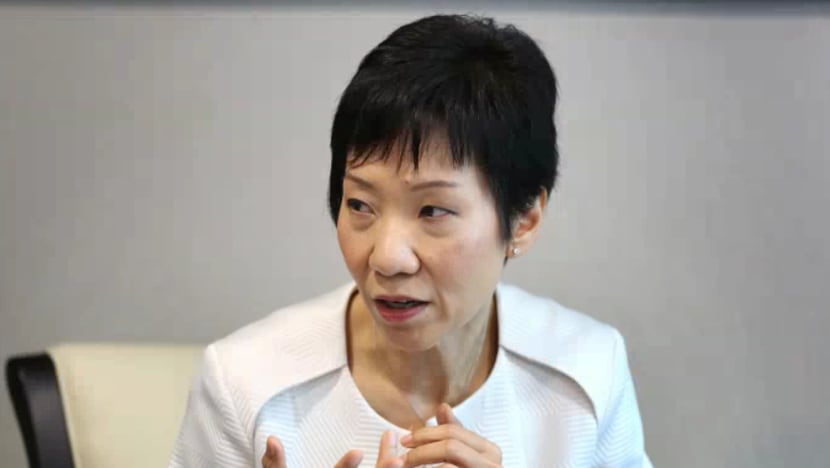
Minister for Culture, Community and Youth Grace Fu. Photo: Raj Nadarajen/TODAY


SINGAPORE — New fault lines are emerging in society, sometimes giving rise to fractious debate, but Minister for Culture, Community and Youth Grace Fu is hoping to bring Singaporeans together by rallying them to take pride in the work of those from the local arts, culture and sports scene.
And beyond the consultations the Government has been conducting over the past few years, the Ministry of Culture, Community and Youth (MCCY) wants to get Singaporeans to participate in coming up with solutions, building a new relationship between the Government and Singaporeans, said Ms Fu.
In an interview with the media on her vision for the ministry over the next few years, Ms Fu, who was appointed to the ministry last September, said most of the challenges Singapore faced over the past 50 years remain, such as the country’s small hinterland and traditional fault lines among the racial groups and religions.
New ones have also emerged along the income divide and over values, such as controversy over the Madonna concert that divided the conservatives and the liberals, and the Cross Island Line that is seeing differing opinions among interest groups and some residents, she noted. Fault lines are also emerging between different age groups, as well as between foreigners and locals.





Any of these fault lines can cause imbalance and tension in society, noted Ms Fu, underscoring the need to continue with nation-building. The MCCY, she said, will play a role in this, by helping to define national identity and pride, and build a caring and cohesive society.
“On a whole, if I’m able to make Singaporeans feel stronger and better about themselves as a people and about Singapore as a country, I think that would be what I define as my success as a minister,” said Ms Fu.
In the first 50 years of Singapore’s independence, nation-building was centred on the country’s achievements in public housing, the physical environment — such as the clean-up of the Singapore River — the education system and other tangibles, said Ms Fu.
But in future, she hopes to see Singaporeans define themselves as a people who care for and respect one another and the environment, and have greater understanding of religious sensitivities and culture. “Ultimately, (the MCCY sees) our role not just in community building, it’s really about nation-building, nation-building in the more intangible or amorphous sense,” she added.
To deepen people’s understanding of “who we are”, the MCCY, through its statutory boards like National Heritage Board, National Arts Council and Sport Singapore, will aim to reach out to the ground.
This includes widening the audience groups to the national art institutions and cultural centres by integrating arts and culture in the schools’ curriculum. Likewise, athletes can also brought to the schools to act as positive role models.
To get Singaporeans to take pride in the achievements of fellow Singaporeans in the arts, heritage or sports, the ministry will aim to help raise standards. For example, this could mean putting up better art displays, or supporting artists and athletes more on the international stage.
Noting that sports can bring people together and has social benefits, there are also plans to get more schools to let members of the public use their facilities, she said.
Asked about the Singapore Sports Hub, which has seen turmoil — including legal action over claims that it had not delivered on its promises — Ms Fu said she was “equally anxious” about its use.
She noted that the first year of operations were taken up by the SEA Games, and Sports Hub Pte Ltd (SHPL) only recently sorted out its calendar with the Ministry of Defence over hosting the National Day Parade. “To be fair to SHPL, if that factor is unknown, you can’t go out with a calendar to (market) it … It’s just a fact that National Day falls in August and it’s the summer seasons of the sporting events,” she said.
“With each lapse of time and events, we expect them to do better.” As for getting Singaporeans to be co-creators of solutions — beyond contributing at consultation sessions — Ms Fu said this is part of the new relationship between the Government and Singaporeans the MCCY hopes to promote.
For example, after discussing the value of volunteer mentors for student apprentices at a SGfuture dialogue session, a not-for-profit organisation got schools to come on board their programme, and engaged 16 mentors for over 100 apprentices, shared Ms Fu.
“In other words, I have an idea about what we could do, how about me bringing my friends to participate,” she said.
Now that society is more educated, there needs to be “a model where citizens feel that they can come together, they can participate in that decision-making”, but also understand and expect the trade-offs the country is making, said Ms Fu.




