Singapore aims to speed up private bank account opening for wealthy clients
Private banking account opening times for the wealthy will be reduced to within one month by the end of 2026, down from the current duration of about six weeks or longer.
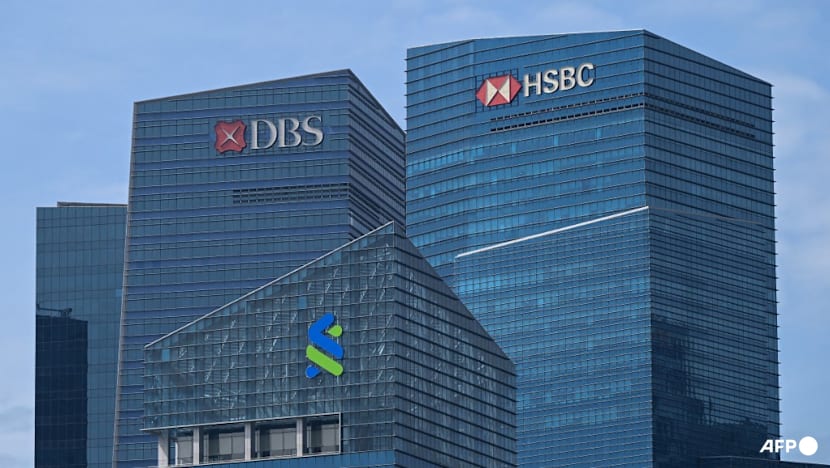
Skyscrapers with the offices of major banks are pictured at the Marina Bay Financial Centre in Singapore on Sep 5, 2022. (Photo: AFP/Roslan Rahman)

This audio is generated by an AI tool.


SINGAPORE: Wealthy clients can expect faster private bank account opening times in Singapore by the end of 2026, the authorities said on Monday (May 25), as the country positions itself as a safe and trusted financial hub at a time of growing global uncertainty.
The Monetary Authority of Singapore (MAS) said that it is working with the Private Banking Industry Group (PBIG) to reduce private banking account opening times to within one month by the end of this year, down from the current duration of about six weeks or even longer for complex cases.
PBIG, which looks into the wealth development sector, comprises senior industry leaders and representatives from the private banking industry. It established an account opening workgroup last year, co-led by MAS and industry, to identify ways to make client onboarding more efficient while maintaining sound regulatory standards.
MAS' managing director Chia Der Jiun said at the UBS Asian Investment Conference on Monday that more efficient account opening will improve the competitiveness of the wealth management industry while maintaining high standards.





"MAS also takes a risk-proportionate regulatory approach that provides protection and transparency to investors, but avoids undue regulatory burden on financial institutions," he added. "Innovation has been core to building new capabilities in our financial centre."
He also said that "in a world buffeted by shocks and uncertainty", there will be demand for safety and stability. "The attributes of safety and stability have been Singapore's enduring advantage."
These have been the result of a strong commitment to a transparent and predictable legal framework, trusted governance, sound macroeconomic management and a supportive pro-business environment, Mr Chia added.
Building on the observations highlighted by the workgroup, MAS has issued a circular guiding financial institutions to "establish a client’s source of wealth in a risk-proportionate way", Mr Chia said, so that financial institutions can avoid unnecessary and excessive steps in the process and be more targeted.
In the months ahead, the industry will roll out case studies and training for relationship managers and compliance professionals.
Under MAS regulations, banks in Singapore are exempt from complying with certain regulatory requirements when dealing with high-net-worth individuals or accredited investors.
Accredited investors can also be offered a wider range of investment products not available to retail investors.
To qualify as an accredited investor, the person must have a minimum income of S$300,000 (about US$235,000) in the last 12 months, net financial assets exceeding S$1 million or net personal assets exceeding S$2 million, of which their primary place of residence can only contribute up to S$1 million.
Priority or privilege banking services for Singapore's domestic banks typically require a minimum amount of about S$1.5 million investable assets to qualify for account opening. A full private banking account, which is the highest tier, requires at least S$6.38 million.
Citi Private Bank, for example, has a US$10 million net worth requirement, while UBS Wealth Management requires US$2 million in investable assets. HSBC Premier Elite needs a minimum "total relationship balance" of about US$940,000.


PBIG said on Monday that it has issued a set of "process enhancement tips" on practical ways to address the typical challenges that banks face in the processes related to onboarding clients.
These include clearer approaches to streamline processes and harness technology to accelerate client onboarding.
PBIG's co-chair Shee Tse Koon, also DBS bank's head of consumer banking and wealth management, said: "By streamlining processes and embracing technology, we are not only improving client experience, but also reinforcing the efficiency and dynamism of our private banking sector, all while upholding effective and robust regulatory standards.
"This is crucial for meeting evolving client needs."
"NO COMPROMISING OF REGULATORY COMPLIANCE"
The authorities in Singapore had imposed stricter regulations following the S$3 billion money laundering case in 2023, where a group of foreign nationals used the country's reputable financial system to turn millions of dollars into luxury cars, jewellery, designer goods and properties in Singapore's most lavish neighbourhoods.
MAS penalised nine financial institutions, comprising Credit Suisse, United Overseas Bank (UOB), UBS, UOB Kay Hian, Citibank, Julius Baer, Blue Ocean Invest, Trident Trust Company and LGT Bank, with penalties of S$27.45 million for breaches related to the case.
Mr Lee Lung-Nien, Citi's banking head for Singapore, said on Monday: "Delivering faster and more seamless client onboarding is a key objective across the private banking industry.
"However, this must be achieved without compromising robust risk management and regulatory compliance."


National Development Minister Chee Hong Tat said last year that most family offices had seen shorter processing times of within three months for their tax incentive applications.
Mr Chee, who is also the deputy chairman of MAS, said that Singapore wants to maintain high regulatory standards while still ensuring a convenient and business-friendly environment.
PBIG co-chair Gillian Tan, also MAS' assistant managing director, said on Monday that Singapore's "strong legal and regulatory frameworks provide investors with confidence that their assets are well-protected".
"At the same time, efficient account opening enables our financial institutions to promptly serve the needs of their clients, from individual investors to businesses requiring sophisticated financial solutions.
"MAS will continue to encourage the industry to adopt risk-proportionate approaches, so that investors and businesses can bank more smoothly without weakening safeguards," she added.