Three online retailers caught using misleading website features to pressure shoppers
The websites of Boarding Gate, Origin Sleep and Light in the box were found to have displayed features such as fake visitor counts and fabricated countdown timers to create artificial urgency.
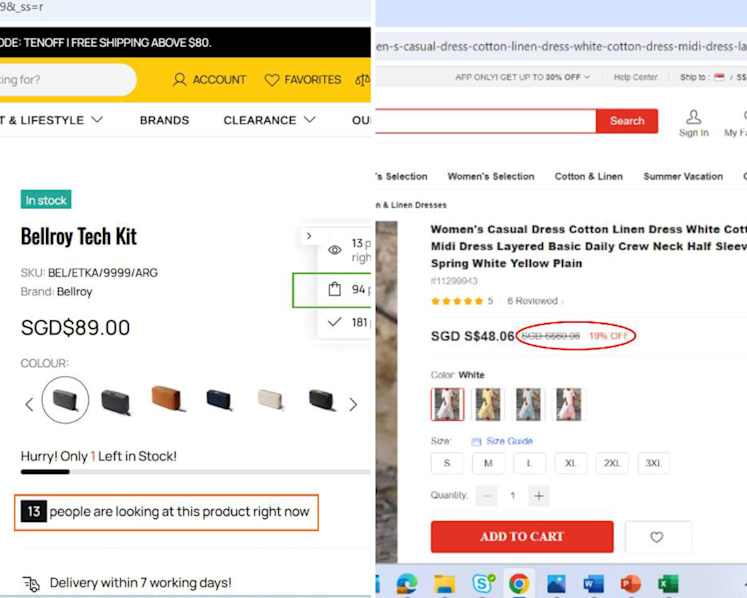
Retailers have been caught using various tactics to mislead and pressure shoppers. (Images: CCS)

This audio is generated by an AI tool.
SINGAPORE: Singapore’s competition watchdog has taken action against three online retailers for using deceptive website tactics designed to pressure consumers into making purchases.
Seager Inc, which operates Boarding Gate, along with Origin Sleep and Light In The Box, had used so-called “dark patterns” - misleading design features that create false urgency, demand or savings, the Competition and Consumer Commission of Singapore (CCS) said on Monday (May 18).
These included displaying fake visitor counts, fabricated countdown timers, and false discount claims.
On Boarding Gate's website, messages such as “XX people are looking at this product right now” and “XX people added this item to cart” gave shoppers the impression of strong real-time demand.





"However, when CCS examined the website's source code, it discovered that these numbers were randomly generated," the agency said.
Origin Sleep was found to have used similar tactics, including claims that other shoppers had items in their carts without any real-time data to support these statements.
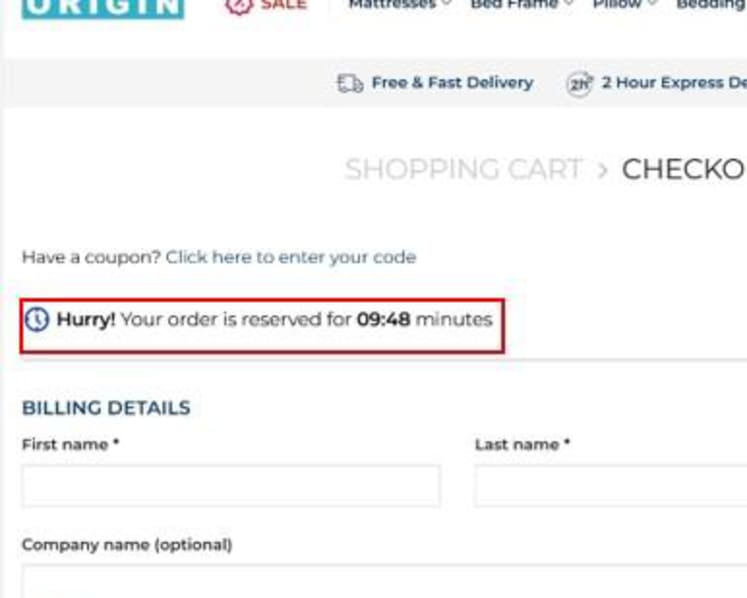
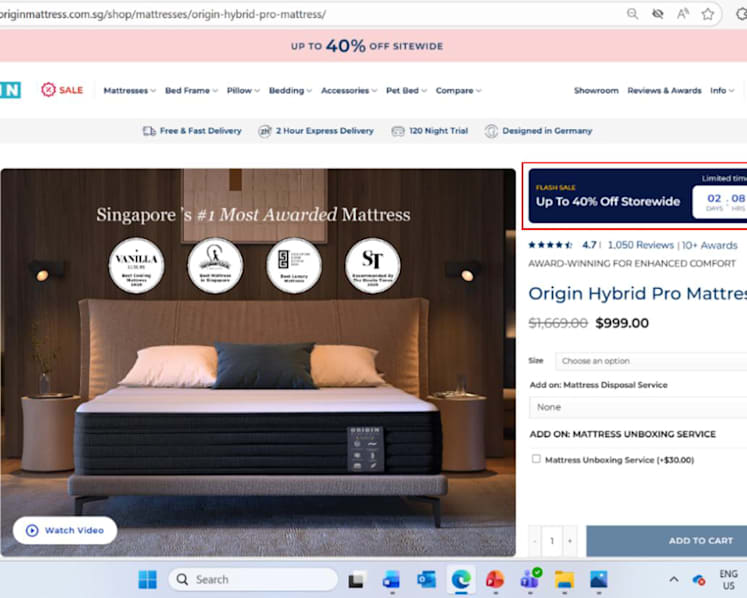
The mattress retailer's checkout pages also featured countdown timers, implying purchases had to be completed before the time expired.
"In reality, these messages and timers had no impact on product availability or shoppers' ability to buy," CCS said.
In addition, Origin Sleep ran what appeared to be time-limited promotions offering discounts of up to 40 per cent. In reality, investigators found that these sales continued for nearly two years under different names - from “Flash Sale” to “Valentine’s Day Sale” and “3.3 Mega Sale” - undermining the impression of urgency.
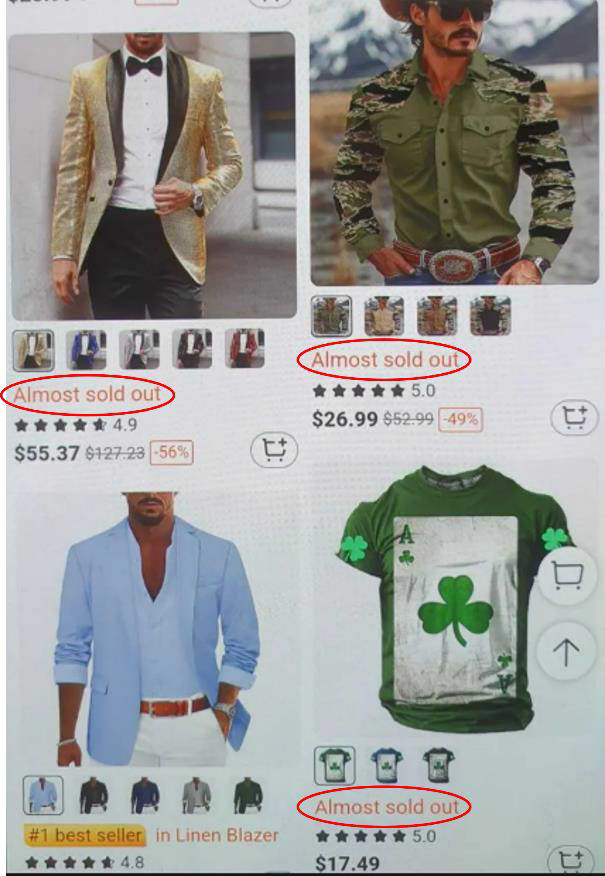
Meanwhile, Light In The Box displayed “Almost sold out” warnings on products despite operating a made-to-order model with little or no inventory.
"In reality, these scarcity labels were applied randomly for promotional effect," CCS said.
The company was also found to have advertised discounts against “original” prices that were never actually offered, creating a false impression of savings.
"CCS was alerted to Light In The Box's conduct by a European regulator, demonstrating how these misleading practices can span multiple countries," the agency added.
Without naming the retailer, CCS said one of them claimed that its website design was based on a template purchased from an overseas vendor.
The agency said it stressed that businesses remain responsible for complying with consumer protection laws regardless of how their websites are built.
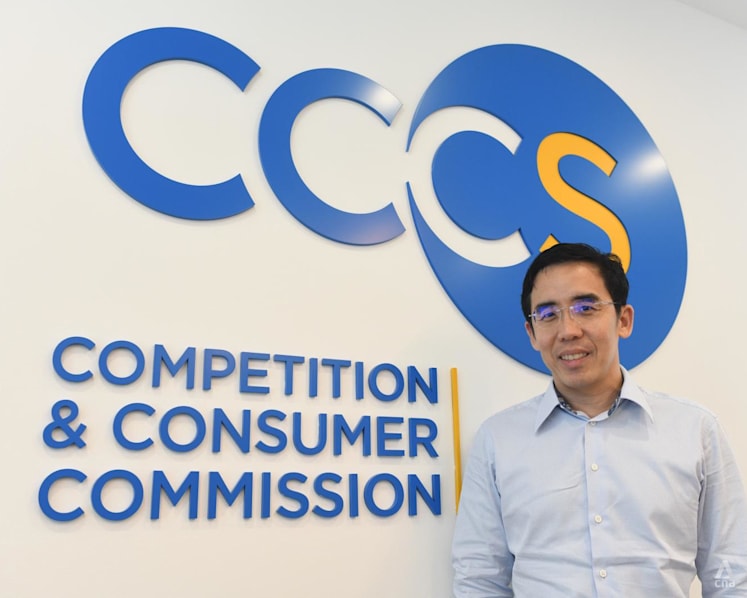
"Dark patterns are insidious as they are difficult to detect and erode consumer trust in the digital marketplace," said CCS chief executive Alvin Koh.
All three companies have since provided formal undertakings to CCS, ceased their misleading practices and committed to avoiding unfair trade practices in the future.
Light In The Box has also removed misleading claims from its Singapore- and Europe-facing website and mobile application, CCS said.
"This enforcement action signals Singapore's commitment to protecting consumers from misleading practices that create false impressions of popularity, scarcity and urgency," CCS added.
Given the prevalence of these "dark patterns", the Consumers Association of Singapore (CASE) welcomes the enforcement actions taken by CCS, its president, Melvin Yong said in a Facebook post.
He said the move demonstrates Singapore’s commitment to protecting consumers against such unfair practices.
"Such enforcement actions close the information gap between consumers and businesses, enabling consumers to make more informed decisions without any misleading or false information," Mr Yong added.
He noted that in 2025, CASE received 369 complaints involving misleading claims and website features aimed at influencing consumers' online purchasing decisions.
As the e-commerce space is “fast evolving”, CASE called for “more concerted effort among stakeholders to address these issues at a systemic level”, saying consumers are often unaware of such unfair practices.
The Consumer Protection Review Panel is studying feedback on "dark patterns" as part of its review and will submit its recommendations to the government in the second half of 2026.
The panel, led by Mr Yong and former judicial commissioner Foo Tuat Yien, was convened last year to review key consumer concerns, including the adequacy of existing protections for high-value package purchases.