Changi Airport Terminal 3 to get major upgrade ahead of Terminal 5 opening
The works will introduce more digital technology and robotics for self-service check-in and toilet cleaning, serving as testbeds for the upcoming Terminal 5.
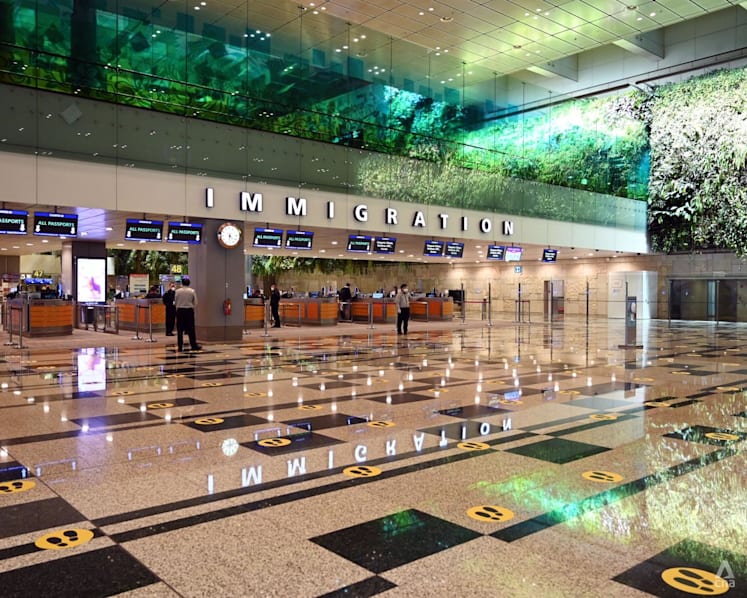
A view of the immigration checkpoint at Changi Airport Terminal 3. (File photo: CNA/Marcus Mark Ramos)

This audio is generated by an AI tool.


SINGAPORE: Changi Airport Terminal 3 will get a major upgrade to handle more passengers, Acting Minister for Transport Jeffrey Siow announced on Wednesday (Apr 29).
Speaking at the Changi Airline Awards at Shangri-La Singapore, Mr Siow said the tender for the works will be called in the second half of the year.
"This is likely to be our last major airport upgrade before Terminal 5 (T5) is ready," he said.
The main objective is to improve passenger throughput capacity – the maximum number of passengers an airport can handle within a given period – particularly during peak hours.





"We know that between now and T5, our passenger traffic will continue to grow. We want to make sure Changi passengers continue to experience the same level of comfort and service that they are used to," said Mr Siow.
The upgrade will also bring in more digital technology and robotics for self-service check-in, security screening and toilet cleaning. Some of these will serve as testbeds for solutions to be rolled out at scale when T5 opens.
"T5 will take roughly another 10 years before it becomes a reality. In the meantime, Singapore will continue to invest in our existing terminals to keep them up to date," Mr Siow said.
When the first phase of T5 is completed in the mid-2030s, it will be able to handle about 50 million passengers annually – expanding the airport's capacity by over 50 per cent to 140 million.
In 2024, Changi Airport Group announced plans to invest S$3 billion (US$2.35 billion) over six years to upgrade terminals 1 to 4. This includes the addition of Skytrain cars to carry more passengers between terminals, larger immigration halls and more check-in facilities.
CEO Yam Kum Weng announced during the event on Wednesday that the number of bus gates in T3 will increase from three to seven to handle more flights during peak periods.
By this quarter, Changi Airport will also have more than 50 aircraft stands to support the new Boeing 777-9 folding wingtip aircraft, which some airline partners have ordered. This aircraft is longer and puts more strain on pavement infrastructure, said Mr Yam.
He also introduced the group's first off-airport check-in service, which will be available at selected hotels for passengers to check in for their flights and drop off their luggage.
The luggage will be transferred to Changi Airport and loaded onto the departing aircraft, said Mr Yam.
"This will free travellers to move around in Singapore for both business and leisure, completely unburdened by their bags," he added.
In the first phase of the roll-out, the service will be available for Singapore Airlines passengers staying at The Fullerton Hotel, Fullerton Bay Hotel and Marina Bay Sands, with more hotels invited to join the programme.
NAVIGATING MIDDLE EAST DISRUPTIONS
Mr Siow also addressed the impact of the ongoing Middle East conflict on global aviation. Jet fuel prices have climbed as the crisis weighs on global oil supply, prompting some airlines to cancel flights and impose surcharges.
Singapore responded by working with airlines to launch more than 90 alternative flights from Changi last month to destinations including Europe and Australia.
"This arrangement benefits all parties," said Mr Siow. "Airlines reduce the impact of the flight disruptions, even temporarily. Changi optimises the use of our airport capacity and our passengers have more destination options."
On cargo, Mr Siow said the sector was growing. More than half a million tonnes of air freight passed through Changi in the first quarter of 2026 – up nearly eight per cent from a year earlier – making Singapore the ninth busiest air cargo hub in the world.
Singapore is also bringing in more air freight partners to complement existing operators such as DHL, FedEx, UPS and SF Group, with an eye on key routes between Australia and Asia.
"Therefore, notwithstanding the immediate challenges, the long-term trajectory for aviation continues to be upward," Mr Siow said.